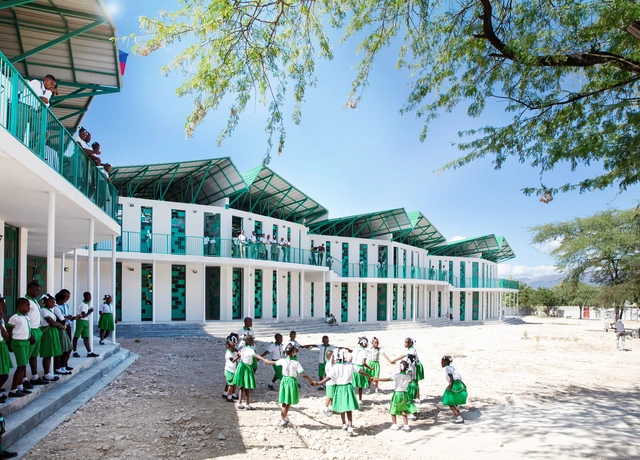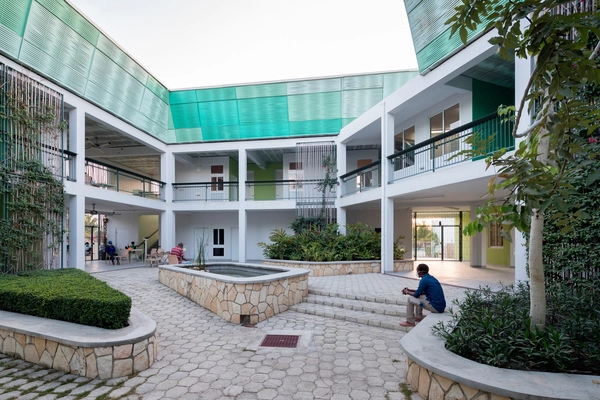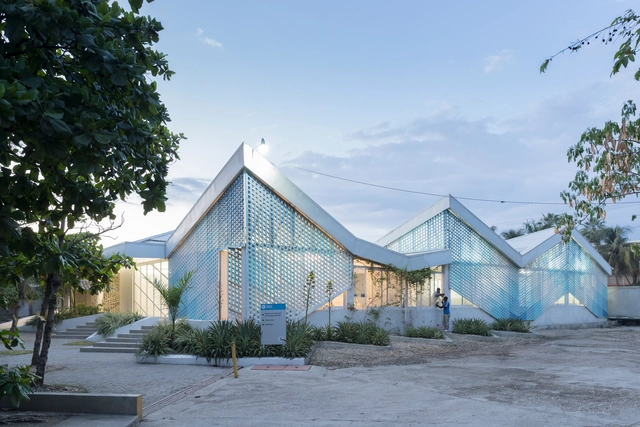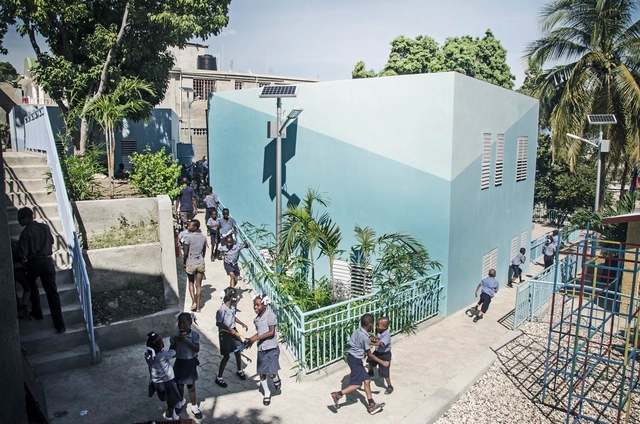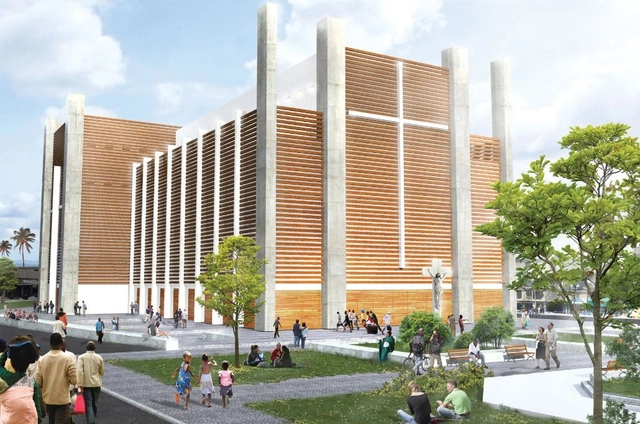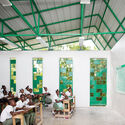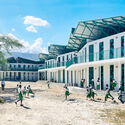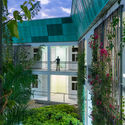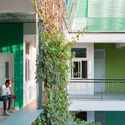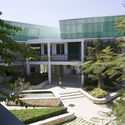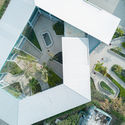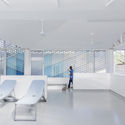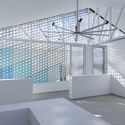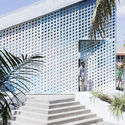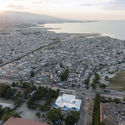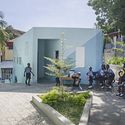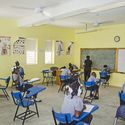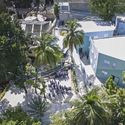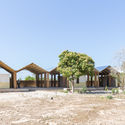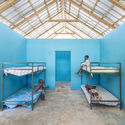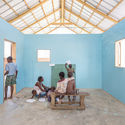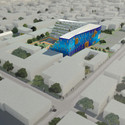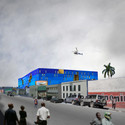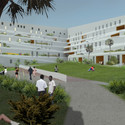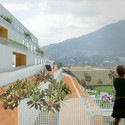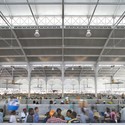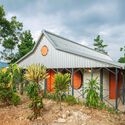
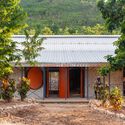
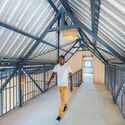
Notre Dame Haiti Cathedral Competition Entry / TABB Architecture

Designed by TABB Architecture, their proposal for the Notre Dame de l’Assomption Cathedral in Port au Prince optimizes resources, producing designed solutions and teaming up for a change. Designing a New Cathedral for Port-au-Prince,not only will imply a beautiful, energy saving, affordable building, but a complete strategy plan to generate the labor force in order to sustain the local economy, teaching people construction techniques to support future needs. More images and architects’ description after the break.
World-Class Soccer Stadium Underway in Haiti

Three years have passed since a tremendous earthquake devastated Haiti. The long reconstruction process includes the construction of the country’s first stadium to be completed this year. Partners of Project Phoenix have created plans for Phoenix Stadium, a massive world-class professional soccer stadium soon to be located in Cite Soleil, Haiti. This project developed as a result of the 2012 Clinton Global Initiative when collaboration began between Morad Fareed of Delos and Boby Duval of L’Athletique D’Haiti. The vision is to create a world-class stadium for soccer games as well as many other community functions.
Read more about Phoenix Stadium after the break!
Notre Dame de l’Assomption – National Cathedral Competition Entry / YCF Group

Designed by YCF Group, in collaboration with ARCA Consulting and AFH Haiti (Architecture for Humanity), their proposal for the Notre Dame de l’Assomption draws on the life and culture of the Haitian people, while remembering the site’s history and the lives lost on January 12, 2010. Inspired by a Haitian fisherman’s boat, the project’s folded origami form aims links the new cathedral to the old cathedral’s former function as a lighthouse. More images and architects’ description after the break.
Notre Dame de l’Assomption – National Cathedral Competition Entry / NC-Office

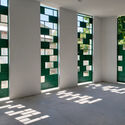
Recently destroyed by the 2010 Earthquake, Port-au-Prince’s new design for the National Cathedral is presented as an absolute plain wall of concrete which expresses the true character of the construction. Designed by NC-Office, the concrete material is not only structurally appropriate, but it also produces a somber cool space that absorbs light – forming an architecture of shadows. More images and architects’ description after the break.
Haiti Cathedral Competition Entry / Sparano + Mooney Architecture

Designed by Sparano + Mooney Architecture, they embraced the idea as light as a mediator for the central organizing principle for their proposal. The new Cathedral, a delicate dance between old and new, each contributes to its role in the creation of the new. The act of covering the precious ruins with a diaphanous, copper material creates the new space and form of the Cathedral which emerges as a dialogue between existing remains and new veil. More images and architects’ description after the break.
Update: Transitional Shelter Project in Haiti / MICA

When we last heard from David Lopez and his students at Maryland Institute College of Art (MICA) they were in the process of constructing a prototype of the Transitional Shelter for Disaster Relief in Haiti. The project started in a Design|Build studio in the Spring of 2011. Acquiring funds to prototype the design became a challenge. Students spent the summer and fall of 2011 completing the design and reaching out to organizations for donations and materials. WorldwideShelters.org and Whiting Turner Contracting Company gave critical donations that made it possible to begin construction.
Follow us after the break to catch up on the status of the project.
USGBC and AIA announce second Architecture for Humanity Sustainability Design Fellow

The United States Green Building Council (USGBC) and the American Institute of Architects (AIA) announce Burtland Granvil, AIA, LEED AP as the new Architecture for Humanity Sustainability Design Fellow. Succeeding the first Sustainability Design Fellow, Stacey McMahan, AIA, LEED AP, Granvil will be working directly with the Haitian community at the Architecture for Humanity’s rebuilding center based in Port-au-Prince.
“The earthquake didn’t take as many lives as the poor quality of construction did,” said Granvil. “Architecture for Humanity’s Rebuilding Center in Haiti will help educate and build together with local current and future builders of Haiti…this is the main reason why I joined Architecture for Humanity. I am here with others to work on the long-term approach. Haiti, as well as other post disaster areas, can benefit from this kind of transitional office with this mindset.”
USGBC partners with HOK to design Haiti Orphanage and Children’s Center

Marking the two year anniversary of the devastating 7.0 earthquake in Haiti, we would like to share with you the important efforts of Project Haiti – a LEED Platinum orphanage and children’s center that is planned to be built in Port au Prince, Haiti. The project is lead by the United States Green Building Council (USGBC) and their official pro-bono design partner, HOK. Project Haiti not only focuses on the children, but also aims to create a “replicable, resilient model for rebuilding” that may serve as a practical teaching tool for the local community. The USGBC motto states, “Every story about green building is a story about people.”
Update: Transitional Shelter Project in Haiti / MICA

In the Spring of 2011, the Design|Build studio at the Maryland Institute College of Art (MICA) began researching the various influences impacting the design and construction of transitional shelters used in disaster relief. The research included a review of conditions in Haiti, where a portion of the class travelled to Port-Au-Prince over their Spring Break to check out some of the shelter types being constructed in response to the earthquake that devastated the area back in January of 2010.
Several case studies were investigated, including the Haiti Earthquake. The research was comprehensive. However, the impact of this survey on the outcome of transitional shelter was debatable – there were no “universal solutions”, and there was no panacea that could solve every scenario.
Interview: Mark Gilbert on Designing Jacmel by Alexander Britell

Mark Gilbert discusses redesigning and rebuilding the city of Jacmel, Haiti with Alexander Britell from Caribbean Journal. The architect and his colleagues at trans_city used New Orleans typologies and their concept of rapid-response housing to provide an economical reconstruction proposal that will provide long-term stability to the people of Jacmel.
Reconstruction Plan for Haiti / Trans_City Architecture and Urbanism

Over the last 18 months, Trans_City architecture and urbanism, has developed a comprehensive plan for the reconstruction of Jacmel, Haiti based upon the concept of satellite cities located at the edge of the existing, earthquake-ravaged city center.(A concept developed in accordance with the universal design principals of the Housing Reconstruction Framework of the Haitian Government)
The concept includes an urban masterplan, and a proposal for prefabricated houses, in which the building shell is industrially manufactured in Austria, and finished by local hand workers. In line with the content of the project, the architecture does not attempt to be spectacular. Rather, it is the holistic integration of the many levels of an urban system that makes this project interesting. More images and project description after the break.
FPM GAP Academy / I|K Studio

I|K Studio shared with us their masterplan design with an energy network for an academy outside of Port-au-Prince. This design will serve as a model of offset power production independent from a central utility. More images and project description after the break.
Transitional Shelter Design Study in Haiti by MICA

In March of 2011, a design-build class from the Maryland Institute College of Art (MICA) received a grant in support of their efforts to design a shelter for disaster relief. The money from the grant was used to travel to Haiti to see conditions on the ground, 14 months after the earthquake that reportedly amassed some 230,000 fatalities.
The goal of the trip was to investigate the myriads of different shelter construction projects still ongoing as Haiti transitions from the emergency tents and tarpaulins that still populate the landscape, into temporary housing for the foreseeable future until permanent housing can be provided through rebuilding.
One of the more ambitious and impressionable projects we came across was the UberShelter.
Update: Japan / Temporary Housing

Earthquakes in Haiti and Chile, monsoons in India, and now the disasters in Japan. Each has left thousands displaced from their homes, giving us, as architects, reason to re-think the idea of temporary housing. In Chile, strict building codes helped some infrastructure withstand the 8.5 quake; yet, there is a limit to the pre-disaster measures a country can take. So, what are the steps for dealing with the after effects of the disaster, be it wind, water, or seismic damages?
Each world tragedy brings with it the opportunity for the creative to find solutions that will help give shelter to people. There are many obstacles to overcome in Japan’s case – roads are completely destroyed which presents quite a challenge to collect and transport material, plus snow has covered much of the region. Yet, if we could re-think the idea of a house and pool our efforts to create a system of rapid response temporary housing that can overcome such obstacles, think of the number of people in devastated areas that would benefit from such a project.
More after the break.
Harvest City / Tangram 3DS
Architects: Tangram 3DS
Location: Haiti
Project year: 2010
Photographs Tangram 3DS
Clinton Bush Haiti Fund awards $800,000 to Architecture for Humanity

The Clinton Bush Haiti Fund just awarded $816,472 to Architecture for Humanity for the Haiti Rebuilding Center to support reconstruction and livelihoods in Port-au-Prince, a town that was catastrophically affected by an earthquake at the beginning of the year. As a result, many large buildings were either severely damaged or destroyed. This fund will not only aid in the rebuilding process, but will benefit thousands of who were suffering since the natural disaster. Additionally, this grant will enable small and growing Haitin businesses to participate in post-earthquake reconstruction and ensure rebuilding incorporates better design and engineering. More information after the break.
Virginia Tech Student Wins Yéle Haiti Competition
Christopher Morgan, architecture student from Virginia Tech won an international competition to design Yéle Music Studio in the Cité Soleil area of Port-au-Prince, Haiti. The competition was launched before the terrible earthquake of January 12, and architecture students from all over the world were invited to participate. The Royal Institute of British Architects, along with architecture firm John McAslan + Partners and developer Allied London, sponsored the competition on behalf of Yéle Haiti, a nonprofit organization founded in 2005 by Haiti-born musician Wyclef Jean.
The brief asked entrants to design a 1,000-square-foot music studio that would contain recording and radio-production facilities, while also offering space for vocational training for at-risk youth in Cité Soleil, a poor and crime-ridden district. You can see more images of the winning design after the break. Seen at Architectural Record.
Rebuilding a Sustainable Haiti: Symposium Videos
A while ago we told you about Rebuilding a Sustainable Haiti, a symposium on planning strategies that can lead to a more socially, environmentally, and economically sustainable future in Haiti, hosted by the Institute for Urban Design on June 4.
The organization have recently added videos of the entire symposium to their website. You can see the various presentations, panel discussions, and Q&A sessions that took place. The videos are also timestamped to allow viewers to skip ahead to highlights within the individual videos. You can see all the videos right here.
Building Back Better Communities Housing Competition for Haiti
Building Back Better Communities has been initiated by the Government of Haiti to investigate alternative forms of permanent housing for displaced citizens. A prototype housing Expo will take place in Port-au-Prince from early October 2010. The development of an exemplar housing settlement will follow shortly after.
The Government of Haiti wishes to attract as wide a response as possible from across the world. Designers, architects, contractors, consultants and suppliers are all warmly invited to participate. More information here. Seen at Death by Architecture.
Shelter for Haiti / Andres Duany
In just a short period of time since the earthquake hit Haiti, designers have been proposing possible housing solutions for the country. We will share a variety of these housing schemes with you throughout the week, with the hope that they will encourage more people to get involved to help not only Haiti, but also Chile. The first proposal is designed by Andres Duany, a Miami architect. Duany, with the help of sociologists and anthropologists, has designed four different versions of a temporary structure to relieve the urgent need for housing in Haiti. The differences in the homes respond to the varying ways Haitians live, so that each home is tailored to their specific needs.
More about the houses after the break.