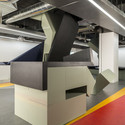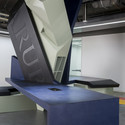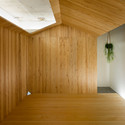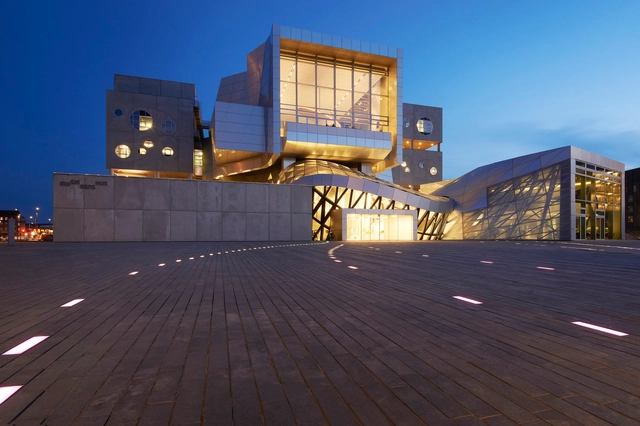
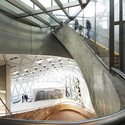


-
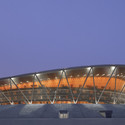
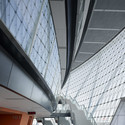
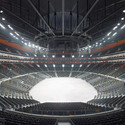
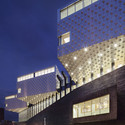
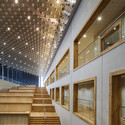
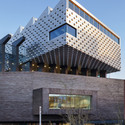
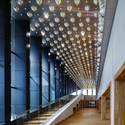
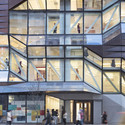
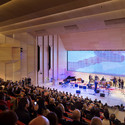
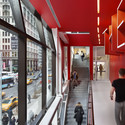
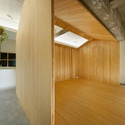
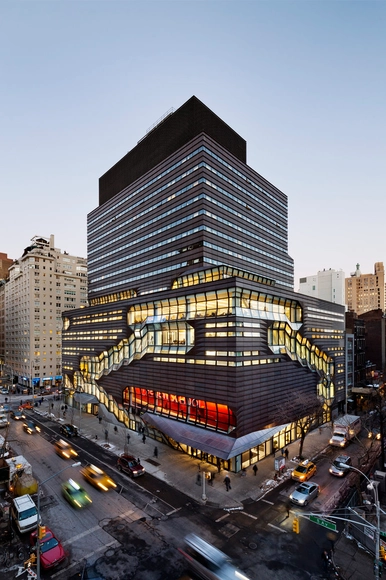
Architects: Coop Himmelb(l)au
- Area: 20257 m²
- Year: 2014
-
Professionals: Isochrom, Silkroad, Davis Langdon, Eichinger Offices, Ramboll, +3


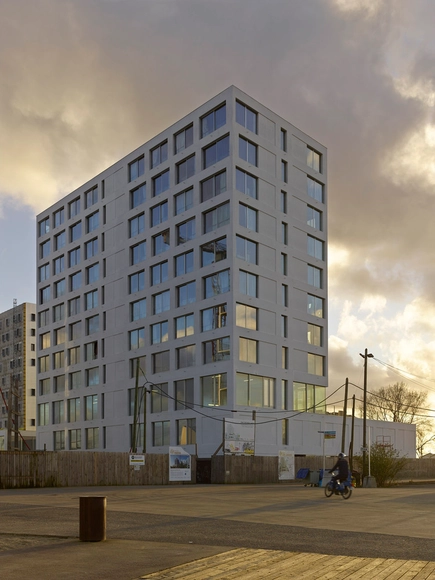
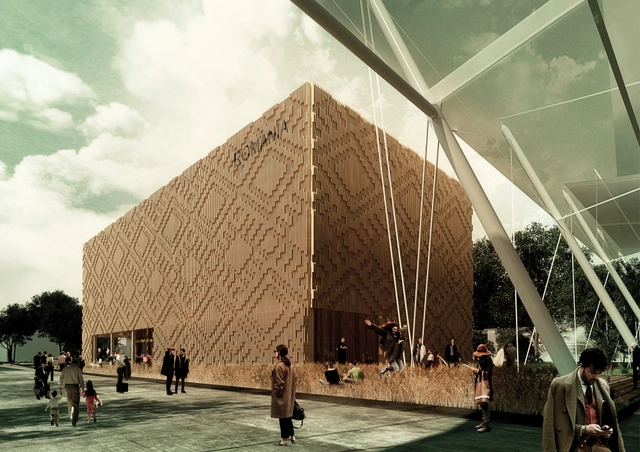
Placing sixth in the competition to design the Romanian Pavilion for the 2015 Milan Expo, Collective East Architects offered a “simple and powerful landmark” that focuses on the history of Romania’s agriculture. Serving as an “attractor and orientation mark,” the structure was conceived by repeating a traditional Romanian pattern that “transformed the pavilion into a sculptural object with a powerful national identify.” From a distance, the facade appears “introverted and impenetrable;” as viewers move closer, the building begins to expose its contents, revealing a level of detail one would expect in a “jewelry museum.”
.jpg?1397409146)
The United Design Group (UDG) China has begun construction the “Xieli Garden” resettlement community kindergarten in Wuxi. The three-story building, designed as a “spiraling elliptical ring,” aims to create an ideal learning environment for children with ample natural light and a direct connection to outdoor space.

Spanish architect Rafael de La-Hoz has designed a mirrored, 60-meter monument to commemorate the 30 anniversary of the Tianjin Economic-Technological Development Area (TEDA). The design, titled “A Cut between heaven and earth”, was “driven by an effort to analyze the process of abstraction and reinterpretation of the site.”

Jeanne Gang, founder of Studio Gang, will be hosting a public lecture at the Reva and David Logan Center for the Arts on Monday, April 28, 2014. The lecture, named 'What Mammals Want', will start at 5:15pm and seating is first-come, first-served.
Text by Isaac Wilhelm:

The architectural firm PRODUCTORA, based in Mexico City, is presenting 9 unbuilt projects that have a clear relation to geometry and mathematical composition. Large-scale models, made in collaboration with students at Woodbury University are presented together with black and white CAD drawing that clarify the main conceptual aspect of the building.

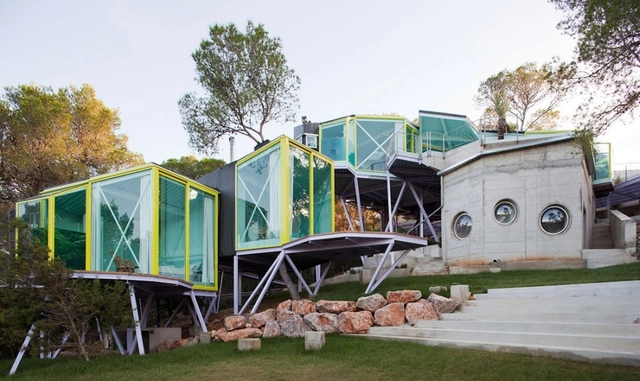
Starting this week,The Princeton University School of Architecture will hold until May 14 a retrospective exhibition on the work of Andrés Jaque and his architectural practice Office for Poitical Innovation. It includes their production since 2000, including several projects we've published in the past like the Plasencia Clergy House, Sweet Parliament Home, Escaravox and the Never Never Land House.
In the last 10 years the Office for Political Innovation has explored the question: ‘What happens to architectural practices when common notions of the urban (as something confined in cities) are replaced by others in which the urban is contained in urban enactments (ordinary interactions in which politics are produced)?’
More after the break.
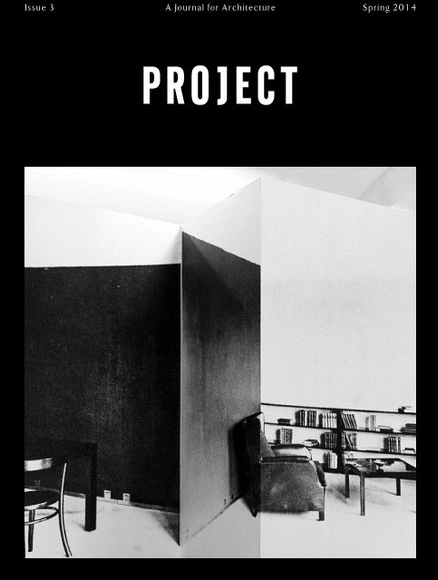
The editors of PROJECT invite you to celebrate the release of Issue Three at common room, 465 Grand St., New York, NY, this Wednesday, April 9 from 7pm to 9pm. PROJECT investigates the possibilities for developing a a critical position in contemporary architecture. Publishing both visual and written work, the goal of PROJECT is to provide a platform for disseminating ideas.