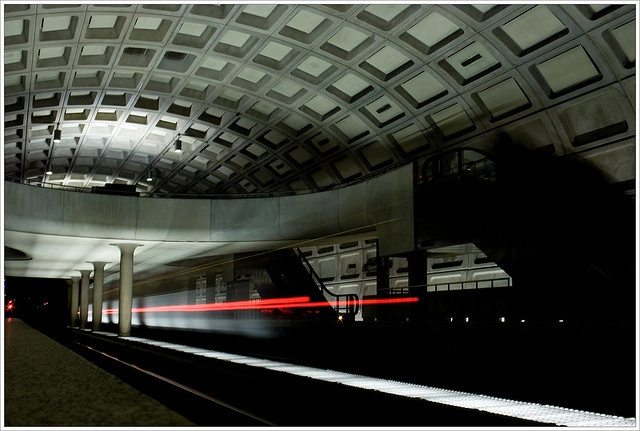
The AIA has given the 25 year award - for architectural projects which have stood the test of time - to the Washington DC Metro System. Designed by Harry Weese and opened in 1976, the metro system has been praised for its application of a sense of civic dignity to the function of transportation, as well as the consistency of the design across its 86 stations. You can read an accompanying article about the design of the Metro System here.
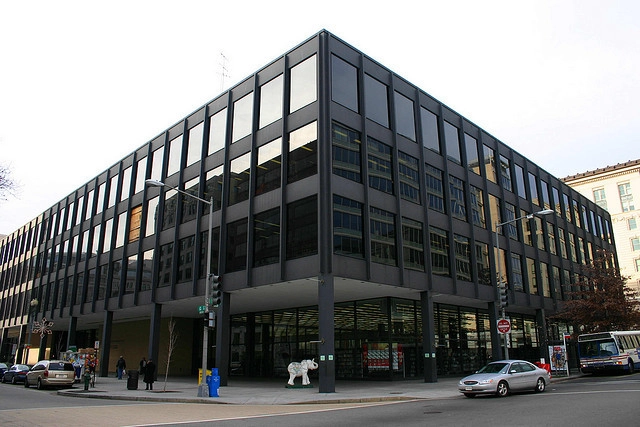
Three teams have been shortlisted from a longlist of ten for the renovation of Washington DC’s Martin Luther King Jr. Memorial Library - the only library and D.C. building ever designed by Mies van der Rohe. The three competing teams are:
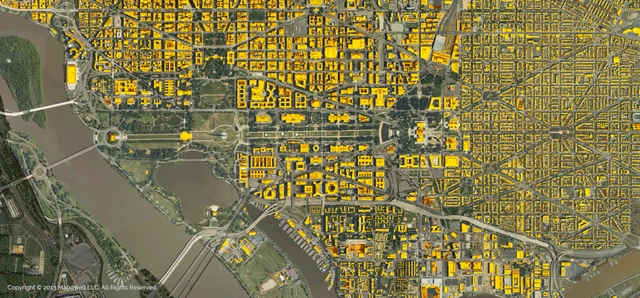
Mapdwell announced today the unveiling of Mapdwell Solar System for the Washington, D.C. The MIT-born project has formed an alliance with the District Department of the Environment (DDOE) to provide its state-of-the-art rooftop solar resource to the U.S. capital.
DDOE was the first of several organizations to partner with Mapdwell after the platform was introduced in Cambridge, Massachusetts. The District’s map comes only seven months after the initial rollout of Solar System, and constitutes the first step in Mapdwell’s expansion in the United States and abroad.
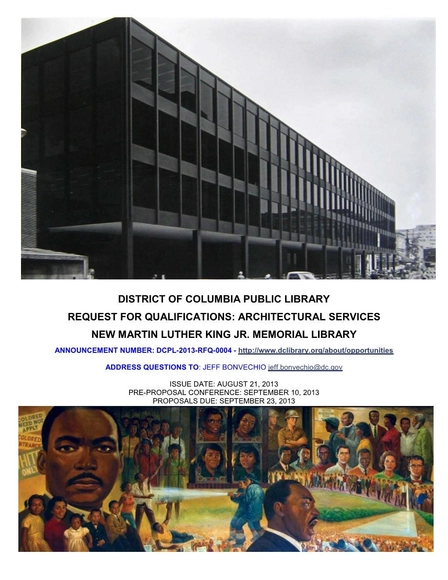
In August, we reported a Request for Qualifications for the renovation of Mies van der Rohe's Martin Luther King (MLK) Jr. Memorial Library in Washington D.C. - Mies' only library and the only building in D.C. A few days ago, the District of Columbia Public Library (DCPL) narrowed down the list of potential firms from 26 to 10 and revealed that it was looking for community input on the library's future spaces and services.
Tama Art University Library (Hachioji Campus) / Courtesy Ishiguro Photographic Institute
The innovative work of the 2013 Pritzker Prize Laureate Toyo Itois often driven by an internal critique and struggle towards perfection. In this translated program, the principal of Toyo Ito & Associates, Architects will discuss his design philosophy and remarkable work, which includes the Sendai Mediatheque in Miyagi, Japan, and Tokyo's Tama Art University Library and TOD’S Omotesando Building.
In honor and celebration of the 50th anniversary of the historic March on Washington, which took place August 28, 1963, the RFQ for architectural services for the new Martin Luther King Jr. Public Library was officially launched today by the District of Columbia Public Library. Currently a Mies van der Rohe building, which is his only library and the only Mies building in D.C., people using the public library more than ever to seek assistance in navigating the complex networks of information available to them and in converting that information to knowledge for their personal needs (education, lifelong learning, enjoyment, jobs, business development, and so on).
The Martin Luther King, Jr. Memorial Library will be a place for residents to explore, connect, create and engage. They seek an inspiring design for the library of the future that will accommodate great flexibility in library uses and in technology. The RFQ's are due no later than September 23. A pre-proposal conference is also set to take place September 10. For more information, including the full RFQ document, please visit here.
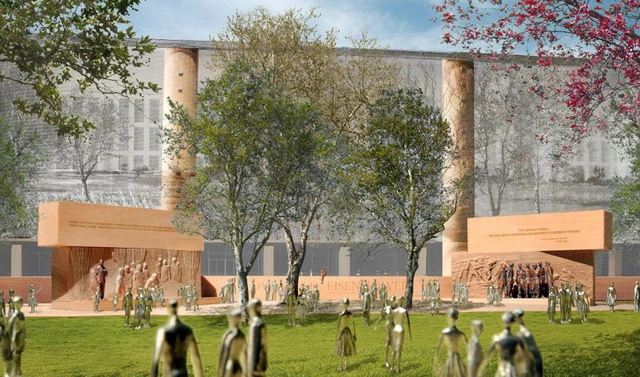
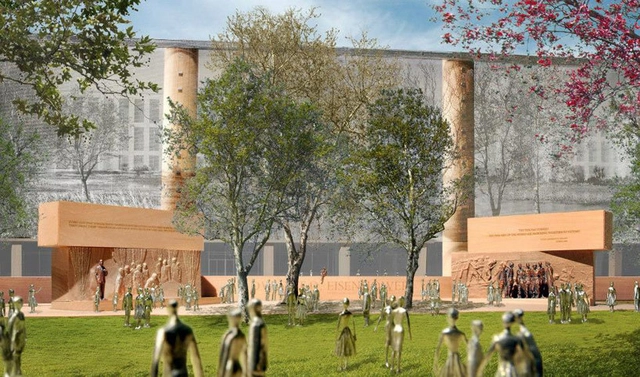
Frank Gehry’s revised design for the controversial Eisenhower Memorial has been approved by US Commission of Fine Arts in a 3-1 vote - a major step forward after the project’s funding was nearly scraped last year. Though Gehry’s redesign was welcomed by the commission, BDOnline reported that they’ve requested he removes the three woven metal tapestries that border the site, as they believe the scale “undermined Gehry’s attempt to convey the president’s humility.” Gehry accepted this request and now awaits re-authorization from Congress.
Taking place during the National Building Museum's Summer Block Party, the Architecture 101 lecture series explores iconic styles during significant periods in architectural history. The two lectures, titled 'Miesian' (July 20) and 'Expressionism' (July 27) will serve as a refresher course for the professional or student or providing the novice with a chance to learn more about the world of architecture. More information after the break.
Despite harsh criticism and a lingering threat from the House to scrap funding and start anew, the Eisenhower Memorial Commission has unanimously approved Frank Gehry’s design for the Dwight D. Eisenhower Memorial in Washington DC. The $110 million project, nearly fourteen years in the making, has undergone numerous revisions in the past couple years in search of a compromise between the commission and its opposition, namely the Eisenhower family.
Though the odds started to lean in the opposition’s favor, the commission is pressing forward with their plans and Gehry is expected to present his design to the U.S. Commission of Fine Arts next month and the National Capital Planning Commission in early fall for review and approval.
After four years of high-brow debate, the demise of the controversial Hirshhorn ‘Bubble’ has been confirmed. The decision, made by Smithsonian Secretary G. Wayne Clough and Undersecretary Richard Kurin, comes shortly after the Hirshhorn board’s split vote resulted in the resignation of director Richard Koshalek - the man behind the ‘Bubble’.
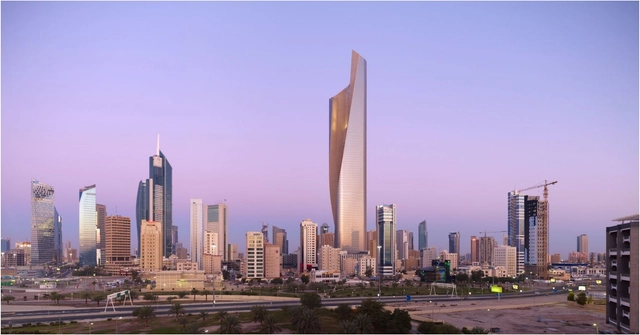
Taking place at the National Building Museum on May 14 from 6:30-8:00pm, SOM (Skidmore, Owings & Merrill Architects) design principal Gary Haney, AIA, RIBA, will present the innovative design process behind the firm’s work, including the recently completed, 1,354-foot tall, Al Hamra Tower in Kuwait City, one of the world’s tallest buildings and the tallest building in Kuwait. Since its founding in 1936, the firm has designed and engineered some of the tallest buildings in the world-notably Chicago's Willis Tower, and New York's One World Trade Center. To register, and for more information, please visit here.
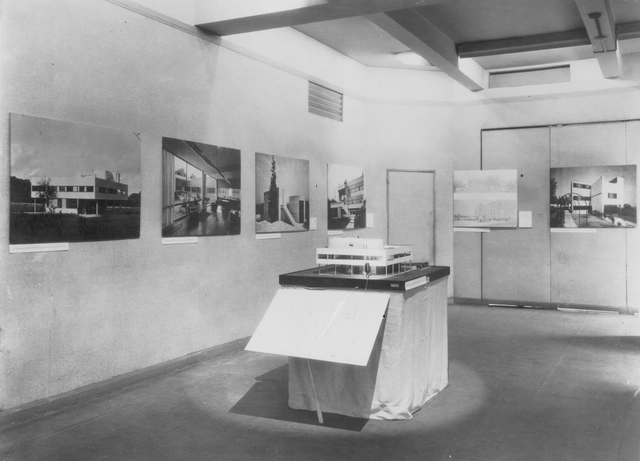
Model of Le Corbusier’s Villa Savoye from Modern Architecture: International Exhibition [MoMA Exh. #15, February 9-March 23, 1932] Photo: Modern Architecture, International Exhibition. 1932. The Museum of Modern Art, New York. Photographic Archive.
Barry Bergdoll, Philip Johnson Chief Curator of Architecture and Design at New York's Museum of Modern Art and professor of modern architectural history at Columbia University, will present the 62nd A.W. Mellon Lectures in the Fine Arts Series. The Mellons are among the most prestigious art history lecture series in the world and have been delivered annually since 1952 at the National Gallery of Art, Washington, D.C. For this year's series, Bergdoll will present "Out of Site in Plain View: A History of Exhibiting Architecture since 1750."
“Originally seen to reflect the democratic attributes of a powerful civic expression - authenticity, honesty, directness, strength - the forceful nature of Brutalist aesthetics eventually came to signify precisely the opposite: hostility, coldness, inhumanity. [...] Separated from its original context and reduced in meaning, Brutalism became an all-too-easy pejorative, a term that suggests these buildings were designed with bad intentions.” - “BRUTAL”/“HEROIC” by Michael Kubo, Chris Grimley and Mark Pasnik
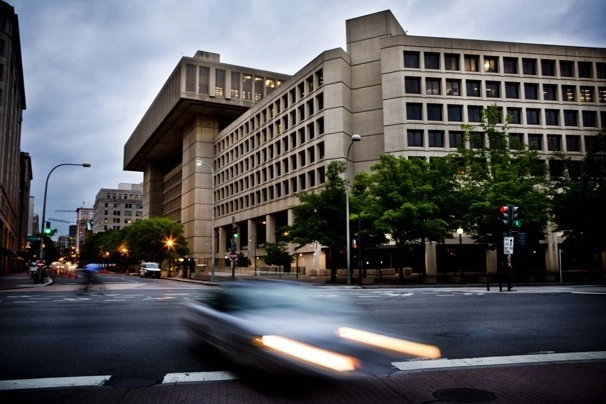
Brutalism, an architectural movement that peaked in the 1960's, inspired the development of countless governmental buildings in Washington DC as well as across the world. Though Brutalism's original intentions may have been good, many believe that the actual manifestation of these buildings was not and consider them to be little more than an eyesore on the District's landscape. One such concrete structure, the FBI's J. Hoover Building, is currently facing possible redevelopment as the government has decided to relocate FBI headquarters and given the private sector the rare opportunity to transform this so-called "monolith" into a new kind of monument.
Striving to provide the nation’s children with a healthy place to learn is not a new concept. As long as there have been school buildings, there have been advocates for architectural improvements to ensure that students had proper lighting, heating, and fresh air. But with the real problems of overcrowding, age, and budget crises, many green visions have fallen short. With that being said, the Green Schools exhibition at the National Building Museum, which began this month and will run until January 4, 2014, will look at several examples of what is possible—at the future that, in some places, is already here—and provide resources for all of us to consider as we look toward constructing the next generation of school buildings. For more information, please visit here.
The Dwight D. Eisenhower Memorial saga continues, as Rep. Rob Bishop (R-Utah) proposed legislation that would forego Frank Gehry’s controversial design and eliminate federal funding. Although Bishop’s radical bill would save $100 million in future funding, it ignores any possibility of compromise.
The National Building Museum, in partnership with the Environmental Film Festival will be showing two films related to both the natural and built environment. Taking place Sunday, March 17 from 11:30am to 12:45pm, 'Mother Nature's Child' focuses on nature’s powerful role in children’s health and development is explored through the experience of toddlers, children in middle childhood and adolescents, from Vermont to Washington, D.C. Then, on Thursday, March 21 from 6:30pm-7:30pm, 'Diller Scofidio + Renfro: Reimagining Lincoln Center and the High Line' film includes a discussion of their projects and interviews with New York City planning commissioner Amanda Burden and other civic figures. For more information on the events, please visit here.
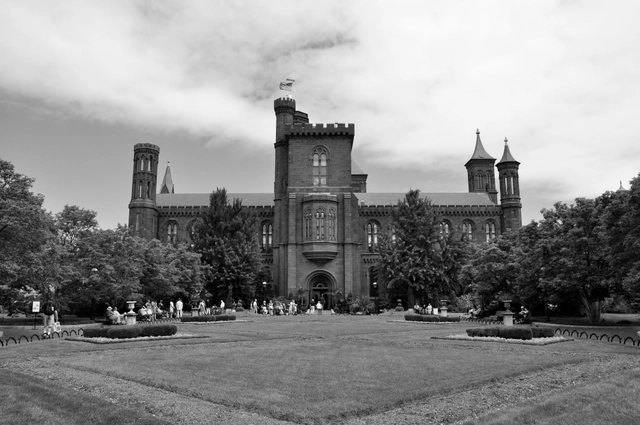
The Smithsonian Institution has commissioned the innovative practice of Bjarke Ingles to reimagine the heart of its antiquated Washington D.C. campus. The Danish architect has agreed to an eight- to 12- month, $2.4 million contract to draft the first phase of a master plan that seeks to dissolve the notable impediments and discontinuous pathways that plagues the area.



._Courtesy_Ishiguro_Photographic_Institute..jpg?1379609779&format=webp&width=640&height=580)
.jpg?1374089350)
.jpg?1374089327 "© Eric Laignel")
.jpg?1374089331 "© Eric Laignel")
.jpg?1374089369 "© Eric Laignel")
.jpg?1374089413 "© Eric Laignel")
.jpg?1374089350)