Can current design and manufacturing technologies be incorporated into vernacular and traditional construction techniques? On the IE University campus in Segovia, a group of researchers from IE University, Princeton University, and the University of Bergamo built an unreinforced masonry structure called innixAR that demonstrates how digital technologies can enhance craftsmanship. This pavilion explores the intersection between the latest augmented reality (AR) innovations and 4D funicular design to allow vault craftsmen to build masonry structures without the need for physical guides and costly temporary molds.
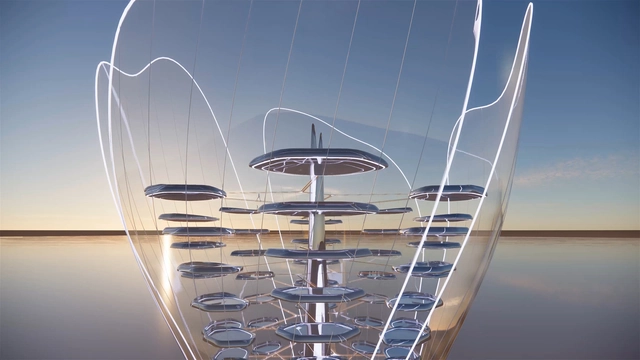
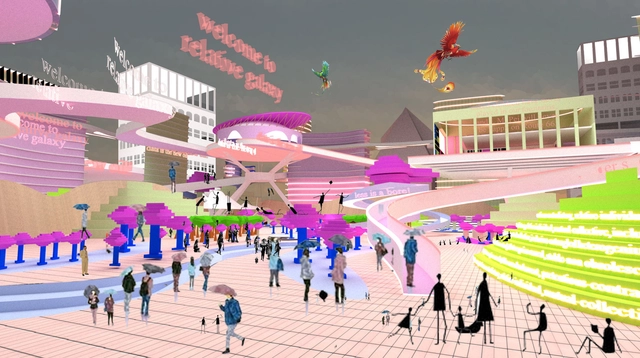
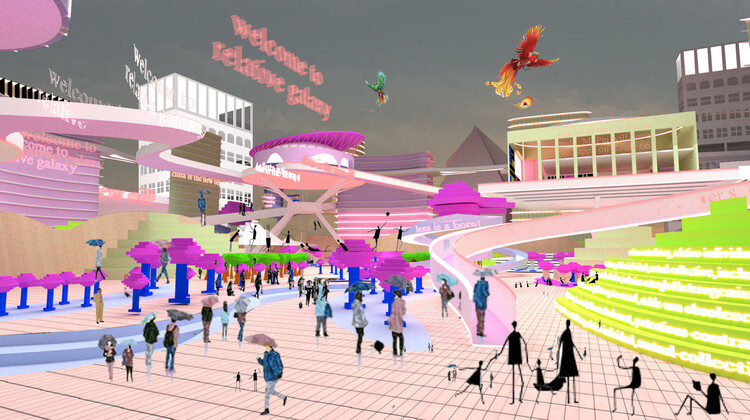
Meta City Hall / CAA LAB. Image Courtesy of CAA LAB
The promise of the metaverse is proving to be a fertile ground for research and experimentation for architects. This new realm is currently undefined, consisting of many narratives, explorations, and opportunities for architects and designers to shape a new type of environment. Generative engines, such as AI image-generators, are contributing to the feeling of open possibilities. While they are not yet part of the standard practice, they bring the promise of a shift in the production of architecture. Conceptual projects such as the ones presented in this list serve little to no external purpose. Still, they are essential in conducting an understanding of the possibilities of the new technologies which are likely to have a significant effect on the profession.
This week's curated selection of Best Unbuilt Architecture highlights projects submitted by the ArchDaily community that experiment with a new medium and integrate novel technologies. From abstract buildings created to be experienced through virtual reality in the metaverse to investigations into the ability of AI image generator engines to develop innovative architectural expressions and even research into planimetry, the following projects are pushing the boundary of what architecture could look like in the new age of technological developments.
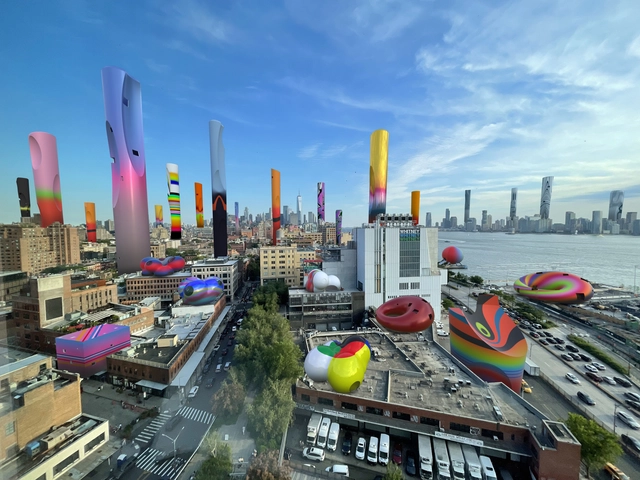
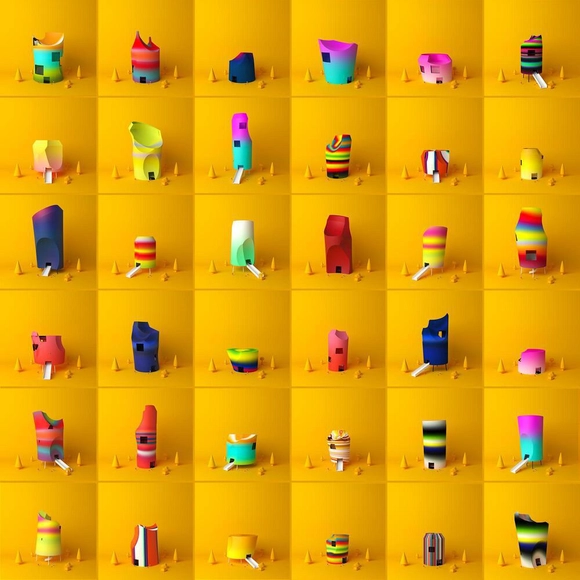
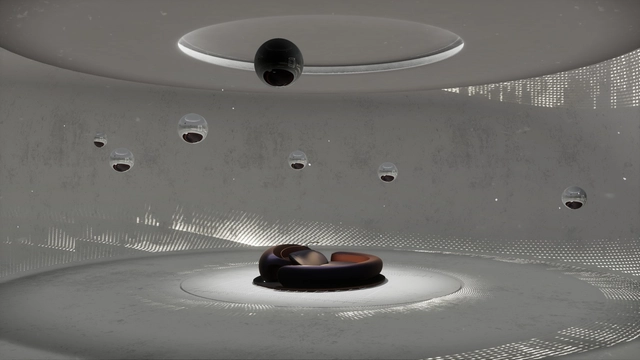
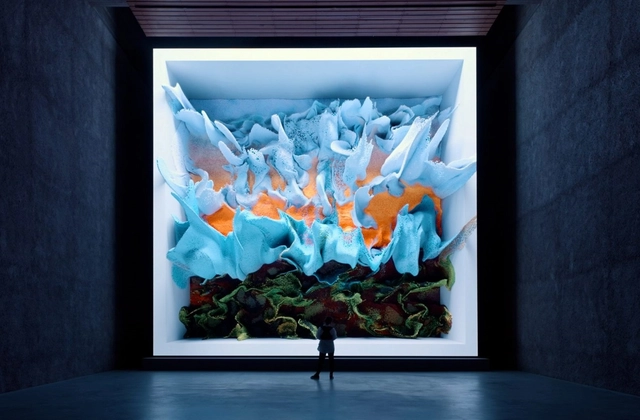
The promise of the metaverse, this new type of three-dimensional and immersive digital space, is proving to become more and more appealing to architects eager to explore the new realm of virtual creations. As it currently stands, the metaverse does not have a singular definition but is composed of many narratives and explorations. This unknown land is however fruitful ground for architects, who have to opportunity to shape not only the new environment but also the experiences of future users. The SOLIDS project represents one response to these conditions. Developed by FAR, an architect and engineer working with digital environments, SOLIDS uses a generative process to design unique, metaverse-compatible buildings.
The new technologies of the digital world caused changes in architecture and urbanism. New materials, new construction techniques, and new ways of manufacturing and building have changed how we design and think about construction. Besides, these technologies reveal possibilities of interaction between society and architecture, transforming the understanding of architecture and its purpose.
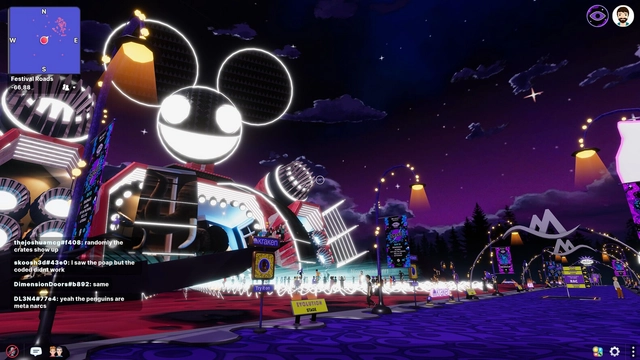
DEADMAU5 The Metaverse Festival. Image by Duncan Rawlinson flickr under Attribution-NonCommercial 2.0 Generic (CC BY-NC 2.0).
“All the physical spaces that we (architects) design – buildings, interiors and cities are born as metaspaces, and we call them 3D models”. With this statement Brian Jencek, director of planning at San Francisco-based architecture firm HOK, narrows the boundaries between the current way of designing and the future of architecture in the metaverse. According to him, we are not that far from this technology, since we already use the same tools that visual designers use to create realistic environments, such as Unity, Twin motion and Blender.
The undisputed protagonist of the last few years has been the Metaverse. The news is already flooding the world of video games and technology. Today, architects and designers are increasingly aware of the responsibility they have in leading this construction of the virtual environment. But what is the architecture of the Metaverse, how is it designed, how is it built?
Everyone’s experience of a city is unique. Whether one is visiting a place for the first time or has lived there all their life, their experiences are shaped by their personal interactions with the built environment. Buildings, landscapes, and streets come together to offer an opportunity for sensory stimulation, however, most of them are unable to provide inspiration. While a city’s infrastructure accounts for livability, equal importance isn’t given to enjoyability. Play and games embedded in the city’s fabric can help improve user engagement with urban spaces.
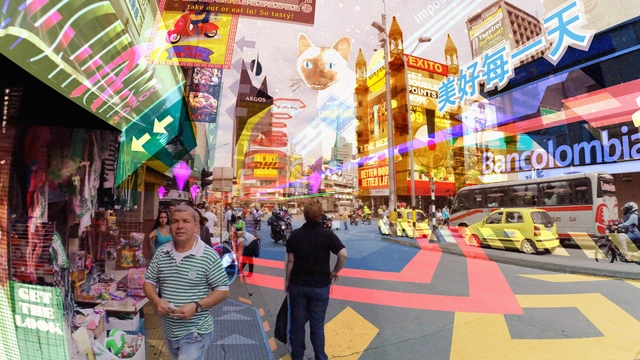
Image: Elif Ayiter/Alpha Auer/..../, via VisualHunt
Imagine the daily life of an architect today. There is a demand for a new project, a blank canvas full of countless possibilities. The creative delight is about to be started. The main constraints are established: brief, analysis of the terrain and surroundings, solar orientation and prevailing winds. The first sketches are created, always combined with structural knowledge, even if basic, fundamentally determining for those who live in the gravitational acceleration of 9.807 m/s².
But what if only the brief remains among these basic premises?
We live in a world where the experienced, remembered, and imagined, as well as different moments in space and time concerning the past, present, and future are inseparably blended. As of recent, we are being offered various mediums to gain access to other planes of existence, utilizing immersive technologies like virtual and augmented reality (VR and AR), creating a pathway to the metaverse in which we are transported to spaces that are capable of feeling more ‘real’ than anything we presently experience.
The metaverse promises to revolutionize our way of life. By integrating immersive technologies like virtual and augmented reality (VR and AR), it hopes to add another layer to the way we experience everyday life. It is suggested that the metaverse will create virtual spaces where people can meet and share experiences regardless of geographical constraints. The possibilities seem endless: exchanging knowledge, encouraging professional collaboration, developing and democratizing art, education, culture, and even enabling political engagement. Social interactions are at the core of the idea of a metaverse. This raises the question: how can the new, virtual spaces acquire the properties of public spaces?
Everybody talks about Metaverse, but hardly anyone agrees on what it is. For the moment, it is still enigmatic, however, it seems like its ambiguity is its strength. Not a day goes by without a new article or a video on this subject, trying to convince people that Metaverse will inevitably become a part of our daily lives soon. Architects and designers are essential parties to the ongoing discussion as it is a spatial innovation that requires the Internet to be redesigned as a 3D environment.
Architecture shapes our lives every day, but how can it be decentralized? At the core of efforts to design extended reality (XR) environments is a desire to make these projects more human and more relatable. As technologists, architects, and users themselves develop new tools for the metaverse, as well as augmented and virtual spaces, new projects are increasingly democratized and open source. At the same time, the design process is being reimagined.
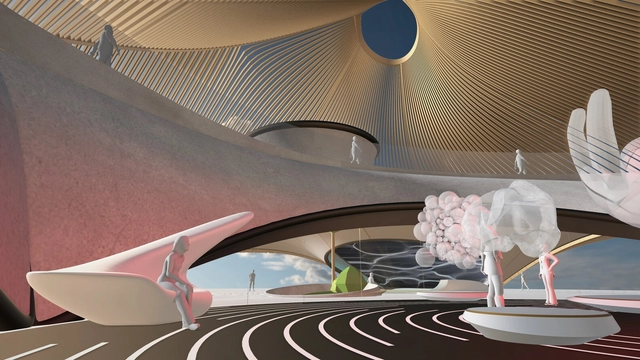
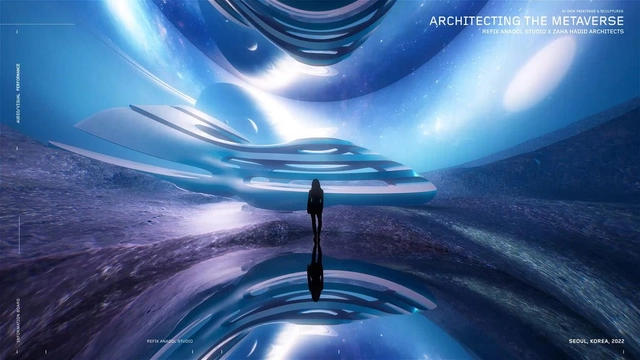
ZHA_RAS_Architecting the Metaverse. Image Courtesy of ZHA
Dongdaemun Design Plaza (DDP) has collaborated with Zaha Hadid Architects (ZHA) for the 'Meta-Horizons: The Future Now' exhibition in Seoul, Korea. Designed by ZHA to promote the instigation and exchange of new ideas and to showcase innovative technologies and media, the inaugural exhibition of DDP’s new Design Museum explores ZHA’s work across multiple fields, from digital technology to artificial intelligence and virtual reality, featuring the firm's recent designs, process, and research that incorporates immersive technologies and new fabrication techniques. The exhibition will be on display from 26 May - 18 September 2022.
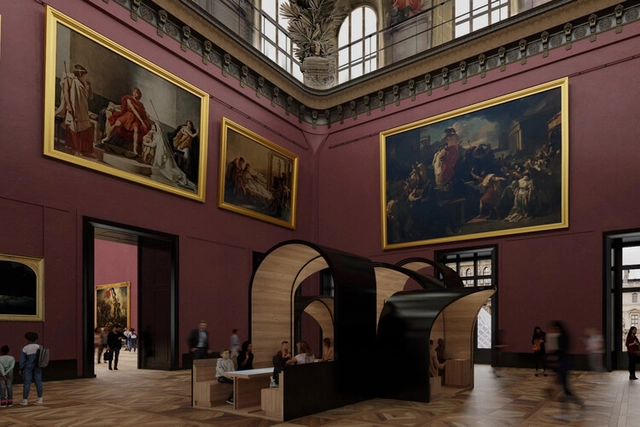
Louvre Museum Pavilions / France . Image Courtesy of Studio Malka Architecture
Housing objects of artistic, cultural, historical and scientific importance, the term ‘museum’ is derived from the Latin language. In regards to classical antiquity, in Ancient Greek ‘mouseion’, meaning ‘set of muses’ was a philosophical institution, a place for contemplation and thought. These muses refer to the 9 muses in Greek mythology, the goddesses of the arts and sciences, and patrons of knowledge. Early museums’ origins stem from private collections of wealthy families, individuals or institutions, displayed in ‘cabinets of curiosities’ and often temples and places of worship. Yet these ‘collections’ are predecessors of the modern museum, they did not seek to rationally categorize and exhibit their collections like the exhibitions we see today.
In definition, the modern museum is either a building or institution that cares for or displays a collection of numerous artifacts of cultural, historical, scientific or artistic importance. Through both permanent and temporary exhibits, most public museums make these artifacts available for viewing and often seek to conserve and document their collection, to serve both research and the general public. In essence, museums house collections of significance, whether these be on a small or large scale.
From Epic Games' Build: Architecture 2021. Image Courtesy of Zaha Hadid Architects
Epic Games operates one of the world’s largest games, Fortnite, and also develops Unreal Engine, the most advanced real-time 3D creation tool that powers Fortnite and is used in industries beyond games. Over the last few years, more professionals in architecture and related fields are using Unreal Engine to bring stunning, photorealistic worlds to life.
In an exclusive interview with ArchDaily, David Weir-McCall, Architecture Industry Marketing Manager at Epic Games, shares his insights on the use of digital technology, such as the likes of Unreal Engine, for collaboration and co-design within the field of architecture, engineering, and construction.
As Antoine Picon describes in Architecture and the Virtual Towards a new Materiality? : "An architectural project is indeed a virtual object. It is all the more virtual that it anticipates not a single built realization but an entire range of them. …Whereas the architect used to manipulate static forms, he can now play with geometric flows. Surface and volumes topological deformations acquire a kind of evidence that traditional means of representation did not allow.”
Virtual reality has given architects alternative ways to work. Paired with real-time visualization software, it offers a robust tool with endless capabilities for your design workflow. It can help develop the design, address needs, and win over clients. Here are four key reasons why you need to implement VR into your design workflow.
For the past couple of years, the metaverse has been gaining prominence, prompting architects to consider its implications for our relationship with the physical environment and how can architecture contribute to this new virtual space. Architecture in the metaverse is no longer a fringe subject, having been embraced by established firms. "The metaverse is where much of the architectural action and innovation will be happening in the coming period,"says Patrick Schumacher. Unbound from restraints such as physics, material properties and construction costs, the metaverse unlocked a new realm of architectural expression. The following looks at some of the various ways the profession engages with the expanding field of digital environments.
























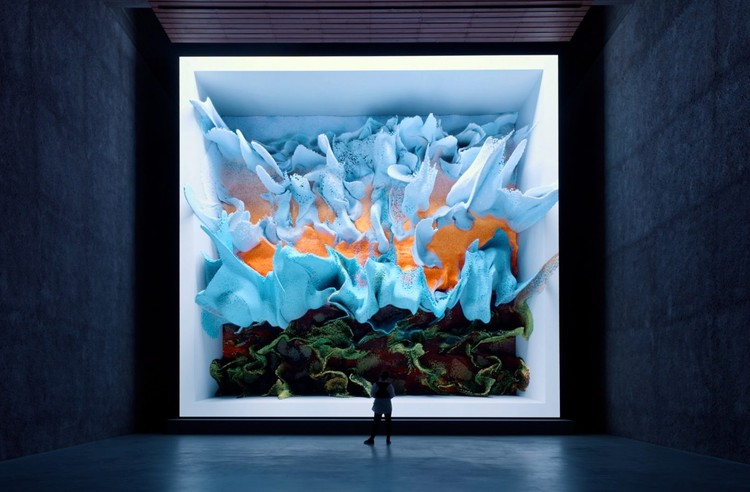
.jpg?1653902387 "ZHA_RAS_Architecting the Metaverse Render. Image Courtesy of RAS")
.jpg?1653902366 "ZHA_RAS_Architecting the Metaverse Render. Image Courtesy of RAS")

.jpg?1653901572 "ZHA_RAS_Architecting the Metaverse. Image © Kyungsub Shin")



.jpg?1652479150 "The Solomon R. Guggenheim Museum / New York . Image © Laurian Ghinitoiu")




.jpg?1650608161)


.jpg?1650608161)