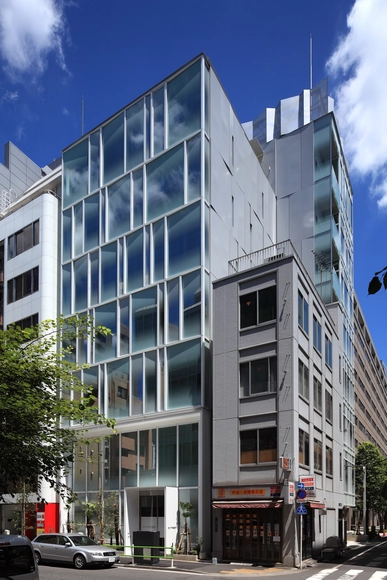
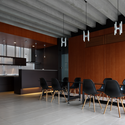
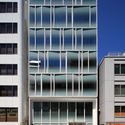
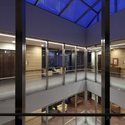
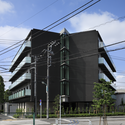
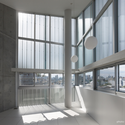
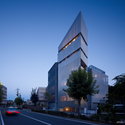
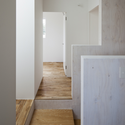
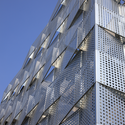
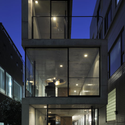
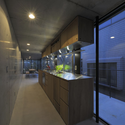
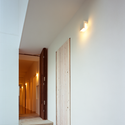
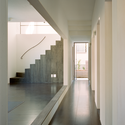
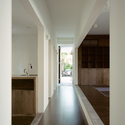
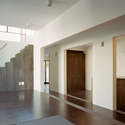
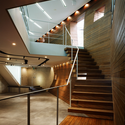
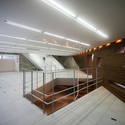
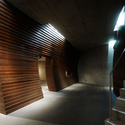
Located in front of the Kamiari-mon gate in Asakusa, Kengo Kuma’s Culture Tourist Information Center serves as a beacon to the local area as well as housing programs to serve both tourists and the local community. This video via ja+u takes you through the 7 stacked volumes that make up the 8 internal floors that house a wide variety of programming ranging from meeting rooms to tourist information kiosks. The construction uniquely integrates HVAC equipment in the gaps between the stacked volumes. The interior structure of heavy timber members are left exposed which complement the dynamism of the vertical volumes, while the language of wood is continued onto the exterior by means of laminated timber louvers.
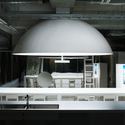
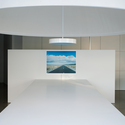
American retailer Coach has commissioned OMA to develop a new merchandising system that accommodates Coach’s wide diversity of products while returning to the clarity of Coach’s heritage stores. Since establishing its first workshop 1941, Coach has expanded from a specialist leather atelier to a global distributor of “democratized luxury goods”. This expansion has clouded the clarity of the brand’s original library-like stores, which used a rigorous organizational system that categorically sort projects inside minimal wooden shelving at assisted counters. OMA intends to create a flexible, modular system that embodies the clarity of the original stores and responds to the individual needs of locale.