Net Zero Schools Summit, Rudolph Hall, Yale University
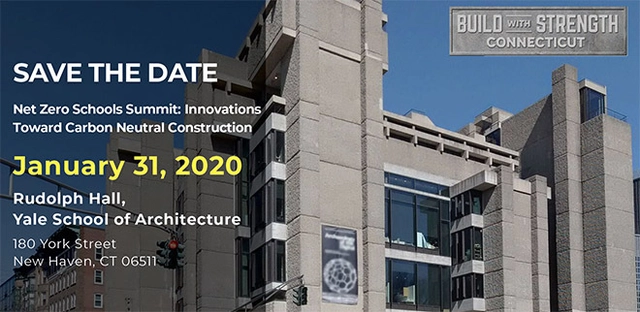
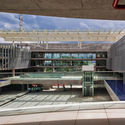
AIA Connecticut, in collaboration with the CT Green Building Council and the National Ready Mixed Concrete Association (NRMCA) is hosting their very first Net Zero Schools Summit at the Yale School of Architecture. A group of thought leaders and experts from across the country will discuss the issues of sustainability, carbon sequestration in construction, and construction methods to achieve Net Zero schools and move the design and construction industries toward a carbon positive future.
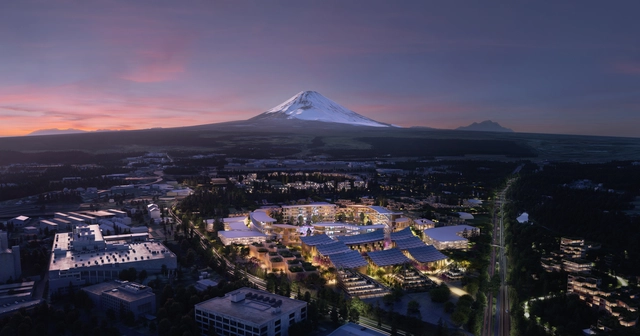
BIG unveiled its latest intervention, the Toyota Woven City, the company's first venture in Japan. Nestled at the foothills of Mt. Fuji, the project, in collaboration with Toyota Motor Corporation, is the world’s first urban incubator pushing forward the development and progress of mobility.
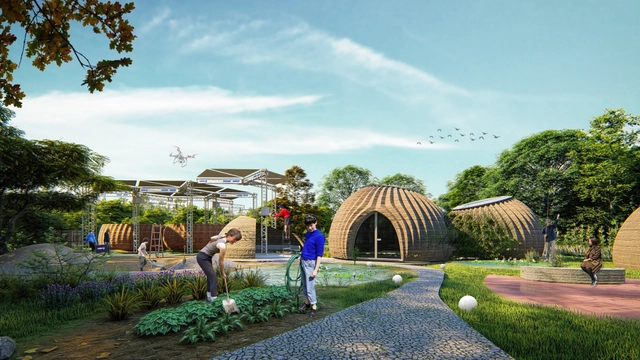
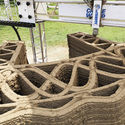
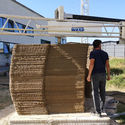
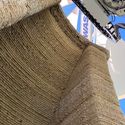
Designed by MCA - Mario Cucinella Architects, engineered and built by WASP, TECLA is a prototype of an on-site 3D printed habitat, launched near Bologna, Italy. The innovative model creates future housing solutions and re-questions the idea of living in the city. It provides a shelter for everyone, through a sustainable, low-cost and efficient method.
The independent juries will evaluate entries in the 6th International LafargeHolcim Awards for Sustainable Construction in five regions of the world. Each jury consists of nine experts in sustainable design and construction. The Awards seek real projects as well as bold ideas that combine sustainable construction solutions with architectural excellence. The competition offers a total of USD 2 million in prize money and is open for entries until February 25, 2020.
Emaar Development is hosting an International Open Design competition for the Design of The Landmark at the heart of the ambitious new world-class mixed-use waterfront development Dubai Creek Harbour. The Development is a 5.6 Million sqm site and is expected to have 48,500 residential units with a population of 175,000 residents, when completed.
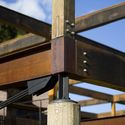
Inverted king post trusses are made of steel bars and cables used to reduce bending, deformation, and a trusses’ height. In other words, they are a collection of continuous beams (steel or wood) and steel cables that are positioned under the beam, supported by an upright king post. Although slender, they are suited for large spans and have small sections.
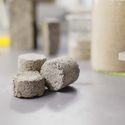
Some years ago, researchers in the United States previously tested the concept of using synthetic urine-based substances to fabricate building materials. However, new research conducted by Masters student Suzanne Lambert at the University of Cape Town, South Africa, puts forth a zero-waste process of producing urine-based bricks by using collected human urine for the first time.
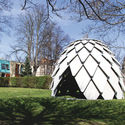
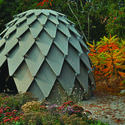
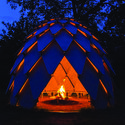
Designed by Czech designers Atelier SAD and distributed by mmcité1, this mobile, nature-inspired gazebo is a playground must-have for children and adults alike. 109 waterproof, plywood scales are treated with resistant glaze and connected by galvanized joints to create a self-supporting, sustainable structure.
Building and growing are two actions that should be considered more often than not at the same time. This is how the 2017 "Build to Grow" social housing competition, looked to establish bases that sustain a flexible way of living. The event took place in the Belén district in the city of Iquitos, on 3.7 hectares plot of land. The project that received first place proposed to locate 120 incremental homes, that alternatively allowed users to modify and expand it according to their needs and economic means. In short, a home with a solid nucleus formed by a structure that supports changing activities.
The countdown has begun to the annual GAGAs - Galvanizers Association Galvanizing Awards. Entry is now open for these highly regarded awards, which offer an accessible yet powerful way of establishing a reputation for design excellence, within the architectural community and beyond.
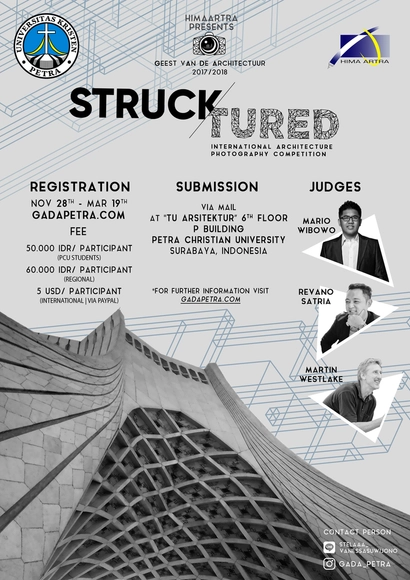
In this fast-paced era a lot of little details are missed in a matter of seconds. Just like architecture that we see everyday and everywhere, the stunning beauty of it all are tend to be overlooked.
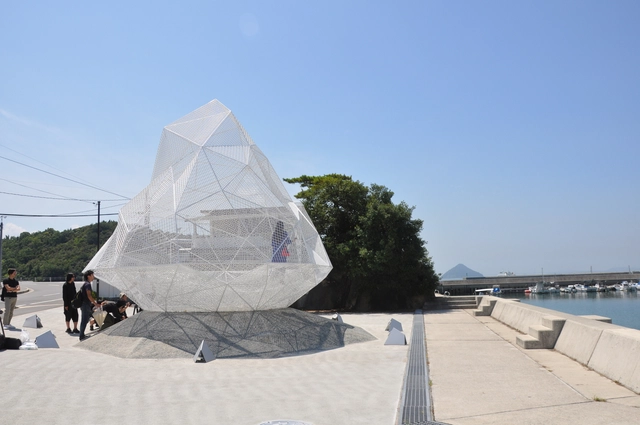
Located a few meters from the terminal of Naoshima, the Japanese island better known as the "Art Island", Sou Fujimoto's Pavilion appears as a translucent and lightweight diamond perched on the coastal edge of Kagawa, visible from SANAA's ferry terminal welcoming the visitors to the island.
The Naoshima Pavilion was part of the 2016 Setouchi Triennial. Fujimoto has created its structure with a white painted stainless steel framework, acting as a mesh that gives the polyhedron it's irregular shape and light appearance as if it was levitating from the ground.
Archtalent, an online architecture platform for Architects, in collaboration with Sziget, one of the largest music and cultural festivals in Europe, make an international call to design a temporary structure within the particular context of a music festival in the city of Budapest in Hungary.
Known for its light weight and high strength properties, graphene has been promised to us as the material of the future for quite some time now. But difficulties in translating its 2D strength into 3-dimensional applications have so far held it back from common use. Now, thanks to new research by the Massachusetts Institute of Technology (MIT), that future may now be closer than ever before. In the school’s latest experiment, researchers have discovered how the material could be shaped into to sponge-like form to resist forces 10 times greater than steel.
In the late 20th century, restricted by an a small landmass and extreme terrain, the Hong Kong urban area grew to become one of the densest and most vertical places on the planet, with more buildings taller than 500 feet than any other city in the world. But instead of the steel or aluminum structures used as scaffolding in Europe and the Western Hemisphere, the majority of skyscrapers built in Hong Kong and much of Asia used scaffolding systems constructed out of bamboo.
To create the structures, the high strength, lightweight material is strapped together with plastic ties by construction crews, who also use the structure as a ladder for scaling the building. Despite using few safety restraints, crews are able to construct up to 1,000 square feet of bamboo scaffolding in just one day. To protect the structure, nylon gauze is sometimes draped along the outside.
Check out a series of GIFs and images showing how it works after the break. And if you're interested in learning more about bamboo construction materials, check out our Materials catalog.