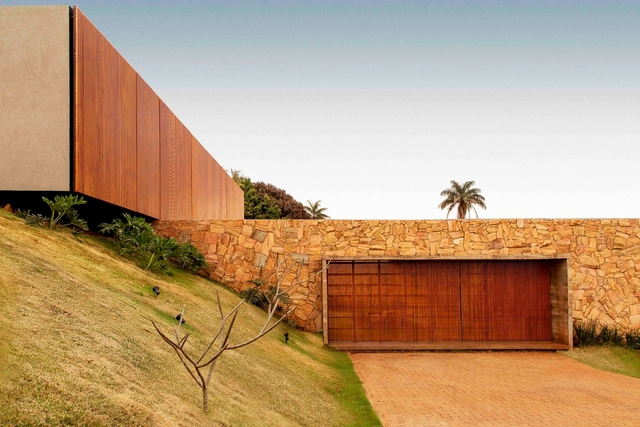
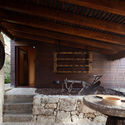
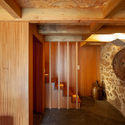
Inherited from ancestral techniques, dealing with natural stone as a building material is, historically, linked more to the structure of a building than to the finishing stage. With the development of construction, natural stones as a structure were replaced by more efficient and cheaper systems, such as reinforced concrete or even metallic structures and structural masonry, opening space for the use of stones as finishes and coatings.
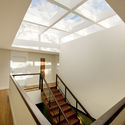
Whether to mark a change of direction, to highlight its first steps or its own presence in a room, stairs that combine two or more materials tend to draw attention by establishing dialogs between particular characteristics of each material. Concrete, steel and wood are some of the most common choices to compose the structure of stairs due to their high strength and versatility. But, when combined, these different materials expand their individual possibilities and reveal how the design can be tailored to their peculiarities and connections.
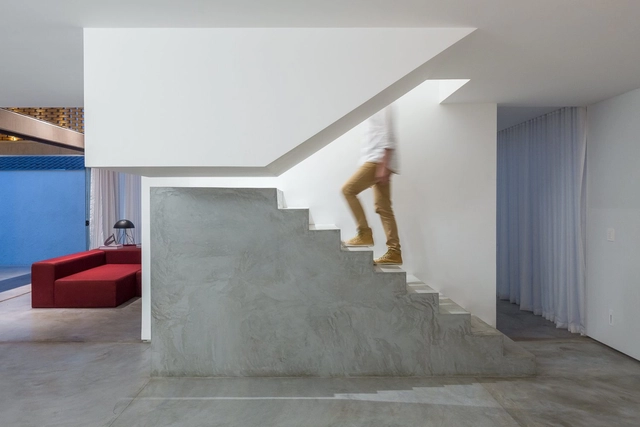
The combination of textures, colors, and finishes among materials can provide a number of creative solutions for these elements used for vertical circulation, as shown in LÂM’s Home, by AD+studio and House 9A, by 23o5Studio, characterized by stairs with a sturdy and rough base that meets a light and sleek structure of steps. The opposite composition order, a lighter base that meets a robust set of steps, thrives ingeniously in Luis Carbonell's Casa Chulavista and messina | rivas' Angatuba House, where the light wooden stairs' base is followed by raw concrete steps.
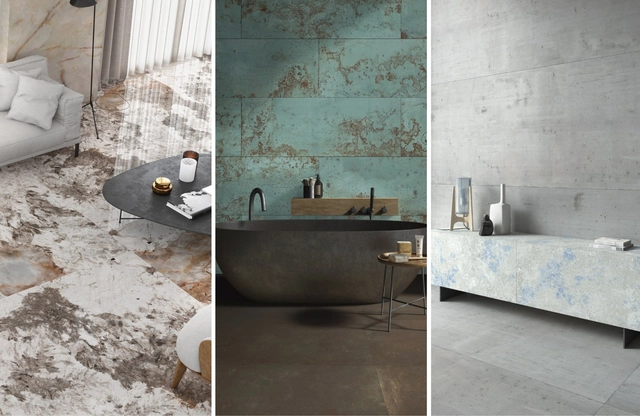
A rock like marble is usually light in color when formed through a process involving the heat and pressure of limestone. Carrara marble, for example, became famous for having good workability for sculptures, but also for its extremely uniform appearance. Under skillful hands, rough stone could become works of art such as Michelangelo's Pietá or David, among many others. But if during the rock formation process there are impurities such as clay minerals and iron oxides, the resulting stone may acquire bluish, gray, pink and black hues. Something that would make its use in a sculpture unfeasible can be seen as the real beauty of the piece, and how the passage of time was printed on it. Likewise, it is very difficult to predict exactly how zinc or copper will oxidize over time, and its patina effect takes on beautiful greenish, reddish or grayish tones, depending on the conditions to which they were exposed.
Admiring the unpredictability of materials and observing the beauty of the unexpected can bring surprising results to architectural projects. Through constant research, Apavisa has been able to develop modular ceramic pieces that combine strength and versatility, reproducing in detail the materials that our environment gives us. The strength of stone and metal with their oxidative processes, the roughness and timelessness of cement or the beauty of marble with its different veins, shades and patterns.
The study of rocks allows us to understand the formation of our earth. Its types, the formed designs, the layers, all reveal the story. Along with the atmosphere and the hydrosphere, the lithosphere is one of the great pieces of the earth system, supporting the biosphere. This outermost solid layer of the planet is made up of rocks and soils; as for rocks, there are several ways to classify them. The most common is to separate them according to their formation processes, such as igneous, sedimentary, or metamorphic. While sedimentary rocks constitute about 5% of the earth's crust, the remaining 95% are igneous or metamorphic rocks.
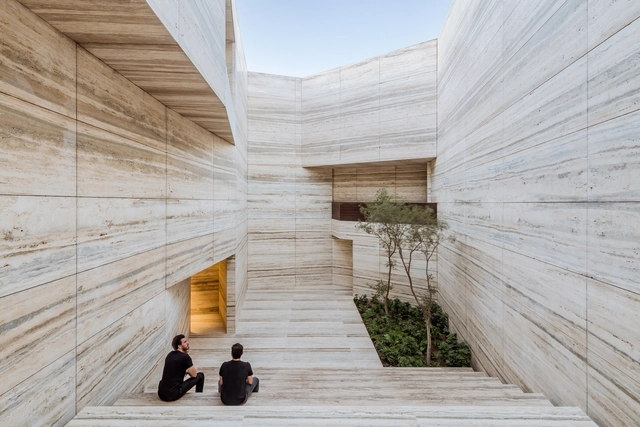
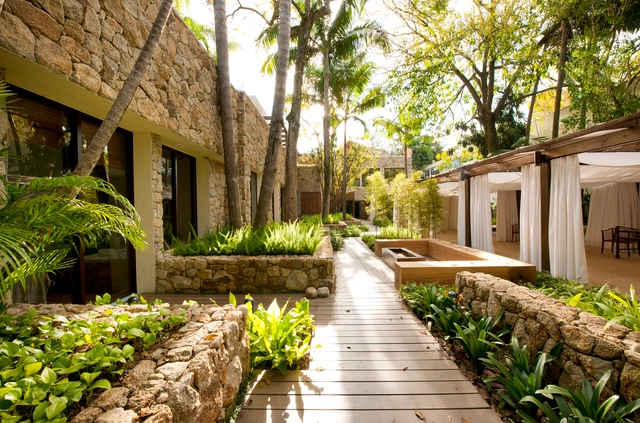
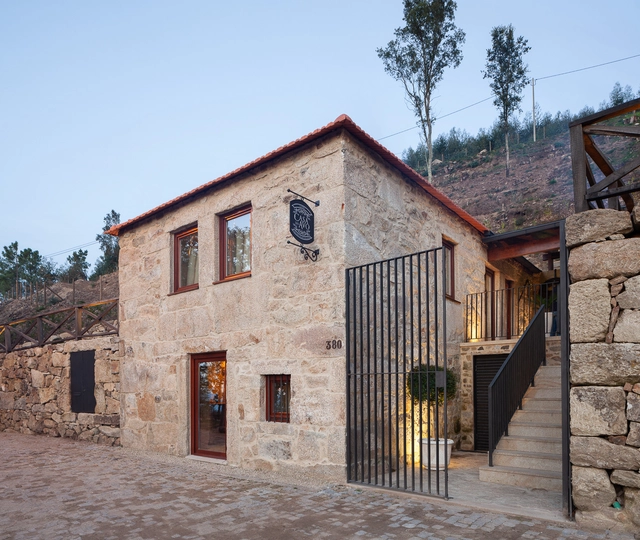
Because of their durability and strength, along with their varied designs and colors, stones have been used as building and cladding materials for hundreds of years. For floors, stone remains a noble and elegant option, which in addition to having high thermal inertia and structural stability, has a pleasant texture to the touch.
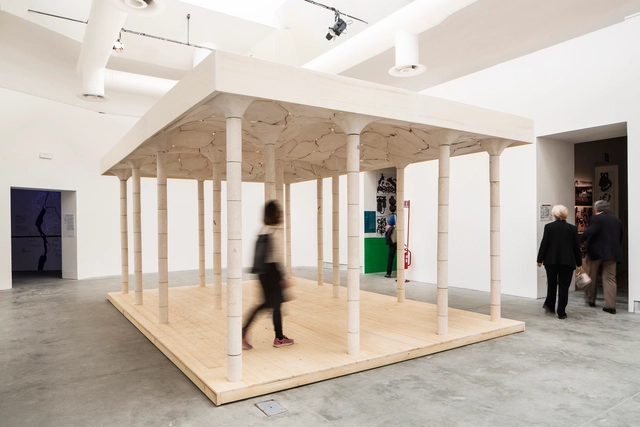
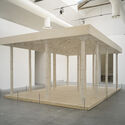
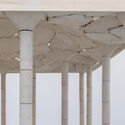
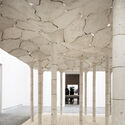
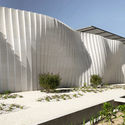
Having been invited to participate in the 17th International Venice Architecture Biennale, architecture and design practice AAU ANASTAS presents the exhibition All-Purpose, which translates the craftmanship of stone into a new form of contemporary architecture. Exhibited within the Giardini, the structure featuring an undulating parametrised stone slab supported by thin, slender columns is a material exploration that builds on the Palestinian construction tradition to create a new architectural discourse around stone.
Historically, "cyclopean" referred to a building technique that superimposed large stone blocks together without any mortar. This allowed for a diverse array of structures across various civilizations, including defensive walls, talayots, navetas, nuraghes, temples, tombs, and forts. Nowadays, the term applies to any ancient structure consisting of large stones superimposed to form a polygonal shape.
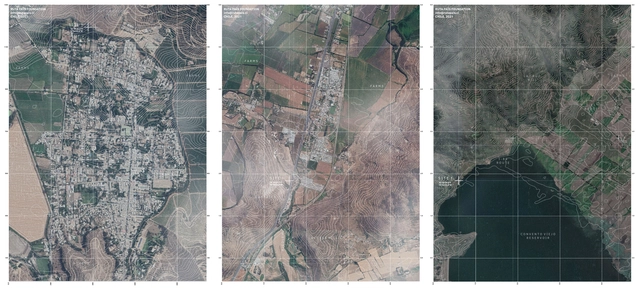
The Chilean organization Ruta Pais Foundation has invited international architects and local artisans to design a series of architectural interventions in order to create 3 artisan routes in the Chilean Central Valley: Wicker Route in Chimbarongo, Clay Route in Pomaire, and Stone Route in Pelequén.
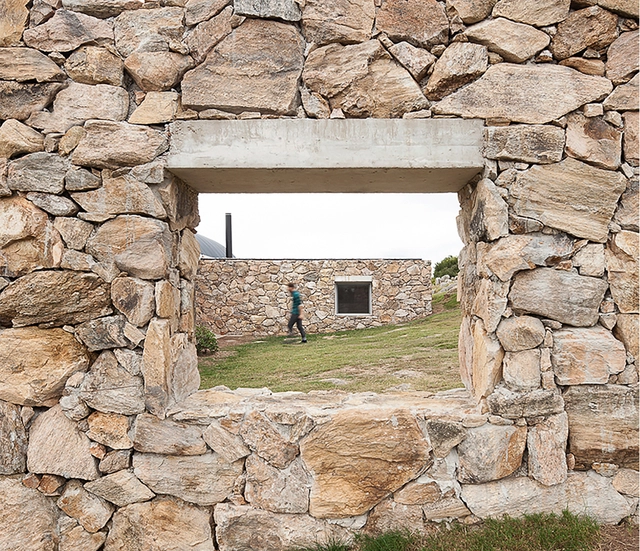
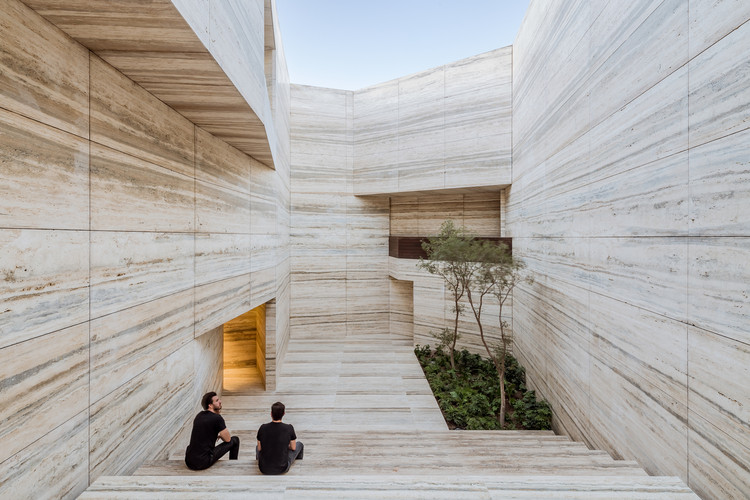
While stone has been used in construction since time immemorial, it's maintained its place in architecture thanks to its design capabilities, durability, and efficiency.
Designed by OMA / Chris van Duijn, the Department Store Galleria in Gwanggyo, south of Seoul has just opened. The store’s sixth branch is located at the center of the relatively young and new urban development.
Stone Tower Research Project. Image Courtesy of Groupwork
Groupwork, in collaboration with Jackson Coles, Eight Associates, Webb Yates, The Stonemasonry Company and Polycor, is investigating the possibilities to build large commercial buildings in stone, through the Stone Tower Research project and The New Stone Age exhibition.
This landmark exhibition at the Building Centre will explore the potential of stone to revolutionise architecture and construction in light of the current climate crisis. It may seem like an ancient building material but stone has serious sustainability credentials; with the ability to reduce a project’s embodied carbon by an incredible 90 per cent compared to typical steel or concrete frames. The New Stone Age will celebrate the sustainability, practicality and inherent beauty of the world’s oldest natural material.
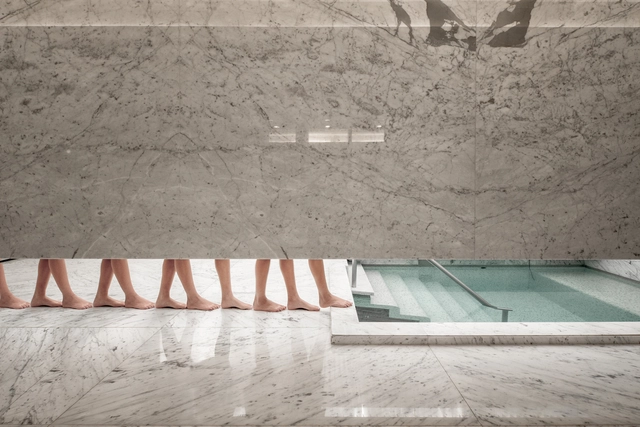
Michelangelo's sculptures. The ancient Greek temples. Castle interiors and palaces. The iconic Barcelona Pavilion of Mies van der Rohe. When we approach the history of architecture and sculpture, it is inevitable that we speak of marble. Originating from a chemical reaction in limestone when exposed to high pressures and temperatures for thousands of years, this notable material is a metamorphic rock generally found in regions where volcanic activity has occurred. Its extraction, by itself, is already a spectacle.
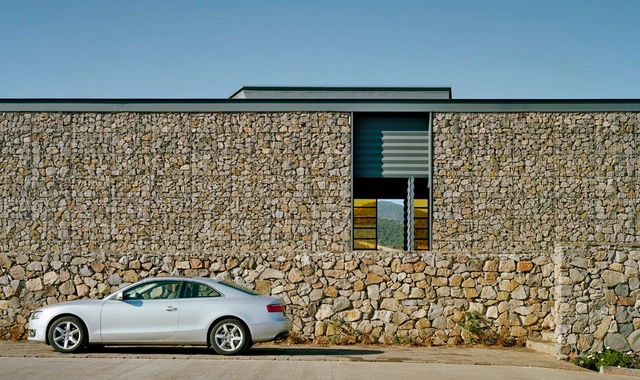
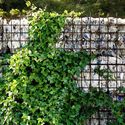
Widely used in infrastructure, gabion walls are structures made of mesh metal cages filled with stones. These permeable walls use galvanized steel wire to withstand outdoor conditions.
One of the most practical and functional spaces of any residential project is the kitchen. Its artificial surfaces – be it countertops, kitchen benches, or coverings – contain most of the space's equipment. Thus, it’s essential to build kitchens with the most resistant and hygienic materials. Aside from these requirements, it's also important to pay attention to aesthetics and profitability, while adapting the space to the dynamics of each family.