Renovating a space for a gastronomic purpose can be one of the most interesting challenges for an architect, due to the freedom of design that tends to characterize these projects. It allows us to play with cladding materials, lighting, and furnishings to create unique spaces that are both attractive and functional for both the restaurant team and the diners.
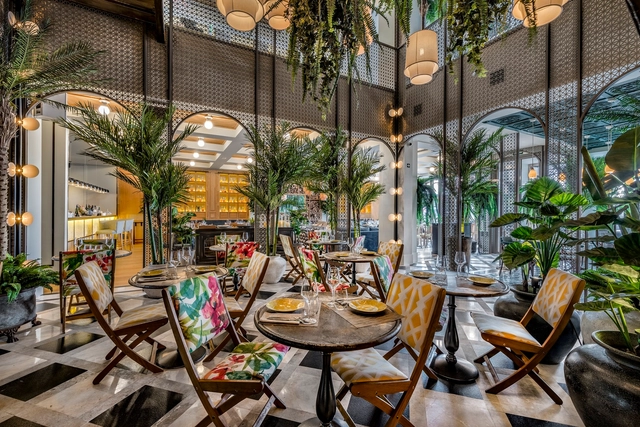
We dived into our project library to select 5 restaurants that took advantage of their renovations and complexities to create distinctive spaces, presented by ICEX e Interiors from Spain.
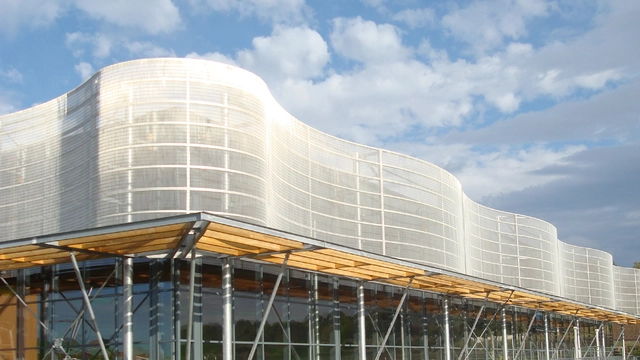
Rolling stainless steel wire mesh facade at Centre Aquatique, Vic-le-Comte, France. Image Courtesy of Haver & Boecker
From creating a new parking structure with an awe-inspiring aesthetic to retrofitting an existing building, architectural wire mesh provides versatility and durability which makes it unique from other design material options.
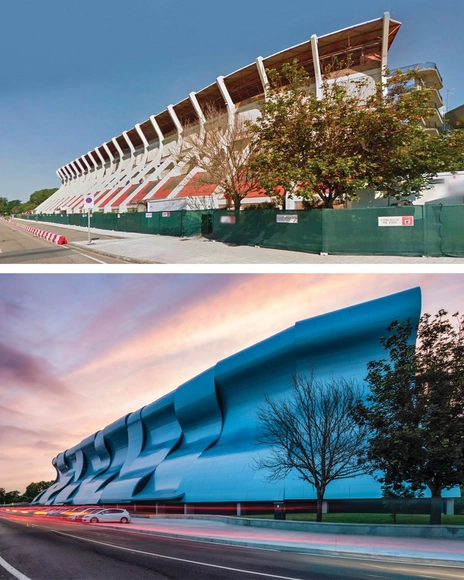
Estadio Municipal de Balaídos, Vigo, Spain / Pedro de la Puente Crespo. Image Cortesia de STACBOND
The task of rehabilitating buildings has been increasingly encouraged and celebrated for some reasons: first, by renovating and not demolishing, a large part of the material resources present are used, reducing the use and exploitation of raw materials and, in certain cases, the memory and the original urban fabric are preserved. A good rehabilitation also incorporates the modernization of the building to increase its energy efficiency, readjustment of facilities and the correction of pathologies, making it coherent with the demands of current users. For the building's owners and users, this means a better quality of life and, also very important, an appreciation of it. An element that plays a fundamental role in rehabilitation is the façade, which combines aesthetics and performance.
Cork is obtained from the bark of the cork oak, a slow-growing tree in the Mediterranean region that lives an average of 200 years. The valuable property of the cork oak is that it regenerates itself. After each peeling, the bark grows back. Therefore, no tree is cut down or permanently damaged for the cork harvest. In addition, a peeled cork tree binds more CO2 than an unpeeled tree.
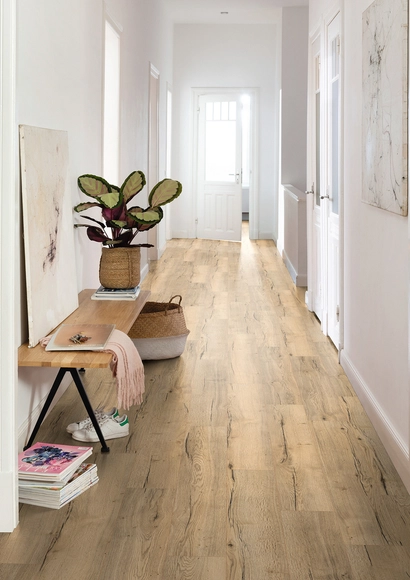
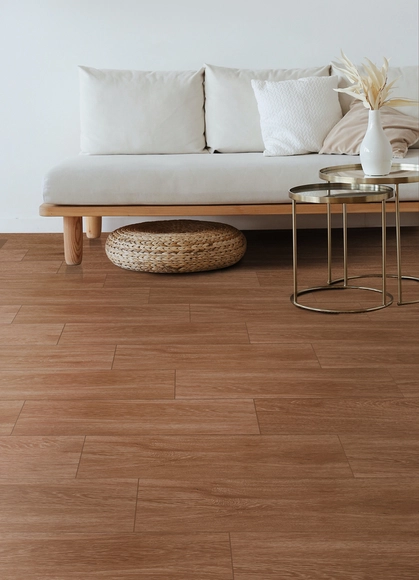
Combining the benefits of laminate with the special properties of cork, EGGER Comfort flooring is made up of two layers of cork that provide warmth and special comfort when walking, coming from sustainable forestry.
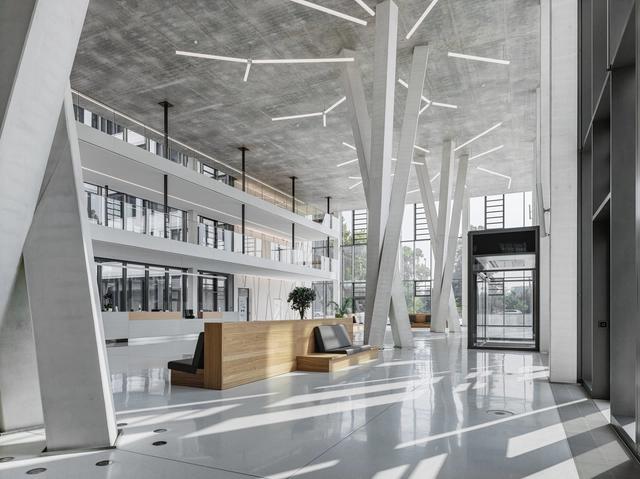
The new headquarters of the building materials manufacturer HeidelbergCement consists of three interconnected building sections of different heights. The atrium of each building section provides plenty of light and luminance. The building was opened in June 2020 and provides up to 1,000 employees with a state-of-the-art work environment. The architectural firm AS+P Albert Speer + Partner based in Frankfurt was responsible for the project as a general planner, and carried out the design in collaboration with W+Architektur, with the latter providing the consulting office for the client’s project manager.
PERI, one of the leading formwork and scaffolding manufacturers worldwide - and the building materials manufacturer HeidelbergCement - combined their architectural and concrete expertise for the execution of this project. In doing so, the existing limits of PERI’s concrete construction offerings were pushed. The architectural highlights of the project were successfully realized using special PERI formwork elements.
Considering our present time, the COVID-19 pandemic will likely have a lasting influence on the next era of building and design, shaping how we build at every phase, including design, materials, and building protocols. We may see architects and engineers continue to work remotely, reviewing designs and specifications virtually. Manufacturers may have to space production areas farther apart or even rely on more automation.
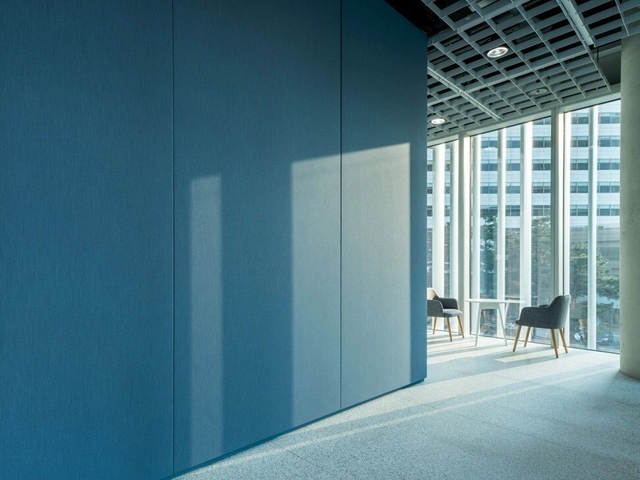
Acoustic comfort is affected by the levels and the nature of the sound experienced in an interior space, measured in decibels. The functionality and aesthetics of working and living spaces are usually the primary focus of the designer, however, too often overlooked, are the factors contributing to the productivity of employees or the comfort of residents. Providing a comfortable acoustic environment contributes significantly to the overall mood and health of people operating within it.
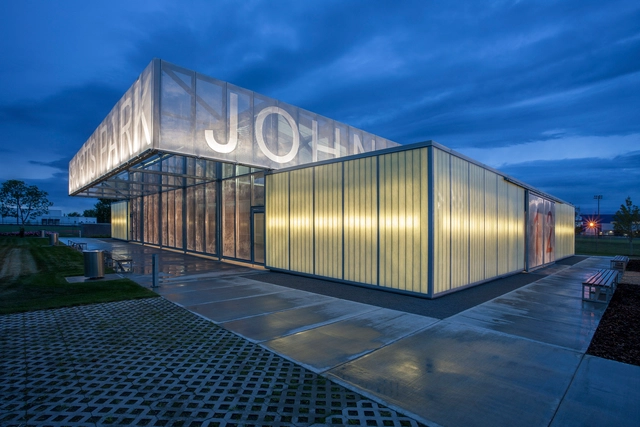
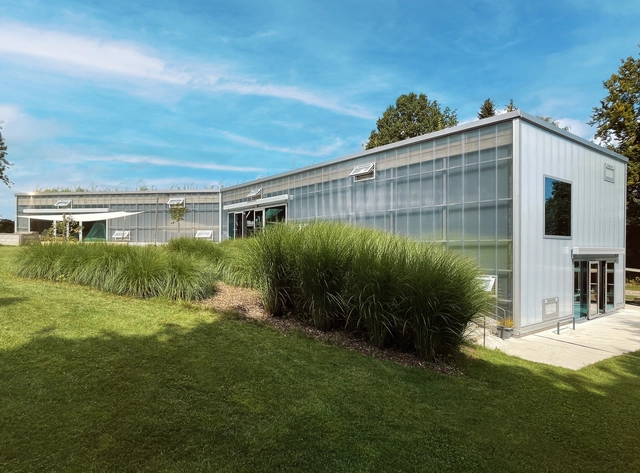
Climate and resource protection are some of the most pressing issues in regards to our future world. This is not a singular issue, but a complex one that affects every sector of humanity including mobility, architecture, sustainable living, and learning. There is a common misconception that building materials - such as polycarbonate translucent panels - cannot be sustainable. Plastic as a material has such an enormous impact on the world, and has drawn negative attention which makes it difficult to break away from the generalization that plastic is fundamentally "bad." Companies such as Rodeca, for example, in the plastics production space have engineered translucent building materials that are capable of enduring for many years as an integral construction material, and do not have to be quickly disposed of. As a producer of polycarbonate panels, Rodeca is always looking ahead to the future of sustainability.
Working smarter, not harder is the goal of every business; but in architecture, where margins can be thin, it’s an imperative. So how do firms work smarter without spending tons of time wising up? By leveraging artificial intelligence—or AI.
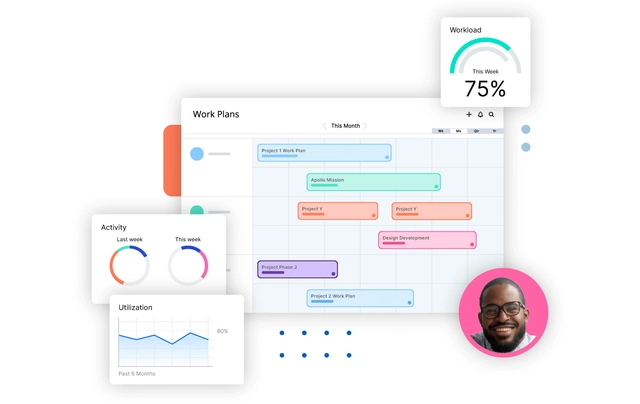
Put simply, AI analyzes huge datasets to solve the historically unsolvable. AI unburdens people from time-consuming activities, like planning projects and work. Our brains aren’t wired to manage dozens of conflicting schedule dates, projects, and staff. But Mosaic—AI-powered resource management software—is here to help architects effectively plan.
Monograph—a leading practice operations platform designed to help architects and engineers oversee projects, timesheets, and forecasts in one integrated and simple interface—has launched its latest add-on feature, Planned Profit Report and Profit Drivers. During the company’s first-ever virtual conference, Section Cut, in August 2021, Monograph announced the introduction of Planned Profit Report and Profit Drivers, designed to provide architecture and design firms with a better understanding of their profitability.
The boundaries between different kinds of spaces are not as defined as they used to be. All around us, we are witnessing examples of blurred boundaries between private and public spaces, interiors and exteriors, and formal and informal spaces and so on.
With the increasing availability of space travel on the rise, living with access to the Moon may no longer be a science fiction fantasy. For decades, Equitone has gathered inspiration for the future by the appearance and raw materials of Earth. Now, reflecting the fascination with what lies beyond our own atmosphere, its new Lunara façade panels appear both otherworldly and yet natural at the same time. Its unique surface, covered with tiny irregular elevations and depressions, is reminiscent of the cratered landscape of the Moon and invites architects and planners to design visionary building envelopes.
Sky-Frame Swiss-made frameless windows and sliding doors continue to revolutionize the transition between indoors and outdoors, by providing unbounded spatial experiences with spectacular vistas.
We would like to invite you to our second event in collaboration with The Developer UK, a publication for enlightened real estate developers working in the private and public sector along with their investors, local government, architects, placemakers and project teams.
The A’ Design Award was "born out of the desire to underline the best designs and well-designed products." The A' Design Award, recognizing the excellent and original talent from across the globe, is both a major achievement for designers and a source of inspiration for award-winning architects, brands, and design agencies. Entry and nomination are open to contestants from every country. Registration for the A' Design Award & Competition 2021-2022 period is now open. Register and upload your design here, and receive a complimentary preliminary score.
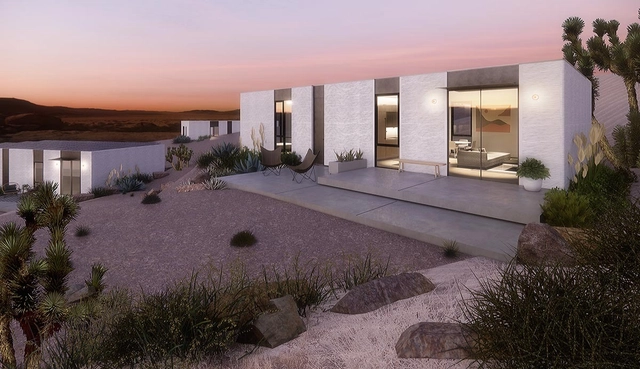
The Mighty House Single Family Home and ADU designed by EYRC Architects. Rendered in Enscape. Image Courtesy of EYRC and Mighty House
Why is 3D-printed architecture on the rise?
According to a July 2021 report by Grand View Research, the global 3D construction market is set to grow by an incredible 91% between 2021 and 2028. And, why is printed architecture seeing such rapid growth? Firstly, 3D printing is emerging as a possible solution to some of the challenges currently facing architecture, engineering, and construction (AEC) – it can provide affordable housing, shelters for disaster-hit regions, and an answer to sustainable construction. Alongside these, one of the main advantages is the lower construction costs. It’s far easier to calculate the actual volume of construction material required, resulting in less waste.
https://www.archdaily.com/968146/building-the-future-with-3d-printing-and-real-time-visualizationGemma Falconer Da Silva
Graphisoft, the leading Building Information Modeling (BIM) software solution developer for architecture, has announced the full speaker list and final agenda for the Building Together 2021 conference. Scheduled for September 14-16, the carefully curated online program will cover a range of topics of interest to today’s AEC professionals, including sustainability, integrated design, Building Lifecycle Intelligence, and the future of architecture education.
In an effort to create a high-impact solution during the current global pandemic, the Peru-based Grupo LAMOSA decided to generate a line of ceramics with antiviral properties of Copper Nanoparticles (NanCu). The team decided tokick-off the distribution of BIO-C29 technology through its range of BIO-CER products. This solution was achieved through a collaboration between Mauricio Méndez (Industrial Director) and Jenny Morales (LATAM Technical Manager) from Cerámica San Lorenzo-Grupo LAMOSA, in conjunction with Nano Quantum Group SpA. The result is a capable protective layer that considerably eradicates infectious agents, creating disinfected architectural spaces free of health hazards.