cove. tool's core mission is to fight climate change by helping architects, engineers, contractors, and developers use data-driven design through automation and cost optimization. Creating a competition premise that called attention to this critical issue was important. With the recently published landmark Intergovernmental Panel on Climate Change's (IPCC) 2021 report that warned of increased extreme heatwaves, droughts, and flooding, as well as a key temperature limit on track to be broken in just over a decade, it further highlighted the urgency. As climate change intensifies, housing stability will be increasingly under threat. These two inextricably linked issues had the potential to spark innovative ideas from the international design community and community-at-large. With the sizeable grand prize of $50k, the goal was to solicit entries from all over the world and help facilitate more conversations about carbon positive, affordable housing that could be replicated in multiple neighborhoods, cities, and countries. Sustainability and affordability are often two topics that are at odds. However, this competition proved that there are creative solutions to complex problems.
Climate change, the scarcity of resources, and urbanisation are hot topics in the building and construction industry. In this context, the importance of sustainability cannot be overemphasised: almost 40% of global CO2 emissions and 36% of global energy usage is associated with building and construction. These figures clearly illustrate the increasing need for more sustainable solutions in the industry.
Companies that play an active role in the building industry have a responsibility to pave the way toward a more sustainable future. This is why partners like Uponor, one of the leading international providers of solutions that move water for buildings and infrastructure, strive to help customers in Europe to choose the perfect solutions for greener building designs.
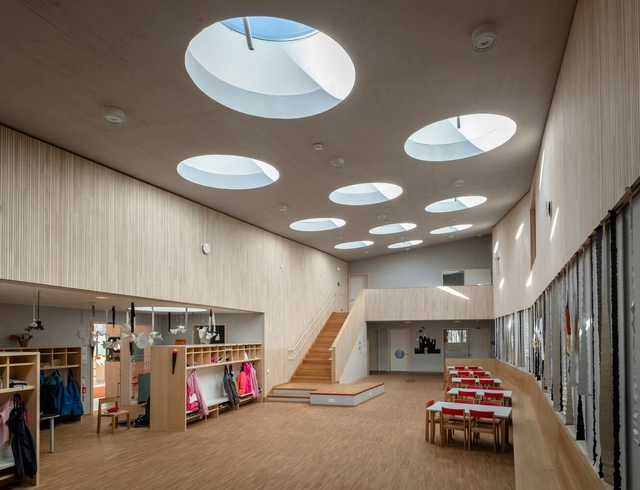
Kindergarten “St. Severin”, Garching. Image Courtesy of LAMILUX
Our environment influences how we feel; we have all experienced this. For students, it is easier to study in a bright place, artists look for inspiring atmospheres, and our mood can improve with the right color scheme. These aspects are also important for kindergartens, daycare centers and schools, because a child-friendly design can stimulate the curiosity and imagination of children, so that they learn in a playful way. The design of a room supports the learning and creativity of children. Daylight systems, for example, flood rooms with light, making them appear larger and friendlier.
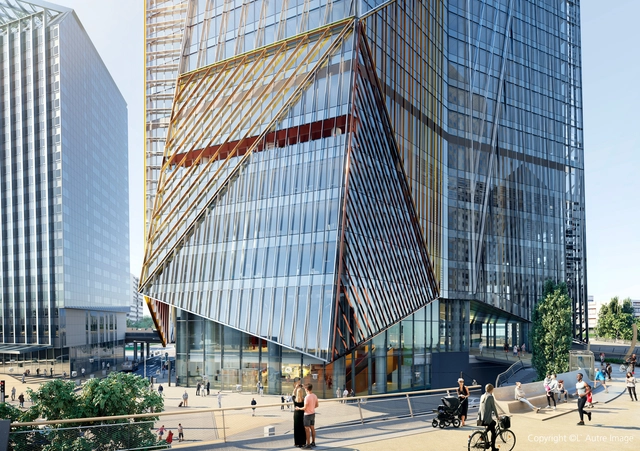
Overtaking the Tour Firstskyscraper, the 48-story, 220-meter HEKLA Tower will be the tallest building in Paris’s La Défense business district, as well as the second tallest building in all of France. Currently under construction and designed by Pritzker prize-winning Jean Nouvel, it is set to become a powerful architectural statement. Due to complete this 2022 in the midst of the sector’s redevelopment program, the futuristic skyscraper spreads over 76,000 sqm of floor area distributed in offices, services, lobbies, an amphitheater, projection rooms, performance halls, restaurants, bars, gyms and loggias. All of this with the aim of providing a unique user experience with vast, flexible workspaces that promote interaction and well-being.
Videos
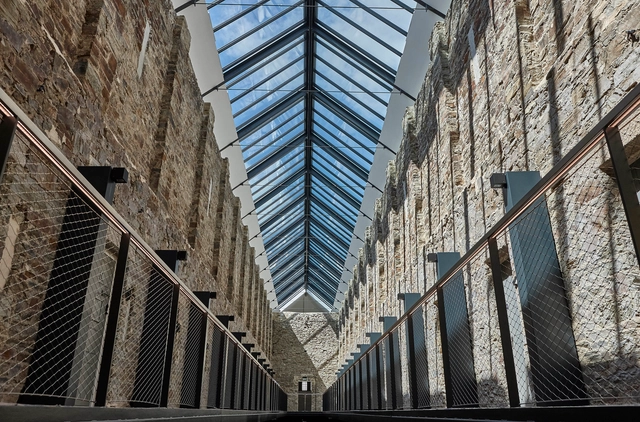
The Bodmin Jail Hotel. Image Cortesia de VELUX Commercial
Commercial building refurbishment projects present architects with design challenges. Transforming 18th century Bodmin Jail into a modern hotel meant an acknowledgement of restrictions in relation to the building’s infrastructure. Listed buildings often have construction regulations to preserve historic and architectural interests, impacting thermal comfort and how daylight is introduced to transform building spaces.
These design challenges can make architectural planning appear more complex, particularly when a building is being repurposed. Common challenges include sourcing materials to replicate or meet existing infrastructures. The adaption of floor plans, consideration of user comfort and introduction of technology in planning phases, also influence contemporary design. The Bodmin Jail Hotel required skylight installations that could work within an existing and iconic sloping roof.
Wolf Trap National Park for the Performing Arts – Vienna, Virginia | FlexShade® ZIP | Dealer: Goodwin Bros. Shades and Specialties | Photographer: Alan Wycheck – alanwycheckphoto.com. Image Cortesia de Draper
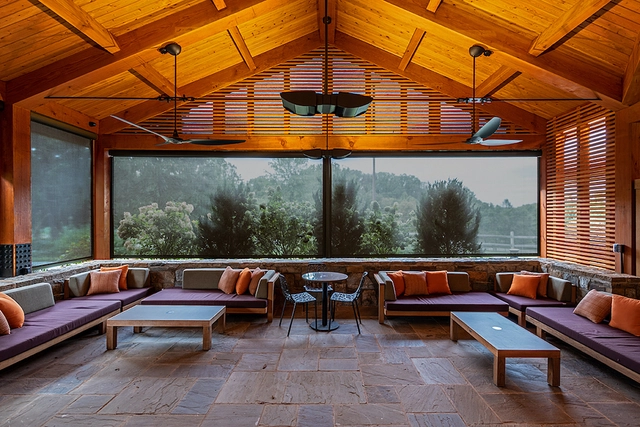
Comfortable outdoor spaces are more desirable than ever. Over the past couple of years, people have been spending more time at home, connecting with nature from the relative comfort of covered balconies, patios, and pergolas. But even with pleasant views, cooling breezes, and the warmth of the sun, covered outdoor spaces can be uncomfortable. Temperature variations, glare, rain, and wind quickly create an unpleasant experience. In warmer climates, insects can be an additional a nightmare.
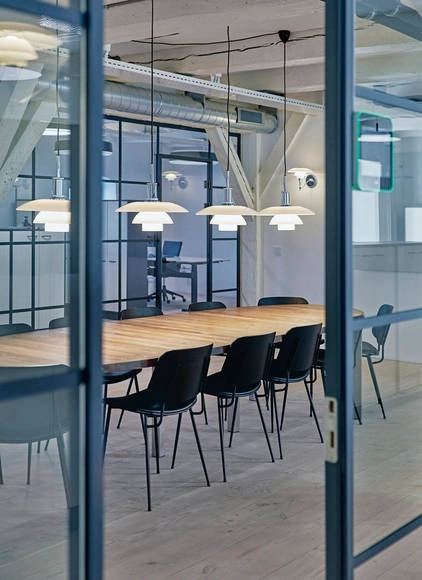
In recent years, there has been an increased focus on indoor lighting, especially in the context of the growing numbers of open-plan offices. In large parts of the world—and especially in Nordic countries—people can spend up to 80-90% of their time indoors. The light we are surrounded by affects both our circadian rhythm and hormones, making our indoor environment and its light an important factor of our well-being. Opinions on the optimal indoor lighting solution—and if one exists at all—are numerous and divided. To gain some more insight into this, the Danish lighting manufacturer Louis Poulsen set out to test the effects of various artificial lighting conditions in their own head office in Copenhagen.
Parametric design render by Oneistox graduate Alab Adviento. Image Courtesy of Oneistox
Although computational design as a technique applied in the architectural field has been around for two decades, the infinite possibilities it presents are only just being discovered. The horizons of designing using programming software are expanding alongside the growing popularity of tools like Rhino 3D and Revit. What aspiring architects will hereon have to be mindful of as they train themselves for the industry is that computational design software is not to be treated as a ‘to-do item’ to be ticked off for only adding to one’s résumé. Rather, it’s an opportunity to delve deeper into one’s creative instincts.
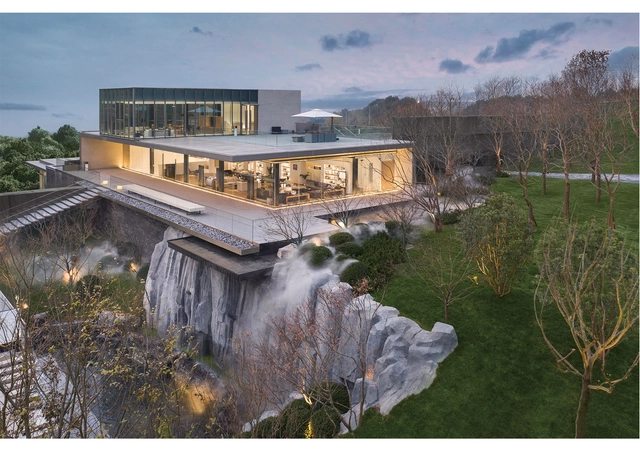
Chongqing GREENTOWN COLLECTION Sales Center. Image Courtesy of goa
The registration for the international ICONIC AWARDS 2022: Innovative Architecture is on. The awards of the German Design Council honour the best achievements in architecture, pioneering interior and product design, outstanding communication concepts and particularly innovative materials. The winners will be honoured at a festive awards ceremony on 4 October 2022 at the Pinakothek der Moderne and will have the opportunity to network internationally.
As part of a major initiative to modernise schools and educational facilities in the city of Düsseldorf, the Friedrich-Rückert grammar school renovation represents a first step towards the future. In addition to renovating the interior of the school, much work was done to make the exterior of the aging building look more modern, inspiring and inviting. The new 3,000 m2 facade made of glassfibre reinforced concrete panels from Rieder bridges the architectural gap to the here and now. The innovative concrete is a symbolic step towards sustainability, fit for a modern school building. The new texture twine was also used for the first time in this project for the colour-matched formed parts, skilfully highlighting the building envelope.
“I’ve always been quite interested in keeping up with what’s happening on a technical front,” said Nick Lawrence, a practice director at A&Q Partnership in London. The architect, who studied engineering in undergraduate school, leads the building information modeling (BIM) effort at A&Q Partnership and says his studies greatly influenced his interest in information modeling.
His interest extends beyond personal. Relying on BIM framework has been crucial for A&Q Partnership, who work on large, multi-building commercial and residential projects.
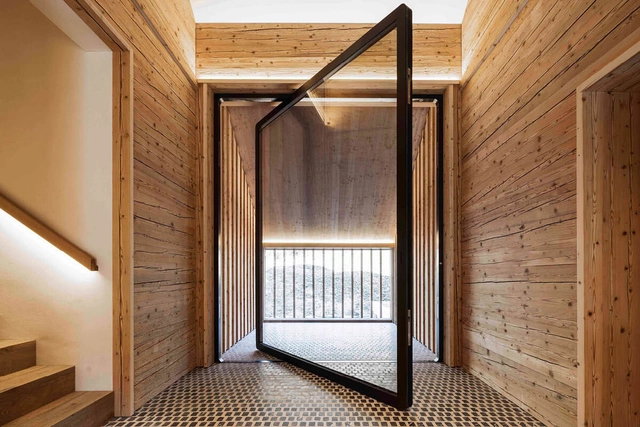
Exterior doors provide a sense of security and define first impressions, which is beautifully demonstrated in the pivot door presented above (designed and crafted in Europe by Air-Lux). On the other hand, inside of a house, interior doors are capable of generating privacy, buffering noise, separating rooms and enhancing a room’s architecture. Therefore, in order to fulfill these needs – and considering that they are used multiple times a day – interior doors must be durable and timeless without sacrificing beauty and style. Among all the options that meet these criteria, pivot doors stand out because of their elegant movement, aesthetics and versatility. With a sleek contemporary design that exceeds the regular function of a traditional door, these swinging doors rotate on a vertical axis with nearly invisible hardware, taking on any type of décor, use and measurement with endless creative possibilities.
We are all experienced and we have all done it! I am referring to one's reaction to less than good lighting of course. Think about it.
We have all experienced architectural spaces wherein something about the lighting is not quite right. It could be any of the following issues, to name a few: appearance, color quality, controllability, emphasis or lack thereof, flicker, harshness of shadows, lack of shadows, illumination levels on horizontal and/or vertical surfaces, luminaire placement, proportions, and/or scale. Any of these issues can be perceived as bad lighting.
A new place for design - State of Address (SOFA) - is a world-first design community on the blockchain, shifting how design and architecture is made, owned and collected.
Founded by four Melbourne entrepreneurs - Chris Stribley, Domenic Cerantonio, AJ Batra and Anmol Sekhon - SOFA uses non-fungible tokens (NFTs) to turn products of architecture and design into tokenized and investable assets that are unique, scarce, and transferable. All of which provide a plethora of digital and physical utility and have the potential to be on-sold for longer term gain.
Nordic Structures. Image Courtesy of Quebec Wood Export Bureau
Offsite construction is a fast-growing sector within the global building construction industry. With that growth, many challenges lie ahead for all parties involved, especially architects, who have traditionally remained at arm’s length to the means and methods of construction. Cost challenges have led many firms to want to learn more about optimizing for offsite delivery methods. To help speed up industry transformation, a cooperative and open-source initiative led by the Quebec Wood Export Bureau has been developing a suite of nonprofit and collaborative tools for architects. At www.offsitewood.org, they offer a free Revit plugin, detailed content packs, and a BIM-integrated early-phase embodied carbon estimator called Carbon Fixers.
Real-time visualization is used to generate renderings with excellent visual quality from a BIM or CAD model. When integrated into your design workflow, it can also facilitate collaboration and allows all parties within an architectural project to engage throughout the design process.
Here are five ways in which integrating real-time visualization can provide a complete understanding of design at various project stages.
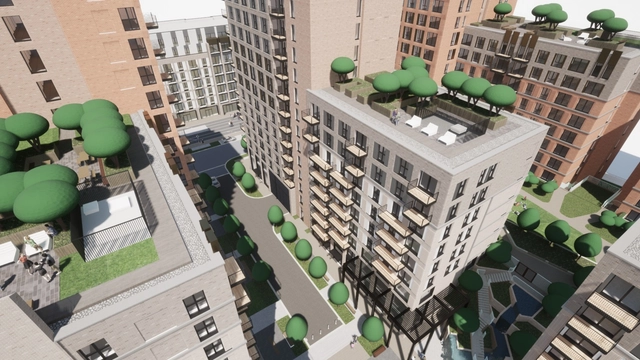
Affordable housing has become an increasingly dire global issue. Be it rent or homeownership, the unaffordability of homes has been on the rise. A look at U.S. Census data illustrates a sharp decline in homeownership in recent decades. Although Millennials were the most populous generation by 2019, they only contributed to homeownership at a rate of 47.9%. Contrastingly, Gen-X’s homeownership rate stood at 69%, following the silent generation at 77.8%. Trends of generational decline in homeownership are mirrored in other parts of the world, such as in the U.K. where rates have steadily dropped from 71% in 2003 to 64% by 2018. Many experts point to affordability as a large reason for this decline.
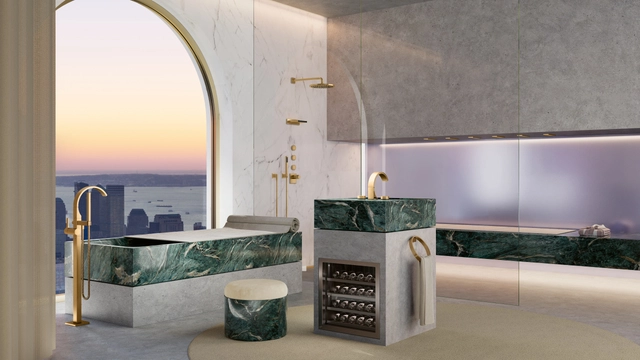
CYO Metropolitan bathroom. Image Courtesy of Dornbracht
As cities become denser and the pandemic continues to shape living and working patterns, people have become well aware that the space they inhabit greatly influences their physical and mental well-being. As a result, the interior design of homes has focused on promoting sensitivity, comfort and calmness as a way of escaping the uncertain outside world. As a safe space where we practically start and end each day, the modern bathroom has also adapted accordingly, taking on a key role as an environment dedicated to relaxation and self-care. Hence, what used to be a purely functional zone is now perceived as an energizing personal retreat and flexible living space that can even adopt other functions – from a gym to a private spa.