
-
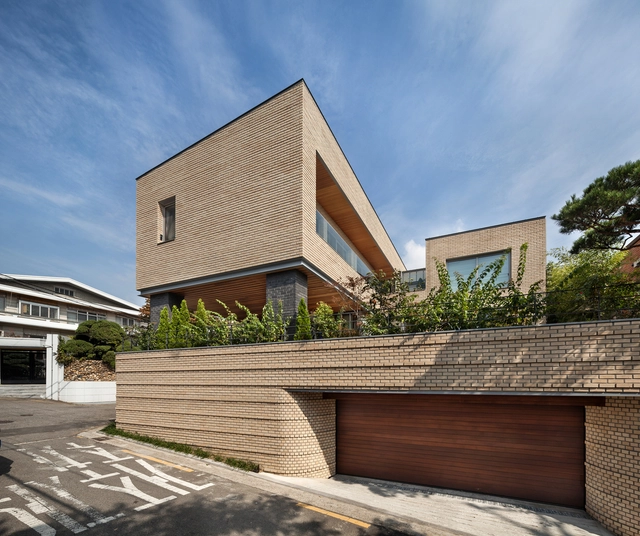
Architects: Urbansociety
- Area: 326 m²
- Year: 2017
-
Manufacturers: CN Window, NS Home, Sunjin
-
Professionals: Yusong Engineering



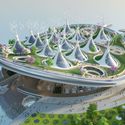
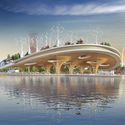
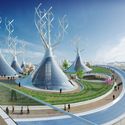
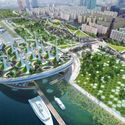
Vincent Callebaut Architectures have developed a design plan reimagining the riverbank of Yeouhido Park, Seoul. The park is envisioned as an experimental urban space dedicated to sustainable development through a series of interventions - including a floating ferry terminal. Named the “Manta Ray,” the ambition of the proposal is to transform the park into an ecological forest of trees, enhancing its natural irrigation and strengthening the banks from floods. The “permeable landscaping” seeks to reduce floods and rehabilitate urban ecosystems that have become fragmented through Seoul’s rapid built expansion. The vegetation-dominated strategy also seeks to reduce the urban “heat island” effect Seoul has been experiencing due to climate change over the past decades.

A Swiss Room to Showcase Lausanne’s Candidature to organize the 28th UIA Congress.
The challenge posed by this competition is to design a place object which encapsulates the ideas behind the topic of “Architecture and Water”. It involves creating a place to showcase Lausanne’s Candidature which offers an intuitive approach to the multiple ramifications of this topic. It should, effectively, act as a laboratory of ideas. This place-object must be able to house a table and 4 chairs for discussions, presentation of the candidature, etc. It will be located in the hall of the Convention center in Seoul.
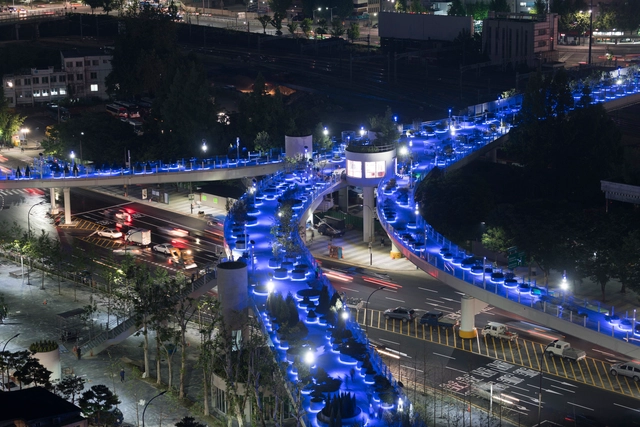
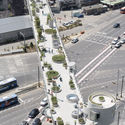
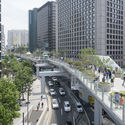
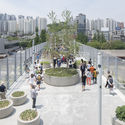
Today the Mayor of Seoul opened the Skygarden, a 983-meter elevated walkway designed by MVRDV which utilizes a formerly abandoned highway in the center of the South Korean capital. Located in Seoul's Central Station district, the 16-meter-high linear park features a living catalog of Korea's indigenous plants, featuring over 24,000 individual plants from 228 species and sub-species. The Skygarden is known in Korean as Seoullo 7017, a name which references the Korean for "Seoul Street," and the 1970 and 2017, the years in which the structure was originally built and subsequently transformed.
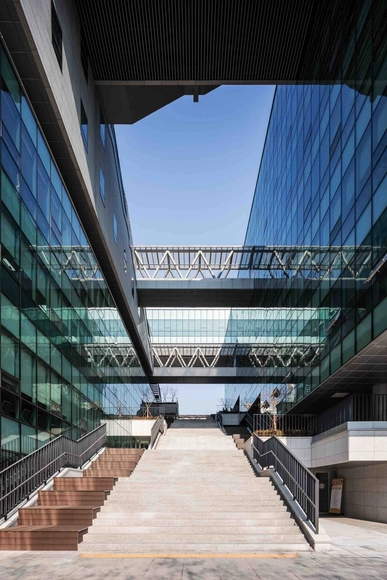
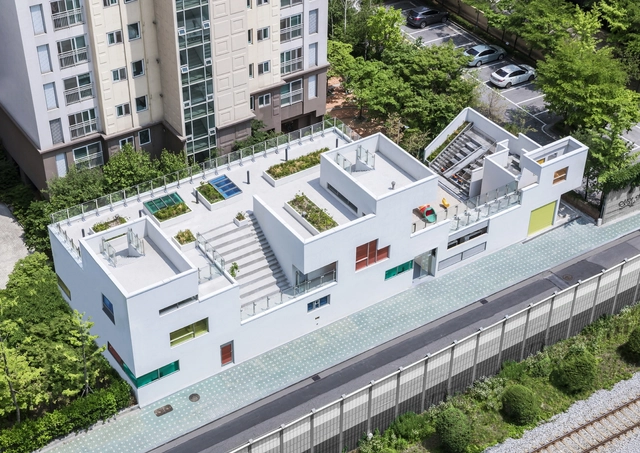

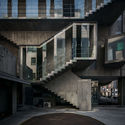
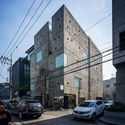
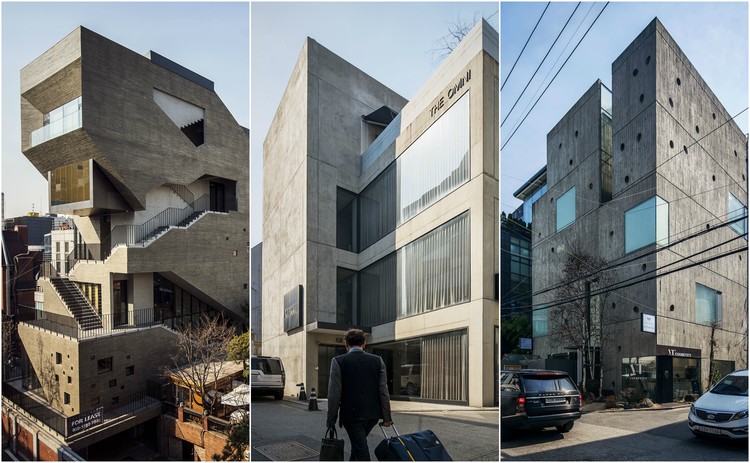
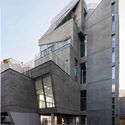
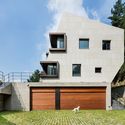
During his frequent travels to Seoul, Hong Kong- and Singapore-based photographer Raphael Olivier noticed a new trend taking the South Korean capital: a crop of geometric, concrete buildings of all genres. He calls the new style Neo-Brutalism, after the modernist movement that proliferated in the late 1950s to 1970s, in which raw concrete was meant to express a truth and honesty. Olivier's observation led him to capture the phenomenon in a personal photo series—a photographic treasure trove of these projects which, when taken as a whole, uncovers a cross-section of this trend in the city's architecture.
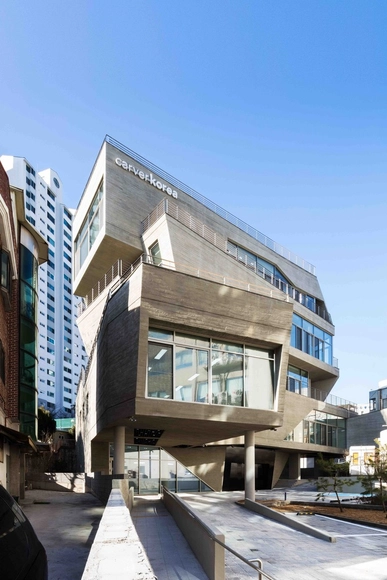
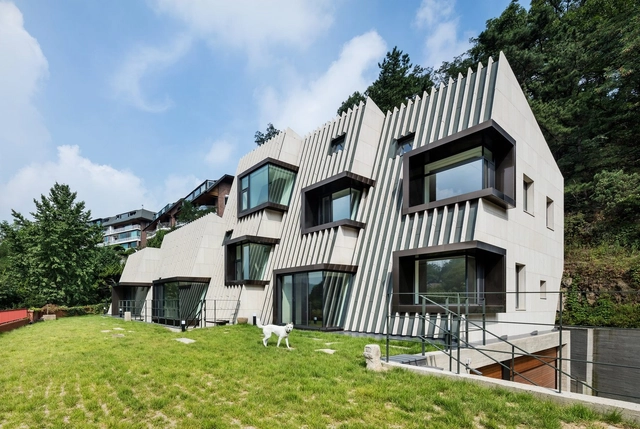
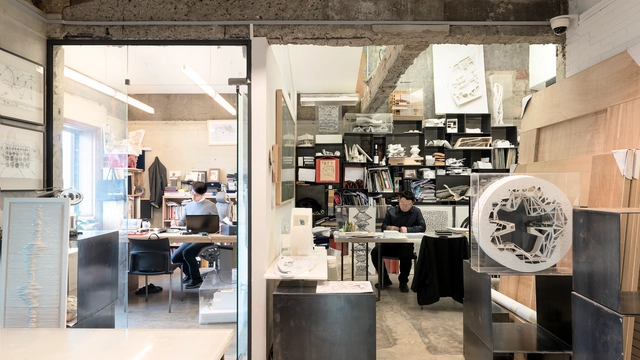
Architectural photographer Marc Goodwin, in cooperation with Felix Nybergh, has recently completed the fourth collection of his "ultra-marathon of photoshoots" – this time in Seoul. Following Goodwin's unique insight into the spaces occupied by Nordic architectural offices (based in Oslo, Stockholm, Copenhagen and Helsinki), his look at studios both large and small lived in by London-based practices, and his lens on a collection of Beijing-based studios, he and Nybergh have now turned their attention to the rich architectural scene of the South Korean capital.
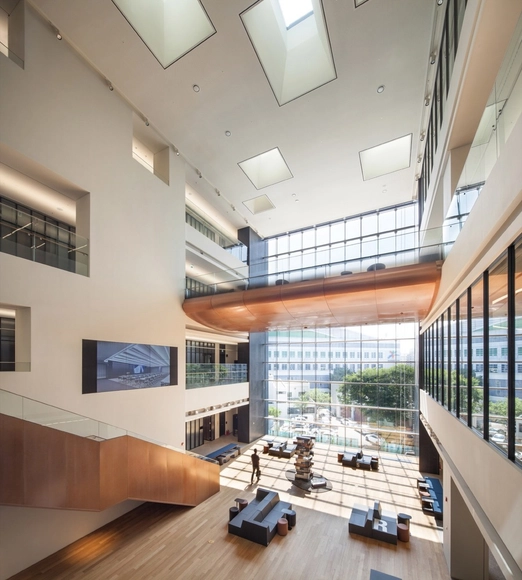
Lotte_Group.jpg?1491409215&format=webp&width=640&height=580)
KPF’s Lotte World Tower in Seoul, South Korea is officially complete, according to criteria established by the the Council on Tall Buildings and Urban Habitat (CTBUH). At 555 meters tall, the building becomes the tallest building in Korea (250 meters taller than the previous tallest building, Northeast Asia Trade Tower) and the world’s new 5th tallest building.