1. ArchDaily
  2. Robert Stern

Robert Stern: The Latest Architecture and News

Farewell to Masters: Remembering the Architects We Lost in 2025

Every year brings new ideas, projects, and shifts in architectural culture, but it also marks the loss of voices that have shaped the discipline across decades. Architecture moves forward, but it also advances through absence. When figures who helped articulate its language and its ambitions disappear, they leave behind more than completed works or influential texts. Their absence becomes a threshold, a moment in which the discipline pauses to understand what remains, what evolves, and what continues to guide us. These moments of loss remind us that architecture is a long, collective construction, carried not only by those shaping the present but also by those whose visions continue to orient how we think about cities and landscapes.

The architects and thinkers we lost in 2025 came from remarkably different worlds, yet the questions that shaped their work often intersected. Some approached the city through identity, symbolism, and historical continuity, seeking to ground the built environment in cultural memory. Others interpreted it through engineering precision, ecological systems, or radical experimentation, expanding what architecture could be and how it could be experienced. Their work spans contexts as diverse as postwar Britain, rapidly urbanizing China, Central European avant-gardes, and the evolving cultural institutions of Berlin and New York. Together, they form a spectrum of responses that defined, and continue to define, architectural culture over the last half-century, revealing the multiplicity of ways in which architecture can engage with society, technology, and the environment.


Farewell to Masters: Remembering the Architects We Lost in 2025 - Image 1 of 4Farewell to Masters: Remembering the Architects We Lost in 2025 - Image 2 of 4Farewell to Masters: Remembering the Architects We Lost in 2025 - Image 3 of 4Farewell to Masters: Remembering the Architects We Lost in 2025 - Image 4 of 4Farewell to Masters: Remembering the Architects We Lost in 2025 - More Images+ 33

On Juneteenth, Discover 8 Museums and Cultural Institutions Dedicated to African American History and Culture

Subscriber Access | 

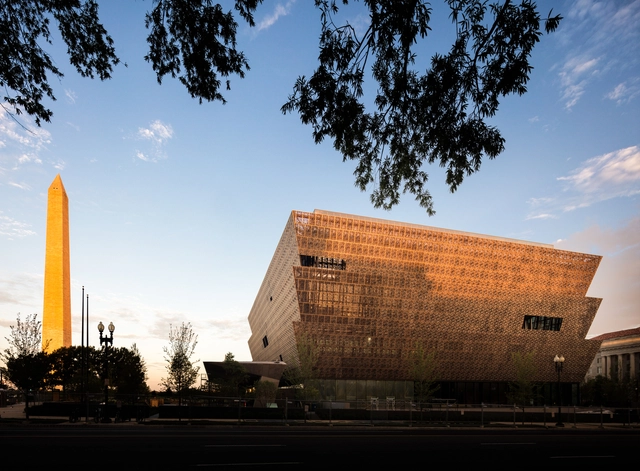
Juneteenth, observed annually on June 19th, commemorates the emancipation of enslaved African Americans in the United States, marking a moment of liberation and reflection on a complex and often overlooked history. Originally celebrated in Texas, Juneteenth has grown to symbolize broader themes of freedom, resilience, and cultural identity, fostering conversations about justice and representation. This day also presents an opportunity to highlight the ways in which architecture can serve as a medium for preserving and presenting African American history and cultural values.

Architecture, beyond its functional and aesthetic qualities, can reflect and collect narratives, values, and hidden histories, giving a tangible and visual presence to communities often underrepresented in cityscapes. Buildings dedicated to African American history and culture become physical landmarks that anchor these stories within the daily life of cities. They serve as places of learning, reflection, and celebration, creating meaningful spaces that engage the public and foster a sense of communal identity.

On Juneteenth, Discover 8 Museums and Cultural Institutions Dedicated to African American History and Culture - Image 1 of 4On Juneteenth, Discover 8 Museums and Cultural Institutions Dedicated to African American History and Culture - Image 2 of 4On Juneteenth, Discover 8 Museums and Cultural Institutions Dedicated to African American History and Culture - Image 3 of 4On Juneteenth, Discover 8 Museums and Cultural Institutions Dedicated to African American History and Culture - Image 4 of 4On Juneteenth, Discover 8 Museums and Cultural Institutions Dedicated to African American History and Culture - More Images+ 9

This Week in Architecture: What Makes a Place?

Subscriber Access | 

It’s well understood that a sense of place is an essential value for people, architecture, and cities. Everyone from designers to planners to city governments speak breathlessly of the power of places to transform cities for the better - but it’s not clear what placemaking really means.

Robert A.M. Stern: Old-Fashioned yet Unfazed

In the mutable world of architecture it's easy to get distracted by the trendy new thing, be it the tallest tower or the "blobbiest" form. Robert A. M. Stern (Dean of the Yale School of Architecture and a practicing architect in his own right), on the other hand, remains purposefully old-fashioned (to the point of becoming obsolete). In an exquisitely written article for the New York Magazine, Justin Davidson reports that, despite the mockery of his colleagues, Stern seems unfazed. If his architecture has the power to inspire, he says, then he's done his job. Read the full must-see article here.