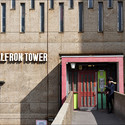

-
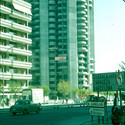
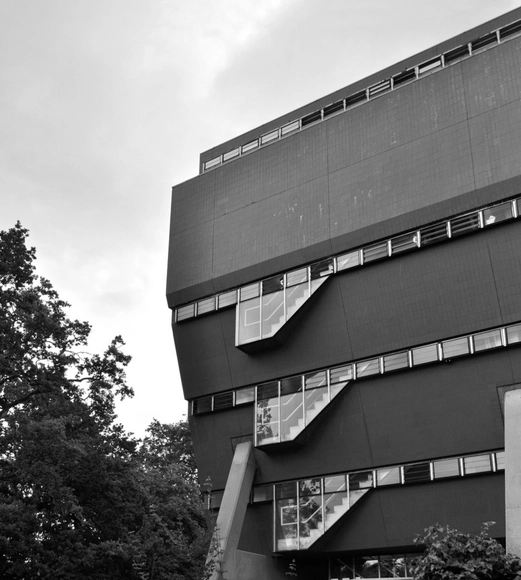
Architects: Erno Goldfinger
- Year: 1967



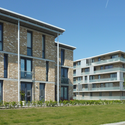
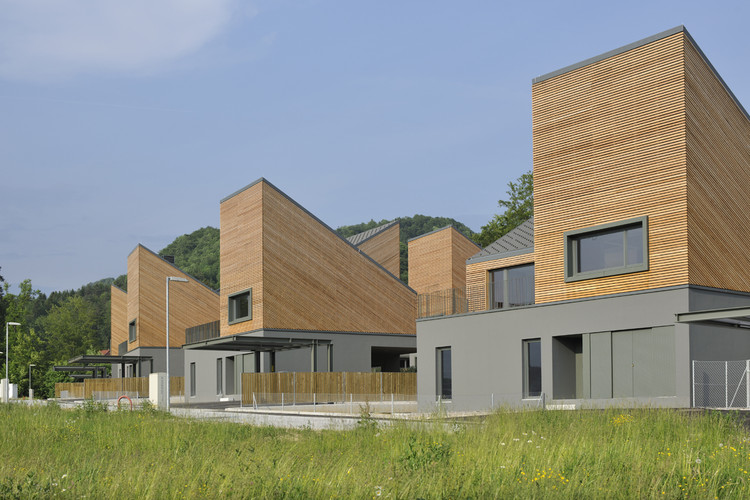
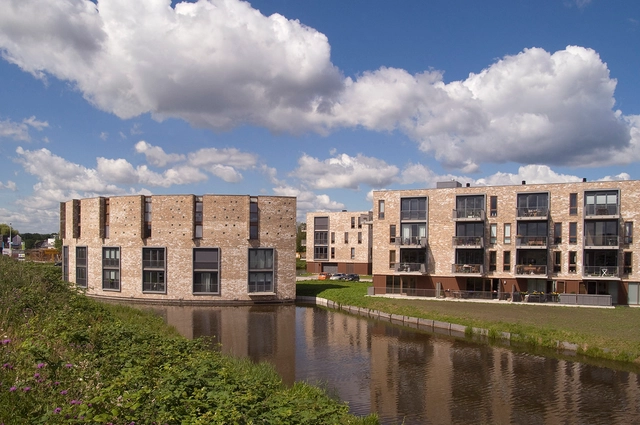
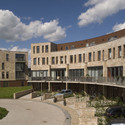
The aim of the sustainable residential complex, designed by Morfearch, is not only the production of new buildings able to satisfy living space requests, but the will to offer public services to the new settlement and open to the “outer” population. The project area, crossed north to south by divergent paths, generates trapezoidal spaces that become the generating principle of the different parts of the whole complex: every secondary parcel is indeed composed by different size tanks, 30 to 120cm high, open to different uses, materials, and patterns: green areas, water, paved spaces, vegetation and gardens, available for residents with a leisure, but also social, function. More images and architects’ description after the break.

The informal city is a problem that could not be solved by the twentieth-century urbanism. It is necessary to produce a set of tools that will allow us to perform with solvency and responsibility in this area. Some of the tools of traditional architecture and urbanism can be successfully applied; others are yet to be elaborated. With this in mind, Drucker Arquitetura designed the winning proposal for the Sáo Paulo competition to rebuild the city’s slum-areas.

The HA tower, designed by Frontoffice + François Blanciak Architect, proposes a hybrid model for urban life that embraces the city, pulling it in the heart of the units, while still offering large open spaces that otherwise are only available on the urban fringe. Located in Higashi-Azabu, within walking distance of a cluster of rail lines, Shiba Park, and the iconic Tokyo Tower, the corner site is small, covering only 130 square meters and is constrained by a floor area ratio that limits construction to 8 floors. More images and architects’ description after the break.

Though primarily known as Wiliamsburg’s only first-run movie house, this project is in actuality an expansive 23,000 square foot mixed-use building with three floors of residential apartments above the cinemas, bar, café commercial kitchen housed in the retrofitted brick warehouse below. All of the apartments have access to outdoor space in the form of private roof decks at the penthouse level and shared courtyard access for the floors below. Caliper Studio designed all phases of the project from the earliest design studies through the construction process. More images and architects’ description after the break.
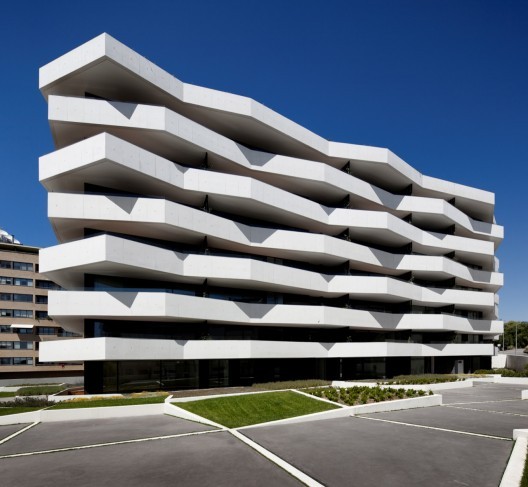
We recently received new photographs by FG+SG – Fernando Guerra, Sergio Guerra of Living Foz. We featured this project back in February, and has been recently award a 2011 Emirates Glass LEAF Award. “The Emirates Glass LEAF Awards honour the architects designing the buildings and solutions that are setting the benchmark for the international architectural community.”
New photographs after the break. Original ArchDaily feature.



The Queen's College Florey building is the third and last building of “The Red Trilogy” (the Leicester Engineering Faculty building and the Cambridge History Faculty building being the first two) designed by James Stirling, solidifying him as an irreplaceable facet in modern Architecture.