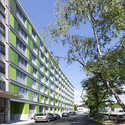
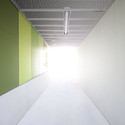
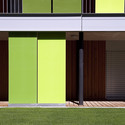
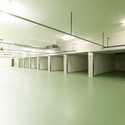
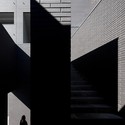
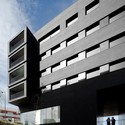
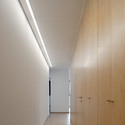
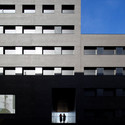
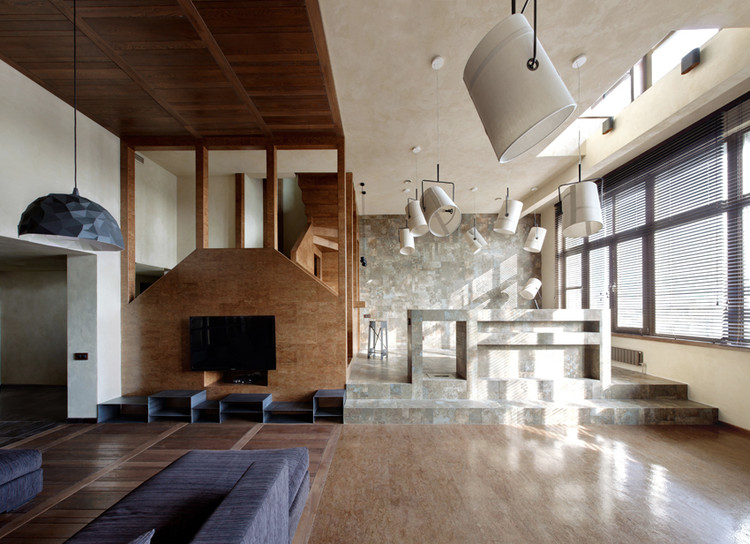
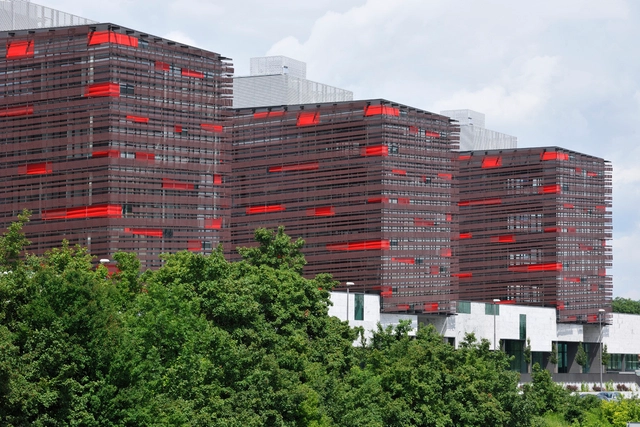
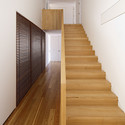
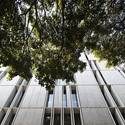
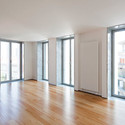
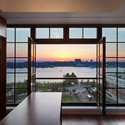
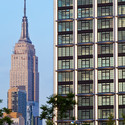
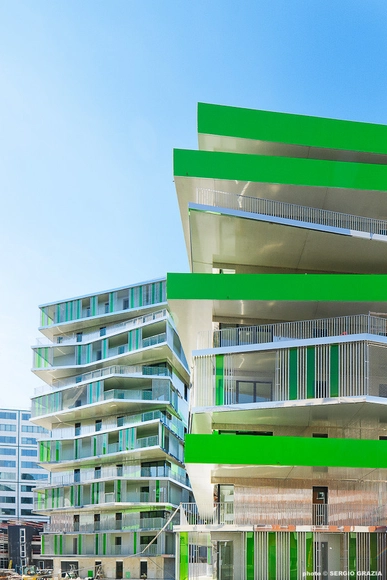
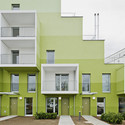
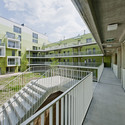
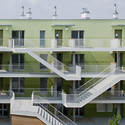
The Floresta apartment complex, designed by Somatic Collaborative, is a 16 unit residential complex that occupies a residual site on the northeastern edge of the city of Quito, Ecuador, overlooking the Guapulo valley. More images and project description after the break.
The Deputy Mayor Laura Hay recently revealed the winners of the competition for a 12.000 m2 sustainable housing project at a reception at Aarhus City Hall. The winning team consists of the architects ADEPT and LUPLAU & POULSEN, turn-key contractor Dansk Boligbyg and NIRAS Consulting Engineers. The team has designed a project entitled The City in the Building – Housing for All at Harbour North, that consists of 238 public dwellings distributed between 83 apartments for families and +55 aged seniors, and 155 student-housing units. The project is expected to be completed for inauguration in December 2013. More images and project description after the break.
ContemporARchitectURban Designers Group, which was created by Ali Andaji Garmaroodi, Amin Monsefi and Reza Roudneshin, shared with us their winning proposal for the Mehrshahr Residential Complex Design Competition located in Karaj which is the fifth largest city of Iran, and located near Tehran. The main purpose of the client and the organizer of this competition was to find new ways to develop and build houses for middle layer people of the society in order to have an complex suits to Iranian needs and culture, which has had missed in the recent years. More images and project description after the break.
EDIT! Architects shared with us their design for River Park Modrany, a residential complex in the Modrany district, located in the south of Prague by the Vltava river. The district is typically covered with villas from the beginning of 20th century that surround the Modrany landmark, a 60m high Microna tower. We have divided the plot into strips of land in a perpendicular axis to the main urban lines [tramline, train tracks, main road, the river itself]. A building volume has been placed into every strip and main vertical cores have been defined for all volumes. We have stretched up the core building parts in a way to create the hill-like shapes of the buildings. The volumes have been afterwards rotated in order to improve the particular views from every building. More images and architects’ description after the break.
In keeping with our coverage of the Solar Decathlon, we are happy to share Victoria University’s Meridian First Light House third place finish. Finishing a few point shy of the University of Maryland’s 951 points, the New Zealand university received 919 points with high standings in several categories, including winning the Engineering contest, gaining first equal in Hot Water and Energy Balance, second for Architecture and third for Market Appeal. Plus, over the course of the competition, the house managed to produce more energy than it consumed – achieving net zero energy consumption, despite 10 days of undesirable weather. Team member Nick Officer exclaimed, “While we may not have won overall we are incredibly proud to have represented New Zealand on the world stage. We had such and amazing response from the US public here along with supporters back home.” Be sure to check out our previous coverage of the house to learn more about the traditional Kiwi bach – a New Zealand holiday home – inspired residence.
Designing in Lima, a city of marked eclecticism is more a provocation than a challenge. The vibrant movement of forms, heights, colors, reflections, textures and all kinds of elements competing for the leading role is a particularly interesting framework for XTe a+d‘s proposal for an exclusive, loft apartment building. More images and architects’ description after the break.
MSA+PMA Architecture entered this competition in collaboration with “MAS Urban Design ETH Zürich” – successful teamwork that revealed a First-Prize Winning Project for “Cabuço de Baixo 5”. The initiative of this cooperation began with a proposal from a cohort of postgraduates who were attending the Masters Program in Advanced Studies in Urban Design at the Swiss Federal Institute of Technology (ETH Zürich).