The architecture of cultural centers in Mexico has gained relevance in recent years. There has been a growing interest in providing spaces for recreation and education, transforming them into urban landmarks that attract visitors from all over the country year after year.
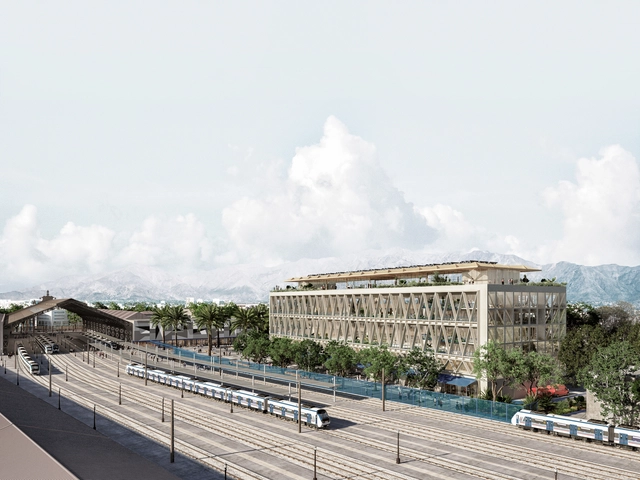
The Chilean architectural practice UMWELT, together with the landscape architecture office LANDMRX and the renowned Mexican firm PRODUCTORA, have won first place in the competition for the transformation of the former Correos de Chile (Chilean Postal Service) building located in Estación Central, Santiago. In 2021, EFE (Chile's State Railway Company) acquired the property to convert it into their new corporate headquarters, where the company's employees will work in interaction with the nearby railway operations.
Mexico City's Secretary of Public Works and Services announced a collaboration with some of the country's most distinguished architectural minds in a move to add on to the capital's educational and cultural infrastructure. The project centers on the planning and building of 25 new Points of Innovation, Freedom, Art, Education, and Knowledge (PILARES), an initiative implemented by Mexico City Mayor Claudia Sheinbaum.
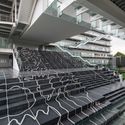
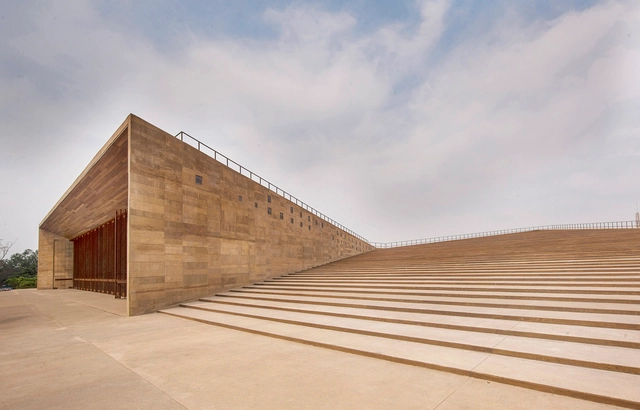
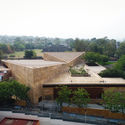
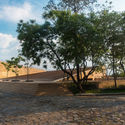
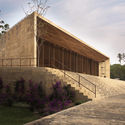
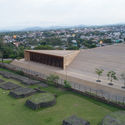
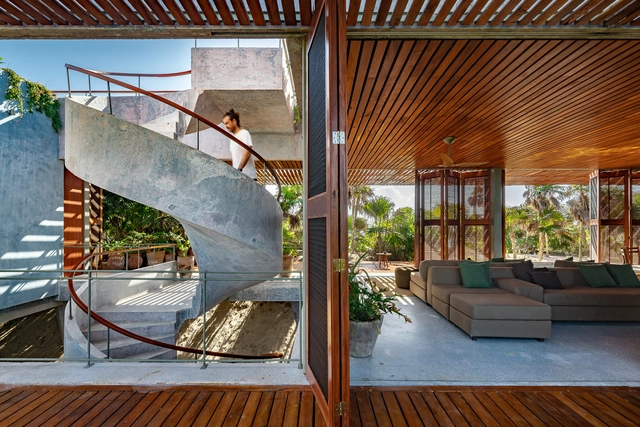
Stairways are central to access and mobility within a space, and yet, they often take a backseat to other elements of design within a work of architecture. However, Mexican firm PRODUCTORA has put them at the forefront of many of their projects, notably the Teopanzolco Cultural Center.
The Houston Endowment and the organizers of the Malcolm Reading Consultants (MRC) contest announced that the team led by Kevin Daly Architects (KDA) and PRODUCTORA, in collaboration with TLS Landscape Architecture, won the international competition to design the new headquarters for the foundation. The winning proposal stood out as a dynamic response to the architectural and landscape tradition of Houston.
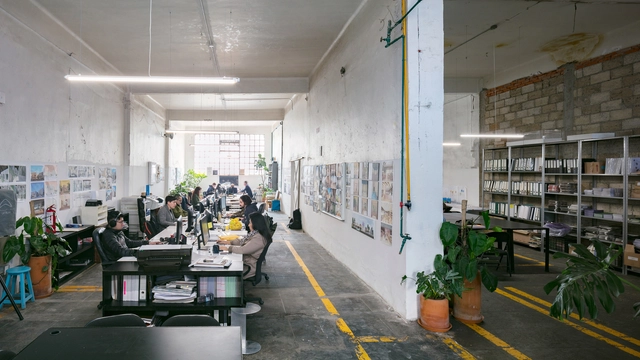
After having previously photographed the architecture offices in the Netherlands, Dubai, London, Paris, Beijing, Shanghai, Seoul, the Nordic countries, Barcelona and Los Angeles, the architectural photographer Marc Goodwin continues the series with an exploration of some of the most recognized architecture offices in Mexico. With a set of emerging and world-renowned offices alike, the series offers insight into the lives of designers in Mexico City.
The Oscar Niemeyer Award for Latin American Architecture is a renowned initiative by the Latin American Architecture Biennial Network (REDBAAL). This award recognizes the best architectural production, unquestionable empowerment, and presence of Latin American architecture in the international context.
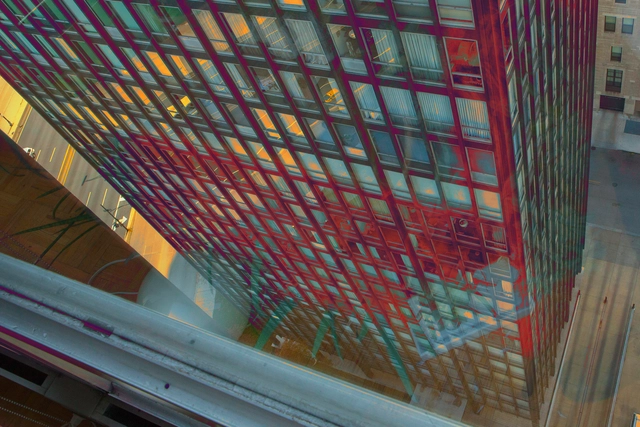
James Welling, 8183, 2016 from the series Chicago, 2016-2017, Courtesy the Artist and David Zwirner, New York and London. Image Courtesy of Chicago Architecture Biennial
The Chicago Architecture Biennial has announced the list of participants invited to contribute to the event’s second edition, which will be held from September 16 to January 7, 2018 in Chicago. More than 100 architecture firms and artists have been selected by 2017 artistic directors Sharon Johnston and Mark Lee, founders of Los Angeles–based Johnston Marklee, to design exhibitions that will be displayed at the Chicago Cultural Center and throughout the city.
“Our goal for the 2017 Chicago Architecture Biennial is to continue to build on the themes and ideas presented in the first edition,” explained Johnston and Lee. “We hope to examine, through the work of the chosen participants, the continuous engagement with questions of history and architecture as an evolutionary practice.”
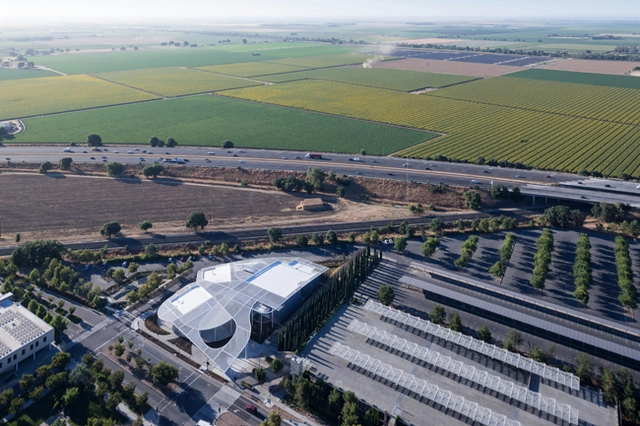
This November, the Manetti Shrem Museum on the University of California, Davis, campus opened to the public. Designed by New York City–based SO-IL with the San Francisco office of Bohlin Cywinski Jackson, the museum pays homage to the agricultural landscape of California’s Central Valley with an oversize roof canopy. The steel members of the 50,000-square-foot (4,650-square-meter) shade structure, nearly twice the size of the museum itself, reference the patterning of plowed fields and create a welcoming outdoor space for visitors. It is both expressive and practical, but getting that balance wasn’t easy.
SO-IL, founded by Florian Idenburg and Jing Liu in 2008, has a portfolio filled with smaller projects, installations, and exhibition-related work. The Manetti Shrem Museum is easily the firm’s largest work to date, demanding a rigorous design-build process while maintaining a strong conceptual vision. In short, it required architecture.




_copy.jpg?1596150637 "Floating House / Talleresque. Image © Studio Chirika")