1. ArchDaily
  2. Paul Andreu

Paul Andreu: The Latest Architecture and News

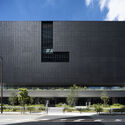
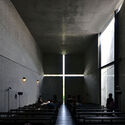
Osaka Architecture City Guide: 23 Projects Showcasing Japan’s Design Legacy and Innovation

Subscriber Access | 

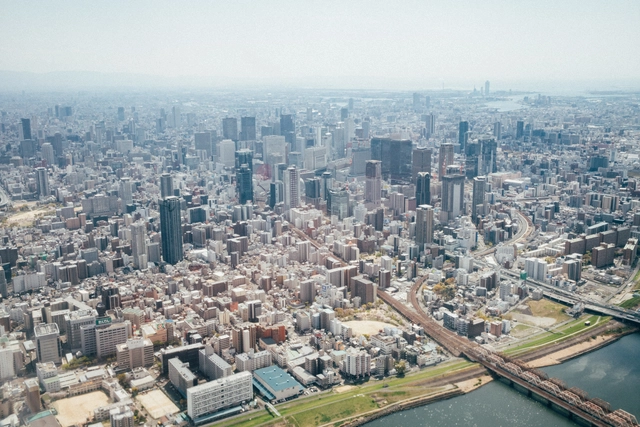
Osaka, Japan's third-largest city, is a vibrant blend of tradition and modernity, making it a compelling destination for architecture enthusiasts. Known historically as the "nation's kitchen" for its role as a mercantile hub, Osaka is also a city of cultural and architectural diversity. Its landmarks range from the historic Osaka Castle to striking contemporary developments, each reflecting Japan's evolving urban identity.

As the host city for the highly anticipated Expo 2025, Osaka is poised to showcase its architectural prowess on a global stage. The city's skyline features innovative works by renowned architects and urban planners, including cutting-edge cultural centers, transportation hubs, and waterfront redevelopments. With contributions from celebrated Japanese architects such as Tadao Ando, Kengo Kuma & Associates, and Takenaka Corporation, alongside international figures like Dominique Perrault, Renzo Piano Building Workshop, and Pelli Clarke & Partners, Osaka seamlessly blends modernity with tradition, creating a unique architectural identity that reflects its past while looking boldly to the future.
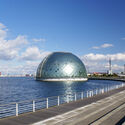
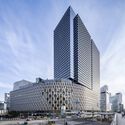
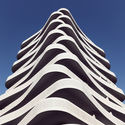
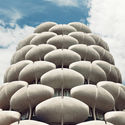
Osaka Architecture City Guide: 23 Projects Showcasing Japan’s Design Legacy and Innovation - Image 1 of 4Osaka Architecture City Guide: 23 Projects Showcasing Japan’s Design Legacy and Innovation - Image 2 of 4Osaka Architecture City Guide: 23 Projects Showcasing Japan’s Design Legacy and Innovation - Image 3 of 4Osaka Architecture City Guide: 23 Projects Showcasing Japan’s Design Legacy and Innovation - Image 4 of 4Osaka Architecture City Guide: 23 Projects Showcasing Japan’s Design Legacy and Innovation - More Images+ 19

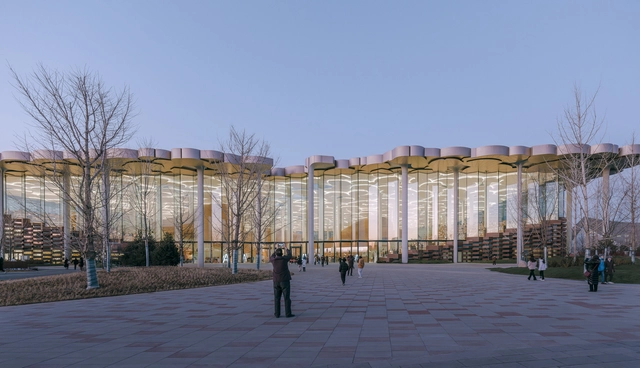
Beijing Architecture City Guide: 28 Projects to Understand Contemporary Architecture in a 3,000-Year-Old City

Subscriber Access | 

Beijing, as the cultural and political center of China, embodies a rich architectural language that bridges history and modernity, tradition and innovation, showcasing the city's profound depth and diversity. From monumental landmarks like CITIC Tower and Daxing International Airport to the hidden courtyard renovations nestled within the city's historic hutongs; from the dramatic revitalization of the Shougang industrial site to the refined transformations of Baiziwan and Baitasi, Beijing's architectural achievements continue to captivate and inspire. Every space tells a unique story of the city, blending heritage with contemporary vibrancy.

In this city, memories are preserved, and vitality thrives. Let us step into Beijing, rediscovering the "new Beijing" within the "old Beijing" through the lens of its architecture, and experience the depth of time and the pulse of the city in its dynamic spaces.

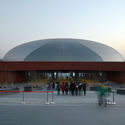
Beijing Architecture City Guide: 28 Projects to Understand Contemporary Architecture in a 3,000-Year-Old City - Image 10 of 4Beijing Architecture City Guide: 28 Projects to Understand Contemporary Architecture in a 3,000-Year-Old City - Image 11 of 4Beijing Architecture City Guide: 28 Projects to Understand Contemporary Architecture in a 3,000-Year-Old City - Image 12 of 4Beijing Architecture City Guide: 28 Projects to Understand Contemporary Architecture in a 3,000-Year-Old City - Image 17 of 4Beijing Architecture City Guide: 28 Projects to Understand Contemporary Architecture in a 3,000-Year-Old City - More Images+ 25

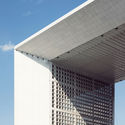
Sebastian Weiss Reveals The Public Personalities of French Landmarks in Paris, Nanterre and Arcueil

Sebastian Weiss Reveals The Public Personalities of French Landmarks in Paris, Nanterre and Arcueil - Featured Image
© Sebastian Weiss

For Hamburg-based photographer Sebastian Weiss, buildings are dramatis personae, or "characters". Inspired by Ash Amin and Stephen Graham's 1997 book The Ordinary City, in which the authors described the city as the "theater of life", this photo-essay of architectural landmarks in the French cities of Arcueil, Nanterre, and Paris examines the personalities of public buildings.

Sebastian Weiss Reveals The Public Personalities of French Landmarks in Paris, Nanterre and Arcueil - Image 1 of 4Sebastian Weiss Reveals The Public Personalities of French Landmarks in Paris, Nanterre and Arcueil - Image 2 of 4Sebastian Weiss Reveals The Public Personalities of French Landmarks in Paris, Nanterre and Arcueil - Featured ImageSebastian Weiss Reveals The Public Personalities of French Landmarks in Paris, Nanterre and Arcueil - Image 3 of 4Sebastian Weiss Reveals The Public Personalities of French Landmarks in Paris, Nanterre and Arcueil - More Images+ 8

Paul Andreu: "I Would Only Take On a Project if the Ideas Were Mine. Otherwise, I Am Not Interested."

Paul Andreu: "I Would Only Take On a Project if the Ideas Were Mine. Otherwise, I Am Not Interested." - Image 4 of 4
Charles-de-Gaulle airport, Terminal 1, Paris, 1967-1974. Image © Paul Maurer

For 40 years, Paul Andreu was among the world's foremost airport design experts. Reflecting on this before the turn of the millennium, he stated that architectural historians of the future might consider the 1990s as “the age of the air terminal.” But shortly after this, he left the arena of airport design to focus on other large projects, many of them in China. In this interview, the latest of Vladimir Belogolovsky's “City of Ideas” series, Andreu explains why he made the switch and shares his thoughts on how good architecture is made—saying it often depends more on what you don't tell your client than what you do.

Paul Andreu: Before we start, I must explain something. I am an architect and engineer. For a long time I was not an independent architect but worked at and then was the head of airport works at Aéroports de Paris Ingénierie or ADPi, a subsidiary of Aéroports de Paris (ADP). This public establishment is not only in charge of the planning, design, and operation of three Paris-region airports, but is also involved in airport works all around the world, as well as other large-scale architectural projects. First, we did airports in France, then in the Middle East and Africa, then in China and all over Asia, and then we developed projects in other parts of the world. Most of the time we developed our projects from concept all the way through construction; although once we did just the concept for Kansai airport on a specially built island in the Bay of Osaka. As you know, it was designed by Renzo Piano and I consulted for him on function and circulation aspects.

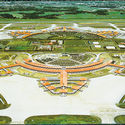
Paul Andreu: "I Would Only Take On a Project if the Ideas Were Mine. Otherwise, I Am Not Interested." - Image 15 of 4Paul Andreu: "I Would Only Take On a Project if the Ideas Were Mine. Otherwise, I Am Not Interested." - Image 17 of 4Paul Andreu: "I Would Only Take On a Project if the Ideas Were Mine. Otherwise, I Am Not Interested." - Image 18 of 4Paul Andreu: "I Would Only Take On a Project if the Ideas Were Mine. Otherwise, I Am Not Interested." - Image 43 of 4Paul Andreu: I Would Only Take On a Project if the Ideas Were Mine. Otherwise, I Am Not Interested. - More Images+ 64

Why Should You Register A .archi Domain?

The time has come for architects, across the globe, to register for their .archi domain names. This year has seen the launch of a entirely new range of domains which explicitly indicate the field of business a particular domain name points to; .archi, the new extension reserved exclusively for architectural bodies, is one such. Not only will it differentiate architects from other fields but, perhaps more importantly, will also help internet users find architects when browsing the web. The development of this domain extension, which has been supported by the International Union of Architects (UIA), will mean that only academically qualified architects and their affiliates will be able to use .archi.

Paul Andreu, designer of the Shanghai Pudong International Airport and the Taiyuan Archaeological Centre, alongside Corinne Vezzoni, have both pledged their support of the new domain name in an advertising campaign by the regulating body Starting Dot.

Click here to register a .archi domain name or find out more after the break...

Architecture City Guide: Paris

Subscriber Access | 
Architecture City Guide: Paris - Image 19 of 4
Courtesy of Wikimedia Commons / Benh Lieu Song

This week, with the help of our readers, our Architecture City Guide is headed to Paris. For centuries Paris has been the laboratory where innovative architects and artists have come to test their ideas. This has created a city that has bit of everything. Where the architecture of some cities seems to undergo phases of punctuated equilibrium, Paris’s architectural fossil record gives an impression of gradualism; all the missing links are there. This makes it easy to trace the origins of the most contemporary ideas throughout history. Nothing seems to come out of nowhere. If you look around you kind find the design’s inspiration running through the city’s Roman, Medieval, Renaissance, Baroque, Classical, Rocco, Neo-Classical, Empire, Art Nouveau, Art Deco, Modern, Post-Modern, and Contemporary Architecture. Seen in another context, many of Paris’s buildings might seem out of place, but the bones of this city support the newest iterations on the oldest and most profound questions. The 24 contemporary designs that comprise our list probably should not be viewed outside of this context, even though that is the stated goal of some of the designs.

As the most visited city in the world and arguably the capital of culture, it is impossible to capture the essence of Paris in 24 modern/contemporary designs. Our readers supplied us with great suggestions, and we really appreciate the help and use of their photographs. The list is far from complete and we realize that many iconic buildings are not yet on the list. We will be adding to it in the near feature, so please add more in the comments section below.

The Architecture City Guide: Paris list and corresponding map after the break.