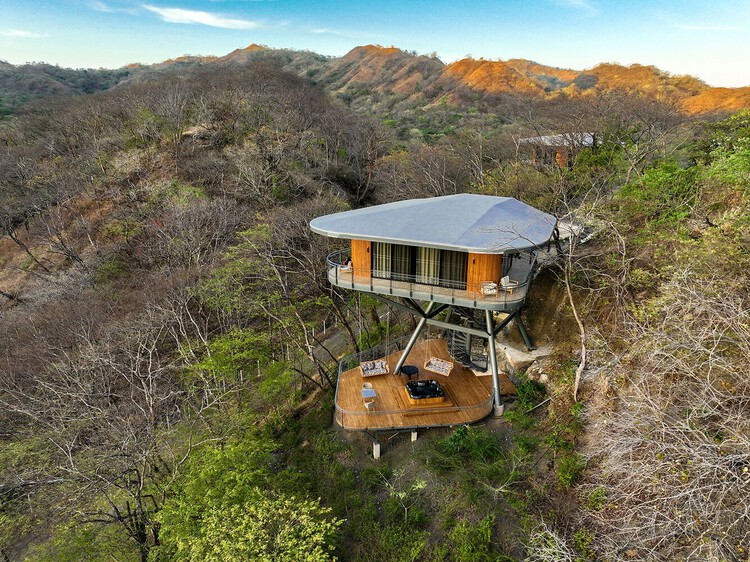
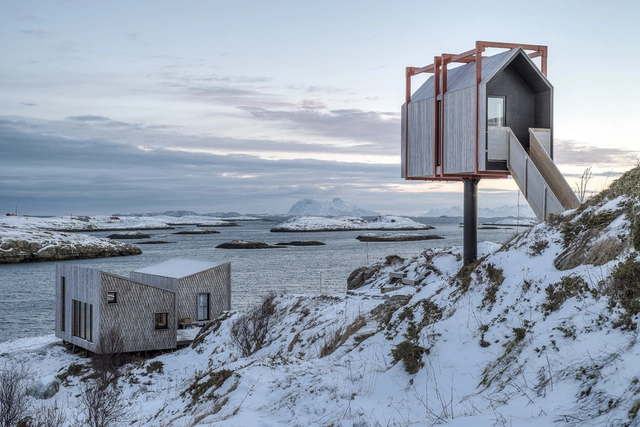
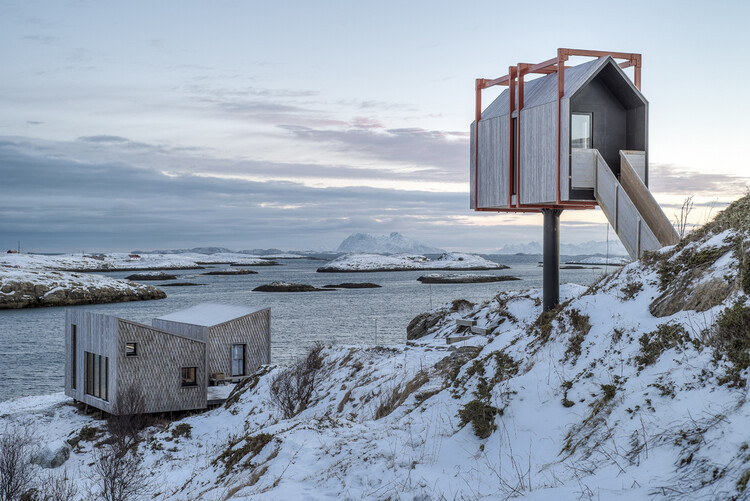
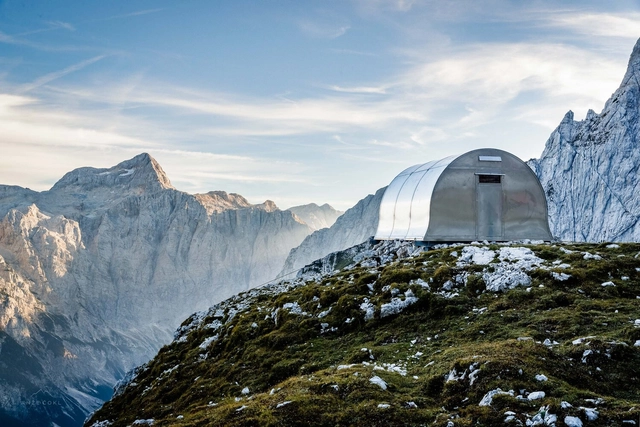
"In various regions of the planet, nature imposes adverse conditions on the human body. In these places, designing a building is almost like creating a garment: an artifact that protects and offers comfort. This challenge requires technological performance that must be combined with aesthetics. Making human beings feel good involves more than just meeting notions of comfort and safety; it's also a question of working with spaces in their symbolic and perceptual dimensions." This is the beginning of the description for the design of the Brazilian Antarctic Station in Antarctica, by Estúdio 41, located on the Keller Peninsula, where the surrounding sea freezes for around six to seven months of the year, where everything and everyone arrives by plane or ship and the nearest hardware store is days away. If designing a building in normal circumstances already presents numerous complexities, it's not hard to imagine the additional challenges when developing something in an extreme environment, such as locations with very high or low temperatures, or in places susceptible to corrosion, radiation, and more. In this article, we will explore the difficulties, the main solutions and the materials used in these contexts.
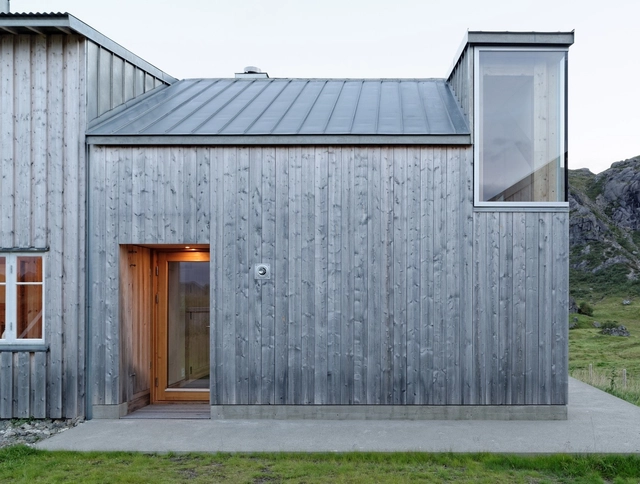
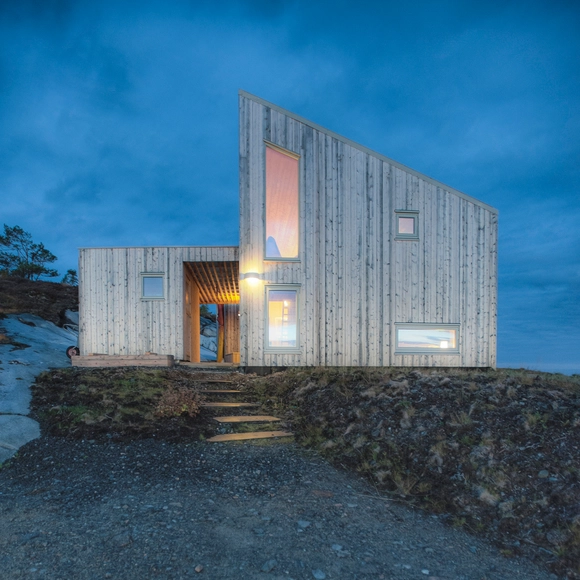
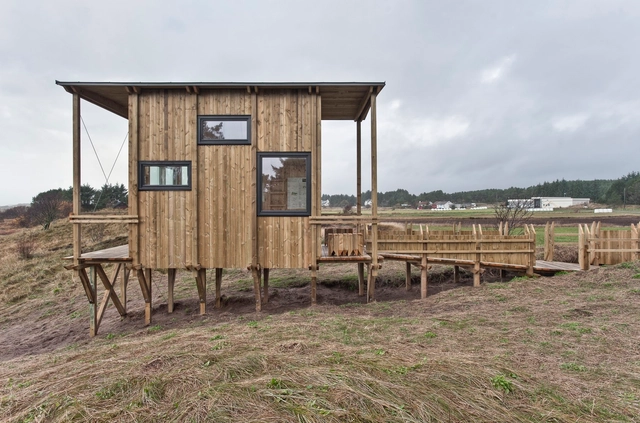
Summer House Gravråk / Carl-Viggo Hølmebakk. Image Cortesia de Carl-Viggo Hølmebakk
The moment a tree is cut down and its biological processes are interrupted, it can be said that the deterioration process of wood also begins. Steps such as the correct cutting of the trunk, drying and storage or the precise specification of the best species for each use will determine its durability. Composed basically of cellulose, hemicellulose and lignin, each wood species has a certain natural durability, also influenced by the environmental conditions of where it is inserted, such as temperature, humidity, oxygen content, and the microorganisms and insects present there. Generally, surface treatments are used to increase the protection of different parts, such as varnishes, oils and other chemical processes. But there are situations in which untreated wood can be used outdoors, achieving a gray and sober aesthetic that blends into the exterior and brings personality to the building.
The construction industry moves a huge amount of resources, employs millions of people, and is a fairly accurate gauge for the economic situation of different countries. If the economy goes down, construction shrinks, and vice versa. Members of the construction industry include mining companies, contractors, material manufacturers, architects, engineers, governments, real estate, and more. In other words, many agents participate either directly and indirectly in the industry. But construction is also considered to be one of the most backward and resistant industries to embrace new technologies, instead opting to replicate traditional ways of doing less efficient work with high rates of waste. A study by McKinsey & Company showed that, unlike other industries, industry productivity has remained stable in construction in recent years, despite all the technological progress that has occurred.
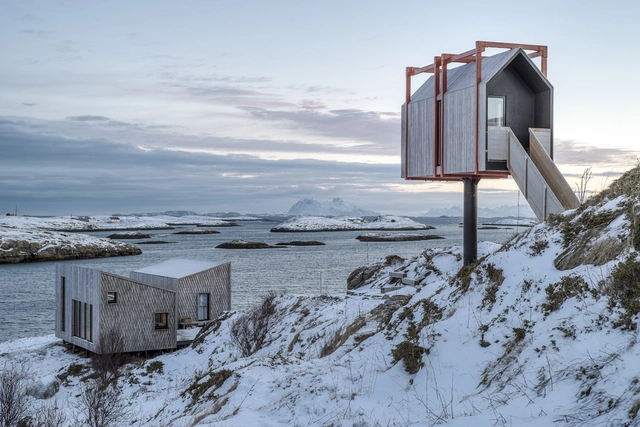
Building in nature constitutes a contradiction, as architecture enables immersive access to the landscape, while at the same time, natural landmarks are being slowly engulfed by tourists. The human presence in natural landscapes is an interplay of scales, a juxtaposition of archetypal shelters against the vast sceneries, as well as a negotiation between access to the landscape and environmental conservation. Exploring a variety of attitudes and formal strategies, the following takes a look at what could be learned from the experiences and design philosophies of several architects and practices that have perfected ways of addressing architecture in the landscape.
Architects are notorious for working long, consecutive hours. So, in an attempt to remind you to take a break, we've compiled the top 12 most re-pinned images of inviting, well-designed outdoor spaces from our Pinterest. Take a look, after the break, then step away from the screen and go outside for some much needed fresh air.
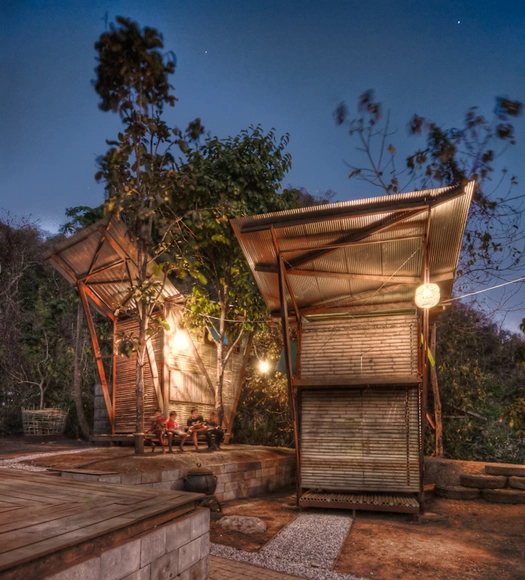
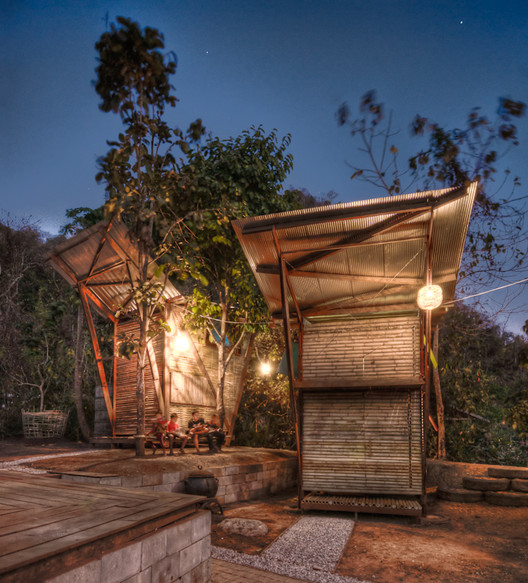
TYIN tegnestue architects are known for their small-scale built projects in underprivileged areas around the world, but you might not know just how open this firm is about sharing their work. If you head to their website, many of their past projects are available for download in the form of photographs, sketches, drawings, models, and more. They believe that by sharing their knowledge, they are encouraging students and young architects to learn by building. The architecture co-operative has even created the "TYIN Architect's Toolbox," a downloadable guide to working on design-builds in places of need. For more information on the guide, keep reading after the break.
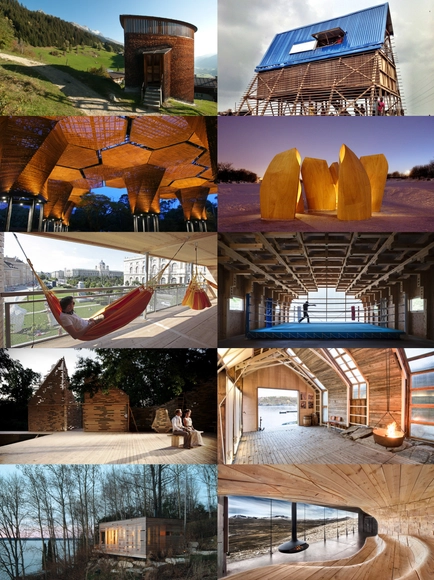
To celebrate the launch of ArchDaily Materials, our new product catalog, we've rounded up 10 awesome projects from around the world that were inspired by one material: wood. Check out the projects after the break...
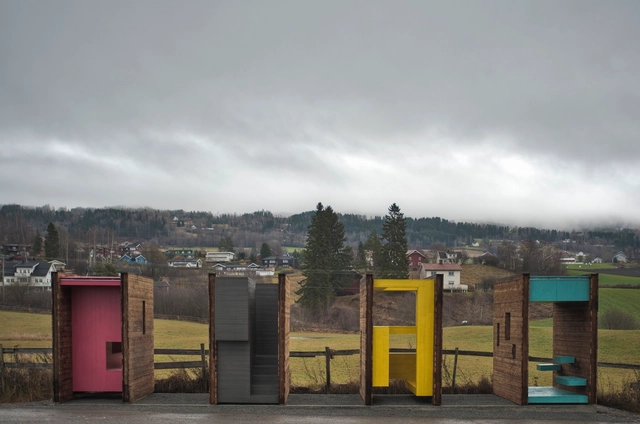
The Museum of Finnish Architecture’s summer exhibition, 'Light Houses.Young Nordic Architecture' is a two-part showing of contemporary work by young Nordic architects taking place now until September 22. Thirty-two architects from Finland, Sweden and Norway – all born after 1962, the year the pavilion was designed – were invited to design a sculptural piece that both complements the modernist vocabulary of Fehn’s pavilion and encapsulates their office’s philosophy of architecture in a 3D form of pre-specified dimensions. More information on the exhibition after the break.