1. ArchDaily
  2. Neri Oxman

Neri Oxman: The Latest Architecture and News

Animal Printheads, Biomimicry and More: How Nature Will Shape the Built Environment of the Future

Subscriber Access | 

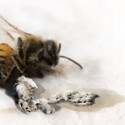
Biomimicry is quickly emerging as one of the next architectural frontiers. New manufacturing processes such as 3D printing, coupled with the drive to make buildings more environmentally sustainable, have led to a wave of projects that are derived from natural phenomena or even constructed with biological materials. A recent example of this trend is “Hy-Fi,” this summer’s MoMA PS1 design that is constructed of organic and compostable eco-bricks. Other projects such as MIT Media Lab’s Silk Pavilion have taken biological innovation a step further by actually using a biometric construction processes - around 6,500 silkworms wove the Silk Pavilion's membrane. “Animal Printheads,” as Geoff Manaugh calls them in his article "Architecture-By-Bee and Other Animal Printheads," have already proven to be a viable part of the manufacturing process in art, and perhaps in the future, the built environment as well. But what happens when humans engineer animals to 3D print other materials?

Animal Printheads, Biomimicry and More: How Nature Will Shape the Built Environment of the Future  - Image 1 of 4Animal Printheads, Biomimicry and More: How Nature Will Shape the Built Environment of the Future  - Image 2 of 4Animal Printheads, Biomimicry and More: How Nature Will Shape the Built Environment of the Future  - Image 3 of 4Animal Printheads, Biomimicry and More: How Nature Will Shape the Built Environment of the Future  - Image 4 of 4Animal Printheads, Biomimicry and More: How Nature Will Shape the Built Environment of the Future  - More Images+ 5

Neri Oxman Wins 2014 Vilcek Prize in Design

As an immigrant “who has made lasting contributions to American society through extraordinary achievements in biomedical research and the arts and humanities,” Israeli-born designer and architect Neri Oxman has been selected as the 2014 Vilcek Prize in Design’s recipient.

Printing 3D Buildings: Five tenets of a new kind of architecture / Neri Oxman

Subscriber Access | 

As a designer, architect, artist and founder of the Mediated Matter group at MIT’s Media Lab, Neri Oxman has dedicated her career to exploring how digital design and fabrication technologies can mediate between matter and environment to radically evolve the way we design and construct our built world. In this article, which was first published by CNN, Oxman discusses the future of 3D printing buildings with five tenets of a new kind of architecture.

How 3D Printing Will Change Our World (Part II)

Subscriber Access | 
How 3D Printing Will Change Our World (Part II) - Image 2 of 4
Rapid Craft, designed by Neri Oxman.

Today, 3D Printing technology lives in the realm of small plastic tchotchkes. But economists, theorists, and consumers alike predict that 3D printers will democratize the act of creation and, in so doing, revolutionize our world. Which poses an interesting quandary: what will happen when we can print houses?

Last week, I discussed the incredible capabilities of 3D Printing in the not-so distant future: to quickly create homes for victims of disaster/poverty; to allow the architect the freedom to create curvy, organic structures once only dreamed of. But, if we look a little further afield, the possibilities are even more staggering.

In the next few paragraphs, I’ll introduce you to Neri Oxman, an architect and MIT professor using 3D Printing technology to create almost-living structures that may just be the future of sustainable design. Oxman’s work shows how 3D Printing will turn our concept of what architecture – and the architect – is, completely on its head.