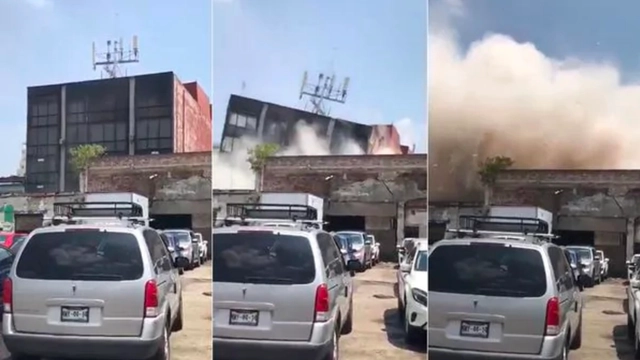
The destruction of a building in Mexico following the 2017 earthquake. Image via Infobae
Following the devastating earthquake measuring 7.1 in magnitude that struck Mexico yesterday at 13:14 local time, many—over 200 people at the time of writing—are feared either dead or trapped in collapsed buildings or unsafe structures. While rescue efforts continue and information surrounding the scope of devastation is preliminary, schools are closed indefinitely and major companies and organizations have requested their employees not to work.
The death toll continues to rise while ArchDaily México, which is located in Mexico City, reports wide-reaching destruction of the built fabric of the capital. Footage captured by terrified residents show the final moments of buildings—many taller than four stories—that were reduced to dust and debris in seconds.
https://www.archdaily.com/880010/many-feared-dead-or-trapped-after-earthquake-topples-buildings-throughout-mexicoAD Editorial Team
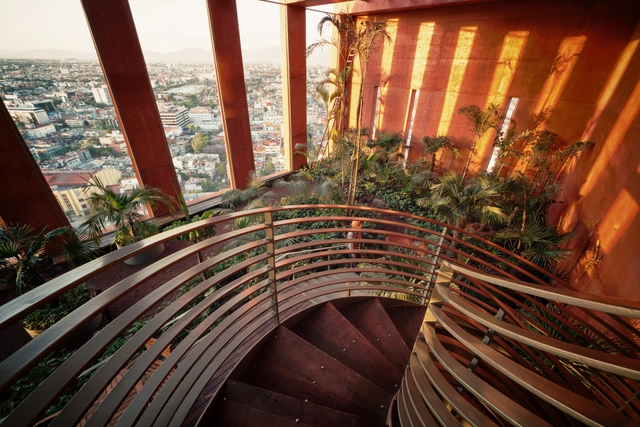
Last month I went on an enlightening trip to Mexico City, during which I had a chance to meet with half a dozen leading Mexican architects and critics. Those meetings included insightful conversations with Miquel Adrià, Tatiana Bilbao, Victor Legorreta, Mauricio Rocha, and Michel Rojkind among others (many of which will also feature in future installments of City of Ideas). I asked them many different questions, but two were consistent: “who would you name as Mexico’s best architect at this moment?” and “what one building built in the capital over the last decade is your favorite?” All of my interviewees pointed to Alberto Kalach (born 1960) and his Vasconcelos Library (2007). My Conversation with Kalach took place the next day after visiting the library on the rooftop of another one of his iconic buildings, Tower 41 overlooking Bosque de Chapultepec, Mexico City’s Central Park. We spoke about books, libraries, and his idea of buildings as inventions.
The Museo Soumaya, which opened to the public in 2011, is one of the more striking cultural landmarks on the skyline of Mexico City. Designed by FR-EE / Fernando Romero Enterprise, the space accommodates and displays a private art collection of nearly 70,000 works spanning the 15th to the mid-20th Centuries, including the world’s largest private collection of Auguste Rodin sculptures. In this photo-essay, photographer Laurian Ghinitoiu has turned his lens to this – a rotated rhomboid clad in a skin of 16,000 hexagonal mirrored-steel panels.
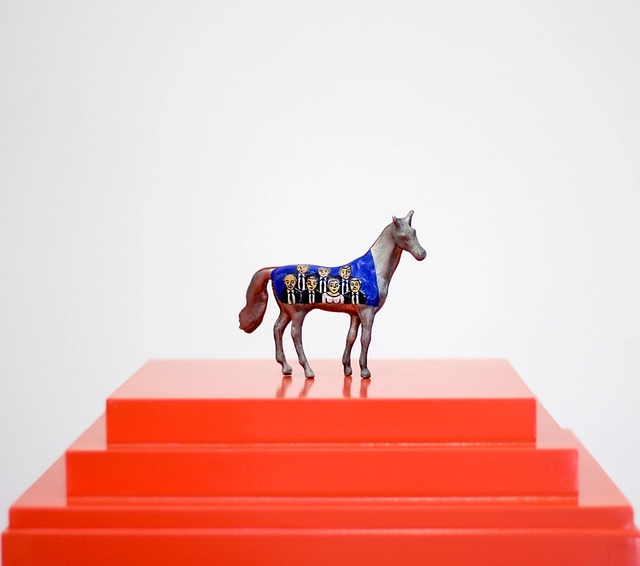
Una pieza de la exposición. Image Cortesía de Museo Universitario de Arte Contemporáneo
In a somewhat poetic proposal, Jill Magid, the American artist, offered Federica Zano, owner and archivist of the Barragan Foundation in Switzerland, a two-carat diamond ring made from ashes from Barragan’s cremation, in exchange for returning Barragan’s professional archive to Mexico.
This gesture was the pinnacle of an art project that “posed fundamental questions about the consequences and implications of converting cultural legacy into private corporate property.” Magid’s work, titled “A Letter Always Arrives at its Destination,” held an exhibition at the University Museum of Contemporary Art at the UNAM.































.jpg?1500381046&format=webp&width=640&height=580)
.jpg?1500381347 "© Laurian Ghinitoiu")
.jpg?1500381865 "© Laurian Ghinitoiu")
.jpg?1500382233 "© Laurian Ghinitoiu")
.jpg?1500381480 "© Laurian Ghinitoiu")
.jpg?1500381046)