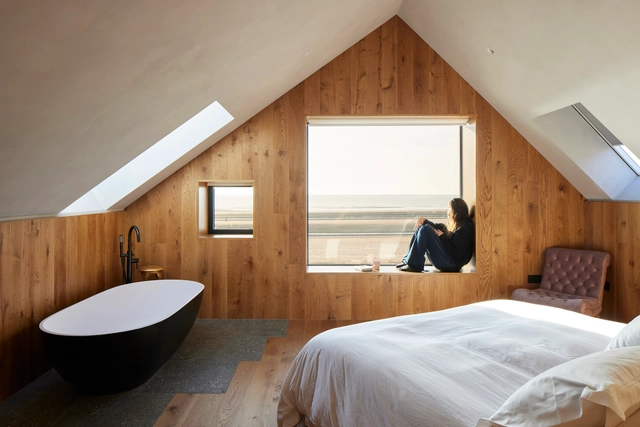
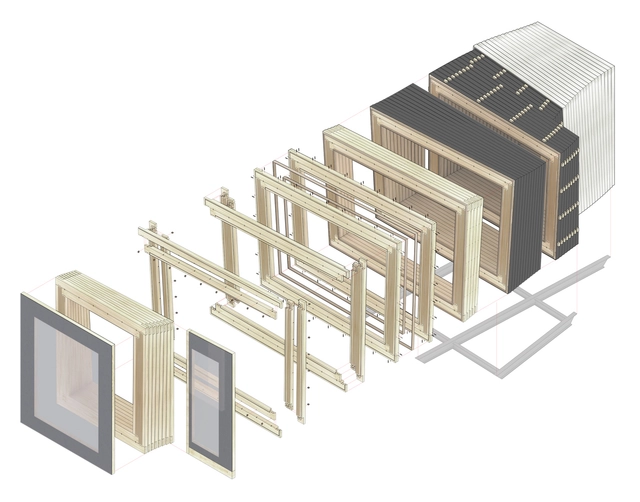
When children first learn to draw a house, there are four basic components they illustrate: a wall, a pitched roof, a door and one or more windows. Along with the common structural elements, windows have always been considered to be indispensable architectural features for their multiple functions. While providing views, daylight and natural ventilation, these insulate from cold and heat, protect from external threats and enhance a facade’s appearance. They are also associated with a strong poetic or symbolic value; it is through them that we are able to connect with and enjoy our surroundings, be it a beautiful natural landscape or a dense urban environment. An expressive part of any building, windows serve as a visual bridge between the inside and outside, acting somewhat as a refreshing escape from our everyday routine.
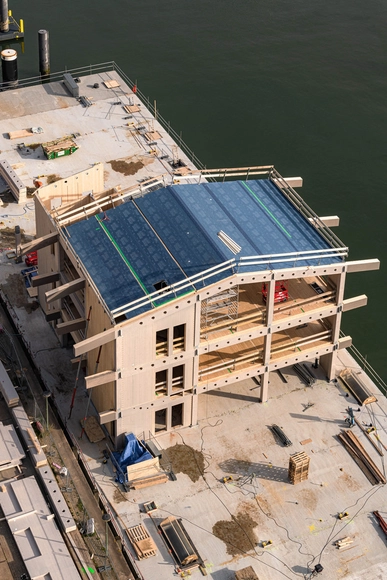
Everyone who has ever built anything—a model, a birdhouse, or small pieces of furniture—has a clear sense of the amount of things that can go wrong during the construction process. A screw that is impossible to tighten fully, a warped wooden board, an inattention or a miscalculation that can frustrate plans instantly. When we transport these small inconveniences to a building scale, with countless processes and many different people involved, we know how complex a work can become and how many things can get out of control, taking more and more time and requiring more and more resources to finish. And when we talk about a building that needs to float, be completely self-sufficient, and, after fulfilling its useful life, be completely reused—could you imagine the technical challenges of building something like this?
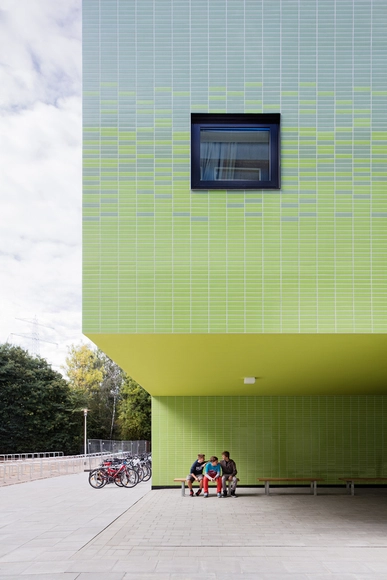
“Color is life; for a world without color appears to us dead.” Distinguished painter Johannes Itten described with these words the exceptional power of color in our perception of the world. As a sensory event, color not only defines what we see, but also how we feel and think; it has been shown to alter productivity, inspire decision-making, shape our perspective, and influence our well-being. Especially in architecture, these effects materialize and reach their maximum splendor. Design is, after all, a visual form of communication, and color palettes –coupled with light, shadow, texture and sheen– play a critical role in conveying a building’s message. They create the ambiance that supports the function of a space, completely transforming user experience. Even the greats have recognized this power: “Polychromy is as powerful an architectural tool as the plan and section,” Le Corbusier once said.
Plataforma de Mergulho ICEBERG / Bulot+Collins. Image Cortesia de Bulot+Collins
The aquatic environment has always fascinated dreamers and researchers. Around 1960, in the midst of the fierce space race of the Cold War, French explorer Jacques Cousteau developed equipment such as the Aqualung to unravel the depths of the sea, which remained as unexplored as outer space itself. He even stated that in 10 years we could occupy the seabed as “aquanauts” or “oceanautas,” where it would be possible to spend long periods extracting mineral resources and even growing food. Sixty years later, the seabed is still reserved for few, and mankind has been more concerned with plastic in the oceans and rising sea levels than colonizing the ocean floor. But being close to a body of water continues to attract most people. Whether out of interest or in response to risks of flooding and over-population, some have turned to utopian proposals and floating architecture, examples of which have been featured in the ArchDaily project archive. But what are the fundamental differences between building houses on land versus on water, and how do these buildings remain on the surface rather than sinking?
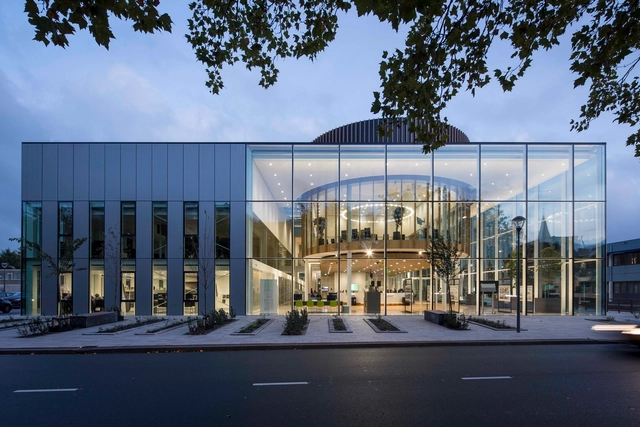
Somewhere between 1914 and 1915, Le Corbusier designed the Maison Dom-Ino, a groundbreaking modular structure that replaced the heavy load-bearing walls with reinforced concrete columns and slabs. The open floor plan with minimal thin elements, coupled with large glass facades, would ensure healthy natural daylight for the interior spaces as well as desirable architectural transparency that could blur the boundaries between interior and exterior —at least metaphorically.
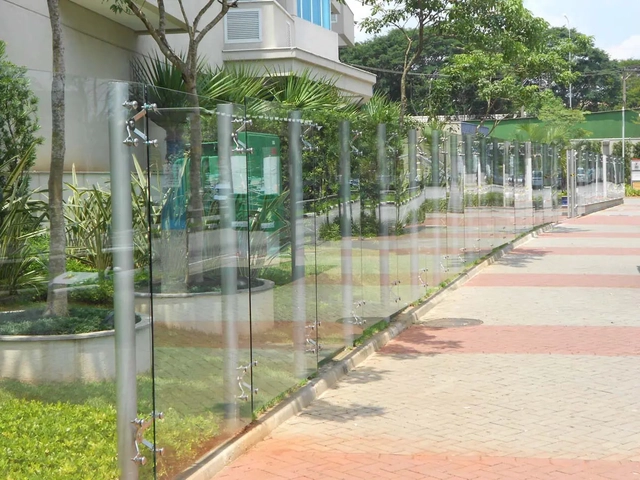
Via construcaoemvidros.com.br. Image used under fair use terms.
In the past, in a less densely populated urban context, houses and buildings were built with a direct connection to the street, with no need for walls and front fences. Over time, the urban fabric was transformed, and the division between public and private spaces became increasingly evident and — under the argument of public safety — necessary. Although this division occurs in different ways in Brazilian cities, in general, walls, fences and railings are used on the facades, creating a transitional space between the building and the street, transforming the relationship between them.
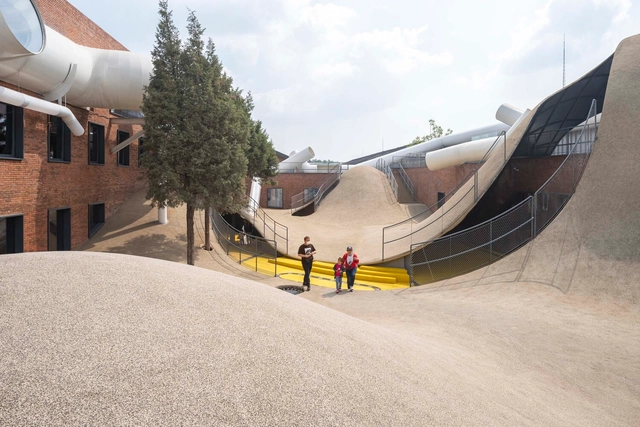
"The flat floor is an invention of architects. It suits machines, not humans." Inspired by the Viennese Secessionists and Austrian artists Egon Schiele and Gustav Klimt, as well as bold Gaudinian forms, the author of this phrase, Friedensreich Hundertwasser (1928-2000), was a prolific painter, sculptor and architect. His works are marked by the dualities between discipline and indiscipline, the predictable and the unexpected, rational and irrational. In his creative adventure, Hundertwasser was not just an enemy of the straight line. He despised architectural rationalism, claiming fluid forms and striking colors.
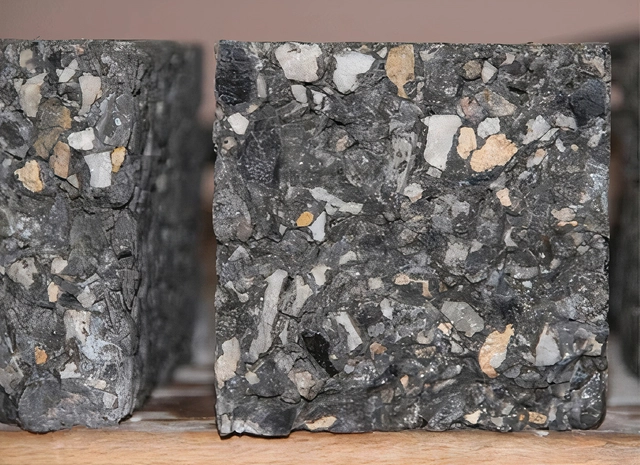
No-Fines Concrete with Steel Slag Samples by L.Korat et al. (2015). Image via ResearchGate. Licensed Under CC BY-SA 3.0
The construction industry is one of the largest in the world, and cement and concrete are literally the building blocks of its success. Evolving from prehistoric caves to today’s towering skyscrapers, concrete structures have and will continue to be vital components of modern civilization, providing long-lasting, reliable support for buildings, roads, bridges, tunnels and dams. So much so that concrete is the most consumed material on Earth, second only to water, while the steel used to reinforce it is by far the most commonly used metal. But this doesn’t come without high environmental costs: concrete accounts for 8% of global CO2 emissions, much of which come from the extraction and transportation of aggregate materials such as sand, gravel and crushed stone.
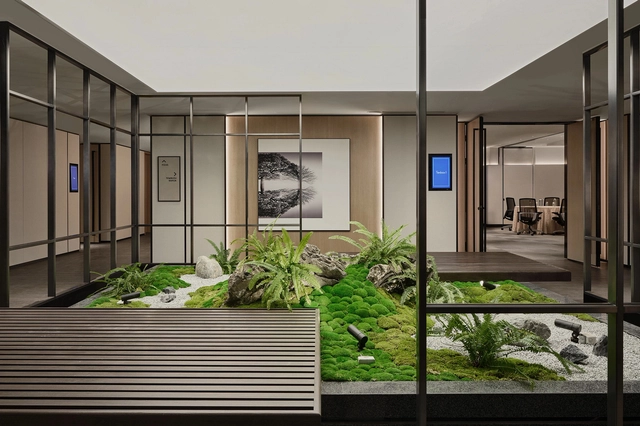
Imagine walking into a hospital and being greeted by greenery, views, natural light streaming in through large windows and open spaces that promote calmness and serenity. These favorable conditions play a crucial role in shaping patients’ experience, making their days a little bit easier while promoting healing. In fact, good healthcare design has been shown to reduce patient stays, infection rates, medication and medical errors, as well as improve staff attraction and performance. A well-designed facility can ultimately transport patients from a sterile, clinical environment to one that is warm, inviting and even uplifting. Such is the case of the Crystal Clinic Orthopaedic Center by HGA Architects, which has been selected among the five winners of the 2022 Shaw Contract Design Awards “Best of Globe” for its innovative approach to healthcare.
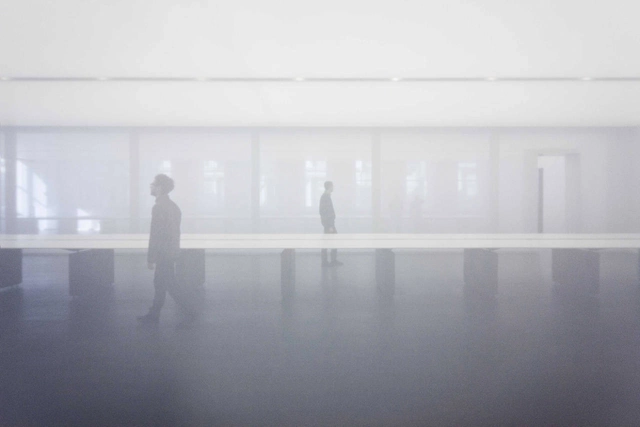
In the heyday of high modernism, architects such as Le Corbusier and Mies van der Rohe extolled the aesthetic value of whiteness, which they viewed as connoting purity and simplicity. Mies van der Rohe’s Farnsworth House, for example, paired the stripped-down whiteness of its structural skeleton with expansive floor-to-ceiling windows, using the enveloping natural light to further elevate the already heavenly aspirations of the space. Today, some contemporary architects and designers have evolved the sublime aesthetics of white high modern architecture by using translucent fabric partitions, complementing the purity of the white walls with the fabrics’ ethereal play of light and shadow. Below, we discuss different design strategies for working with white fabrics in this way, and include two examples of projects that have used translucent fabrics in soothing but innovative ways.
https://www.archdaily.com/957021/white-atmospheres-how-to-create-calm-spaces-with-fabric-partitionsLilly Cao
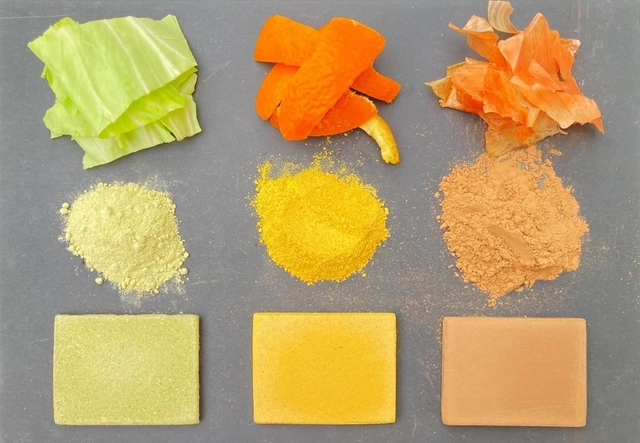
Add cabbage leaves, orange peels, onions, bananas and a few slices of pumpkin to get... cement. That's right, researchers from the University of Tokyo in Japan have developed a technique through which it is possible to produce cement from food waste. Besides being used in construction, the innovative initiative is edible as well. You can make boiled cement into a delicious meal by adjusting flavors, adding seasonings, and breaking it into pieces.
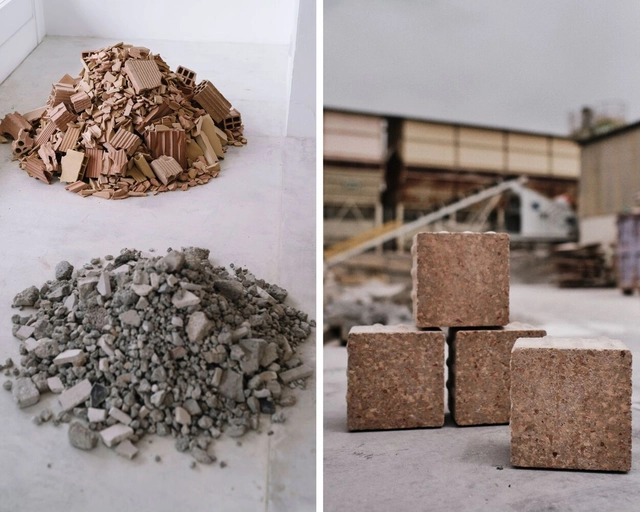
Cities are filled with waste materials and the need to reuse existing resources has become key in fighting the increase in waste production. More than a third of all the waste generated in the EU comes from construction and demolition, containing different materials such as glass, concrete, bricks and ceramics. But how to manage this staggering amount of waste production from construction? According to the Spanish Law on Waste and Contaminating Soils, concrete and ceramic waste with no considerable processing can both be reused in construction . By combining reused material waste with technology, architectural design can create innovative solutions that contribute to minimizing environmental impact.
IBA Timber Prototype House / ICD University of Stuttgart. Image Courtesy of ICD University of Stuttgart
While the traditional image of the cabin is one of a rustic wooden home located far away from any trace of society, architects have been experimenting with these conventions alongside newer material and technological considerations to push the boundaries of the ‘cabin’ today. Whether it is by reimagining the aesthetics of the cabin, utilizing advanced fabrication techniques to modernize the rustic, or even reconfiguring the log cabin for the city setting, architects and designers have utterly transformed traditional cabin architecture for a more contemporary existence. Below, we consider 10 innovative cabins that achieve this transformation through experiments with different materials and construction technologies. While each explore different strategies and functions, many share similarities in their use of prefabrication systems, their dedication to sustainability, and their close attention to and optimization of specific material properties.
https://www.archdaily.com/955189/10-innovative-cabins-that-experiment-with-their-materialsLilly Cao
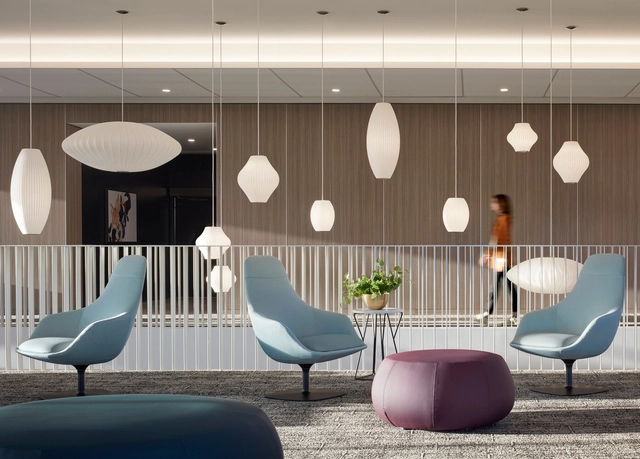
Courtesy of Shaw Contract, Photos by Marc Tan (Studio Periphery), Owen Raggett and Alex Soh
Focused on bringing spaces back to life, Avalon Collective takes a pre-existing building and transforms it into a contemporary hotel that relates to the locality and origin of Orchard Road, while capturing its modern retail context. Through a consistent design language and spirit that incorporates history and regeneration, the new Hilton Singapore Orchard has been selected among the five winners of the 2022 Best of Globe Winner.
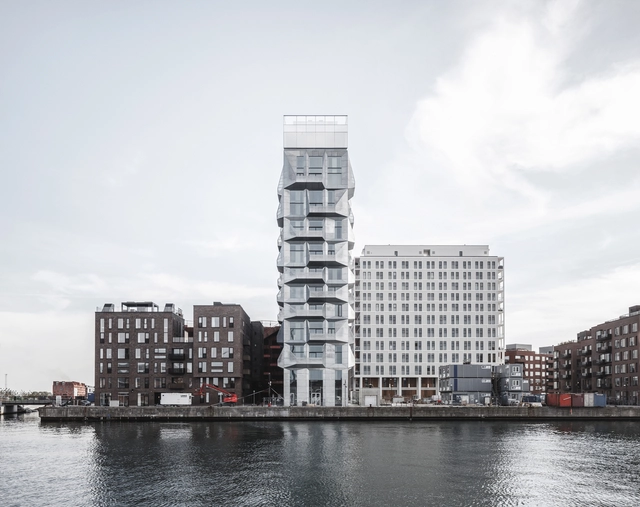
Historically home to vikings, kings and queens, Copenhagen is a vibrant city that mingles contemporary architecture with traditional waterways, narrow cobblestone streets, old timbered houses and ancient castles. Filled with history, its buildings embody a historic legacy that traces the memory of all the characters, epoques and events in which the city has passed through. How to keep all this history alive? By refurbishing traditional buildings within modern design, Copenhagen respectfully enjoys its historical architecture while adapting to current trends.
Are you sitting comfortably right now? OK, I'll wait a few seconds so that you can adjust your posture and we can continue the text. As much as we all know that our backs should be upright, shoulders back and glutes against the back of the chair, as soon as we stop paying attention, we tend to let our body slide down the chair until our spine takes the shape of a big question mark. This can lead to various posture and circulation problems, chronic pain, and increased fatigue after a long day, week, month, or years of work. But know that you're not alone, and it's not (necessarily) your fault. What elements make a chair comfortable? How can they help you maintain a proper posture for longer? Is it possible to have design and comfort in the same product? In this article we will try to answer these questions and show some examples from the Architonic catalog.
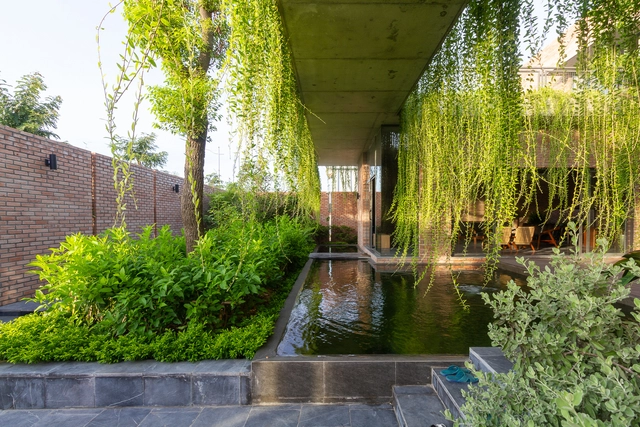
If ancient Hellenic sources are to be believed, hanging gardens have existed at least since antiquity when the famous Hanging Gardens of Babylon were described by writers such as Herodotus and Philo of Byzantium. Today, vertical gardens have proliferated alongside the interest in indoor plants and gardens, especially in suitable climates. This trend in architecture reflects a simultaneous uptick in interest toward sustainability and a more pastoral, back-to-nature lifestyle. In the projects listed below, several of the architects mention moving forward from an industrial past—with its concomitant environmental effects—toward a better future, or at least a secluded, fresh, and natural outpost amidst the chaos of modern city life. Indoor gardens, and the visual allure of hanging plants and climbing vines, provide the setting for such a life. These vertical designs simultaneously conserve space and embed the plants within the atmosphere of the house, ensuring the space feels as much like a garden as it does a comfortable home.
https://www.archdaily.com/954370/adding-fresh-hanging-gardens-to-residential-architectureLilly Cao
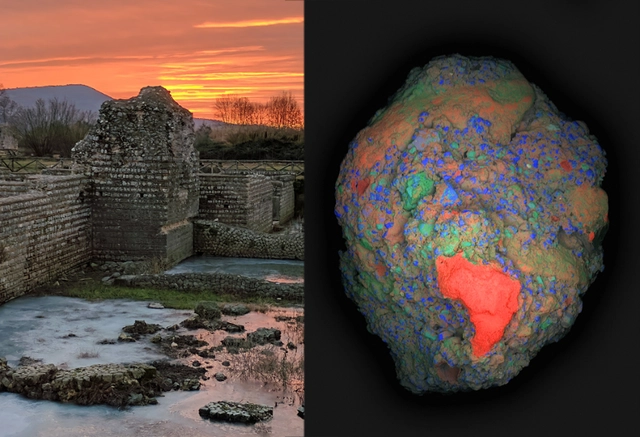
A large-area elemental map (Calcium: red, Silicon: blue, Aluminum: green) of a 2 cm fragment of ancient Roman concrete (right) collected from the archaeological site of Privernum, Italy (left). A calcium-rich lime clast (in red), which is responsible for the unique self-healing properties in this ancient material, is clearly visible in the lower region of the image. Image Cortesia de the researchers (MIT)
Roman aqueducts built more than 2,000 years ago are still in operation. The Pantheon in Rome remains the largest dome made of unreinforced concrete in the world, with a diameter of 43.3 meters. At the same time, it is not unusual to see structures less than a decade old collapsing. Understanding why Roman structures remain standing has been the subject of studies by many researchers around the world. Why, even in hostile environments such as coastlines or seismic zones, do these structures remain intact? Is there some miraculous material or method that has been lost in history? An international group of researchers led by the Massachusetts Institute of Technology (MIT) has shed light on these questions, discovering that these structures had a previously overlooked capacity for self-healing, and the potentially huge environmental impact it can have, to create more durable concrete structures in the future.