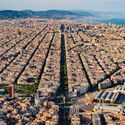
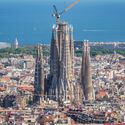
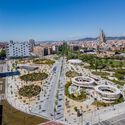
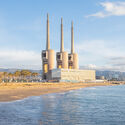
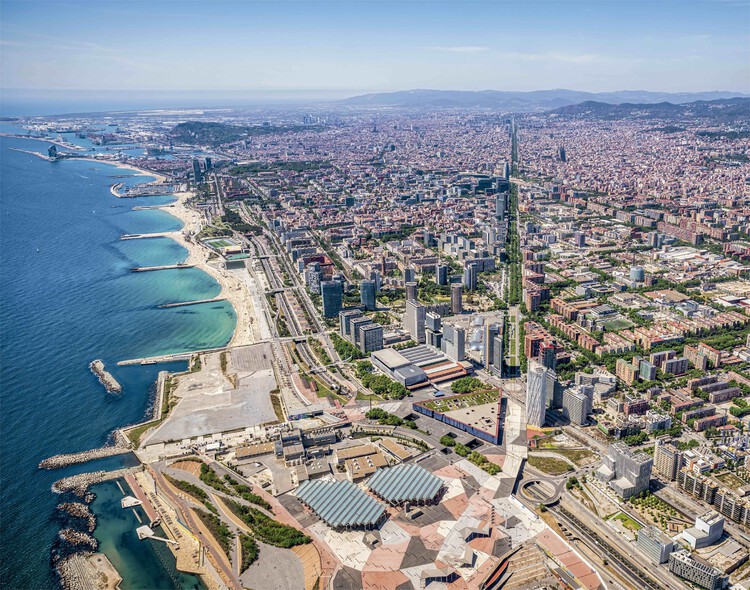
More than three decades after previously hosting the event, Barcelona is set to welcome the UIA World Congress of Architects 2026 Barcelona (UIA2026BCN), bringing the global architectural community back to the city between 28 June and 2 July 2026. Organized under the theme "Becoming. Architectures for a Planet in Transition," the Congress is expected to gather approximately 10,000 participants from over 130 countries, including practitioners, researchers, and students. Rather than being confined to a single venue, the event will unfold across multiple locations along the Mediterranean seafront, among them the Three Chimneys complex, positioning the city itself as an active platform for exchange, discussion, and public programming.
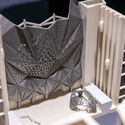
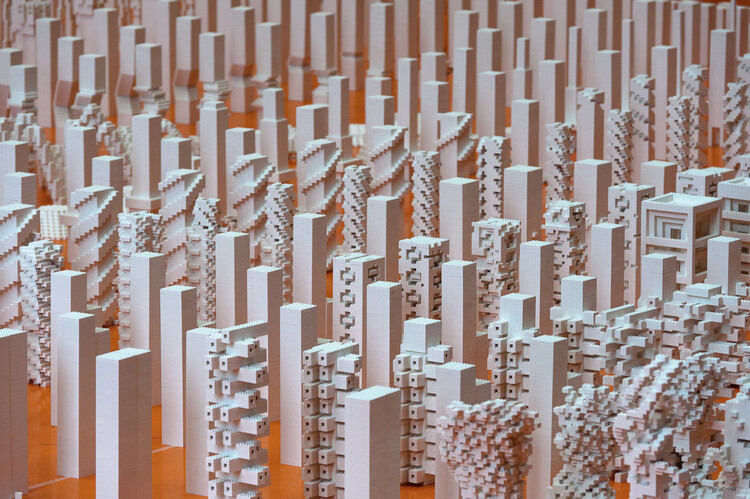
Porous City / MVRDV and The Why Factory. Image Courtesy of Frans Parthesius, MVRDV and The Why Factory
This article is part of our new Opinion section, a format for argument-driven essays on critical questions shaping our field.
Every architectural epoch has been defined by its instruments. The compass, the drawing board, the camera, and the computer have each altered how architects think and produce. Yet the current moment feels qualitatively different. As artificial intelligence and generative systems enter daily workflows, tools cease to be passive extensions of the architect's hand and begin to operate as semi-autonomous agents. They propose, optimize, and simulate, producing outcomes that are, at times, beyond the author's full anticipation.
Modernism, a movement that sought to break away from traditional forms and embrace the future, laid the groundwork for many technological and digital advancements in contemporary architecture. As the Industrial Revolution brought about mass production, new materials, and technological innovation, architects like Le Corbusier, Walter Gropius, and Mies van der Rohe championed the ethos of "form follows function" and a rational approach to design. Their principles resonate in the digital age, where computational design and high-tech materials redefine form and construction.
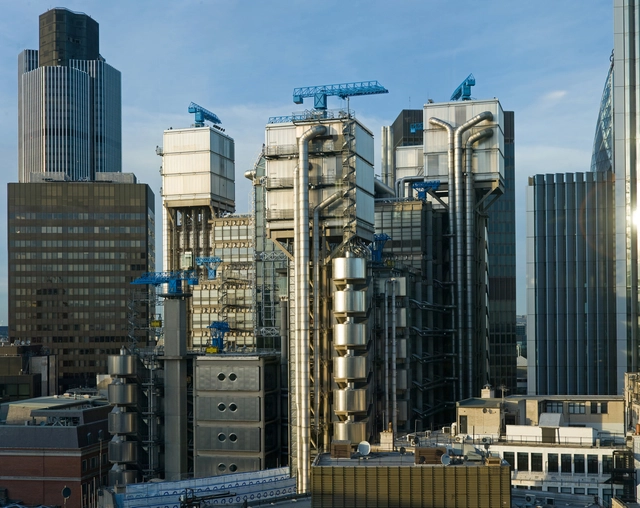
The 20th century's modernist ideals — efficiency, simplicity, and functionality — created a foundation for architects to experiment with structural clarity and material honesty. High-tech architecture, which emerged in the late 20th century, evolved from these principles, merging modernism's clean lines with advanced engineering and technology. This paved the way for parametricism and algorithm-driven design processes, revolutionizing architecture and enabling complex forms previously thought impossible.
Barely a few weeks ago, while self-isolating in London during the grimmest, darkest day of the pandemic, I was among the many who saw the ongoing catastrophe as the final collapse of the mechanical age—or more precisely, of that period in the history of the industrial revolution that is now often called the Anthropocene, characterized by standardized mass-production, global mechanical transportation, and the unlimited burning of fossil fuels. We all thought that the demise of the Anthropocene would be brought about, incrementally, by global warming—which might, perhaps, have given us the time to mitigate or counteract the consequences of climate change and the exhaustion of natural resources. Instead, the end of the machine-made environment came all of sudden, the space of a fortnight, not by way of climate change and global warming but by way of viral change and global infection. When COVID-19 came, and a number of nation-wide lockdowns went into effect (around mid-March in Europe), the entire infrastructure of the industrial world as we knew it suddenly shut down: Planes stopped flying, factories stopped producing, schools, stores, and offices were evacuated and left empty. Yet life carried on, somehow, for those who were not infected, because farming, local artisan production, food distribution, utilities, telecommunications, and, crucially, the internet kept functioning.
Architectural students of my generation—the last of the baby boomers, starting college in Europe or in the Americas in the late 1970s—had many good reasons to cherish architectural history. Everyone seemed to agree at the time that the Modernist project was conspicuously failing. Late Modernist monsters were then wreaking havoc on cities and lands around the world, and the most immediate, knee-jerk reaction against what many then saw as an ongoing catastrophe was to try and bring back all that 20th-century high Modernism had kicked out of design culture: history, for a start. I drew my first Doric capital, circa 1979, in a design studio, not in a history class (and my tutor immediately ordered me to scrape it, which I did).