1. ArchDaily
  2. Interview

Interview: The Latest Architecture and News

Subscriber Access

Beatriz Colomina and Mark Wigley, Curators of the 2016 Istanbul Design Biennial, Discuss "The Design of the Species"

Beatriz Colomina and Mark Wigley, Curators of the 2016 Istanbul Design Biennial, Discuss "The Design of the Species" - Image 1 of 4
Beatriz Colomina and Mark Wigley – Curators of the 3rd Istanbul Design Biennial (2016). Image © Muhsin Akgun

"Design always presents itself as serving the human," state Beatriz Colomina and Mark Wigley, "but its real ambition is to redesign the human." Their curatorial statement for the 3rd Istanbul Design Biennial, which will open later this year and is themed around the title Are We Human? The Design of the Species: 2 Seconds, 2 Days, 2 Years, 200 Years, 200,000 Years, brims with reflective and often prescient statements such as this. All that will be encompassed by this Biennial, they say, will revolve around one pressing provocation: that design itself needs to be redesigned.

If one thing is certain, this Biennial will not come off as a 'trade show'. Wigley (New Zealand) and Colomina (Spain)—both Professors of Architecture at US institutions (Columbia and Princeton, respectively), theorists, writers, and critics—have exerted a profound influence on architectural discourse and pedagogy over the course of their careers. This Biennial, on the other hand, serves as their first formal foray into the world of 'design' – a field which few architects actively engage with.

In this exclusive interview with ArchDaily the curators discuss their intentions, criticise the traditional 'Biennial' model, and describe how they—alongside Andrés Jaque and the Office for Political Innovation—intend to spatialise the show against the backdrop of Istanbul – one of the great nexus of the world. Here, they also formally announce the launch of an Open Call for two-minute films.
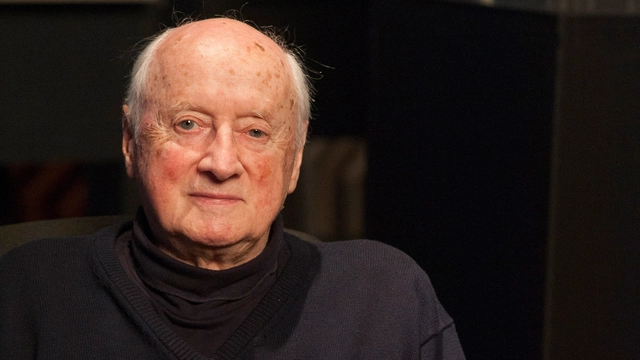
Kevin Roche Reflects on His Five Decade Career, From Beginnings in Ireland to His US Career

In an exclusive thirty minute-long discussion with Kevin Roche, described in this interview as "arguably the greatest living architect you've never heard of," Monocle's Steve Bloomfield hears about his early years in practice through to the evolution of his design philosophy over a career which has spanned five decades.

Kevin Roche Reflects on His Five Decade Career, From Beginnings in Ireland to His US Career - Image 1 of 4
Subscriber Access

Why Rem Koolhaas Switched From Scriptwriting to Architecture

As part of OMA co-founder Rem Koolhaas' sixth interview with Charlie Rose, the Rotterdam-based Architect discusses why the Dutch port-city is his practice's base – and why he switched from journalism and scriptwriting to architecture. In the discussion, of which four snippets have been made available, Koolhaas also explains why he feels that smart technology has a "sinister dimension," and on how he—and his practice—have a tendency to "resist aesthetic."

Subscriber Access

Michael Bierut Talks Architecture, Graphic Design, and How to (Every Once in a While) Change the World

Graphic designers are the masked superheroes of the design world. They shape the way people interact with everyday objects, often at a subconscious level, and create identities for events, services and businesses. Michael Bierut, with his familiar designs for Saks 5th Avenue, New York City parking signs, Verizon, Billboard, and most recently, Hillary Clinton’s much talked-about campaign logo, is a prime example of a man looking out for public aesthetic good. Now, with the release of his book, "How To use graphic design to sell things, explain things, make things look better, make people laugh, make people cry, and (every once in a while) change the world," and a retrospective exhibition of his works coming to a close this weekend at the School of Visual Arts, Bierut’s mask has been lifted.

In Conversation With Jack Self and Shumi Bose, Editors of the 'Real Review'

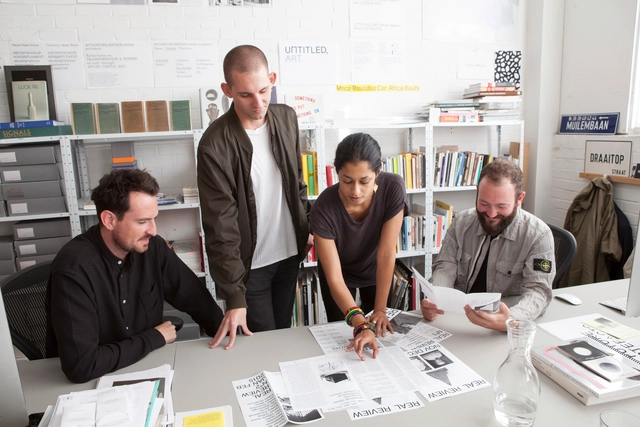
Last month a Kickstarter campaign launched by the Real Estate Architecture Laboratory (REAL) reached its funding target: the Real Review, an independent bi-monthly magazine which intends to "revive the review as a writing form" to a general readership within the architectural sphere, will soon be a reality. ArchDaily sat down with editors Jack Self and Shumi Bose to discuss how the project came into being and what this—the flagship publication of REAL—will look like when its first issue is published in early 2016.

Norman Foster on Urbanism, Emerging Economies and Airport Design

In an exclusive half-hour interview with Lord Norman Foster, Monocle's editor-in-chief Tyler Brûlé discusses matters of urban planning and "big-thinking emerging economies" with "one of the world’s most innovative and revered architects." Foster, who turned eighty years of age this year, has been the recipient of some of the world's most prestigious architecture awards – from the Pritzker Prize, the Stirling Prize, the AIA Gold Medal and the Prince of Asturias Award (Spain). Over the years, Foster's practice have become world-renowned experts in high-density transit design (namely, airports) – a focus of Brûlé's questioning.

Subscriber Access

Archiculture Interviews: Peter Lippman

“We as a profession have to encourage young architects to understand that the technology they’re using is merely a tool. They have to understand how to build the building that they’re creating, but also understand that this place is going to affect somebody. So what can we do to make it a place that—in a sense—I want to be a part of, that I want to attach to?”

Subscriber Access

Archiculture Interviews: Evan Douglis

“Something I always tell my students is that it’s important to fail on a continuous basis—and I’m not talking about the grade. I mean it’s in the spirit of risk, that you have to be willing to free yourself from a set of preconceptions in order to get to this new place. And if failing constitutes making mistakes in order to learn from these mistakes, then you have achieved an enormous amount. In fact, you’re only able to move forward because of this new-found knowledge.”

Subscriber Access

Archiculture Interviews: Michael Monti

“I think one generational shift that’s going on has to do with the interest in architecture students to be involved in the community. Students see architecture not just as a profession, like medicine or law, they see it as a kind of service profession, on the order of social work or social science, where they understand that the work they do affects communities and real people, so they want to involve the communities from the beginning in their design process.”

Subscriber Access

Archiculture Interviews: Terry Heinlein

“Students who enter schools of architecture today are entering it at a very young age, perhaps when their total world experience and awareness is relatively narrow, and they’re making the decision to become a practicing architect, and putting aside those studies—general ed., liberal arts studies—that might actually, in the end, make them more contributing architects. […] Fewer and fewer people are having that basic liberal arts, general ed. knowledge in the profession. And it’s a serious problem.”

Subscriber Access

Archiculture Interviews: Joe Riley

“What makes a livable city is the place where the resident—the occupant—feels in charge. So, for a child, a neighborhood that’s child-friendly. Or for citizens, a place that is physically beautiful, and handsome, and nourishing, and inspirational—a place where there is [a] substantial [amount] of public realm.”

Subscriber Access

Archiculture Interviews: Audrey Matlock

“I think that [sustainability education] is a massive responsibility of ours: to go beyond what we’re being asked to do, and to teach our clients what a good building is, and to get them to look at buildings in different ways, and get them to do […] the right thing.”

Subscriber Access

Video: How Stanley Saitowitz Maximizes Freedom of Space

“These are methods to actually create the optimum amount of freedom for the occupant themselves to figure out how they want to use the space and live with the least […] architectural impediments, and the least […] predetermined idea of where things should go and what should happen where.”

In this interview with DDG | DM Development, Stanley Saitowitz discusses the latest Stanley Saitowitz | Natoma Architects project, a residential building called 8 Octavia in San Francisco. Find out more about Saitowitz’s design principles and methods by watching the video above.

Subscriber Access

Calvin Seibert Sculpts Impressive Modernist Sandcastles

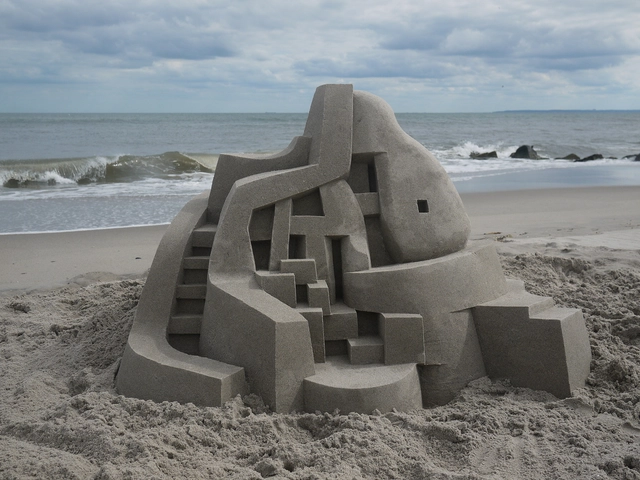
“I always had an affinity for architecture which I attribute to growing up in a neighborhood and town that was constantly under construction. Our house was the first on the block. I think that in a way I was more interested in the abstractness of the foundations and the initial framing then in the completed structures themselves. Things I made back then had that incompleteness about them. As I became more aware of architecture in the wider world Brutalism was one of the styles of the moment. Looking at architecture magazines as a child and seeing hotels in French ski resorts (Marcel Breuer at Flaine) made of concrete suited my sensibility, I was hooked.”

For New York-based Calvin Seibert, sandcastles are more than just a fun summer hobby. Using a paint bucket, homemade plastic trowels, and up to about 150 gallons of water he creates spectacular modernist sandcastles. Read on after the break for an interview with Seibert and to see more photos of his work.

Calvin Seibert Sculpts Impressive Modernist Sandcastles - Image 1 of 4Calvin Seibert Sculpts Impressive Modernist Sandcastles - Image 2 of 4Calvin Seibert Sculpts Impressive Modernist Sandcastles - Image 3 of 4Calvin Seibert Sculpts Impressive Modernist Sandcastles - Image 4 of 4Calvin Seibert Sculpts Impressive Modernist Sandcastles - More Images+ 12

Subscriber Access

Archiculture Interviews: Marc Schaut and Dan Bucsescu

In a new segment of the Archiculture extras series, Arbuckle Industries interviews Pratt professors and architects Marc Schaut and Dan Bucsescu, who discuss the extent to which technology has transformed the teaching of architecture, and the necessities of a holistic architecture education. Watch the interview above, and delve into more Archiculture interviews here.

Subscriber Access

Archiculture Interviews: Bill Hellmuth

“If you look at just carbon emissions, what we do for a living—building buildings, running buildings, all that— is 50 percent of all the carbon emissions in the United States. […] Well that’s both sort of dreadful and wonderful at the same time. […] The opportunity is, because it’s so concentrated, a relatively smaller group of people can do something about it. ”

As a part of its Archiculture series, Arbuckle Industries has interviewed HOK president Bill Hellmuth on his experiences in architecture school and working in a large practice. In the interview, Hellmuth discusses his path in architecture school, how large firms allow for the creation of teams, and issues involving sustainability and livable cities.

Subscriber Access

Archiculture Interviews: John Cary

"There are far, far more basic things - health, education, housing, and so on - but the thing that we try to communicate [...] is that we need to better articulate how design can improve those truly basic human needs."

Subscriber Access

Archiculture Interviews: John King

"What I love about architecture is it really is the art form that we all encounter, it's larger than life, it's what you can't avoid." In this installment of Arbuckle Industries' Archiculture interviews, author and urban design critic John King dissects the role of the public in architectural practice and the mindset of those who get involved. He goes on to discuss the defining characteristics of successful, seasoned architects, and compares their mentality to that of emerging architects. Additionally, King touches on the subject of architectural criticism and how the profession came about.