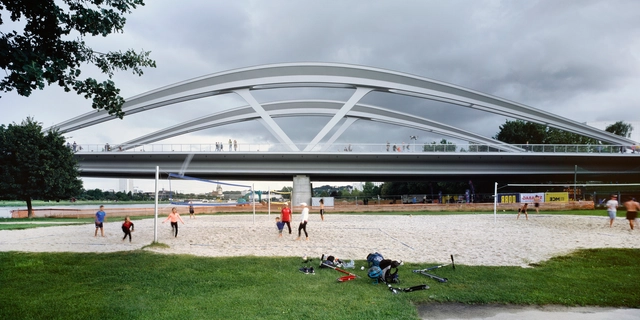
Whether figuratively or in an urban context, bridges are a strong symbol and often become iconic projects in cities. Building bridges can mean creating connections, new opportunities. But they are also fundamental pieces of infrastructure that solve specific issues in an urban context. As these involve highly technical equipment, with complex constructions and overwhelming bold structural requirements, they require projects that do not need full integration between architecture and engineering and, in many contexts, is a type of projects that architects are not so involved with. Marc Mimram Architecture & Engineering is a Paris-based office comprised of an architecture agency and a structural design office. In its project portfolio, there are several bridges, as well as various other project typologies. We spoke with Marc Mimram about his latest project in Austria, the bridge at Linz, photographed by Erieta Attali.
Recent years have seen an increased acknowledgement of the collective endeavour that is architecture and a better valuing of the different professions that participate in the design process. Within every extraordinary building, structural engineering plays an essential role in delivering the architectural vision. The article highlights the past and present contributions of engineering to the built environment, personalities that have stood in the shadow of architects delivering their design intent, and the collaboration between engineers and architects today.
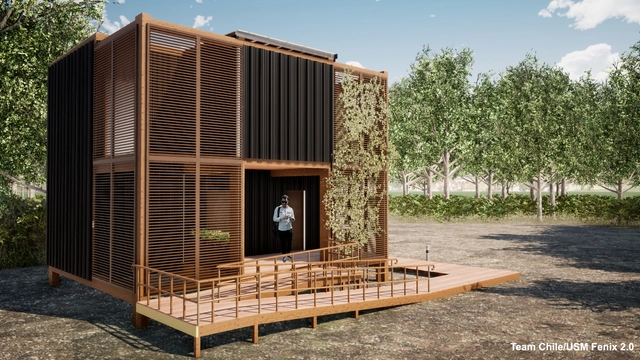
2020 Build Challenge – Universidad Técnica Federico Santa María, Valparaíso, Chile. Image Courtesy of Dept of Energy Solar Decathlon on Flickr
The United States Secretary of Energy Jennifer M. Granholm announced the winners of the 2021 U.S. Department of Energy (DOE) Solar Decathlon, a competition that challenges architecture and engineering college students from around the world to design and construct high-performance buildings powered by renewable energy. 72 competing teams hailed from 12 countries and designed energy-efficient residential and commercial spaces, nine of which were constructed and presented in the Solar Decathlon Virtual Village on the National Mall, a first of its kind, in Washington, D.C.
This landmark exhibition at the Building Centre will explore the potential of stone to revolutionise architecture and construction in light of the current climate crisis. It may seem like an ancient building material but stone has serious sustainability credentials; with the ability to reduce a project’s embodied carbon by an incredible 90 per cent compared to typical steel or concrete frames. The New Stone Age will celebrate the sustainability, practicality and inherent beauty of the world’s oldest natural material.
The annual Council on Tall Buildings and Urban Habitat's (CTBUH) Tall + Urban Innovation Conference explores and celebrates the very best in innovative tall buildings, urban spaces, building technologies, and construction practices from around the world. Incorporating what was previously known as the CTBUH Annual Awards event, this conference sees the owner/developers, design, and engineer teams for 50+ Awarded projects present in front of an international audience and live juries for winning distinctions across several award categories. Hot topics in the building industry will also be explored through presentations in project rooms.
Helen Taylor of Woods Bagot and Rachel Cooper of Arup Associates team up to explore how deep basements may be the future of the city as density and population growth result in the need to dig deep as well as build high. Using their current joint project as a case study, they share their experience of building the deepest habitable basement in London and among the deepest in the world. Set to open in 2020, The Londoner will offer 350 rooms, multiple restaurants and lounges, a rooftop bar and underground spa with swimming pool, Odeon cinema, and a 1,000-capacity ballroom. At over 35 meters deep and containing a large percentage of the FOH floor area, the basement presented several challenges that required innovative architectural and engineering solutions from both teams, which are presented in the following interviews with Helen and Rachel.
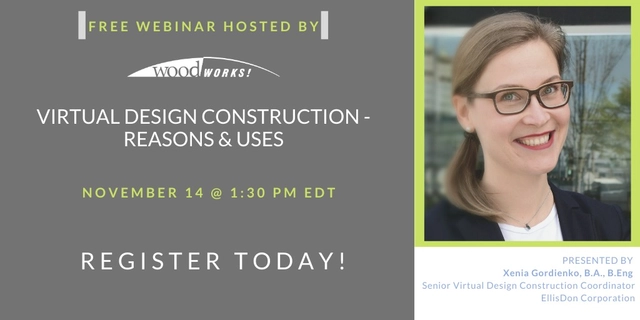
This webinar will touch on the history and the psychological success behind BIM, fast tracking into the current status. The presenter will share details of a current BIM project by using different software for coordination and quantities take-off: Revit model are combined in Navisworks, coordinated in Revizto and exported to Assemble System for quantities take-off.
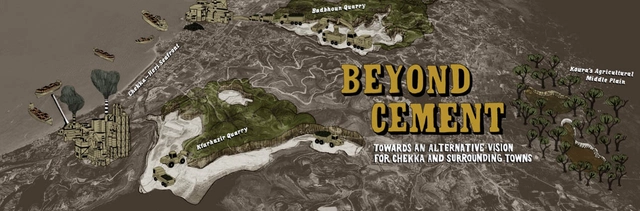
Many challenges underline the urgency of reconsidering dominant approaches to development, land use, and the institutional framework that governs them, in addition to the political context, which requires a novel and creative counter-approach in Chekka and Surrounding Towns in North Lebanon. As such, this competition is an open call for planners, designers, environmental scientists, agricultural engineers, economists and other professionals to draft an intervention framework, which simultaneously answers the concept of sustainable development and the immediate needs of the people, including job opportunities and a local economy, without compromising their health, the environment and local economic resources.
In the context of the World Architecture Festival 2019, edgeallies, a brand owned by edgearch: Ahmed Abdulaziz Zaidan Consulting Architects has signed off a 4 years participation to the World Architecture Festival as main exhibitor as well as main sponsor for the first Engineering Prize category: For collaborative design by architects and structural engineers.
Emaar Development is hosting an International Open Design competition for the Design of The Landmark at the heart of the ambitious new world-class mixed-use waterfront development Dubai Creek Harbour. The Development is a 5.6 Million sqm site and is expected to have 48,500 residential units with a population of 175,000 residents, when completed.
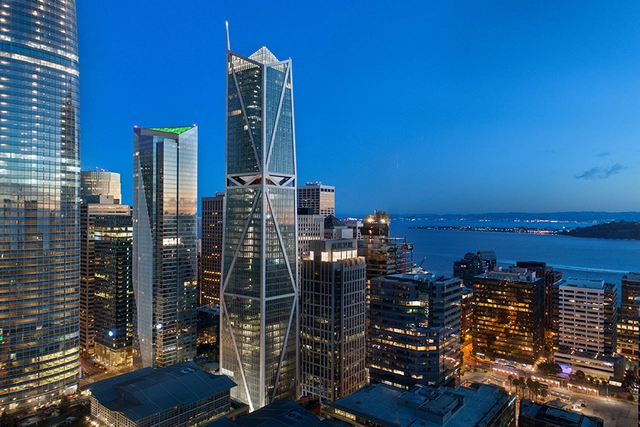
For 181 Fremont, Arup’s radical move was to do away with plans for a tuned mass damper or a sloshing damper on the skyscraper’s roof—common features in tall towers in the U.S. for reducing the natural sway of buildings. Neither damper style goes very far in protecting a building against seismic force, says Ibbi Almufti of Arup. Image Courtesy of Kevin Chu/KCJP
The most remarkable thing about 181 Fremont—San Francisco’s third-tallest tower, designed by Heller Manus Architects—is not the penthouse’s asking price ($42 million). Rather, it’s an innovative yet unglamorous structural detail: a viscous damper system that far exceeds California Code earthquake-performance objectives for buildings of 181 Fremont’s class, allowing immediate reoccupation after a seismic event.
Habitat: Vernacular Architecture for a Changing Planet
Climate change is the biggest challenge facing our planet. There has never been a more important time to understand how to make the best use of local natural resources and to produce buildings that connect to ecosystems and livelihoods and do not rely on stripping the environment or transporting materials across the globe.
Today, a new exhibition opened in Venice featuring the work of the global architecture and engineering practice Skidmore, Owings & Merrill (SOM). Presented at the European Cultural Centre, "Time Space Existence" is a collateral exhibition of the 2018 Venice Biennale of Architecture. The show includes work from leading architects, photographers, sculptors, and universities from around the world.
2018 International Student Tall Building Design Competition, CTBUH
The Council on Tall Buildings and Urban Habitat (CTBUH) is pleased to announce its 7th International Student Tall Building Design Competition. The goal of the competition is to shed new light on the meaning and value of tall buildings in modern society. The deadline for submission is July 23, 2018.
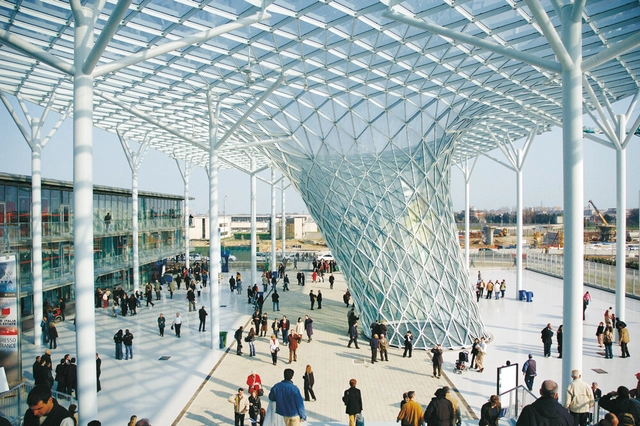
The recent availability of automated design and production techniques is changing the development of building details. With parametric and algorithmic design methods and the use of digital fabrication, new abilities are required from architects for the design of details, at the same time as new players are beginning to take part in their development.
Although not always given the necessary attention, architectural details are of extreme importance for many aspects of a building. They can define its theoretical expression and technical character, and impact its production process, its assembly method and even its ecological footprint. Contemporary architecture shows a new interest in detailing, which should not be confused with a return to the appreciation of artisanal work.[1] This new interest is related to the recent re-involvement of the architect with the physical making of buildings, as a result of the use of digital technologies.[2] The new “digital master builder” [3] counts on file-to-factory processes, in which the morphology of construction details is directly related to the knowledge of the available production processes.












_Tom_Harris_(4).jpg?1527346283&format=webp&width=640&height=580)