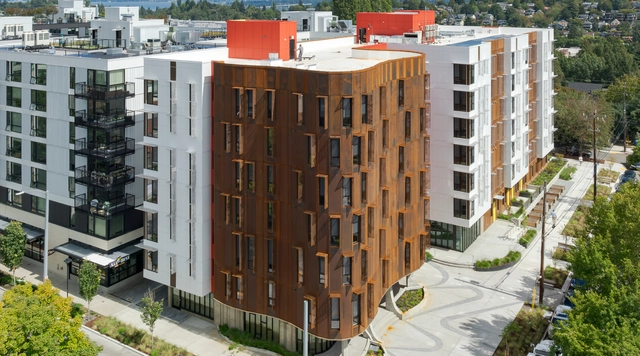
As urban neighborhoods continue to evolve, design plays a key role in shaping how buildings respond to urbanization, functional demands, and the character of their surroundings. Intertwined, these elements guide the transformation of urban life and influence how new developments engage with their context—a dynamic clearly visible in Seattle's Central District. Long considered a historic hub for the city's African American community, the Africatown Plaza project proposes a comprehensive approach that integrates architectural performance with community resonance, using the building envelope as a primary medium.
https://www.archdaily.com/1030331/metal-facade-systems-with-community-resonance-the-case-of-africatown-plazaEnrique Tovar
The world certainly looks different through the eyes of a young child; enormous, intriguing, and somewhat overwhelming, and it has long been believed that what we encounter as children shapes our perspective of the world. When asked about his childhood memories in Switzerland, Peter Zumthor shared that the memories of his youth contain the deepest architectural experience, which has become reservoirs of the architectural atmospheres and images that he explores in his work as an architect today.
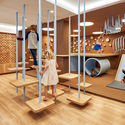
Having a complete understanding of how children change and grow physically and psychologically throughout their childhood requires an in-depth observation of different factors, such as their hereditary traits and genetics, the interactions they have with other children and adults, as well as the environment they are living, playing, and learning in. In celebration of World Children's Day on November 20th, we look at how architects and designers stimulated children's autonomy and promoted their mental and physical well-being through architecture and interior design. This initiative aligns with the theme of World Architecture Day 2024: "Mobilizing the Next Generation for Urban Transformation," emphasizing the crucial role that thoughtful design plays in shaping a sustainable and inclusive future for our cities and the communities within them.
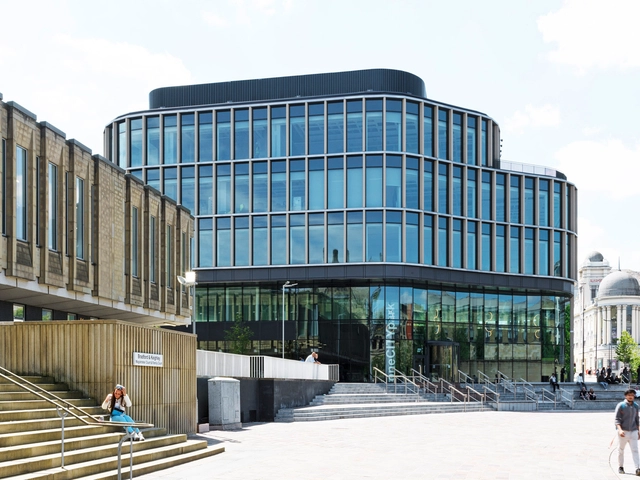
One City Park in Bradford, England. Image Courtesy of Rieder Facades / Ditz Fejer
Contemporary architecture evolves in tandem with the materials and construction techniques available in each region. In addition to the architectural trends of the moment or historical ideas that may inspire creativity, understanding how materials are used, cared for, and maintained, as well as their technical and aesthetic properties, is crucial to the concepts envisioned by many architects. Each material carries its own inherent logic. In fact, architect Louis Kahn suggested that the way materials interact can lead to unavoidable combinations of structure, walls, and assembly in buildings. Rieder products exemplify this by offering modular, flexible solutions that help buildings seamlessly adapt to urban environments, enhancing both interior and exterior spaces while maintaining cost-effectiveness.
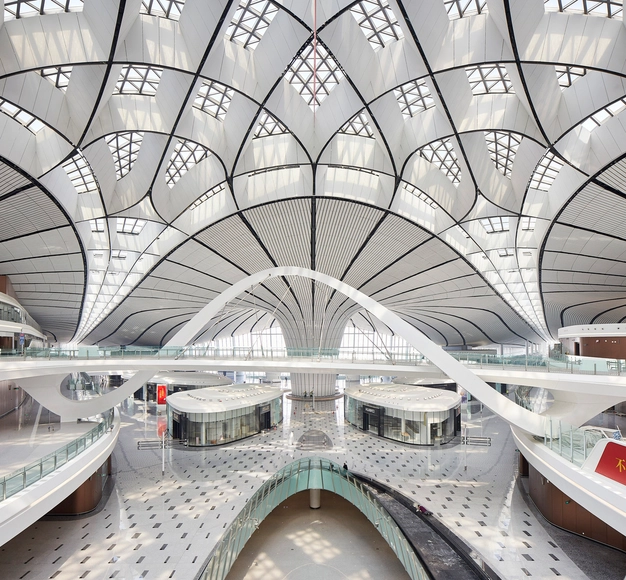
Modern airports have increasingly become symbols of architectural innovation, moving beyond their primary function as transportation hubs to become significant landmarks. A prominent trend in contemporary airport design is the use of curved forms to create fluid, dynamic spaces that enhance both functionality and visual impact. These curves, made possible by advancements in construction technology, allow for more flexible and expansive interiors, as well as designs that can better integrate with natural landscapes and improve passenger circulation and experience.
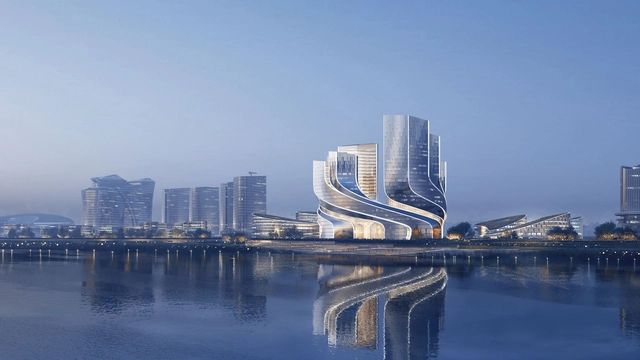
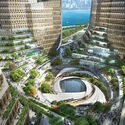
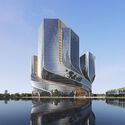
Büro Ole Scheeren has won the international competition for the design of Tencent’s new global headquarters in Shenzhen, China. The new structure, occupying a 14-hectare site, will become part of a new urban development along Qianhai Bay. Envisioned as a centerpiece within the future technology and financial district, Büro Ole Scheeren’s Tencent Helix will become the center of the multinational company’s expanding ecosystem.
.jpg?1637144526&format=webp&width=640&height=580)


.jpg?1637144526)