Architect and MIT Lecturer Cristina Parreño has created this new prototype for a self-supporting glass facade, entitled "The Wall." The design is the first in Parreño's "Tectonics of Transparency," a series of planned prototypes that will "explore the relationship between formal design, spatial perception, structural efficiency and systems of fabrication."
More details about Parreño's prototype after the break
The Urban Implications of Living With Water, a recent report by the Urban Land Institute (ULI) Boston, opens with the clear assertion: "We are beginning to feel the effects of climate change." The result of a conversation amongst over seventy experts from the fields of architecture, engineering, public policy, real estate and more, the report covers the proposed integrated solutions for a future of living in a city that proactively meets the challenges accompanying rising water levels.
"We accept that the seas are rising, the weather is changing, and our communities are at risk; and we recognize that no solution can be all-encompassing. It is our hope that this report will spark conversation, shift our understanding of what is possible, and aid us in reframing challenges into opportunities as we move toward this new era of development."
Become part of the discussion and read more about the collective ideas, after the break.
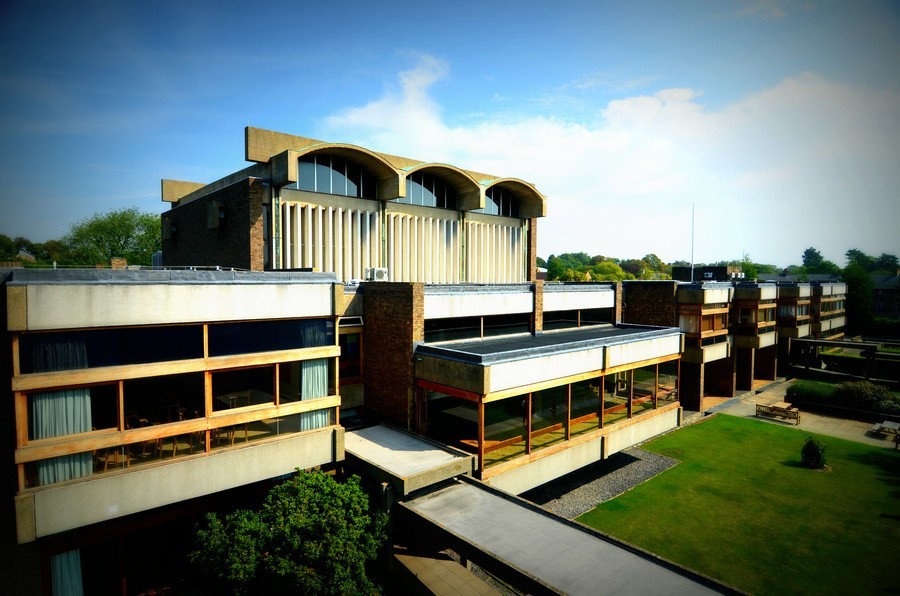
Fifty years ago Churchill College Cambridge opened its doors. In contrast to the historic Colleges, with their medieval Gothic and Neo-Classical buildings corralled behind high walls, this was in an almost rural setting on the outskirts of the city, modern in design, and Brutalist in detail.
The 1959 competition that brought the College into being is considered by many to be a watershed moment in British Post War architectural history. It brought together 20 names, young and old, all practicing in Britain, all working in the Modernist and more specifically the nascent Brutalist style. It was a “who’s who” of British architecture at the time, including the Smithsons, Hungarian-born Erno Goldfinger, Lasdun (then in partnership with Maxwell Fry, Jane Drew & Lindsay Drake, and formerly with Russian émigré Lubetkin), Lyons Israel Ellis and Robert Matthew (one half of the Royal Festival Hall team, who teamed up with Johnson Marshall). None of these made the shortlist of four.
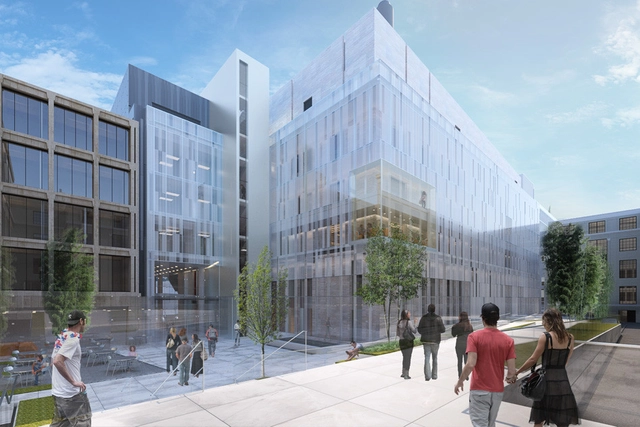
Boston-based practice Wilson Architectshas been commissioned by the Massachusetts Institute of Technology (MIT) to design a state-of-the-art research hub for nanoscience and nanotechnology: MIT.nano. Centrally located at the heart of MIT, the new glass-encased, four-story structure will house two floors of high-performance cleanrooms, as well as imaging and prototyping facilities that are all designed to foster innovation through cross-discipline collaboration.
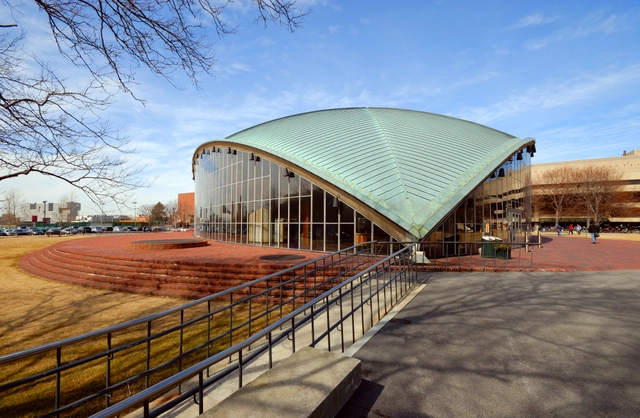
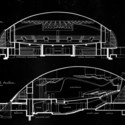
Kresge Auditorium, designed by Finnish American architect Eero Saarinen, was an experiment in architectural form and construction befitting the Massachusetts Institute of Technology’s focus on technology and innovation. This feat of sculptural engineering serves as a meeting house and is part of the cultural, social, and spiritual core of MIT’s campus. Kresge Auditorium is one of Saarinen’s numerous daring, egalitarian designs that captured the optimistic zeitgeist of Post-war America.
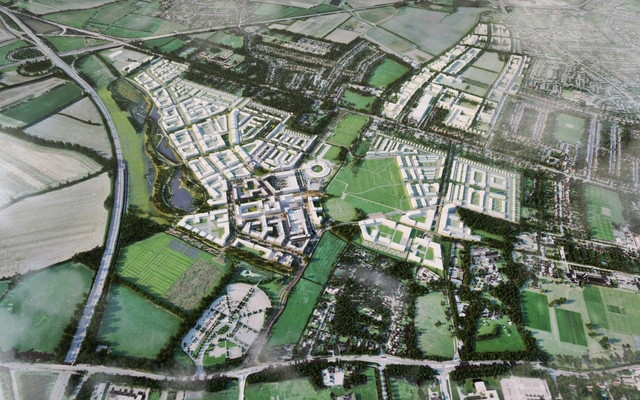
Masterplan. Image Courtesy of North West Cambridge
Earlier this year the University of Cambridge announced an ambitious new urban extension in the north west of the city in order to create a framework for a new district centered on a mixed academic and urban community. The development, planned by Aecom, has aspirations of achieving urban space that is well balanced, permanent and sustainable. Containing 1,500 homes for its key workers, accommodation for 2,000 postgraduate students, 1,500 homes for sale, 100,000 square metres of research facilities and a local centre with a primary school, community centre, health centre, supermarket, hotel and shops, proposals from Mecanoo and MUMA are now entering the planning phase. Future lots are expected to be filled by the likes of Stanton Williams, Alison Brooks Architects and by Cottrell and Vermeulen working with Sarah Wigglesworth and AOC.
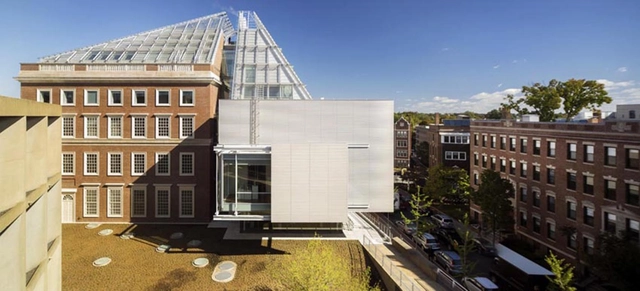
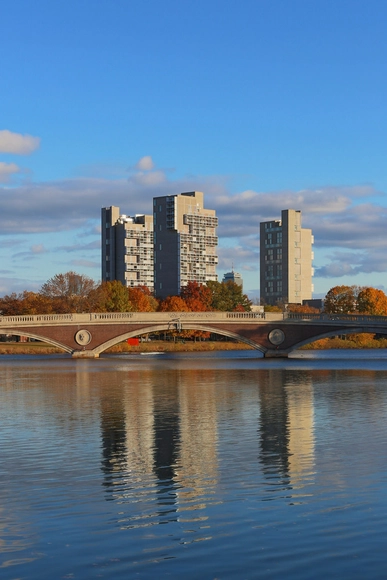
Built in 1964 during his tenure as Dean at the Graduate School of Design, Josep Lluís Sert’s Peabody Terrace provides housing for almost 1500 Harvard graduate students and their families. One of several projects Sert designed for Harvard’s campus, it is a manifestation of his vision for the ideal neighborhood. Many elements such as the negotiation of scale, mixed use program, shared open space and design aesthetic were influenced by but represent a departure from earlier modern housing projects.
Peabody Terrace is a prototypical example of a twentieth-century project heralded by the architectural community as an exemplar of progressive modern ideals, but lambasted by neighbors and members of the general public for being unattractive, cold and imposing. This project and others like it highlight the disconnect that can occur between the architectural intelligentsia and the communities in which they build.
In the last two decades, the concept of urban metabolism, aiming to grasp the continuous processes of energy, material and population exchange within and between cities and their extensive hinterlands, has been subject of both extensive empirical research and, increasingly, critical discussion within the social and natural sciences. However, these interdisciplinary challenges have not yet been met with a synthetic response from the design disciplines.
Biopharmaceutical company AstraZeneca has commissioned Herzog & de Meuron to design their new Global R&D Centre and Corporate Headquarters. Planned for the Cambridge Biomedical Campus on the southern outskirts of the city, the new £330m project will be home to one of the company’s three global strategic research and development centres as well as its corporate headquarters.
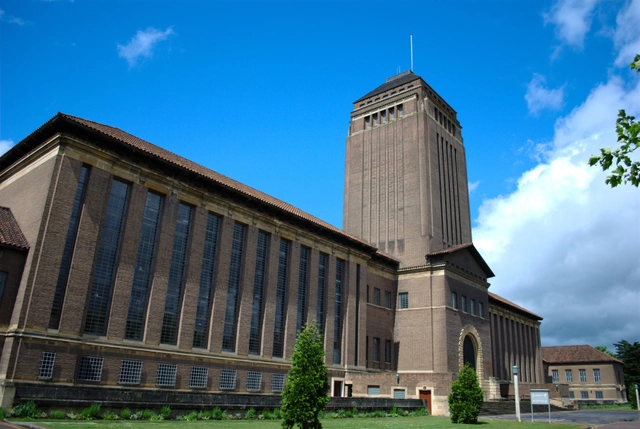
Cambridge University Library. Photo: Faoch via Flickr. Used under Creative Commons
The University of Cambridge Library, with the Department of Architecture, recently launched a landscape design competition to transform the space surrounding Cambridge University Library. Open to professionals and non-professionals alike, they are looking for bold submissions that reimagine the open spaces and environment of the iconic Giles Gilbert Scott building. A monumental presence both within the University and the city, entries to the competition will be judged on their innovative interpretation of the site, its context, use and history – as well as their ability to integrate contemporary ecological research. Entries should also promote new visibility for the Library and encourage people to think about the role of the site on the western edge of the city. The registration deadline is September 30, and the deadline for submissions is November 30. For more information, please visit here.
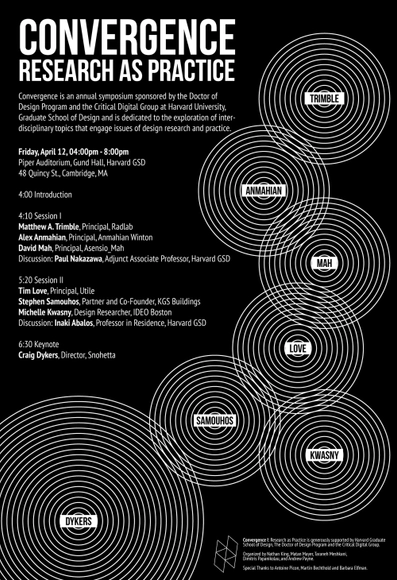
Taking place this Friday, April 12th, from 4:00pm-8:30pm, the Doctor of Design program at the Harvard University Graduate School of Design is inviting you to 'Research as Practice', their annual Convergence symposium. As the traditional boundaries of design practice are increasingly questioned, broadened, and blurred, scientific research in technology development and application emerges as an essential vehicle for exploration and assessment. In this inaugural year, the symposium will seek to explore the position, relevancy, and sustainability of applied research in design practice across various disciplines with examples from contemporary practitioners. For more information, please visit here. For more information, please visit here.
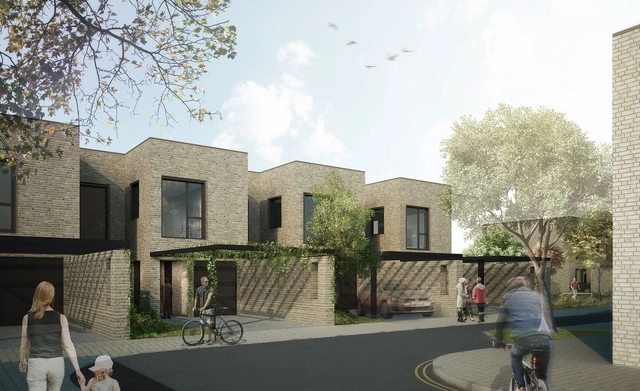
Long Lane, a key section of the Great Kneighton development on the southern fringe of Cambridge, has recently received planning approval, which will provide 273 homes over 5.4 hectares. Designed by C.F. Møller their contemporary masterplan retains historic features from the existing site, while providing homes that are functional, flexible and sustainable. Working in collaboration for developer Homes by Skanska and PRP, the customer-focused scheme provides a tenure-blind mix of private and affordable housing. More images and architects' description after the break.
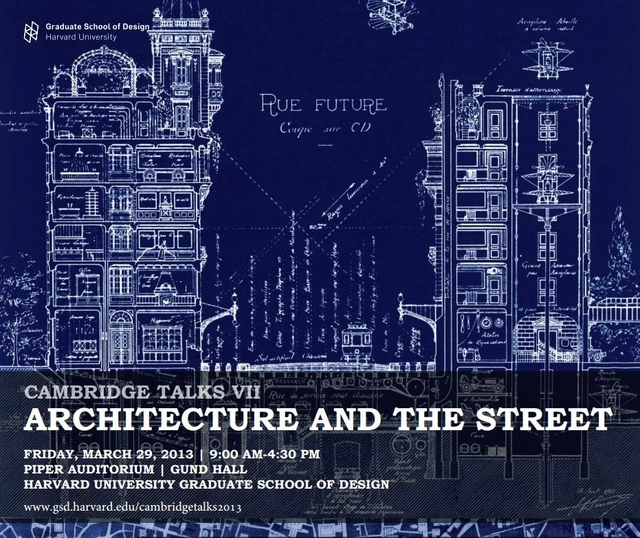
Free and open to the public, the PhD program at the Harvard University Graduate School of Design is pleased to invite you to the 7th annual Cambridge Talks conference, which will take place on Friday, March 29, from 9:00am to 4:30pm. This year's conference seeks to bring fresh historical themes and tools to bear on the problem of 'Architecture and the Street'. New research promises to enrich and challenge perspectives pioneered by Spiro Kostof, Jane Jacobs, and William H. Whyte. You will be challenged to critically think about questions such as 'How might we theorize and historicize modern streets as sites of cultural memory and nostalgia? And above all, what are the effects of such social, political, and technological forces on architectural form? For more information, please visit here.
Taking place April 8-9 at MIT's School of Architecture and Planning the 'Infrastructural Monument' Conference hosted by the Center for Advanced Urbanism (CAU), focuses on the development of infrastructural research agendas and projects which is a key mission for MIT’s CAU. This conference is the first in a series, devoted to a series of strategic design challenges facing cities worldwide. The conferences challenges you to answer the question, 'Can a typical American city be transformed from a collection of fragments assembled regionally by interstate highways, to a more durable regional constitution, using targeted infrastructural investment projects?' For more information, please visit here.
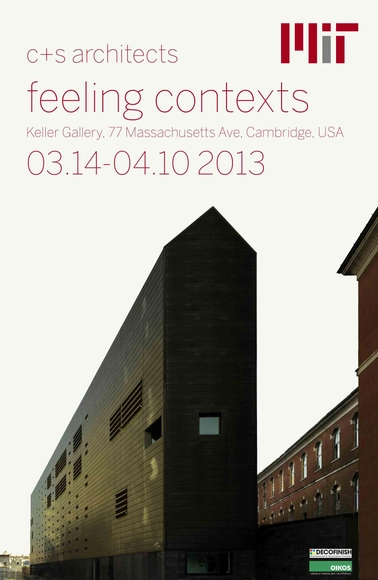
Summarizing the philosophy and methodology of C+S Architects, the Keller Gallery at MIT Department of Architecture will serve as a new context for the work of C+S Architects. As if lifted from their Treviso, Italy studio and planted directly within MIT, a working table of models and drawings will compose the central space of the gallery, juxtaposed with the firm’s recent built works. Taking place March 14-April 10, C+S re-writes the contexts as a map of the potentialities, where to graft interferences which react with the physical, economic, social and political spheres. These interferences are frames in search for the beauty of the ordinary, open to the flowing of time, energy, people. For more information, please visit here.
By Design is a two-day inaugural event taking place January 25-26 that aims to build a platform of innovation by engaging key stakeholders through the creative process. The event includes a speaker series and a design challenge at the newly constructed Harvard Innovation Lab, Harvard Business School, and the Graduate School of Design. With a focus to reframe the future of education, the model and structure of the conference allows participants to unpack tacit, hidden, and evident knowledge from each corner of the university, through simple yet uncommon dialogue between each school. More information after the break.


.jpg?1417009867&format=webp&width=640&height=580)
.jpg?1417009941 "© John Horner")
.jpg?1417009867 "© John Horner")
.jpg?1417009859 "© Jane Messinger")
.jpg?1417009978 "© John Horner")
.jpg?1417009867)