Videos
CAFx SUMMER SCHOOL on FILM x ARCHITECTURE - The Urban Yoga by Anja Humljan, Photo: Emilio P. Doiztua
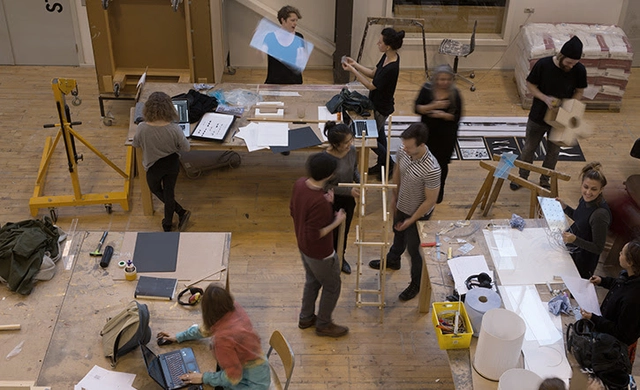
Through interdisciplinary master class studios the CAFx SUMMER SCHOOL explores relationships of architecture and film during eleven days in August 2016. Six upcoming architects and filmmakers under 40 years old will co-teach three thought provoking master class studios in Aarhus. The architects and filmmakers have been selected by an international jury on the basis of their recent submissions to the Future Architecture submissions (see here).
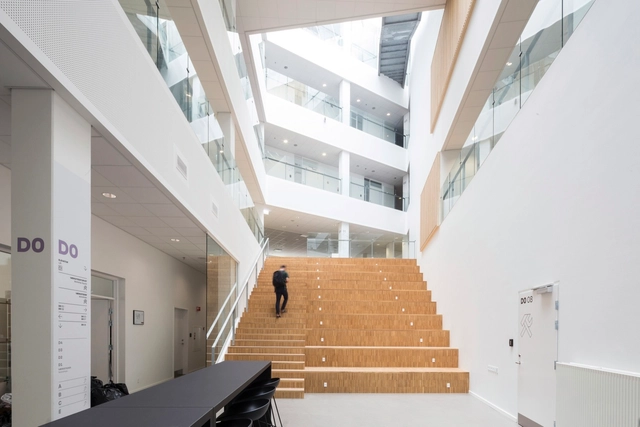
The Danish Building & Property Agency with the Aarhus School of Architecture have announced the three winning teams of the open competition to design the NEW AARCH project. These designs include new buildings for the Aarhus School of Architecture and the development of the surrounding area in Aarhus known as Godsbanearealerne.
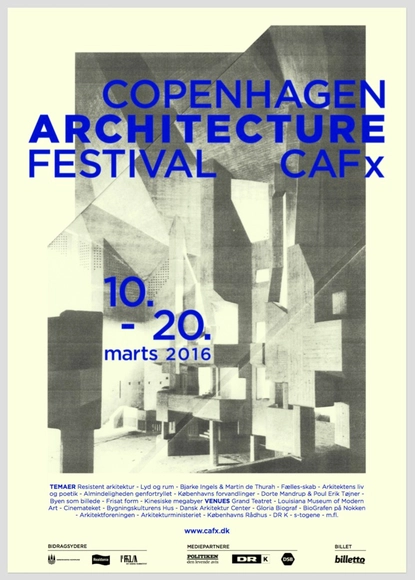
Copenhagen Architecture Festival (CAFx) was founded in 2014 and aims to rethink the presentation of architecture, highlighting its qualities and diversity, and create a relevant discussion about how it affects - and is affected by - our way of being in this world. CAFx is a platform to discuss and display ideas within the architectural world through a public program of talks, film, performances, workshops, seminars and exhibitions in collaboration with different partners primarily in Copenhagen but also in the cities of Aarhus and Aalborg.
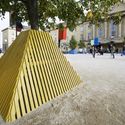
Since 2010, the Danish architects from Schønherrhave been developing a series of large-scale urban interventions for the Aarhus Festival, the largest cultural festival in Denmark. These temporary projects have transformed the streets and parks into extraordinary public spaces, changing the natural topography of the city to attract citizens and bring them together.
We present their last four projects: "The Forest" (2010), "The City Park" (2012), "The Plaza" (2014) and "Bishops Square" (to be completed this 2016).
Exterior Rendered View. Image Courtesy of schmidt hammer lassen architects
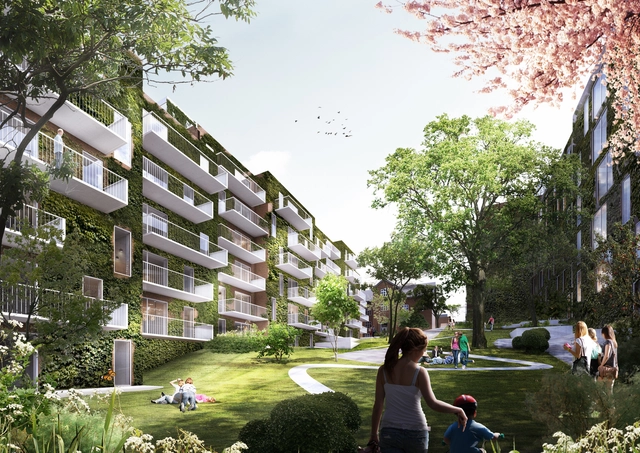
“Valdemars Have” by schmidt hammer lassen Architects is an urban residential block located within walking distance of Aarhus, Denmark's main cultural attractions. By using and adding to the greenery of Aarhus, Valdemars Have seeks to be an oasis within the city and serve as a public, urban garden. Overall, there will be 106 apartments ranging from two-bedroom flats to penthouses with private roof terraces.
The Architecture Project recently invited us to visit the city of Aarhus, Denmark as part of a press tour related to health and architecture, with the aim of seeing the latest healing projects that are arising in the city.
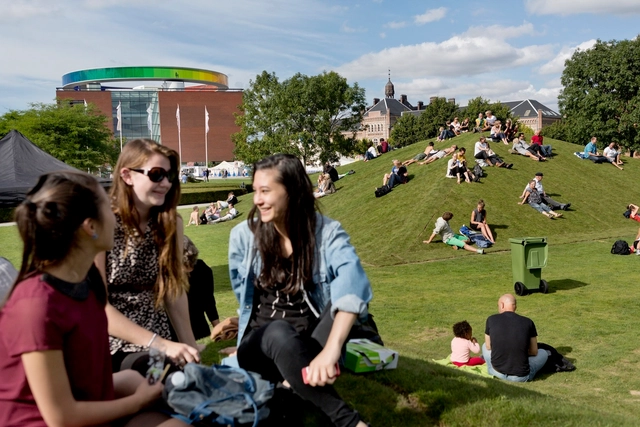
Overshadowed for years by Copenhagen, Aarhus is a port city that seeks to reinvent itself and shine once again – and it is succeeding. The pleasant surprise is that it is the architects who have driven this change. Architecture has invaded all of the city's spaces, from the forgotten industrial port to the downtown areas full of historical buildings.
This visit has taught us some important lessons: 'healing architecture' isn't only about hospital projects, but rather about encouraging people, about creating friendly spaces to live and coexist, and about getting as connected as possible with users to give them what they really need.
Check out some of the strategies used to achieve these goals after the break.
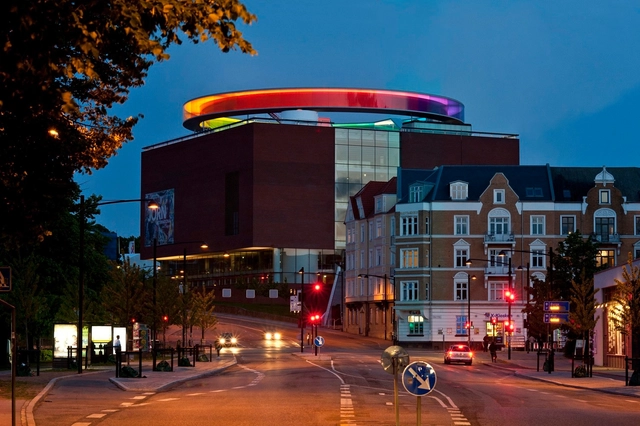
Your Rainbow Panorama / Studio Olafur Eliasson. Image Courtesy of Studio Olafur Eliasson
schmidt hammer lassen architects has been commissioned to expand their ARoS Aarhus Art Museum in Denmark. The architects are expected to collaborate with American artist James Turrell, who will be designing two installations for the expansion's 1200-square-meter subterranean gallery: "The Sphere" and "The Dome." The €30 million expansion is being referred to as "The Next Level," symbolizing the museum's intent to "bring the museum into the world elite of modern art museums." The museum recently embarked on a similar collaboration that involved artist Olafur Eliasson, who designed "Your Rainbow Panorama."
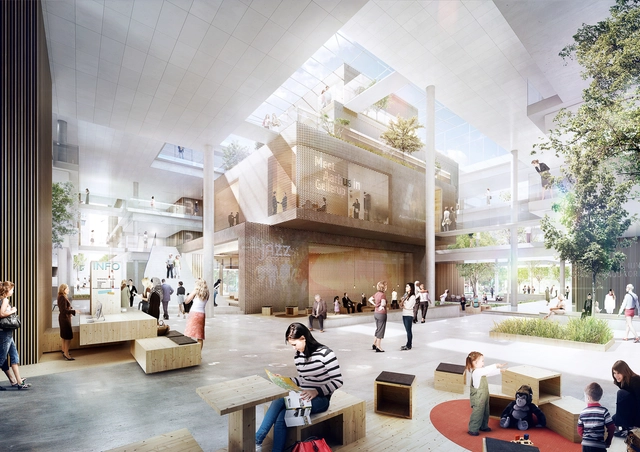
Interior Rendered View. Image Courtesy of Arkitema Architects
In the midst of the transformation of Gellerup, a suburb of Denmark’s second largest city Aarhus, the decision has been made to move 950 municipal workplaces to the area’s centre and the contract for the new building, named Gellerup Nord, has been awarded to Arkitema Architects. Incorporating municipal work and meeting spaces with public functions like restaurants, cafes and a rooftop lounge, the building will produce an entrepreneurial “start-up environment” to revitalize Gellerup.
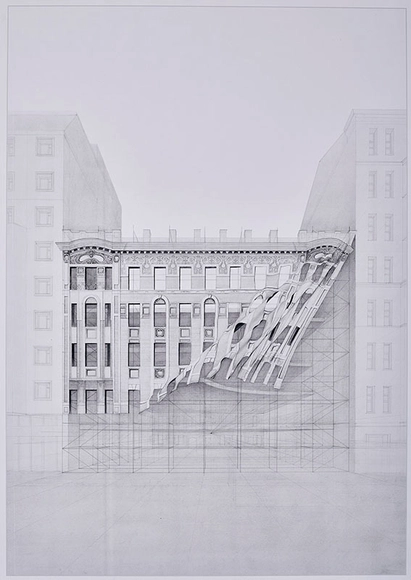
Students worldwide are invited to submit drawings “that inspire, communicate, and engage” with the theme of Sustainability Through Architecture. Thus, drawings “should focus on sustainability and architecture’s ambition to take an active part in the change of our society,” and “should address architecture’s ability to contribute to a sustainable environment on all scales—concepts, utopias, buildings, landscapes, and cities.”
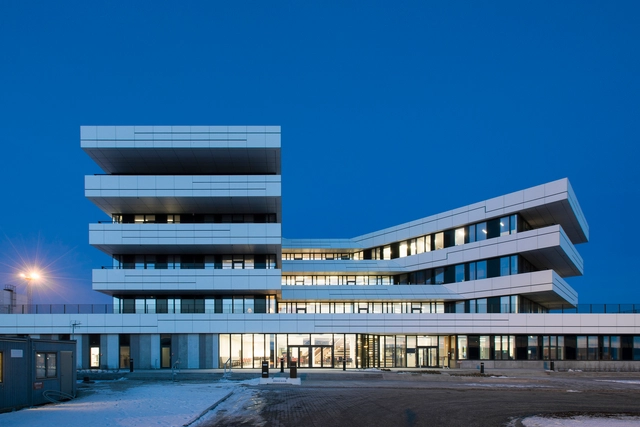
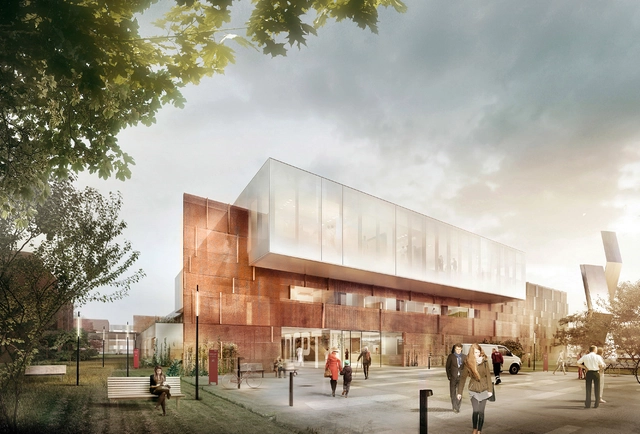
Danish practice aarhus arkitekterne has won a competition to design the new Proton Therapy Centre for advanced cancer treatment in Aarhus, Denmark. As “the most advanced radiation center to date and the only one of its kind in Denmark,” as well as one of only a few in the world, the Centre will undoubtedly become a pioneer in cancer treatment.
Designed from the inside out, the building’s façades are meant to convey the function of the interior, “and tell the story of precision, which is they key component of proton therapy as a form of treatment,” according to the architects. Thus, the atrium of the building becomes central to its orientation, providing not only an axis, but also a source of natural lighting.
For this week's edition of The Urbanist, Monocle's weekly "guide to making better cities," the team explore why being 'number two' is not always a bad thing in an episode about second cities and the ways in which they step out of their capital's shadow. From Milan to Melbourne, the team examine how and why some cities are carving their own niche in the international business and tourism markets. They also interview the Mayor of Aarhus about the challenges – and advantages – of governing Denmark’s second city.




.jpg?1456280512&format=webp&width=640&height=580)
.jpg?1456280302 "© Julian Weyer")
.jpg?1456280437 "© Julian Weyer")
.jpg?1456280652 "© Julian Weyer")
.jpg?1456280719 "© Julian Weyer")
.jpg?1456280512)
.jpg?1456892046&format=webp&width=640&height=580)
.jpg?1456894815 "© Torben Eskerod")
.jpg?1456892792 "© Torben Eskerod")
.jpg?1456892351 "© Torben Eskerod")
.jpg?1456892604 "© Torben Eskerod")
.jpg?1456892046)










_-_Aarhus_I_Billeder__1_.jpg?1436572534&format=webp&width=640&height=580)
_-_Peter_Hastrup_Jensen.jpg?1436572485 "© Peter Hastrup Jensen")
_-_DANISH_TM.jpg?1436572434 "© Danish TM")
_-_Aarhus_I_Billeder__3_.jpg?1436572386 "© Aarhus I Billeder")
_Gj%C3%B8de___Povlsgaard_Arkitekter_(0).jpg?1436572506 "© Gjøde & Povlsgaard Arkitekter")
_-_Aarhus_I_Billeder__1_.jpg?1436572534)