1. ArchDaily
  2. 3D Visualization

3D Visualization: The Latest Architecture and News

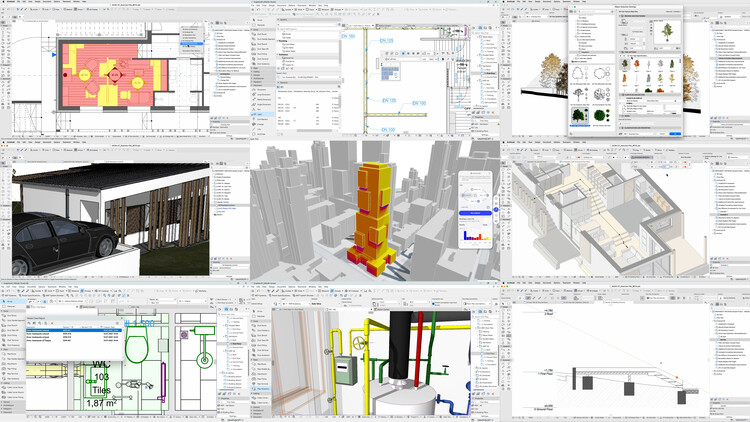
How Top Firms See AI Shaping Architecture’s Workflows

 | Sponsored Content

As artificial intelligence tools sweep through creative industries, architecture stands at a pivotal moment: how to adopt systems that amplify design thinking without eroding authorship or craft. To understand how the profession is responding, AIRI Lab surveyed designers and leaders from practices including LWK+P, MVRDV, Gensler, Büro Ole Scheeren, CUBE, HUAYI, and others. Their responses reveal a nuanced, pragmatic view: AI is a collaborator rather than a substitute.

Visualizing an Art Deco Icon: The Reimagined Waldorf Astoria

 | Sponsored Content

The quintessential symbol of Manhattan, Waldorf Astoria New York officially reopened for the public this year after an extensive renovation. Over its long history, the property has undergone numerous transformations, from its 19th-century beginnings to the modern landmark that stands between Park Avenue and Lexington Avenue.

Reimagining a building that pioneered modern hospitality—a jewel in New York's skyline—posed a challenge that required close collaboration between preservationists, 3D visualizers, architects, and designers. Together, they worked to preserve its protected architectural heritage while meeting contemporary expectations for craftsmanship and comfort.

Rethinking Architectural Ideation With Human-Centric AI

 | Sponsored Content

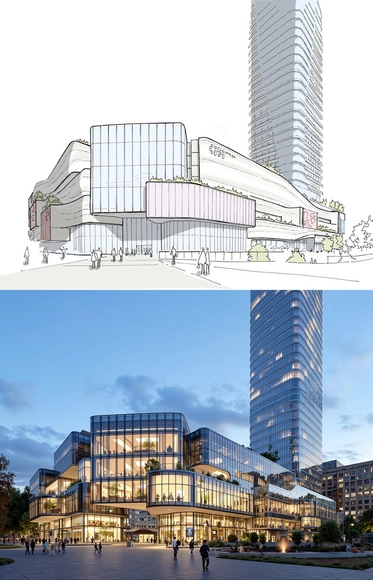
The earliest stages of ideation can be both the most exciting and the most challenging part of the design process. Ideas flow quickly, but they can be abstract and difficult to communicate. This can lead to frustration and waste precious time.

Now, architects, designers, and artists can shorten the distance between the first sketch and a meaningful design decision by pairing traditional ideation techniques with AI-powered visualization tools designed to enhance — not replace — human creativity. Chaos tools keep creators firmly in the center of the process, empowering them with speed and clarity without sacrificing ownership or control.

How AI-Powered Rendering Crushes Bottlenecks in Architecture and Interior Design

 | Sponsored Content

Architecture is a discipline that evolves through progressive stages, with each phase building upon the previous one. Schematic design, for example, begins with broad concepts and initial explorations, followed by site analysis, sketches, and 3D models, with adjustments made along the way. The true challenge lies not just in following this sequence but in balancing speed, quality, and efficiency to navigate the trade-off between time and quality. In this context, the integration of generative artificial intelligence in the built environment reshapes architectural dynamics by assisting architects and creating space for more experimentation and exploration. Its impact is especially significant in rendering, which was previously a constraint at different project stages—particularly during concept development. Today, however, AI-powered architectural rendering operates smoothly, allowing more focus on creative problem-solving through innovative tools and strategies.

How Visualization Studios Help Architects Achieve the “Wow” Effect

 | Sponsored Content

In today's world of architecture and design, it's no longer enough to present clients with blueprints or plans — they want to visualize the final product before construction begins. This is where 3D visualization studios come into play. By offering photo-realistic renderings, virtual tours, and interactive configurators, these studios make it easier for architects to communicate their ideas and leave a lasting impression on their clients. With the help of these cutting-edge tools, architects can create stunning presentations that truly deliver the "wow" effect at every stage of the project. Here's how DEGO render studio deliver with their unique solutions.

The Continued Relevance of Models in Architecture's Digital Era

Subscriber Access | 

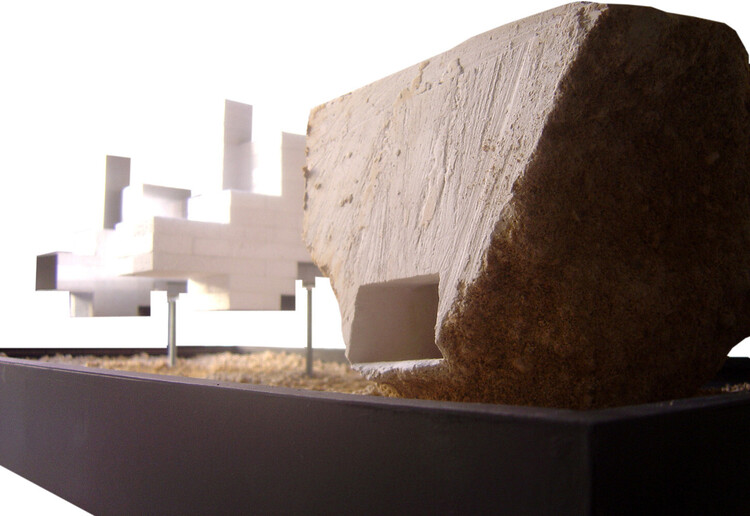
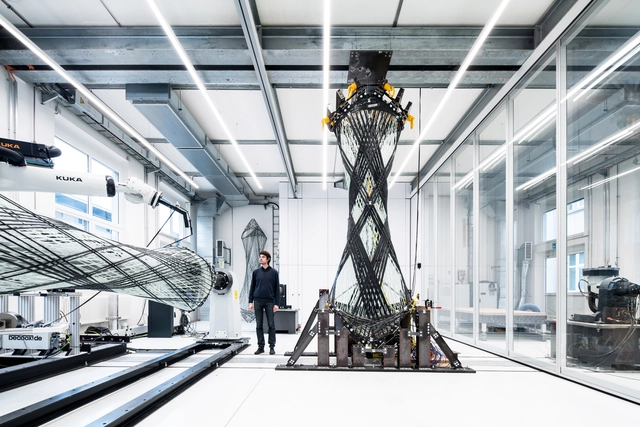
For centuries, models have been central to architectural design, providing architects with a tangible way to explore ideas, test concepts, and communicate their vision. From the Renaissance to Modernism, models have been instrumental in the construction and reflection processes, offering insights into form, proportion, and spatial relationships. However, in today's digital age, where 3D models and Virtual Reality (VR) have become powerful and efficient tools, the question arises: Are physical models still relevant in contemporary architecture?

The Continued Relevance of Models in Architecture's Digital Era - Image 1 of 4The Continued Relevance of Models in Architecture's Digital Era - Image 2 of 4The Continued Relevance of Models in Architecture's Digital Era - Image 3 of 4The Continued Relevance of Models in Architecture's Digital Era - Image 4 of 4The Continued Relevance of Models in Architecture's Digital Era - More Images+ 24

How AI Will Make Everyone a Better Designer: For Better or Worse

This article is the seventh in a series focusing on the Architecture of the Metaverse. ArchDaily has collaborated with John Marx, AIA, the founding design principal and Chief Artistic Officer of Form4 Architecture, to bring you monthly articles that seek to define the Metaverse, convey the potential of this new realm as well as understand its constraints.

In so many ways the introduction of AI software has created a sense that we live in a world predicted by science fiction novels. We commonly have rested on the assumption that computers will never be capable of designing. That time has now arrived, and with it comes an opportunity to confront the positives and negatives these new technologies offer.

How AI Will Make Everyone a Better Designer: For Better or Worse - Image 1 of 4How AI Will Make Everyone a Better Designer: For Better or Worse - Image 2 of 4How AI Will Make Everyone a Better Designer: For Better or Worse - Image 3 of 4How AI Will Make Everyone a Better Designer: For Better or Worse - Image 4 of 4How AI Will Make Everyone a Better Designer: For Better or Worse - More Images+ 2

Six Tips for Creating Compelling Design Proposals

 | Sponsored Content

Most architects are looking to win more work; not just higher-paying projects but those that allow them to unleash their creativity and passion. These opportunities can be won or lost on a professional's ability to communicate their design vision — so the proposal has to be on point. These tips from leaders in the design field can help architects win bids and create their dream projects. 

Real-time and High-speed: D5 Rendering for Architects

 | Sponsored Content

Looking around, it is clear that the world is developing at a rapid rate, and so are cities. Architects and designers inevitably take on the challenge of building better cities and homes, so time needs to be properly allocated for efficiency. After all, in this industry, time really is money.

For years architects have been accustomed to working in a conventional way: they stick with traditional offline renderers and wait until the modeling part is all done to start rendering from scratch. 

This is where software like D5 Render comes in, to resolve such problems and change the game. The market is growing and shifting, and so should the tools architects use.

A BIM Trial Project for a Nearly Zero-Energy Building

 | Sponsored Content

Architectural firm Iglesias Leenders Bylois Architects (ILB Architects) has begun to incorporate the use of building information modeling (BIM). The greatest advocate is architect Meindert Leenders, who believes every architectural office should be working with BIM:

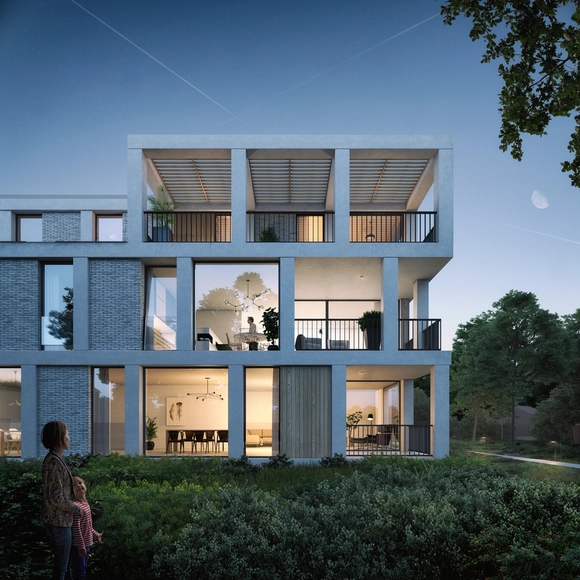
“It doesn’t need to be a big project. Take an actual case, set yourself a few achievable goals, and try to work them out in BIM." ILB chose 'Bergerheide' as a trial: a project consisting of three park villas, designed in collaboration with the construction company Dethier. The rules for collaboration were clearly set out by project director Vlaanderen Bouwt vzw, providing the architects a sturdy framework for experimenting with BIM.

Eyal Weizman on Forensic Architecture: ''Mapping is Power''

“Since I remember myself, I have wanted to be an architect… I could see the way that neighborhoods were organized. I could see the separation. I could see the frontier areas between the Palestinian community and the Jewish majority,” expresses Eyal Weizman in conversation with Louisiana Channel, in regards to understanding the ‘political significance’ of architecture and the potential of the occupation as a critical tool for understanding the world.

Eyal Weizman was interviewed by Marc-Christoph Wagner at Forensic Architecture’s studio in London, in April 2022. As the head of Forensic Architecture, he is renowned for his part within the multidisciplinary research group, using a combination of architectural technologies and techniques to investigate instances of state violence and violations of human rights across the globe. Growing up in Haifa, Israel he developed an understanding of the political connotations within architecture from an early stage.

Eyal Weizman on Forensic Architecture: ''Mapping is Power'' - Image 1 of 4Eyal Weizman on Forensic Architecture: ''Mapping is Power'' - Image 2 of 4Eyal Weizman on Forensic Architecture: ''Mapping is Power'' - Image 3 of 4Eyal Weizman on Forensic Architecture: ''Mapping is Power'' - Image 4 of 4Eyal Weizman on Forensic Architecture: ''Mapping is Power'' - More Images

The Power of Data: Exploring Architectural Language through the Use of Artificial Intelligence

The Power of Data is an exhibition created in a virtual building, conceived by three-dimensional geometries based on various artificial intelligence algorithms. The project was created by the OLA (Online Lab of Architecture) team of research architects formed by Jennifer Durand (Peru), Daniel Escobar (Colombia), Claudia Garcia (Spain), Giovanna Pillaca (Peru) and Jose Luis Vintimilla (Ecuador).

The Power of Data: Exploring Architectural Language through the Use of Artificial Intelligence - Image 1 of 4The Power of Data: Exploring Architectural Language through the Use of Artificial Intelligence - Image 2 of 4The Power of Data: Exploring Architectural Language through the Use of Artificial Intelligence - Image 3 of 4The Power of Data: Exploring Architectural Language through the Use of Artificial Intelligence - Image 4 of 4The Power of Data: Exploring Architectural Language through the Use of Artificial Intelligence - More Images+ 11

"Visualizations Always Start with the Story": An Interview with Visual Artist Ceren Arslan

Beyond hyper-realistic renders and accurate depictions of what projects look like once completed, visualizations have become tools to communicate atmospheres and emotions portrayed by architects. The use of mixed media, combined with architectural compositions, art, lighting, and oftentimes music, have generated a new genre of architectural storytelling, one that combines reality with imagination. And as the world immerses in NFT's and experimenting with cutting-edge technologies to create digital environments, visualizations might soon become "the new reality". 

ArchDaily had the opportunity to talk to Visual Artist Ceren Arslan about branching out from the architecture practice, how she describes her creative process, her latest project EXIT, and what the future holds for architectural visualizations.

"Visualizations Always Start with the Story": An Interview with Visual Artist Ceren Arslan - Image 1 of 4"Visualizations Always Start with the Story": An Interview with Visual Artist Ceren Arslan - Image 2 of 4"Visualizations Always Start with the Story": An Interview with Visual Artist Ceren Arslan - Image 3 of 4"Visualizations Always Start with the Story": An Interview with Visual Artist Ceren Arslan - Image 4 of 4Visualizations Always Start with the Story: An Interview with Visual Artist Ceren Arslan - More Images+ 10

A Series of Renders That Explore Three Unbuilt Projects of Frank Lloyd Wright

More than 60 years after his death, Frank Lloyd Wright's story remains relevant and arduously studied because of the great legacy he left to architecture. Considered the first truly American architect and the first superstar of his craft, Frank Lloyd Wright lives on through his buildings, his influence and his collective imagination. Surprisingly, more than half of Wright's 1171 architectural works were never erected.

A Series of Renders That Explore Three Unbuilt Projects of Frank Lloyd Wright - Image 1 of 4A Series of Renders That Explore Three Unbuilt Projects of Frank Lloyd Wright - Image 2 of 4A Series of Renders That Explore Three Unbuilt Projects of Frank Lloyd Wright - Image 3 of 4A Series of Renders That Explore Three Unbuilt Projects of Frank Lloyd Wright - Image 4 of 4A Series of Renders That Explore Three Unbuilt Projects of Frank Lloyd Wright - More Images+ 2