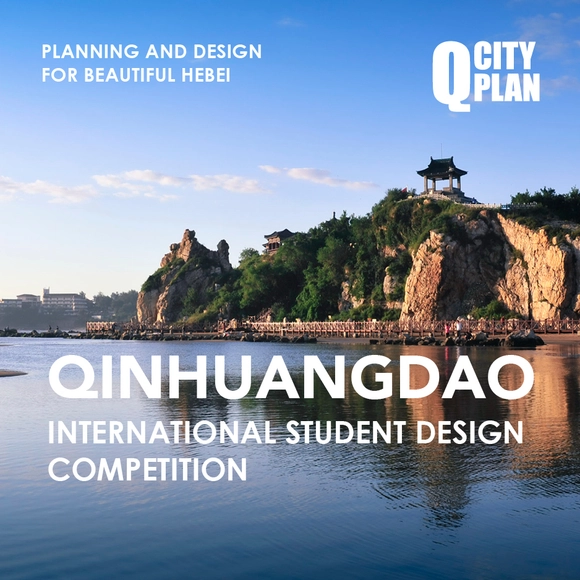
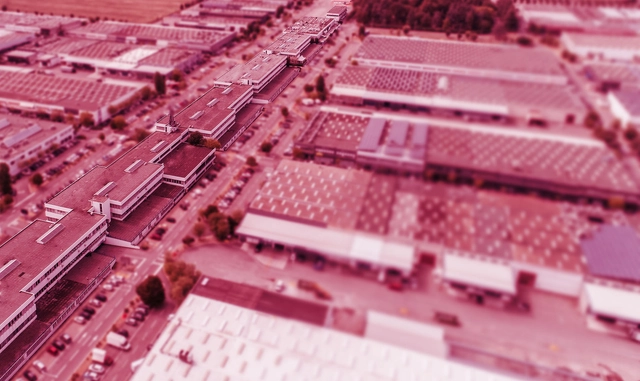
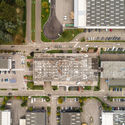
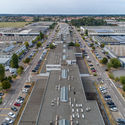
“Q City Plan· Qinhuangdao International Student Design Competition", image credited to UED magazine
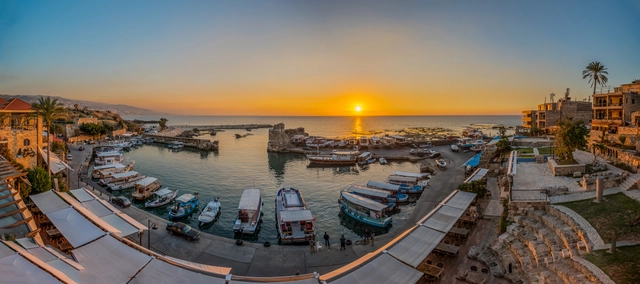
“Q City Plan—Qinhuangdao International Student Design Competition" is now calling for entries from all university and college students worldwide who major in the fields such as urban planning, architecture design, landscape design, and artistic design, aiming to provide them a platform to show their talent based on the real built environment of Qinhuangdao as the foundation for their creation and inspiration. We hope to use this event to solicit creative ideas of microscopic renovation in public spaces and to find more possible paths for the regeneration of this famous port city of China in the future.
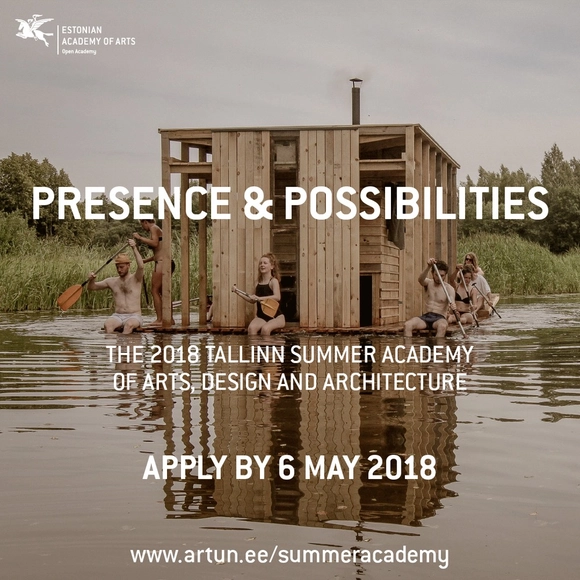
The Estonian Academy of Arts (EAA) is welcoming applications for the international summer school — 2018 Tallinn Summer Academy of Art, Design and Architecture – Presence & Possibilities! Application deadline: 6 May.
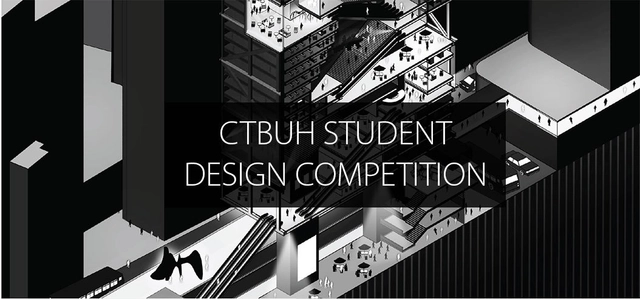
2018 International Student Tall Building Design Competition, CTBUH
The Council on Tall Buildings and Urban Habitat (CTBUH) is pleased to announce its 7th International Student Tall Building Design Competition. The goal of the competition is to shed new light on the meaning and value of tall buildings in modern society. The deadline for submission is July 23, 2018.
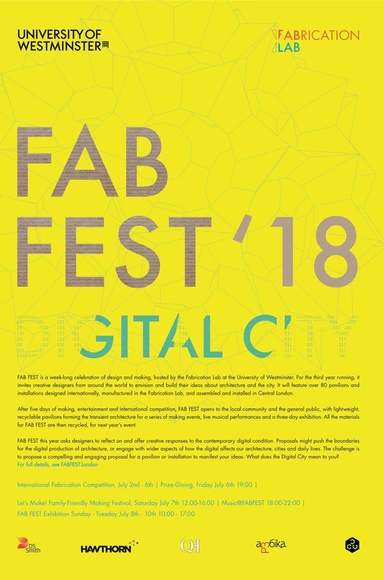
FAB FEST is a week-long celebration of design and making, hosted by the Fabrication Lab at the University of Westminster. For the third year running, it invites creative designers from around the world to envision and build their ideas about architecture and the city. It will feature over 80 pavilions and installations designed internationally, manufactured in the Fabrication Lab, and assembled and installed in Central London.
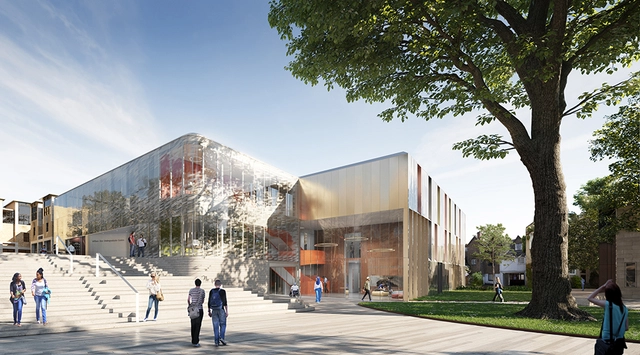
London-based AL_A, spearheaded by Amanda Levete, have revealed their design for two new buildings at the Wadham College site of the historic OxfordUniversity in England. The Dr. Lee Shau Kee Building and William Doo Undergraduate Centre will provide much-needed space for undergraduate services to support the University's access programs as well as new gathering places for the student body. The firm has been developing the expansion since securing the project after an invited design competition in the summer of 2016.
The brief is simple: show us your use of 3D printing in your architecture project. Whether it's a wild mockup of a future tech hub made of plastic or a treehouse prototyped in metal, we want to see how you're using 3D printing to help communicate your ideas.
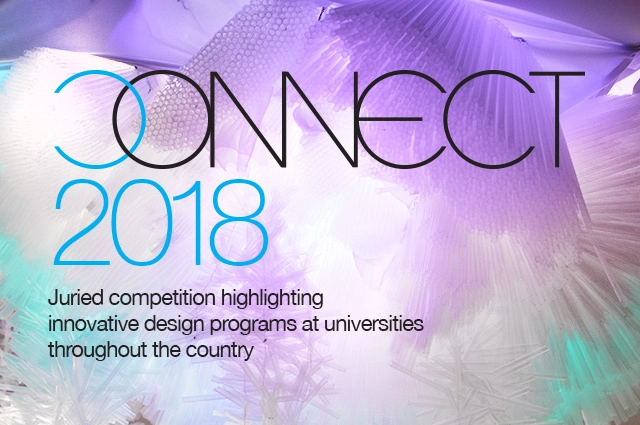
Now in its sixth year, CONNECT highlights innovative design programs at universities throughout the country. Students, under the supervision of university faculty, have the opportunity to design environments that incorporate seating and lighting installations, with the intention of offering an intimate area on the show floor where attendees can sit, relax and "connect." Exhibits will be located throughout the show floor, providing SOFA CHICAGO's international audience an opportunity to experience the innovation and creativity of future designers.
It is an Architecture competition, completely free, addressed to the student of the Polytechnic of Turin, which allows them to put into practice their acquired knowledge in their studies.
The RIBA Norman Foster Travelling Scholarship offers £7,000 to a student of architecture who demonstrates the potential for outstanding achievement and original thinking on issues that relate to the survival of cities and towns.
How much do you wish you knew about carpentry, solar energy or masonry? Leonardo Da Vinci said, "the noblest pleasure is the joy of understanding." Those who are open to learning and expanding their horizons are more likely improve their approach to design. If you've always wanted to understand more about construction processes, structures or materials, this list of online courses is for you.
We scoured MOOC platforms and databases to highlight a series of online courses related to construction and building materials. Many of the courses are permanently available and can be taken immediately; we've also provided information so that you may contact the universities or instructors to inquire about start dates, certificates, costs, course language and other relevant details.
Architecture is well-known as one of the more expensive professions to study given the high costs for supplies. The fast-paced rhythm of traditional studio courses requires students to present their design ideas using drawings, diagrams, renderings, and collages—usually plotted onto paper—adding to the already high cost of creating physical models. The price tag for studying and practicing architecture is a cost that the entire profession has assumed, for better or worse.
If you aren't one of the lucky few residing in a country or state in which education is free, or in which there are significant financial aid support systems, the constant extra cost of building models and printing presentation materials has a big impact. In the best case (and only in cases in which the family is in the fortunate position to do so) parents supplement the extra money need; but in many cases, students must work while studying. What else can you do when you're expected to produce a final project or thesis that can total hundreds or even thousands of dollars to produce?
Update:The deadlines for this opportunity have been extended
Call For tutors : Extended till January 28
Call for participants : Ends on February 28
MEDS workshop “Meetings of Design Students” is an international workshop that takes part each summer in a different country, focusing on various issues, themes, topics and settings that will help any designer expand their expertise. It is a chance to get in touch with diverse approaches to design, different building techniques, traditions and skills. MEDS workshop is both practical and educational because it focuses not only on creative theoretical designs, but actually compels participants to execute these designs during the 2-week span of the workshop. You can apply to MEDS as a tutor or as a participant.
A tribute to Africa’s culture in a remote place of the earth.
Hundred-year-old cultures give birth to communities, being transmitted through rhymes of those who are narrating it and interpreting the past through wisdom. One’s accomplishments result from rituals and metamorphosis, bonding the human being to its own roots through dance, history, music, colors, flavors, materials and landscapes. Space and matter relate themselves to the power of rituals, drawing together the lines of an architecture encharged of passing and preserving history.
In this fast-paced era a lot of little details are missed in a matter of seconds. Just like architecture that we see everyday and everywhere, the stunning beauty of it all are tend to be overlooked.
The Small house trend is here! We invite Victorian TAFE and University students studying either building design or architecture (full time or part time) to design and submit an innovative response to living in 45m2, 60m2 or 100m2. Go our our website for competition details and to register.
“Once you stop learning you start dying” -Albert Einstein
Knowledge is power, knowledge is freedom. But my simple definition of knowledge is total sum of all things you know as a person, and all things known universally. Your experiences, skills you have acquired, and information that has been captured in any accessible format that can be utilized in various ways, is knowledge. And library is a temple for those who seek knowledge.
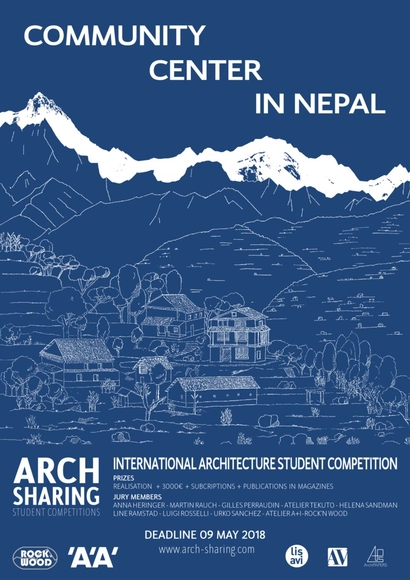
Located between China and India, Nepal is all along the Himalayas. These high mountains offer a range of beautiful landscapes with the eight highest summits of the world. Nepal gets an important profit from the hiking tourism, which represents at least 10% of the GDP of the country. Although well exploited by the country, its environment is a difficult aspect for its development with a complex topography and a rough climate. Seasons rhythm the country’s activities with dry winter and summer marked by important monsoons. The diversity of its ethnic groups, its castes, and its languages contribute to the richness of the culture of this country. Cults and religions take an important part of the Nepalese daily life; Hinduism, practiced by the majority of the population, has been coexisting with Buddhism for centuries. Architecture, culture and religion are tightly connected in Nepal, where the most beautiful wood or rock sculptures mainly stand in temples and monasteries. Nowadays cities and villages still come alive at the rhythm of religious festivities. With 29 million inhabitants, more than 85% of the population live in rural area. Nepal is divided in 75 districts, then in «VDCs» (Village Development Committee) who correspond to municipalities. Villages’ structure can differ from one place to another. Some are composed by groups of houses, with a dense typology. Other are more scattered, with houses separated from each other. Time perception is felt differently: it is common to have to walk for a few hours to walk across a village. These villages are sometimes badly connected or even not connected at all to the main cities, which is why education has been hard to access for a long time. Nowadays an important improvement is visible, with 84% of alphabetisation in the young population. Nepal has been benefiting of its geographic situation between its bordering countries for a long time, being a natural stop for merchants and travellers. Today, it is left behind as compared to its neighbours. There are many challenges to development: drinkable water, electricity support, communication infrastructure, wastewater management, infrastructure for transportation… However, these last years, some aspects of the development have been considerably improved. Electricity support became constant in the major part of the country and communication infrastructure have improved even in really retreated villages. During the last ten years, Nepal has got through economic and political crisis, but its biggest challenge is to recover from the terrible earthquake that has devastated part of the country on 25 April and 12 May 2015. In the area around Kathmandu, earthquakes have destroyed a huge amount of constructions and caused more than 9000 deaths. In the aftermath of this disaster, international assistance has worked together to rebuild the country. The outcome was positive but not to the scale of the real needs. Two years after, the mains NGOs are leaving to other assignments, but the damage is still present.
Study Architecture seeks proposals from architecture students and faculty at ACSA Full and Candidate member schools for the design of a Study Architecture exhibit booth and interactive experience for the 2018 USA Science and Engineering Festival. The 10 x 10 foot booth should reflect the branding and messages of ACSA’s Study Architecture and #IMadeThat campaigns. The proposed activities within the booth should engage visitors in understanding how architects and architecture school graduates use science, technology, engineering, and math to design the world.
CLUE, the international design competition which rewards excellence in lighting design, launches its annual edition under the theme of LIGHT AND THE SENSES.
It is with great pleasure that Aarhus School of Architecture, schmidt hammer lassen architects, VOLA and the Danish Arts Foundation announce the fifth joint venture competition Drawing of the Year 2017. This year’s theme is Everyday Utopia.