


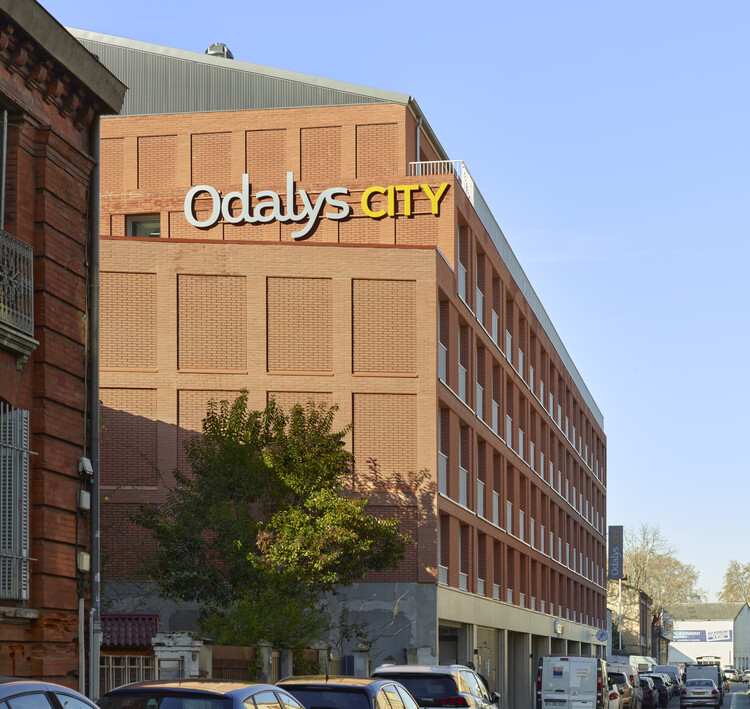
-
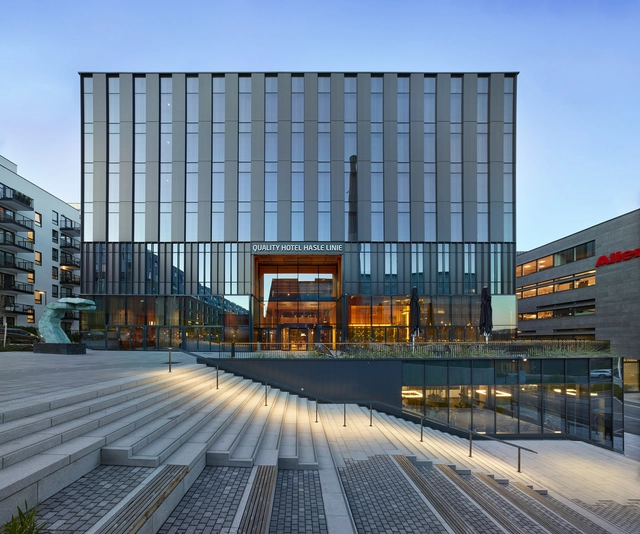
Architects: Taillandier Architectes Associés
- Area: 7015 m²
- Year: 2021
-
Manufacturers: Terreal, Les Zelles, Weber
-
Professionals: ABM Energie Conseil, Ebm, New Energy concept




As the largest city in the United States, New York City is one of the most diverse and vibrant cities in the world, recognized by many as the center for global media, culture, fashion art, and finance. The city was founded in 1624 by settlers from the Dutch Republic and has since grown into “the city that never sleeps”.
While almost every style of architecture exists in New York City, the metropolis is most well known for its skyscrapers, both in historical styles such as Neoclassical and Art Deco and in their varied contemporary expressions. The first building to bring the world's tallest title to New York was the New York World Building, in 1890. Later, New York City was home to the world's tallest building for 75 continuous years, starting with the Park Row Building in 1899.
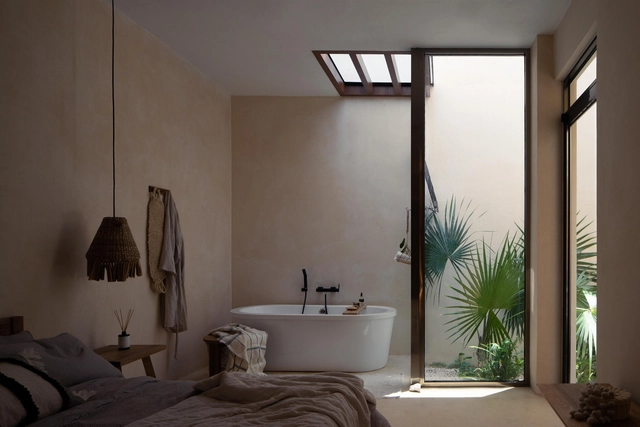
Over the years, interior design has evolved according to the needs that arise, but above all according to the experiences it seeks to evoke in the user. In the last two years we have witnessed a radical change and a special interest in this subject because the pandemic forced us to pay specific attention to the configuration of the places we inhabit. This brought about much more holistic designs that seek to address the wellbeing of the user, combining colours, sensory experiences, technology and natural elements that promote health.

Food pyramids are familiar to all of us. They are visual guides that show us the proportions of foods that we should supposedly eat on a daily basis, in order to stay healthy. Composed of a series of layers with different food types–such as grains, flour, fats, vegetables, and others–, at the base are the foods that should be consumed in larger quantities. Towards the top, each layer becomes successively smaller, indicating the foods that are meant to be ingested rarely. The pyramid can vary according to countries and cultures, but its main purpose is always to provide a guide for a balanced life. There are no prohibitions, but it does indicate some foods that should be consumed with caution because of their impacts on our health.
If we are what we eat, is it possible to also replicate this in the construction industry and our buildings? Using this same easy to understand visual language, the Royal Danish Academy Center for Industrialized Architecture (Cinark) developed the Construction Material Pyramid. The idea was to highlight the environmental impact of the most used construction materials, focusing on the analysis of the first three life phases: extraction of raw materials, transportation and manufacturing.

.jpg?1654104044&format=webp&width=640&height=580)
The Mies Crown Hall Americas Prize (MCHAP) announced the 48 outstanding projects selected by the MCHAP 2022 jury. From the body of nominated projects, the jury elected 38 entries in MCHAP as outstanding among other submissions. The fourth prize cycle considers built works completed in the Americas between January 2018 to December 2021, nominated by an anonymous network of international experts and professionals.
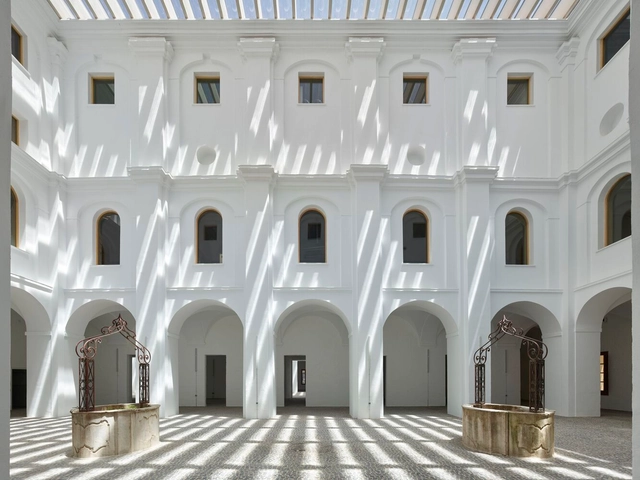

Mies Crown Hall Americas Prize announced the full list of jurors for its fourth edition, chaired by Sandra Barclay of Barclay and Crousse Architecture, and just released the nominated projects comprising 200 built works in North and South America, for MCHAP 2022 and 50 projects for MCHAP.emerge 2022.
.jpg?1643867734&format=webp&width=640&height=580)
Broadly speaking, the performing arts are all those disciplines that take place on a stage, although the main ones are dance, theatre and music. However, parades, religious processions, holiday celebrations and carnivals also have a clear scenic quality. That is why the stage space is so important not only for the presentations of these disciplines but also for carrying out a whole bodily and spatial process that is supported by the architecture.

Circulation spaces are often challenging for designers as they are intended—as the name implies—for moving from one room to another. While many take advantage of these areas by using them as storage spaces, Mies van der Rohe at the Farnsworth house reduced circulation to a minimum, creating an open floor plan completely free of hallways. When faced with vertical circulation, the issue is similar. Stairs fulfill the purpose of overcoming the height between one floor and another, but rarely constitute indoor living spaces. Bleachers, in turn, play this role in several projects. Until recently, they were only found in sports spaces or amphitheaters; now the use of bleachers has become widespread and is seen in office spaces, public buildings, schools and even homes.




HPL (High Pressure Laminate) panels are made of Kraft paper impregnated with phenolic resins, subjected to heat and pressure. A decorative layer with synthetic polymer allows the sheets to have numerous color and texture options, providing an extremely high strength and durability. This is why HPL is widely used in façades, but it is also increasingly being considered for interior wall cladding, for partitions and lockers, as well as for furniture. It is a material that can be used outdoors and indoors, and even on horizontal surfaces.


.jpg?1654104708&format=webp&width=230&height=230&crop=true)
.jpg?1654104468&format=webp&width=230&height=230&crop=true)
.jpg?1654104406&format=webp&width=230&height=230&crop=true)
.jpg?1654104044)


.jpg?1643867734)


