Per Berntsen

BROWSE ALL FROM THIS PHOTOGRAPHER HERE
↓

Unearthing the Ground: Architecture and the Politics of Extraction

Audio available

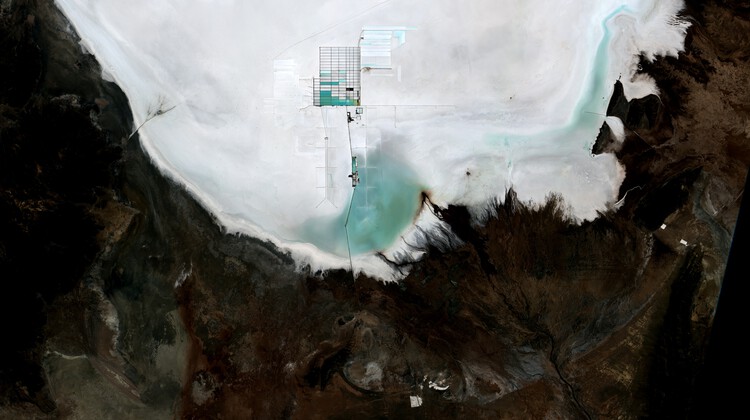
Every building begins somewhere else. The sand in its concrete, the stone on its façade, the lithium that may one day power its systems. It arrives, already stripped from a mountain, a riverbed, or a salt flat thousands of kilometers away, having passed through a chain of trucks, ships, and customs declarations that erase almost everything about where it came from. Architecture tends to treat material as a starting condition, something simply available, but extraction is where construction actually begins.

The global trade in construction sand alone now moves on a scale that rivals the illegal markets in timber, gold, and fish combined, run through networks violent enough to have cost reporters and activists their lives. A single mountain in Tuscany has yielded more marble in the past few decades than in the two thousand years before them, hollowed out by a workforce whose own history of revolt has been almost entirely forgotten. Beneath the salt flats of three South American countries and the copper belt of Central Africa, the minerals that will supposedly power a cleaner future are pulled from ground that Indigenous communities have inhabited for generations and that children, in some cases, mine by hand. Each of these is sold as ordinary commerce; each is also a territorial transaction whose terms were set somewhere far from where the material was taken.

Unearthing the Ground: Architecture and the Politics of Extraction - More Images+ 13

The Project as Argument: What is Architectural Thinking?

Architecture is shaped not only by buildings, but by the ideas that make them possible. Before the constraints of capital, regulation, and procurement, there is a moment when architecture is allowed to think aloud. The first confrontation with this fertile moment usually takes place in academia, in the thesis. It is not merely a requirement for graduation, but a space of speculative freedom where architecture formulates hypotheses, builds arguments, and tests positions.

For many, it is also the first opportunity to think beyond the structure of academic programs — a first chance to explore something more personal, unresolved, or even unreasonable. While often seen as an endpoint, the thesis is better understood as a beginning: the first engagement with architecture as a form of reasoning, where the project is not yet a response, but a question.

The Project as Argument: What is Architectural Thinking? - More Images+ 27

Subscriber Access

Spotlight: Peter Zumthor

Spotlight: Peter Zumthor - Image 10 of 4
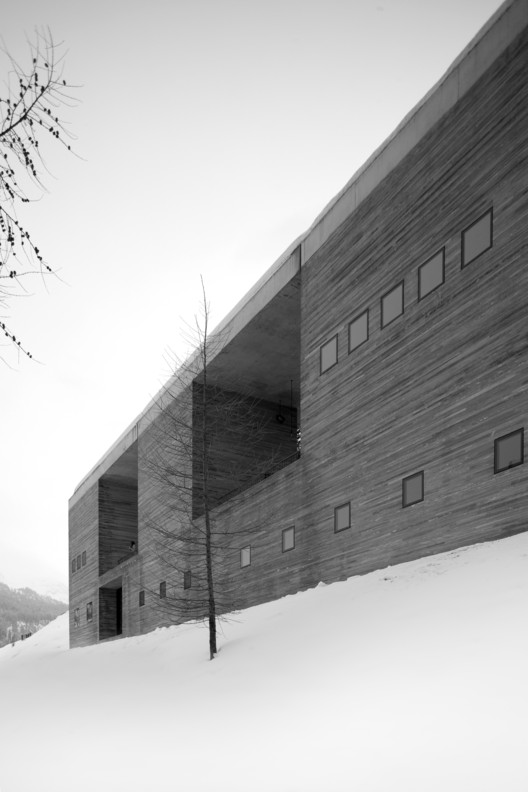
The Therme Vals. Image © Fernando Guerra | FG+SG

Known for his sensuous materiality and attention to place, 2009 Pritzker Laureate Peter Zumthor (born April 26, 1943) is one the most revered architects of the 21st century. Shooting to fame on the back of The Therme Vals and Kunsthaus Bregenz, completed just a year apart in 1996 and 1997, his work privileges the experiential qualities of individual buildings over the technological, cultural and theoretical focus often favored by his contemporaries.

Spotlight: Peter Zumthor - More Images+ 11

Subscriber Access

23 Examples of Impressive Museum Architecture

23 Examples of Impressive Museum Architecture - Image 1 of 4

Designing a museum is always an exciting architectural challenge. Museums often come with their own unique needs and constraints--from the art museum that needs specialist spaces for preserving works, to the huge collection that requires extensive archive space, and even the respected institution whose existing heritage building presents a challenge for any new extension. In honor of International Museum Day, we’ve selected 23 stand-out museums from our database, with each ArchDaily editor explaining what makes these buildings some of the best examples of museum architecture out there.

Subscriber Access

A Capsule of "Almost-Forgotten History": Surface Magazine Visits Peter Zumthor's Allmannajuvet Zinc Mine Museum

Below is an excerpt of the cover story of this month’s Surface magazine: an in-depth look at Peter Zumthor’s recently completed Allmannajuvet Zinc Mine Museum, featuring exclusive quotes from the architect himself.

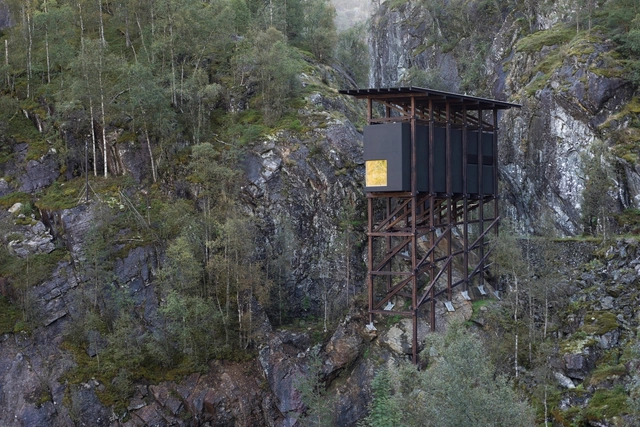
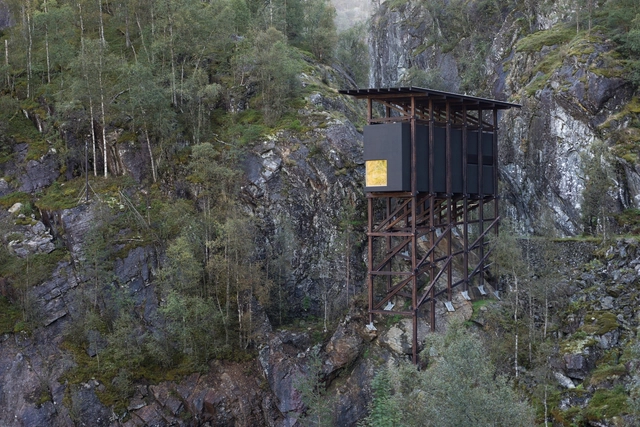
The first thing you notice when you arrive at the new Allmannajuvet Zinc Mine Museum outside Sauda, Norway, is that it looks nothing like a museum—or at least, what we think of as a museum. On a steep site framed by elegantly rugged walls of dry stone, three black, shed-like and zinc-roofed structures look far too small to house exhibits, much less hordes of visitors. But this isn’t a museum in the conventional sense. Consisting of a service building with restrooms, a café, and a gallery—all perched on tall timber supports—it’s more a memorial to those who toiled in the zinc mine that operated on the site from 1881 to 1899 in the spectacularly beautiful Allmannajuvet Ravine. The mine and its accompanying trail were long ago abandoned, the original buildings a distant memory.

Allmannajuvet Zinc Mine Museum / Peter Zumthor

Allmannajuvet Zinc Mine Museum  / Peter Zumthor - More Images+ 14

Rjukan Town Cabin / Rallar Arkitekter

Rjukan Town Cabin / Rallar Arkitekter - More Images+ 16

Mortensrud church / Jensen & Skodvin Architects

Mortensrud church / Jensen & Skodvin Architects - More Images+ 48