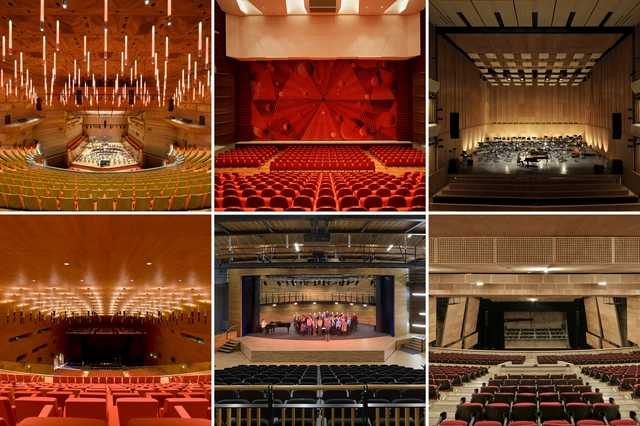
Seeing the space of an auditorium in section is a key tool in allowing us to approach a design's of acoustics, accessibility, and lighting. These components are what make the design of an auditorium a complex task, requiring detailed and specific studies.
There are a number of ways to design an auditorium that offers multiple responses to these challenges. For this reason, we have selected a number of sections from different auditoriums that can help you understand how other architects have solved the challenge.
Check out the 30 auditorium sections below, they are sure to inspire you!
Alongside Camilla Block and David Jaggers, Neil Durbach of Durbach Block Jaggers has carved out a unique place in Australian architecture. Known primarily for their carefully sculpted modernist houses, the firm's architecture is simultaneously rich in architectural references and thoroughly original. In this interview, the latest in Vladimir Belogolovsky's “City of Ideas” series, Durbach explains the true inspirations behind their work, why these inspirations have little to do with the public descriptions of their projects, and why for him, the intention of all of his architecture “is to win Corb’s approval.”
Vladimir Belogolovsky:You came to Australia while the Sydney Opera House was still under construction. Does this mean you were here even before going to the US?
Neil Durbach: Yes, I first came to Australia as an exchange student while still in high school.
VB:So you have seen the Opera under construction then. How special was that? Did that building change anything in particular in you?
ND: Well, at that time I wanted to be an artist. A friend took me on a boat to see it. It was kind of staggering... And I thought – you know, this is much more interesting than art. And I felt – maybe architecture is what I should pursue.
Bijoy Jain, the founder of Indian practice Studio Mumbai, has long been well-known for his earth-bound material sensibilities, and an approach to architecture that bridges the gap between Modernism and vernacular construction. The recent opening of the third annual MPavilion in Melbourne, this year designed by Jain, offered an opportunity to present this architectural approach on a global stage. In this interview as part of his “City of Ideas” series, Vladimir Belogolovsky speaks with Bijoy Jain about his design for the MPavilion and his architecture of “gravity, equilibrium, light, air and water.”
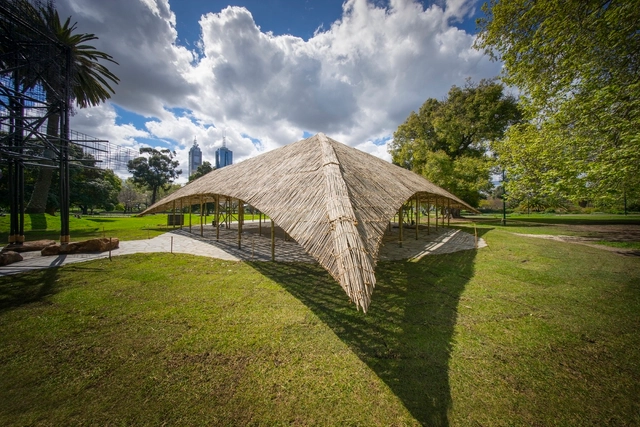
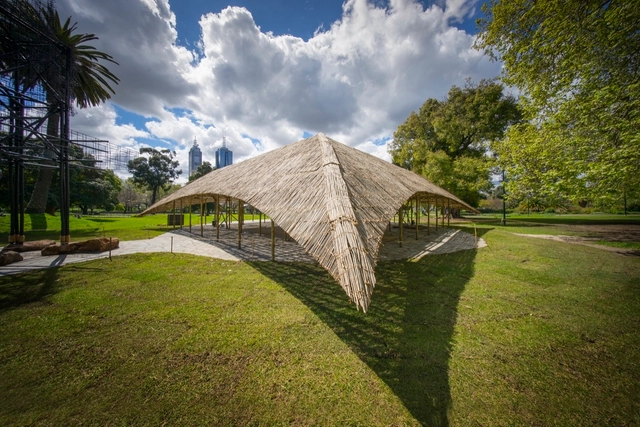
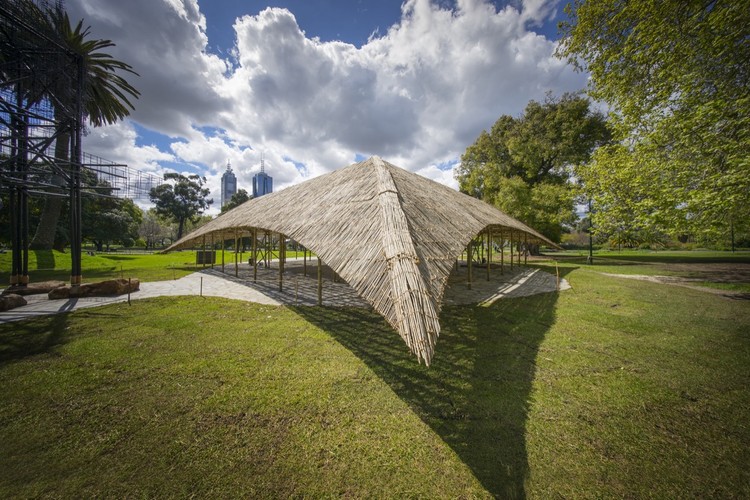
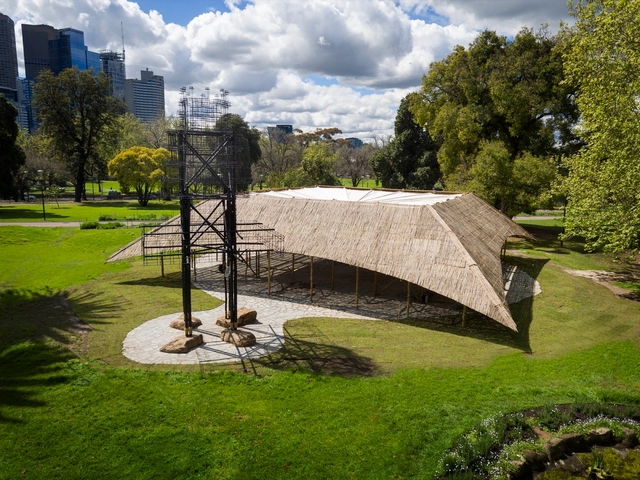
The 2016 MPavilion, designed by Indian architect Bijoy Jain of Studio Mumbai, has opened in Melbourne’s Queen Victoria Gardens. Over the next four months, the bamboo structure will play host to a free public program of over 400 talks, workshops, performances and installations.
Bijoy Jain’s design joins the growing international trend of “handmade architecture” as it becomes the largest bamboo structure in Australia, utilizing 7 kilometers of Indian bamboo, 50,000 kilograms of Australian bluestone, 5,000 wooden pins and 26 kilometers of rope to cover a 16.8 square meter area. The slatted roof panels are constructed from sticks of the Karvi plant and were woven together by craftspeople in India over a four month period.
Courtesy of The Australian Institute of Architects
The Australian Institute of Architects has announced the winners of its 2016 SA Architecture Awards, which honor projects undertaken by architects in South Australia that “[respond] to the challenges of today and needs of tomorrow.”
Winners have been sorted into 16 categories, such as Public Architecture, Commercial Architecture, and Sustainable Architecture.
The 2016 Winners of the SA Architecture Awards Are:
The Australian Institute of Architects has announced the winners of the 2016 International Chapter Architecture Awards, which honor Australian architects working on projects abroad.
Chosen from a field of 16 entries across five categories, the seven winners were notable for their size, scale, and locations.
The seven winners of the 2016 International Chapter Architecture Awards are:
AL_A's MPavilion 2015 has been gifted to the City of Melbourne. It will be relocated from the Queen Victoria Gardens to a permanent site at Collins Street park in Docklands, says Naomi Milgrom, chair of the Naomi Milgrom Foundation.
“In its new permanent home, Amanda Levete’s MPavilion 2015 will continue to inspire and be part of our city’s cultural heritage as a public amenity of Melbourne. Amanda’s magical, forest-like structure joins a growing family of architectural masterpieces to be enjoyed by the people of Melbourne for years to come,” Milgrom said.
Overall, 42 projects received 46 awards in 14 categories, including commercial, public, and interior architecture. Winners were selected by a jury from the Chapter Architecture Awards, held earlier this year.
Read on after the break for a list of the winners.
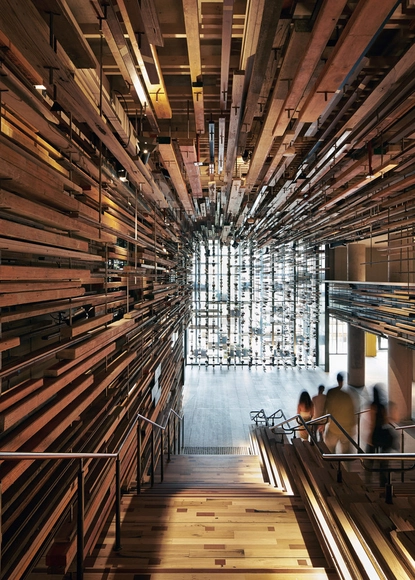
The project has created a "Bilbao effect" that has helped rejuvenate the area, said the judges. Adding, it's a "masterful integration of different spaces into a seamless and delightful interior."
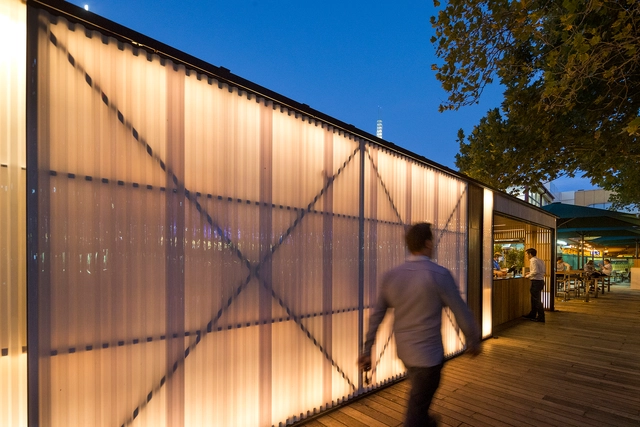
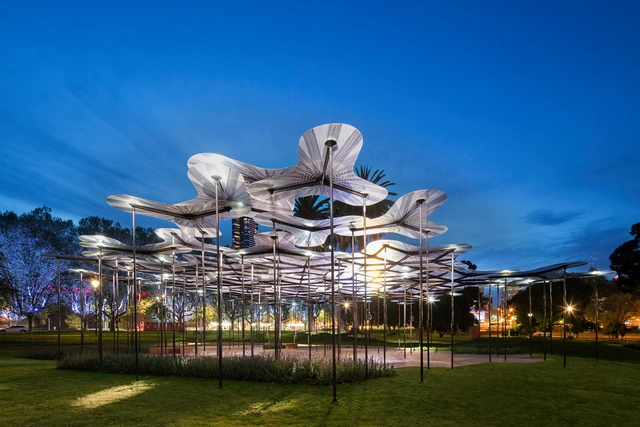
AL_A has completed Melbourne's second annual MPavilion. The temporary installation, initiated by Naomi Milgrom Foundation, was unveiled today in Queen Victoria Gardens. For the next four months, the public is welcome to populate the artificial "forest canopy," whose translucent petals were developed using aerospace technology to demonstrate how an ultra-lightweight structure that can "sit lightly on the landscape and gently respond to the climate." "Each petal is fitted with LED lights that are activated by the sunset to give a light performance synchronized with music," says the organizers.