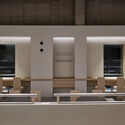
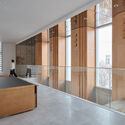
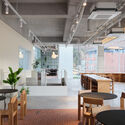
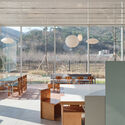
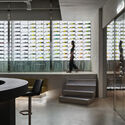
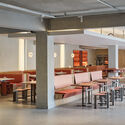
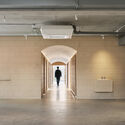
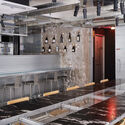
Donggyu Kim

BROWSE ALL FROM THIS PHOTOGRAPHER HERE

Coffee or Tea: Third Places, Kiosks, and the Retail Architecture of Duration

Subscriber Access | 

"Coffee or tea?" is one of those phrases that follows you across contexts: asked on airplanes, after a meal, in hotel lounges, and in meeting rooms. It sounds like a small question—mere preference, a quick fork in the service script. Yet it also carries a quiet cultural inheritance. Tea arrives with the long history of ritual and domestic pacing, tied to older geographies of trade and everyday etiquette. Coffee arrives with a different lineage of circulation, later industrialized into the modern café and its public-facing rituals. In both cases, the drink is never only a drink; it is a practiced relationship to time and space.
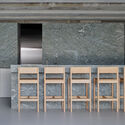
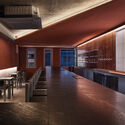
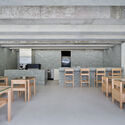
In contemporary East Asia, however, "coffee or tea" increasingly reads as something else: imperceptibly or subconsciously, it is becoming more of a choice about where you want to be. Each beverage now carries a spatial expectation. Coffee implies a room you can occupy—often a place to pause, work, meet, or cool down. Tea, despite being culturally pervasive, appears more diffusely across the city—sometimes as a dedicated destination, sometimes as a high-frequency kiosk, and very often as an embedded default within dining typologies. The result is that a question posed as taste has begun to operate as a subtle indicator of spatial preference: whether you are seeking duration or velocity, enclosure or flow, a third place or a quick node on the street.

Coffee or Tea: Third Places, Kiosks, and the Retail Architecture of Duration  - More Images+ 28

DEMER Busan Station Store / design by 83

DEMER Busan Station Store / design by 83 - More Images+ 32

  • Architects: design by 83
  • Area Area of this architecture project Area:  96
  • Year Completion year of this architecture project Year:  2025

Waveworks Yangyang Workation Center / Chakchak Studio

Waveworks Yangyang Workation Center / Chakchak Studio - More Images+ 9

  • Architects: Chakchak Studio
  • Area Area of this architecture project Area:  272
  • Year Completion year of this architecture project Year:  2023

Shaping Desire: How Architects Redefine Commercial Spaces

Subscriber Access | 

In contemporary architecture, commercial spaces have become more than points of sale; they are stages where identity, image, and experience converge. Stores, showrooms, and branded interiors often operate as laboratories where architects experiment with form, material, and light, translating corporate narratives into spatial experiences. In this context, the architect emerges as a mediator of desire, shaping atmospheres that guide perception, evoke emotion, and subtly influence behavior. This role reveals a complex intersection between design and capitalism: the creation of spaces that sell not only products, but also aspirations, lifestyles, and cultural meaning. By transforming commerce into an architectural performance, these projects invite reflection on how the discipline negotiates its agency in a world where visibility and image have become as essential as function.

Shaping Desire: How Architects Redefine Commercial Spaces - More Images+ 55

Enor Showroom / studioknot

Enor Showroom / studioknot - More Images+ 22

  • Architects: studioknot
  • Area Area of this architecture project Area:  72
  • Year Completion year of this architecture project Year:  2023

Verish Anguk Flagship Store / Studio Tama

Verish Anguk Flagship Store / Studio Tama - More Images+ 16

  • Architects: Studio Tama
  • Area Area of this architecture project Area:  220
  • Year Completion year of this architecture project Year:  2025

Raw Interiors: 35 Projects that Use Exposed Wood and Concrete

Subscriber Access | 

Interior design has been characterized by infinite alternatives in coatings, finishes, and furniture to achieve unique and unrepeatable spaces. Designers are constantly coming up with innovative solutions and materials specifically created for a distinctive spatial perception. However, there is also a trend that seeks the warmth of the interior spaces by exposing the raw building materials as they are. The richness of materials such as wood and concrete gives that feeling of durability and low maintenance that, combined with an attention-to-detail design, makes spaces look warm yet stay true in essence. See below for 35 examples of interior spaces where concrete and wood appear in their almost purest state.

Raw Interiors: 35 Projects that Use Exposed Wood and Concrete - More Images+ 32

Insoil Showroom / KKOL Studio

Insoil Showroom / KKOL Studio - More Images+ 25

Seodaemun-gu, South Korea
  • Architects: KKOL Studio
  • Area Area of this architecture project Area:  69
  • Year Completion year of this architecture project Year:  2025

Center Coffee Eastpole / KKOL Studio

Center Coffee Eastpole / KKOL Studio - More Images+ 13

  • Architects: KKOL Studio
  • Area Area of this architecture project Area:  293
  • Year Completion year of this architecture project Year:  2025

Refracting Light and Redefining Space: Glass Bricks in Contemporary Interiors

Subscriber Access | 

Glass bricks have been widely used in architecture, eventually becoming a staple of the 1980s architectural styles. Some examples of construction with this material could be the classic "Maison de Verre" by Pierre Chareau and Bernard Bijvoet in Paris or the more modern take of Hiroshi Nakamura & NAP with the Optical Glasshouse in Japan. In recent years, glass bricks are becoming increasingly popular, no longer relegated to older aesthetics. Instead, they have evolved into versatile design elements that bring light, texture, and character into contemporary interiors. Their ability to diffuse natural and artificial light while maintaining privacy has reignited interest among designers seeking innovative ways to enhance indoor spaces while taking advantage of natural light.

Refracting Light and Redefining Space: Glass Bricks in Contemporary Interiors - More Images+ 8

Exploring Showroom Interiors: The Art of Displaying Materials, Furniture, and Design Objects

Subscriber Access | 

When creating exhibition spaces, the design of the experience, the proposed route, and the transmission of certain perceptions and senses contribute to establishing different bonds and connections between the displayed objects and their visitors. Understanding a showroom as a space designed to creatively and experientially showcase products and services, what design strategies could enhance users’ interior experiences? How does interior design engage in dialogue with exhibition architecture?

Exploring Showroom Interiors: The Art of Displaying Materials, Furniture, and Design Objects - More Images+ 38

ADSB Andersson Bell Hyundai Pangyo Store / Studio Tama

ADSB Andersson Bell Hyundai Pangyo Store / Studio Tama - More Images+ 16

  • Architects: Studio Tama
  • Area Area of this architecture project Area:  113
  • Year Completion year of this architecture project Year:  2024

The Overlooked Art of Door Design: An Introductory Guide to Interior Door Types

Doors are among the most frequently used architectural elements in any occupied building, serving as movable thresholds that negotiate between private and public spaces. They facilitate both connection and separation among co-inhabitants. Yet, despite their fundamental role, doors are often one of the most overlooked design elements, particularly by clients. In discussions with industry professionals on various interior projects, a common consensus emerges—clients typically pay little attention to door types and details as long as the opening direction aligns with their expectations. However, the world of door design is an intricate one, offering a wealth of possibilities in finishes, installation methods, and modes of operation—each of which can significantly shape the spatial experience beyond the simple matter of swing direction.

The choice of door type and detailing can define or redefine a space entirely. Some doors offer superior sound insulation, while others remain open to connect spaces, enhancing spatial fluidity seamlessly. Certain designs require meticulous installation and ongoing maintenance, while others are virtually hassle-free. Moreover, the type of door selected, particularly that of the hinge, influences not only wall construction but also flooring layers and transitions, adding further complexity to the design process.

The Overlooked Art of Door Design: An Introductory Guide to Interior Door Types - More Images+ 17

OZBE Cafe / KKOL Studio

OZBE Cafe / KKOL Studio - More Images+ 26

  • Architects: KKOL Studio
  • Area Area of this architecture project Area:  495
  • Year Completion year of this architecture project Year:  2025
  • Professionals: IAAP STUDIO

RiverRidge Cafe / KKOL STUDIO

RiverRidge Cafe / KKOL STUDIO - More Images+ 18

  • Architects: KKOL Studio
  • Area Area of this architecture project Area:  107
  • Year Completion year of this architecture project Year:  2024

Hana Bank, Seoul-forest / Indiesalon

Hana Bank, Seoul-forest / Indiesalon - More Images+ 16

Seongdong-gu, South Korea
  • Architects: Indiesalon
  • Area Area of this architecture project Area:  353
  • Year Completion year of this architecture project Year:  2024
  • Manufacturers Brands with products used in this architecture project
    Manufacturers:  Benjamin Moore, Duramaru, HAY, LX Z:IN, Ondarreta, +3
  • Professionals: Kiyeno

Glow Store / Indiesalon

Glow Store / Indiesalon - More Images+ 18

Gangnam District, South Korea
  • Architects: Indiesalon
  • Area Area of this architecture project Area:  36
  • Year Completion year of this architecture project Year:  2024
  • Manufacturers Brands with products used in this architecture project
    Manufacturers:  Benjamin Moore

Atelier Hosoo / design by 83

Atelier Hosoo / design by 83 - More Images+ 15

Busanjin District, South Korea
  • Architects: design by 83
  • Area Area of this architecture project Area:  98
  • Year Completion year of this architecture project Year:  2024