Archive Olgiati

BROWSE ALL FROM THIS PHOTOGRAPHER HERE

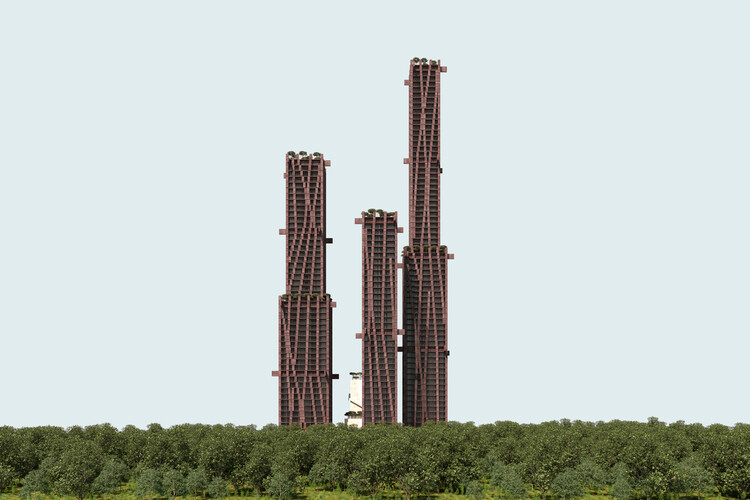
Imported Futures: Global Architecture Shaping Albania’s Urban Transformation

Subscriber Access | 
Audio available

In recent years, Albania has undergone a rapid and visible transformation, emerging as one of the most active urban environments in Southeast Europe. This growth is not only reflected in the expansion of its built fabric but also in the scale and ambition of new architectural interventions that seek to redefine the country's image. Across its territory, a series of large developments, cultural institutions, and infrastructural projects are being introduced as part of a broader effort to reposition Albania and its capital, Tirana, within regional and international networks.

A significant number of these interventions are being designed by internationally recognized architectural offices, whose presence has become a defining characteristic of the city's current phase of development. Rather than relying primarily on incremental or locally embedded processes, Tirana's transformation is increasingly shaped through externally authored visions that introduce new formal languages, typologies, and urban strategies. These projects often operate as singular objects or large-scale fragments, contributing to a landscape where the city is assembled through distinct and highly visible gestures.

Imported Futures: Global Architecture Shaping Albania’s Urban Transformation - Image 1 of 4Imported Futures: Global Architecture Shaping Albania’s Urban Transformation - Image 2 of 4Imported Futures: Global Architecture Shaping Albania’s Urban Transformation - Image 3 of 4Imported Futures: Global Architecture Shaping Albania’s Urban Transformation - Image 4 of 4Imported Futures: Global Architecture Shaping Albania’s Urban Transformation - More Images+ 26

Shaping Architectural Continuity: 25 Revitalization Projects Across Historic, Industrial, and Natural Sites

Audio available

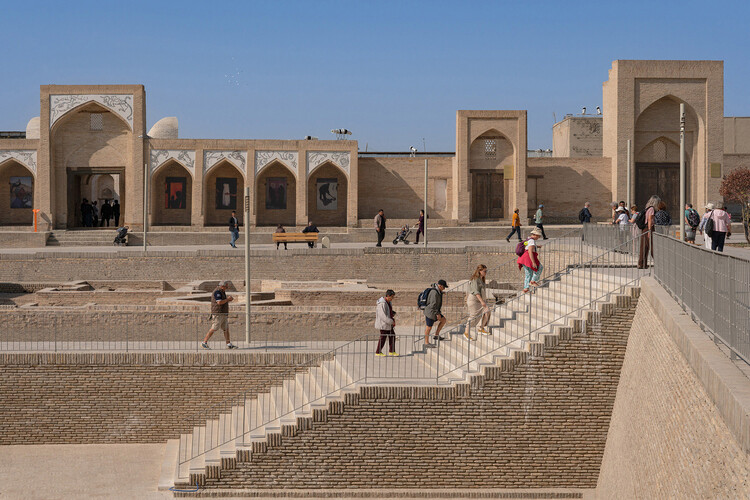
Heritage sites constitute complex spatial archives in which architecture, history, and collective memory converge. They encompass a wide spectrum of contexts—from archaeological remains, ancient and historic townscapes, UNESCO-listed landscapes, to early modern civic structures and industrial infrastructures. Yet these environments confront challenges: climate change, urban transformation, disaster, shifting social needs, and the gradual erosion of material fabric. Revitalization and restoration projects respond to these conditions by positioning architectural and spatial practice as an active mediator between preservation and the contemporary topologies.

In current practice, conservation is understood as a creative process of adaptation and reinterpretation that serves both communities and inhabitants. At the same time, monumental architecture continues to define the identity and landscape of a place for wider audiences and future generations. Architects and planners are called upon to negotiate sensitive historic contexts while introducing new programs, techniques, and spatial experiences. They exemplify diverse design approaches, including precise structural interventions, climate-responsive strategies, and meticulous material restoration, alongside the thoughtful insertion of new architectural elements. Equally important is their engagement with vernacular knowledge and materiality, which preserves the locality and cultural specificity of each site.

Shaping Architectural Continuity: 25 Revitalization Projects Across Historic, Industrial, and Natural Sites - More Images+ 21

Muharraq Architecture City Guide: 10 Projects Through the Bahraini City's Developing Pearling Path

Subscriber Access | 

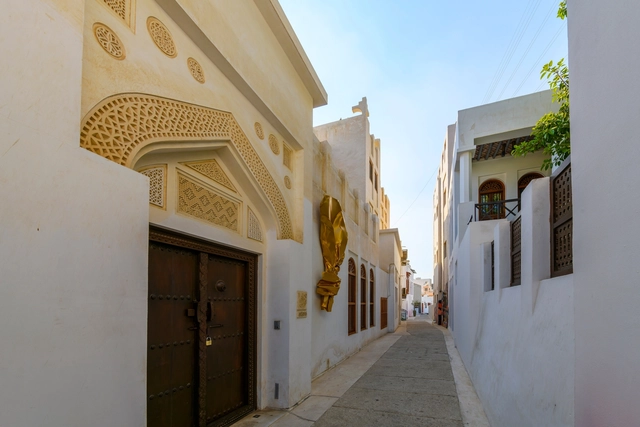
The Kingdom of Bahrain is being widely acknowledged recently through their worldwide architectural contributions at the Expo 2025 in Osaka, with their Anatomy of a Dhow pavilion by Lina Ghotmeh; or at the Venice Biennale, where the Heatwave exhibition was awarded the Golden Lion for Best National Participation. However, for the past few years Bahraini cities like Muharraq have been lending the stage for regional and international architects to discover their typical Persian Gulf architecture and add their own touches to the local sites. It's through the works of Leopold Banchini, Anne Holtrop, or Valerio Olgiati that the old has been brought back to life, along with the efforts of the local authorities and cultural figures.

Muharraq Architecture City Guide: 10 Projects Through the Bahraini City's Developing Pearling Path - More Images+ 16

Architecture & UNESCO: Rethinking Preservation and Cultural Heritage

Subscriber Access | 

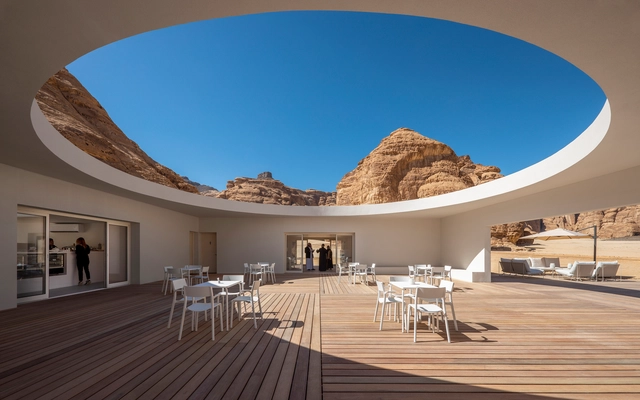
Architecture has always centered on permanence and ephemerality. Defined by material conditions, how we build is closely tied to what we preserve and how we conceptualize the future. Furthering international cooperation in education, the arts, the sciences, and culture, UNESCO is an organization that continues to examine the relationship between history and growth, preservation, and change. As architecture, landscapes, and cities become threatened by the climate crisis and unrest, cultural context becomes paramount.

Architecture & UNESCO: Rethinking Preservation and Cultural Heritage - More Images+ 10

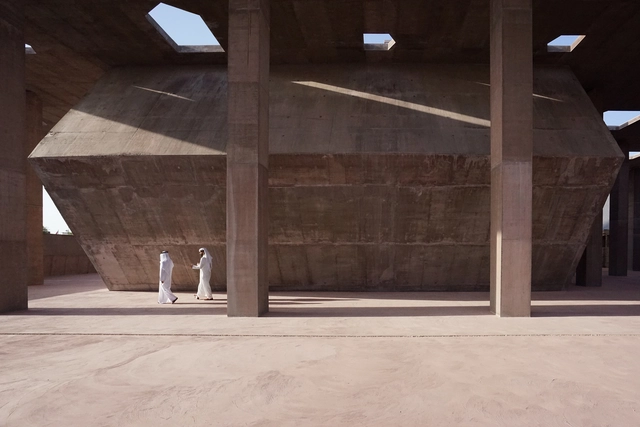
Pearling Site Museum and Entrance / Valerio Olgiati

Pearling Site Museum and Entrance / Valerio Olgiati - More Images+ 11

The Apple and the Leaf: On How in Architecture There Are No Indisputable Truths

Subscriber Access | 

For many centuries, the demands of gravity appeared to give architecture one requirement that was largely unquestionable: that structures must rise vertically. However, with the advent of steel it was revealed that this limit had not been provided by gravity but by our own limited technologies. In this text, originally published by Domus Magazine in Italian and shared with ArchDaily by the author, Alberto Campo Baeza reflects on the architectural freedom offered by steel structures and the arbitrariness they bring to architectural space.

Isaac Newton was resting under an apple-tree in his garden when an apple fell on his head. Being endowed with such a privileged head and thoughts faster than lightning, he rose forthwith from his afternoon nap and set about calculating the acceleration of gravity.

Had Sir Isaac Newton had a little more patience and had he taken his time in getting to his feet, he might have noticed how, following the apple, a few leaves also fell from that same apple-tree, and while they fell, they did so in quite a different manner to the apple.

The Apple and the Leaf: On How in Architecture There Are No Indisputable Truths - More Images+ 1

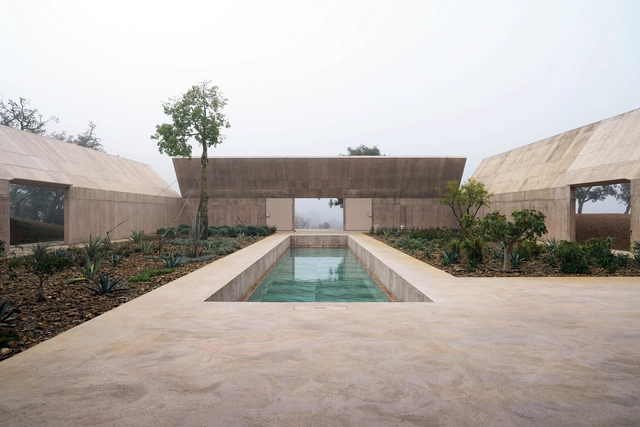
Villa Além / Valerio Olgiati

Villa Além / Valerio Olgiati - Exterior Photography, Houses
© Archive Olgiati

Villa Além / Valerio Olgiati - More Images+ 10