As engines of the economy and production, cities are home to the largest masses of people and it is estimated that by 2050, they will be home to 70% of the world's population. In this context, architects are incorporating the articulation of mixed uses in their buildings on a daily basis, seeking to encourage diversification and avoid mono-functionalisation.
In its 2022 edition, the Colombian Biennial of Architecture and Urbanism celebrates 60 years of highlighting projects that preserve and enhance the urban, environmental, social, historical, and cultural values of the contexts in which they are built. Organized by the Colombian Society of Architects since 1962, the event has announced the 97 selected projects competing for the Biennial Award across nine categories covering different fields of architecture: Interior and Ephemeral Architecture; Urban Design and Landscaping; Dissemination; Social Habitat; Heritage Intervention; Research, Theory, and Criticism; Urban and Regional Planning; Architectural Project; and Single-family, Two-family, and Three-family Housing.
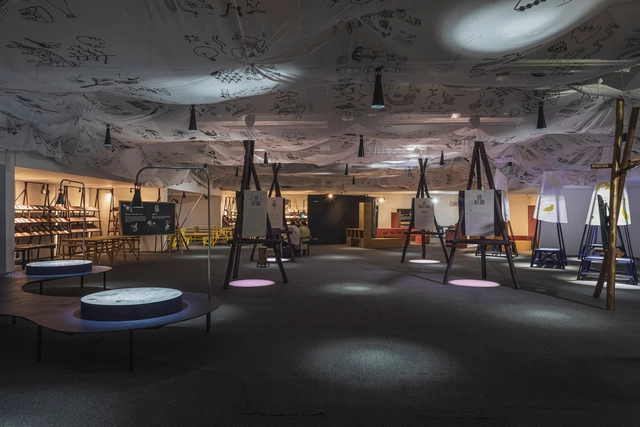
“Reading for Life” is the name of the pavilion of the Mayor’s Office of Bogotá designed by Yemail Arquitectura for this latest edition of the Bogotá International Book Fair (FILBO). Welcoming over 30,000 visitors, the pavilion made a significant impact by presenting a narrative that allowed visitors to understand the Colombian capital from different perspectives. It took into account the city’s rural composition while proposing a future with a more organic connection, where the diversity of the neighborhood, water, air, land, and all the cities found in reading, community, and nature coexist in a single space.
A week ago, we announced the 15 finalist projects of the 2022 Building of the Year award —the prize for the best architecture in Spanish. Our jury of experts—you, our readers—made an initial selection of 15 from nearly 1,000 architectural works built in Latin America and Spain to proceed with the final vote for 3 projects that represent the best of the architecture that inspires, defines, and shapes us.
Today is the day to announce the winners of ODA2022!
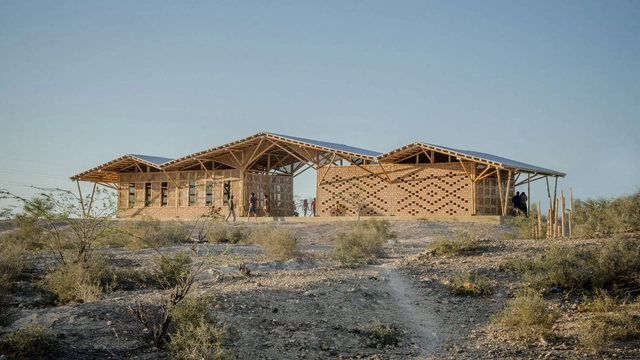
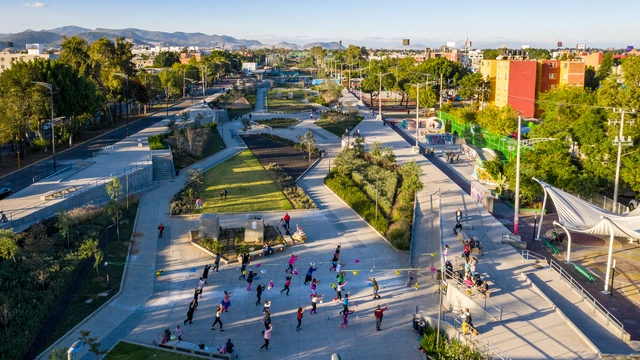
We are pleased to present three projects located in Colombia, Cuba, and Chile that demonstrate the relevance of thinking of architecture as a solution to specific and local needs in order to improve the quality of life, at any scale or program.
The 2022 Building of the Year Award is presented to you by Dornbracht, renowned for its leading designs in architecture, which can be found internationally in bathrooms and kitchens. See the selected projects below.
Today is the day to discover the finalists of ODA2022: the award for the best Spanish-language architecture. Our expert jury—meaning you, our readers—has selected 15 of your favorite projects from nearly 1,000 architectural works built across Latin America and Spain.
This award has become a true tradition, now in its 14th edition. It is an invitation extended to all our readers to recognize the works published during 2021 that inspired them and represent the identity of their local contexts in a globalized planet, shaping the way architecture is made in Latin America and Spain within an increasingly heterogeneous and multicultural world.
Starting today, and until next Wednesday, March 30, at 11:59 PM (GMT -3), you can explore each of the finalists in detail and vote for the work that best represents the Spanish-language architecture that inspires us, defines us, and leaves a mark on us. Discover all the finalist projects below.
The 2022 Obra del Año Award is brought to you by Dornbracht, renowned for its leading architectural designs, which can be found internationally in bathrooms and kitchens.
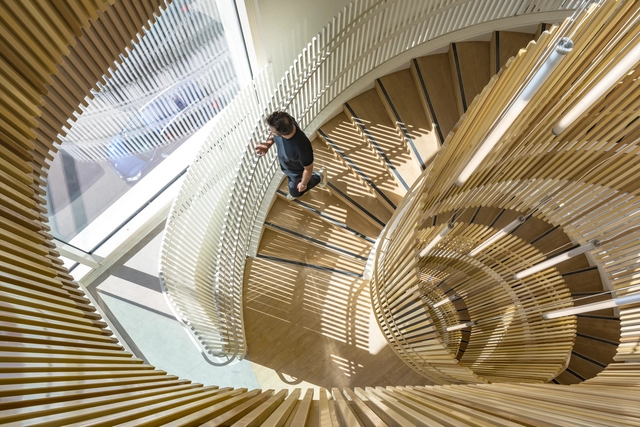
Railings play two roles in architectural projects, both as a support and safety component in a building, which involves a great deal of technical detailing and accessibility standards, and as an accent element in the design. In this article, we will explore the different ways in which these elements can be used in a project.
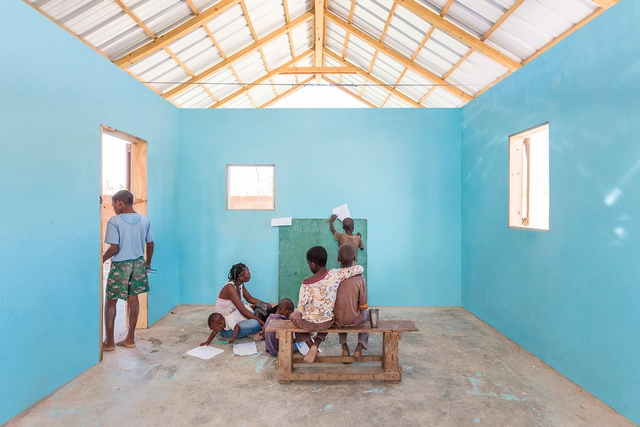
“These types of projects are of vital importance because they seek to reverse social, economic, urban, and political instability, providing organized attention to community needs and creating built platforms that serve as a bridge between the intrapersonal and intra-institutional scales.” Excerpt from the project description of the Community Development Center / OCA + BONINI
Since 2008, World Social Justice Day has been observed every February 20 to support and promote the international community's efforts to achieve sustainable development, poverty eradication, the promotion of full employment and decent work, universal social protection, gender equality, and access to social well-being and justice for all. According to the United Nations, “Social justice is an underlying principle for peaceful and prosperous coexistence within and among nations," representing the core of its mission to promote development and human dignity.
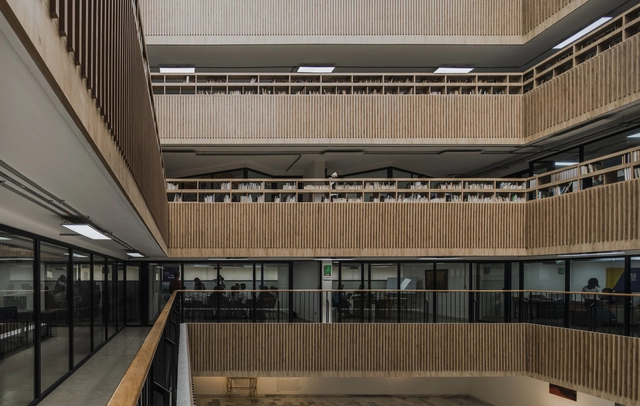
Educational architecture is crucial for creating spaces that, not only nurture and mold the minds of the future generations, but also provide spaces for the wider public to come and share knowledge and ideas.
Maria Montessori began to develop her educational method at the beginning of the 20th century. In general terms, the method is a scientific pedagogy that promotes an education that positively contributes to the development of children's brains, respecting their individuality and stimulating their autonomy, self-esteem, and self-confidence.
Although the method was created in the last century, science is currently beginning to test much of the information investigated by Maria Montessori. For this reason, it is increasingly being applied to architecture for children’s educational spaces, improving the quality of children's learning and development and providing them with better tools for their future lives.
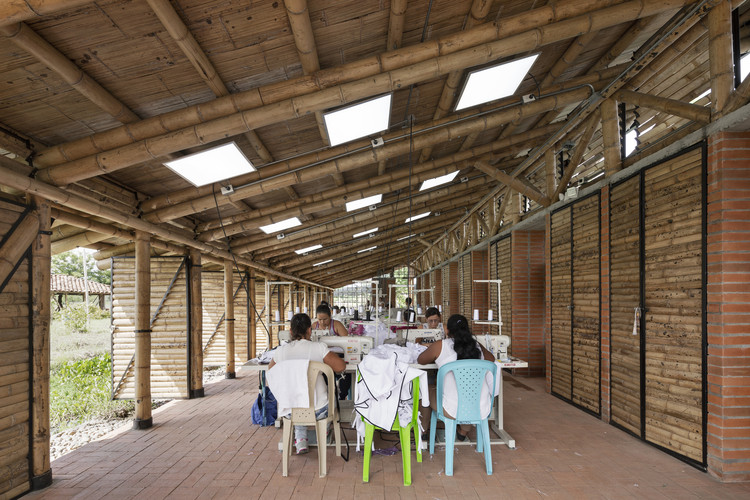
Amairis Community Sewing Workshop / ruta 4 taller. Image
Taller Síntesis, based in Medellín, Colombia, shared this article with us. It emphasizes the importance of recognizing the Colombian rural built environment—which accounts for most of the country's territory but not the majority of its architectural practice—with the aim of raising awareness of how architecture is developed and recognized in the country.
Amairis Community Sewing Workshop / ruta 4 taller. Image
Medellín-based firm Taller Síntesis shares the following article emphasizing the importance of recognizing the rural built environment—which accounts for most of the country's territory but not most of its architectural practice—in order to raise awareness of how architecture is directed and recognized in Colombia. Read on below.
On November 20, the 2020 Panamerican Architecture Biennial of Quito (BAQ 2020) announced the winners of the present edition. Every other year, the BAQ "invites to discuss contemporary production of the built environment, aiming to improve the practice of our profession" in the Americas.
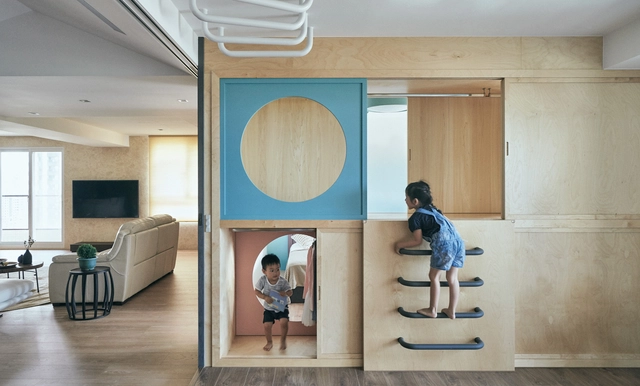
Children's furniture is all furniture –fixed or mobile– that is designed according to the ergonomic guidelines and anatomical dimensions of children specifically. Following this definition, we can identify two types of furniture: (1) those that facilitate a relationship between the caregiver and the child, and (2) those that allow the child to use them independently.
The big difference between these two types is that the first has dimensions that mainly adapt to the ergonomics of the adult, while the second is designed to meet the ergonomic needs of the child at each stage of their development. Since the growth of children occurs relatively quickly, it is common for the furniture of this second group to be multifunctional or even extendable.
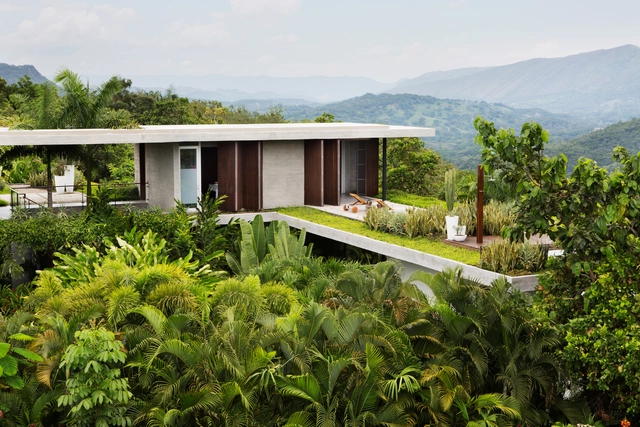
Colombia boasts an immense variety of thermal zones that create breathtaking landscapes and dreamlike natural environments. Its flora and fauna vary distinctly depending on region, altitude, and humidity. For architectural practices designing Colombian homes, the natural context is a constant source of inspiration, ranging from incorporating vegetation as interior architectural elements to framing nearby landscapes. When designing spatial perception—whether from within or without—nature is an undeniable component of these projects.



.jpg?1645781972&format=webp&width=230&height=230&crop=true)
.jpg?1645781751&format=webp&width=230&height=230&crop=true)
.jpg?1645782629&format=webp&width=230&height=230&crop=true)






.jpg?1623327841&format=webp&width=640&height=580)
.jpg?1623327824&format=webp&width=230&height=230&crop=true)
.jpg?1623327748&format=webp&width=230&height=230&crop=true)
.jpg?1623327763&format=webp&width=230&height=230&crop=true)
.jpg?1623327792&format=webp&width=230&height=230&crop=true)
.jpg?1623327841)







.jpg?1602872084&format=webp&width=640&height=580)

.jpg?1602872196&format=webp&width=230&height=230&crop=true)


.jpg?1602872084)