HKS Architects has been selected to design a new Major League Baseball stadium for the Texas Rangers, to be built in Arlington, Texas. As part of a new multipurpose sports and entertainment venue, the stadium will feature a retractable roof for climate control and shelter during the hot Texan summers.
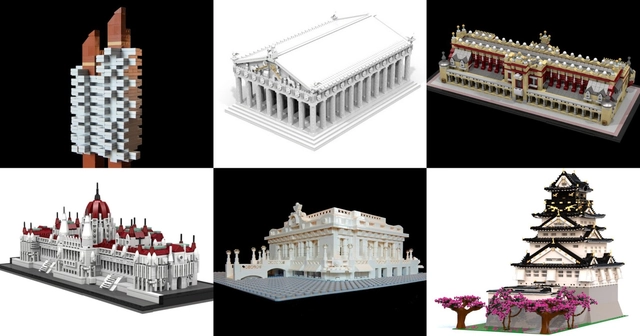
A lot of architects love LEGO—but few may be aware of the LEGO Ideas platform, which allows LEGO fans to submit their own ideas for future sets, and if they gather enough support, be considered for production as a real LEGO product. Here we’ve created a selection of our favorite architectural proposals from the platform; though some have already expired due to a lack of votes, many others included here are still open for voting to become a real set if you so desire. If on the other hand, you feel that our list is lacking a particularly LEGO-worthy building, this could be your time to shine; design your own set and gather support! One day soon, thousands of LEGO enthusiasts could be puzzling over your little architectural gem.
via Laterza's Interview with Leonardo Benevolo (https://www.youtube.com/watch?v=hzto2DOcTpk)
Italian media have reported that Leonardo Benevolo, one of Italy's foremost architects, critics, and historians, passed away yesterday at his home in Brescia following a long illness. Benevolo was an enormously influential figure in the field of architectural history who was continuously examining the problems and possibilities of our cities.
His writings—in particular the book History of Modern Architecture—have been widely circulated, translated and taught, and contribute to his legacy as one of the profession's most distinguished architects and educators.
Videos
Pedro Ignacio Alonso and Hugo Palmarola, Archaeology of Things Larger Than Earth. Film, 2m 30s. Exhibited at the 3rd Istanbul Design Biennial, 2016. Compiled, edited and produced by Jose Hernandez. Copyrights: Pedro Ignacio Alonso and Hugo Palmarola, 2016.
The 2017 Visiting School to Chile aims at studying from architectural, urban, and territorial perspectives, a series of infrastructures that since the 1960s have been installed in Rapa Nui (Easter Island) because of its extraordinary strategic location in the South Pacific Ocean. These include satellite tracking equipment, seismology and GPS tools, and radio-nuclear detection instruments that came to define global technological projects in the island. In particular, the workshop will focus its attention in the Mataveri Airport which – being the remotest runway in the world – was paved in the 1960s by the United States for the installation of a (currently abandoned) strategic base and extended again by NASA in the 1980s to become emergency landing for space shuttles. The island, in opposition to usual associations to isolation, was instead expedient for the setting of larger technological networks.
As we open to a new year, we would like to take a moment and remember one of the most significant lives lost in 2016: Iraqi-born British Pritzker Prize winner Zaha Hadid. While the narrative of Zaha’s trailblazing accomplishments are well-known, architect Rana Hadid celebrates her aunt’s memory from a uniquely poignant perspective in this new piece for the Guardian. Recounting Zaha’s early artistic prowess, fierce ambition, and earnest personality, Rana describes her as “the incredibly warm and generous Zaha who showed us we could do anything we wanted if we worked at it hard enough.”
Entitled “Architecture for the Search for Knowledge,” the lecture is named for Ábalos’ mantra by the same words, which is an aphorism written by Friedrich Nietzsche.
Throughout the event, Ábalos delved into various mixed-use typologies, each of which is in some way related to the basic typology of the medieval monastery.
This episode of Monocle 24'sOn Design podcast, which briefly surveys the state of Indian architecture and suggests a blueprint for a 21st Century vernacular, was written and recorded by ArchDaily's European Editor at Large,James Taylor-Foster.
In the first half of 2016 an exhibition was opened in Mumbai. The State of Architecture, as it was known, sought to put contemporary Indian building in the spotlight in order to map trends post-independence and, more importantly, provoke a conversation both historical and in relation to where things are heading.
https://www.archdaily.com/802970/is-india-building-the-wrong-sort-of-architectureAD Editorial Team
In this photoset, Vincent Hecht takes his lens into the recently completed Sumida Hokusai Museum, designed by pritzker prize winner Kazuyo Sejima, one half of the acclaimed international firm SANAA. Located in the Tokyo neighborhood of Sumida, the 4-story, angular structure will house a collection of over 1800 works by world-renowned ukiyo-e woodblock painter Katsushika Hokusai, who lived in Sumida over 200 years ago.
For U.S. architects, working abroad will now be easier than ever, as the National Council of Architectural Registration Boards (NCARB) has announced a new mutual recognition arrangement with the licensing authorities of Australia and New Zealand. Effective as of January 1, 2017, the agreement allows architects to earn reciprocal licenses that authorize architects to work in the two countries.