Pritzker Prize-winning architect Tadao Ando has designed a monumental lavender-covered temple enveloping a giant statue of Buddha at the Makomanai Takino Cemetery in the northern Japanese city of Sapporo.
Pritzker Prize-winning architect Tadao Ando has designed a monumental lavender-covered temple enveloping a giant statue of Buddha at the Makomanai Takino Cemetery in the northern Japanese city of Sapporo.

After starting and stopping for nearly 20 years, a 17-story Deconstructivist tower by Eric Owen Moss Architects seems to finally be underway in Los Angeles’ Culver City neighborhood after construction permits were approved earlier this year. Originally known as the Glass Tower, the project has been revived as (W)rapper, a nod to the structure’s enveloping steel exoskeleton.
A new flythrough video of the project shows the inside and out of the 230-foot tower, including its double-height and mezzanine office levels, as well as a spacious rooftop terrace. In total, the building will offer 160,000 square feet of office space and two levels of underground parking. Located adjacent to the Expo Line’s LA Cienega/Jefferson station, the project was originally envisioned as a multi-tower development in the late 90s, before being reduced to its current form.

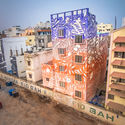
Last month, ArchDaily had an opportunity to speak with Akshat Nauriyal, Content Director at Delhi-based non-profit St+Art India Foundation which aims to do exactly what its name suggests—to embed art in streets. The organization’s recent work in the Indian metropolises of Delhi, Mumbai, Hyderabad, and Bengaluru, has resulted in a popular reclamation of the cities’ civic spaces and a simultaneous transformation of their urban fabric. Primarily working within residential neighborhoods—they are touted with the creation of the country’s first public art district in Lodhi Colony, Delhi—the foundation has also collaborated with metro-rail corporations to enliven transit-spaces. While St+Art India’s experiments are evidently rooted in social activism and urban design, they mark a significant moment in the historic timeline of the application of street art in cities: the initiative involves what it believes to be a first-of-its-kind engagement between street artists and the government.
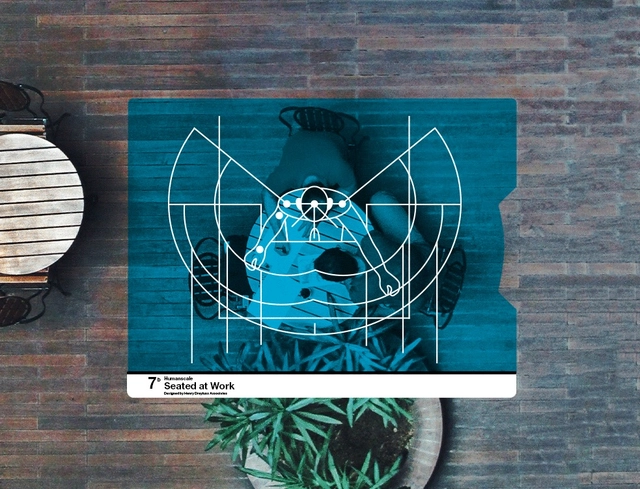
Put away the Neufert manual and pixelated Internet searches, because scaling people just got a whole lot easier. The Chicago-based design consultancy IA Collaborative has launched a Kickstarter campaign for the reissue of Humanscale – a set of ergonomic design templates that contain over 60,000 measurements adjusted to humans of all ages, sizes and, yes, even situations.


In the past decade or so, smartphones and social media apps have revolutionized our culture's relationship to images. From Instagram to Facebook to Pinterest to Youtube, photographs and videos are now so ubiquitous that they have become literally disposable, with apps such as Snapchat trading on their promise to delete your images after a certain period of time. But while smartphones are a very visible driver of this change, what is often forgotten are the huge developments in image-editing software that have supported this revolution—from the HDR built into your smartphone's camera to the wide range of filters provided by Instagram.
Now, as reported by MIT News, Google and MIT's Computer Science and Artificial Intelligence Laboratory may have created another cosmic leap forward: an algorithm that can provide automatic, professional-level image retouching so quickly that you can see a preview before even snapping the photograph.


In a world in which the "happy" architectural image feels all-pervasive, the British architect and academic Dr. Timothy Brittain-Catlin reveals its darker side suggesting why, and how, we might come to celebrate it. You can read Brittain-Catlin's essays on British postmodernism here, and on colorful architecture, here.
"Contemporary buildings celebrate openness, light and free-flowing movement," says the President of the Royal Institute of British Architects (RIBA) in the March 2017 issue of the Institute’s journal. This is what at my school we call an "announcement", rather than a statement of fact. Indeed, all architects and architecture students hear these words all the time. But are they true? Should they be?








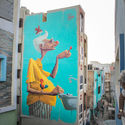
__Anpu_Varkey___photo_by_Akshat_Nauriyal.jpg?1501258835 "Gandhi Mural by Hendrik Beikirch and Anpu Varkey, Delhi. Image © Akshat Nauriyal")