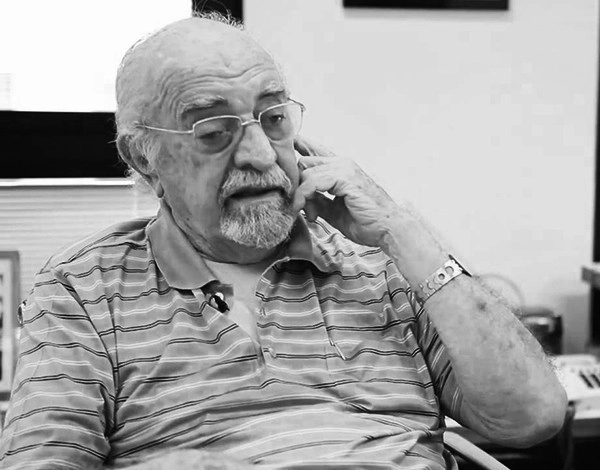
Architect Gian Carlo Gasperini passed away on the night of Wednesday, July 15, at the age of 93. He had been hospitalized for two days at Albert Einstein Hospital with pneumonia. Gasperini was responsible for several of São Paulo's landmark buildings, such as the Galeria Metrópole in the city center and the Pauliceia building on Paulista Avenue.
Polis is a (hypothetical) coastal metropolis with a growing population. However, most of its infrastructure was built 100 years ago, lacks maintenance, and is unable to meet the city's future needs.
Compounding these issues, Polis is experiencing damage from rising floods and coastal erosion. Its residents, especially those already impacted by environmental pollution, suffer from heat waves and poor air quality driven by industrial activity and traffic congestion.
https://www.archdaily.com/1124013/integrated-planning-of-nature-based-solutions-the-key-to-urban-resilienceLisa Beyer e James Anderson
Escola da Cidade is broadcasting, for the first time, the inaugural lecture of the Seminar on Culture and Contemporary Reality, delivered in 2002 by Aziz Ab’saber, one of Brazil's most respected and renowned geographers and scientists.
The air humidity is famous, reaching mercilessly low levels for anyone who has never visited a desert. Trees with twisted trunks, thick bark, and fuzzy leaves rise from the soil, attempting to defy gravity, but they contort in such a way that it is as if the heat were pushing them back toward the ground. The red earth is omnipresent, adding a touch of drama to every corner, as if the searing temperature whipped the land until it bled. Here in the *cerrado*, there is none of the density of a damp, dark jungle—like some menacing forest out of a Jack London novel, or an immemorial witness in a trance, as seen in a Joseph Conrad novella.
Postponed to July 2021, the 27th World Congress of Architects will host virtual debates as part of an open, collaborative platform to gather insights and proposals for addressing contemporary urban challenges.
The countdown to the event begins this week with the release of special content on the social media channels of UIA2021RIO. This includes video testimonials and interviews with speakers, collaborators, and partners discussing post-pandemic urban transformations and the role architects and urban planners should play in society.
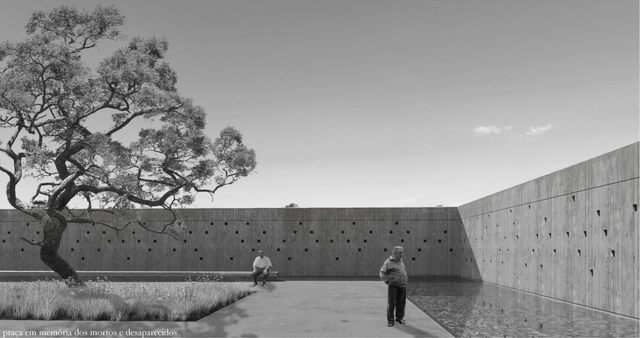
The 4th {CURA} Award continues the practice of hosting ideas competitions on themes aligned with current discussions on architecture, the city, and society, focusing on contemporary Brazil. The institutionalization of authoritarian and denialist discourse has become a real threat. For this reason, the competition's theme—a Museum of Democracy—brings forward a necessary discussion on how we treat memory and our history.
A faucet is a mechanical valve used to regulate (release or block) the flow of a fluid (usually water) from plumbing. While turning on a faucet seems almost mundane today, we rarely think about the vast knowledge and technology required to provide water at any given moment with a simple movement of the hand. Yet, between intake, treatment, and distribution to a kitchen or bathroom, water travels a complex path.
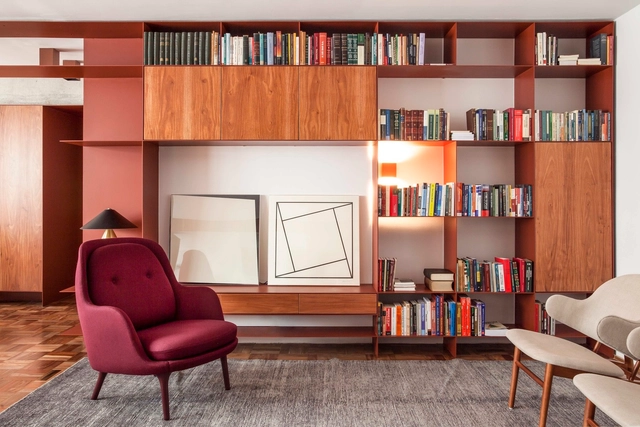
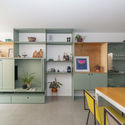
Sheet metal is characterized by an excellent strength-to-weight ratio, meaning it performs exceptionally well under heavy loads despite being lightweight and slender. Because of this, bookshelves made from sheet metal offer impressive storage capacity and have become increasingly popular in apartment design.
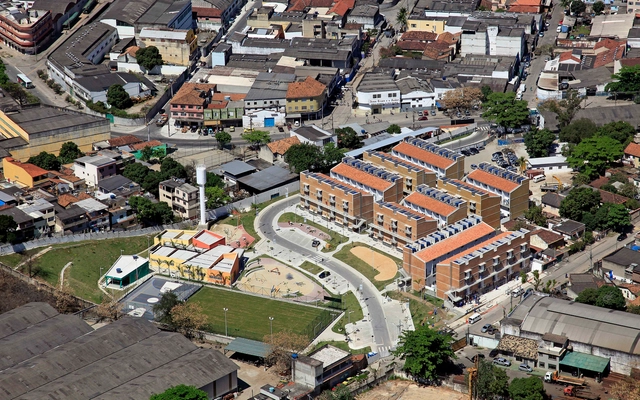
Complexo do Alemão Housing Nucleus, arch. Jorge Mario Jáuregui – RJ 2009. Source: Jorge Mario Jauregui Collection
We must build the city through housing to address the country's housing deficit. Above all, we need not just “houses” but compact housing developments equipped with infrastructure, services, public facilities, and public spaces, featuring highly diverse housing typologies to accommodate a wide variety of family arrangements. The current incentives driving urban land speculation must be redirected through an Urban Reform.
https://www.archdaily.com/1123587/a-reading-of-social-housing-by-jorge-mario-jaureguiJorge Mario Jauregui
Renovations of Brazilian modernist buildings prompt a necessary debate on how to preserve and what best practices to employ when intervening in architectural heritage. The challenges of this type of intervention are immense. These projects must be approached with great care to maintain respect for their historical significance, preserving key elements of their composition while simultaneously updating the building to meet contemporary and client demands.
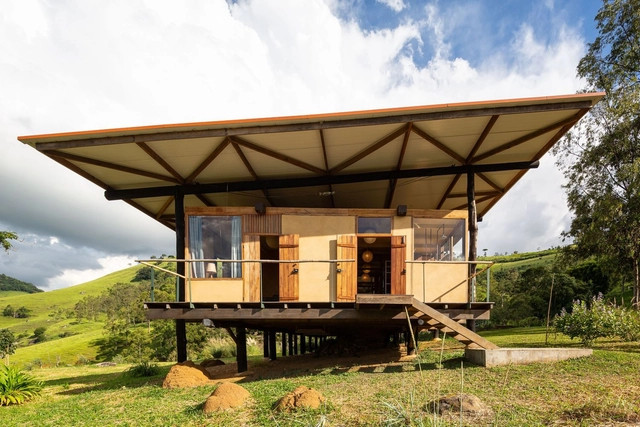
In recent years, metal roofing has increasingly gained ground in architectural projects, from the industrial to the residential scale, especially when there is a need to lighten structural loads or span large distances. In residential architecture, this solution offers a viable alternative to traditional ceramic tiles due to its low cost, rapid installation, and the wide variety of types and models available on the market.
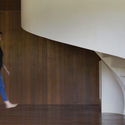
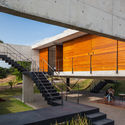
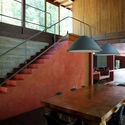
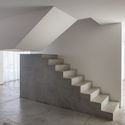
Certain acclaimed architectural works are recognized by details or specific elements designed with such care and inventiveness that they become the immediate reference that comes to mind when we think of these projects.
One such element that frequently takes center stage is the staircase. This is evident in classics like Lina Bo Bardi's Solar do Unhão, featuring a singular wooden staircase that organizes the entire open space and defines the scale of the structure, or the iconic helical staircase of the Itamaraty Palace, designed by Oscar Niemeyer with the precise curves that characterize his work.
Architects and urban planners seeking new sources of income during this period can find job opportunities across various regions in Brazil. For example, the City, Housing, and Health competition, organized by CAU/RJ, will award R$ 10,000 to the two best ATHIS (Technical Assistance for Social Interest Housing) proposals addressing housing and health in the era of Covid-19. Meanwhile, the Healthy House – Healthy City competition, hosted by CAU/RS, challenges participants to propose architectural solutions under different themes and will distribute R$ 100,000 in prizes.
Videos
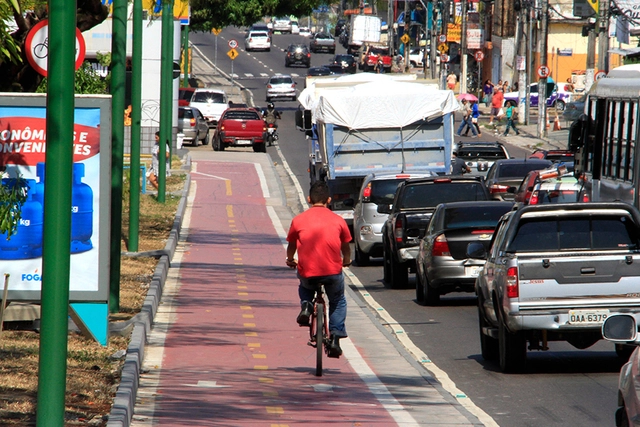
Bike lane in Manaus, AM. Courtesy of Caos Planejado
Cities are on the front lines of the fight against Covid-19. This pandemic has manifested as a global crisis, and the decisions made at this delicate moment by governments, policymakers, decision-makers, and the public will have profound consequences for the future. Countless contexts are already undergoing changes that alter—if only temporarily—human behavior. Social distancing measures, lockdowns, health protocols, and restrictions on urban mobility are major drivers in shaping new urban realities.
To purchase computers for economically vulnerable students at the Department of Architecture, Urbanism, and Design of the Federal University of Ceará—who, due to the pandemic, are unable to attend classes and lectures, develop projects, hold meetings, work in research groups, or access the vast amount of online information—professors and artists have come together for a common project: SOLIDARIEDAUD.
Rocinha Sports Complex and Footbridge | Authors: Mayerhofer & Toledo Arquitetura and Oscar Niemeyer | Date: 2010 | São Conrado. Via Arqguia Colorir
Arqguia Colorir is a digital coloring book that invites everyone to visually reinterpret the main architectural landmarks of Rio de Janeiro. Available for free download in both English and Portuguese, the drawings feature QR codes providing direct access to descriptions of each work on the online architecture guide ArqGuia Rio.
Despite UNESCO's recognition of specific world heritage sites, some are in constant danger of disappearing due to natural phenomena like earthquakes and human factors such as urbanization. By definition, these landmarks are significant to human history, embodying characteristics that reflect the core values of various civilizations. However, many have never been experienced firsthand by a large portion of the global population.
Among the hardships we have faced due to the pandemic, perhaps one of the most keenly felt is the loss of freedom to enjoy public open spaces. Walking down a pedestrian street, meeting friends in a plaza, exercising in large parks or on beaches, enjoying a nature that is also urban. Beyond the desire to meet someone, there is a deep yearning to meet somewhere—beyond the private and intimate sphere.
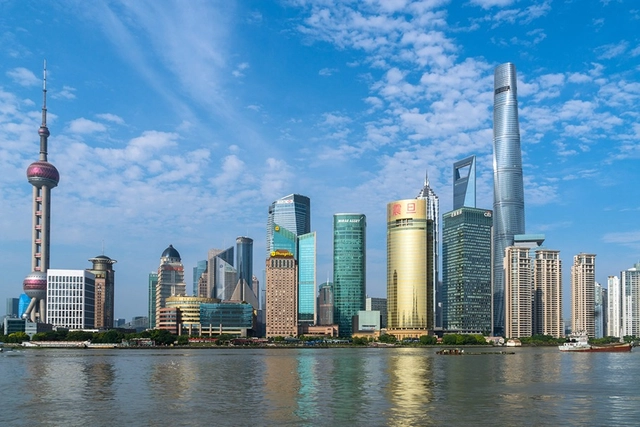
In 2013, the film *Her*, in which the protagonist falls in love with an operating system, sought to depict a not-so-distant future of a relatively dystopian reality. Although the city depicted was likely a futuristic Los Angeles, the filming actually took place in Shanghai. After visiting the city, I believe this was a wise decision, given the pervasive atmosphere that constantly evokes this very theme. I remember standing on a massive circular pedestrian overpass above the Mingzhu roundabout, which connects major avenues in the heart of Pudong, Shanghai's current financial district. Ahead of me, I saw the bizarre Oriental Pearl Tower, a 467-meter-tall TV tower built by a Chinese state-owned enterprise in 1994. Looking back and up at the Shanghai Tower—the second-tallest building on the planet at an impressive 632 meters—the impact was even greater. This is Shanghai's image to the world, the showcase of a new China, breaking paradigms and reaching for the sky.
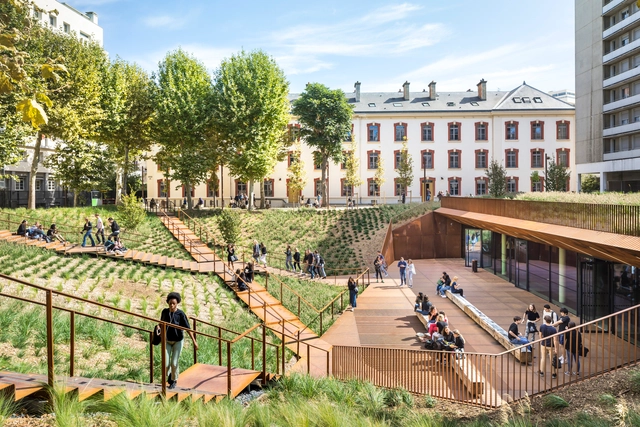
Universities are environments defined by the intrinsic relationship between teaching, research, and outreach. As multidisciplinary institutions responsible for cultivating and disseminating knowledge, the various facilities that make up a university not only translate (directly or indirectly) the principles of education, research, and outreach into physical space, but also serve as the stage for the multifaceted dynamics and activities that shape campus life.
The Cruel Pedagogy of the Virus – The pandemic has a tragic power of revelation. It exposes a series of paradoxes that were previously obscured or underestimated. In this sense, like any moment of crisis, it carries an educational dimension. Undoubtedly, given so many deaths—many of them preventable—this is a "cruel pedagogy of the virus," in the words of Portuguese sociologist Boaventura de Sousa Santos. Amidst the suffering, debates and proposals have proliferated through livestreams, articles, reports, petitions, research papers, action agendas, guides, denunciations, solidarity networks, and even self-governance initiatives in semi-abandoned peripheries. These discussions focus particularly on the Brazilian tragedy, which combines multiple crises tied to structural issues (such as inequality and racism) with a mounting crisis of reason—or simple common sense—shaping a macabre landscape of social regression, hatred, obscurantism, and genocide.
https://www.archdaily.com/1124284/architectures-of-distance-what-the-pandemic-can-reveal-about-architecture-and-urbanism-educationMariana Wilderom e Pedro Fiori Arantes
First Place. Courtesy of Oficina Urbana de Arquitetura
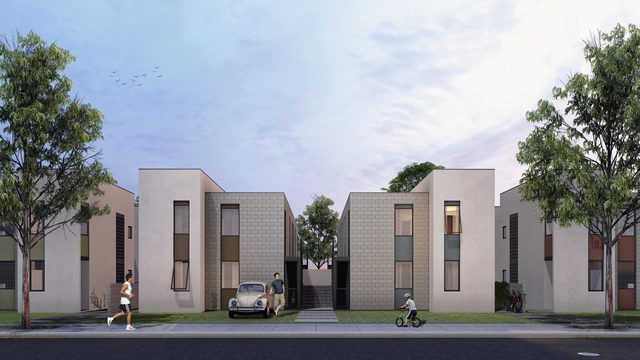
The Council of Architecture and Urbanism of Goiás (CAU/GO) has announced the results of the National Design Competition for Social Interest Housing, which aimed to select the best proposal for constructing homes for low-income families as part of the housing projects of the Goiana Housing Agency (AGEHAB).
In 2003, João Filgueiras Lima, known as Lelé, visited Escola da Cidade for a five-lecture series. The institution is broadcasting the fourth session, in which he discusses the industrialization of reinforced concrete in the urbanization of Salvador's favelas, as well as his partnership with Lina Bo Bardi.










_11.44.10.jpg?1595963269&format=webp&width=640&height=580)

_11.44.10.jpg?1595963269)