Videos
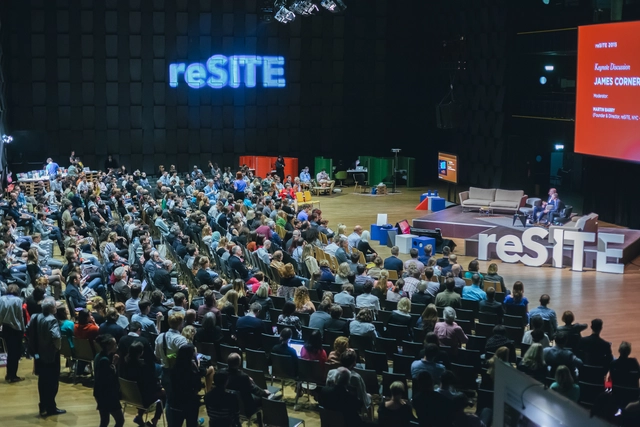
reSITE Conference, Prague, Forum Karlin. Photo Dorota Velek
On June 16-17, Prague will be hosting one of the leading architecture and urbanist events in Europe. Most of the 49 world renowned experts who will speak at reSITE 2016: Cities in Migration have experienced migration themselves. Coming from 20 countries, they will bring innovative solutions and successful strategies for European and Western cities to come to terms painlessly with the influx of new residents. Carl Weisbrod, Chairman of the City Planning Commission of NYC, Professor Saskia Sassen, sociologist at Columbia University, and Michael Kimmelman, the Architecture Critic for The New York Times will come from New York City. A huge number of speakers will come from Germany. Besides the famous landscape architect, Martin Rein-Cano from Topotek 1, Berlin, we will meet one of the city planner of Munich and the co-founders of the initiative “Refugees Welcome.”
The DANIEL GÖSSLER AWARD for an outstanding work of architectural theory will be conferred for the third time in 2016. All theoretical works that address relevant issues in current architecture and urban planning debates are eligible. The works should make a serious contribution to the current discourse and should refer to the socio-political context. Entries must have been published since 2011 and may not have previously been submitted for the DANIEL GÖSSLER AWARD. Works concerned primarily with architectural history are not eligible. Non-German entries must be submitted in German or English translation.
The City of Kansas is sponsoring a design competition to bring in new ideas, energy, and visions to the development of Twin Creeks, a 15,000 acre predominantly rural area in the Northland of Kansas City that is projected to house up to 75,000 people over the next 20+ years.
The Architecture at Zero 2016 competition challenge is to create a zero net energy (ZNE) student housing project on the San Francisco State University campus. The competition has two components. First, entrants will create an overall site plan to accommodate the 784 housing units, student services, dining center, childcare facility, and parking. Second, entrants will design one building, in detail, to indicate ZNE performance.
In a recent article published by the Financial Times, architect and public speaker Michael Pawlyn delves into how biomimicry can be applied to architecture in order to solve design problems and create a more sustainable future. Even in very early examples, biomimicry has been critical in the development of architecture, for example when Filippo Brunelleschi studied eggshells to create a thinner and lighter dome for his cathedral in Florence. In a modern example, biomimicry has been utilized—through the examination of termite mounds—to create cool environments without air conditioning in warm climates such as in Zimbabwe.
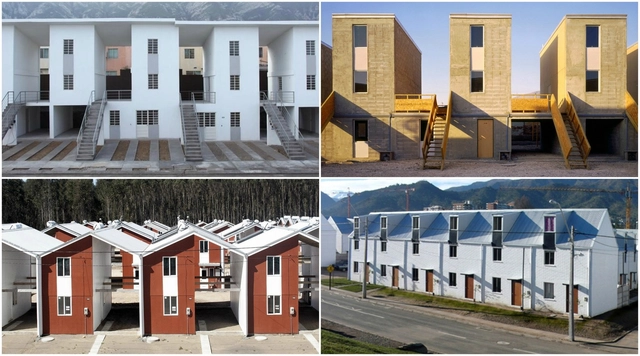
Earlier this year, we reported that 2016 Pritzker Prize winnerAlejandro Aravena announced that his practice, ELEMENTAL, released four of their social housing designs available to the public for open source use. A recent article published by Urbanisms in beta discusses what exactly “open source use” means to the architecture world, and how we may see these designs applied to projects in the future.
For European architects eager to expand their knowledge of contemporary architecture, SCI-Arc, the Southern California Institute of Architecture, has just announced the launch of a full tuition scholarship specifically for citizens of the European Union to study at the SCI-Arc campus in Los Angeles, California.
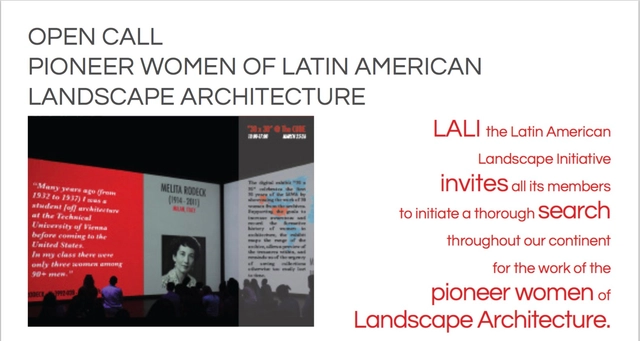
The Latin American Landscape Initiative (LALI) and the International Archive of Women in Architecture Center (IAWA) invites all its members to initiate a thorough search throughout our continent for the work of the pioneer women of Landscape Architecture.
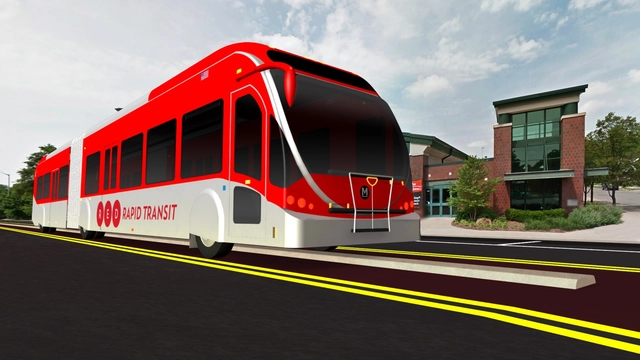
IndyGo is currently in the process of designing the Red Line Bus Rapid Transit (BRT) system. As part of the overall system design, IndyGo is facilitating a design ideas competition to foster creative design solutions for 28 rapid transit stations along Phase 1 of the Red Line BRT route with possible replication of these stations along the two future phases.
MAKING - Alternative design for Factories (www.nonarchitecture.eu)
The aim of the “Making” competition is to develop a design proposal for the factory typology, intended as a place of creation and processing of goods of any kind. It is asked to the participants to create innovative and unconventional projects on this theme, questioning the very basis of the notion of factory. Recently many initiatives, such as fab labs and Makers fairs, have been proposing new interpretations of the functioning of factories, using on demand production and 3D printing to develop extremely successful models.
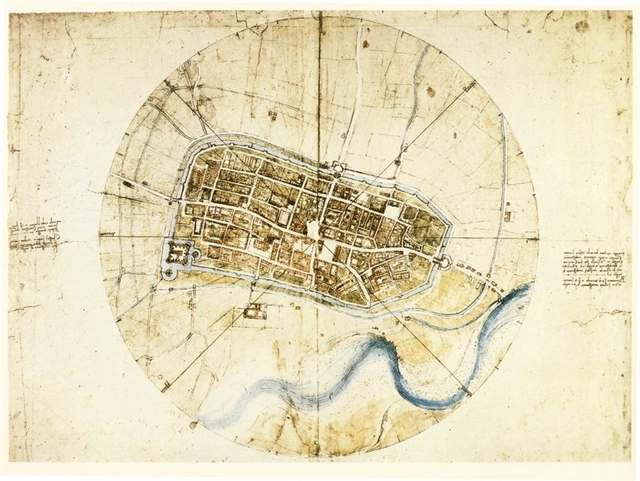
CityLab has recently published an article outlining Leonardo da Vinci's Town Plan of Imola, an "ichnographic" map from 1502, and the earliest of its kind in existence. Rather than utilizing elevations or oblique mapping methods like most other Renaissance mappers, da Vinci developed his own technique -- possibly using special hodometer and magnetic compass technologies that he invented -- to draw the city "as if viewed from an infinite number of viewpoints."
Building Trust are happy to announce that we will be working alongside We Yone Child Foundation to design and build a new hall space for a school that we have been working on for the last 2 years. Building Trust have a number of sustainable design and build projects around the World in 2016, ranging from schools and housing to wildlife conservation and healthcare.
We are offering a hands on participatory workshop where you will gain experience in sustainable building techniques and understand more about humanitarian design while building worthwhile projects that will have a huge benefit to the local community. You will gain an insight into a number of building techniques and architectural styles.
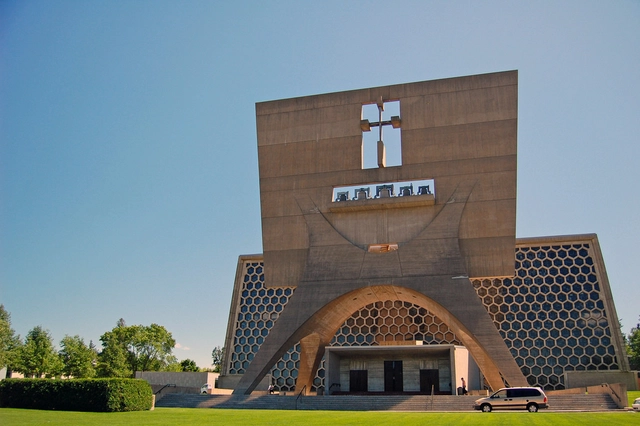
Known as Lajkó to his friends, Marcel Lajos Breuer (21 May 1902 – 1 July 1981) helped define first the interior contents, then the form, of the modernist house for millions; his influential approach to housing was one of the first to demonstrate modernism on a domestic, practical level. Beginning as a furniture designer at the height of Bauhaus, Breuer was hailed as one of the most innovative designers working in the 1930s, before moving to architecture and helping define the modernist vernacular—most notably as one of America's foremost Brutalist architects.
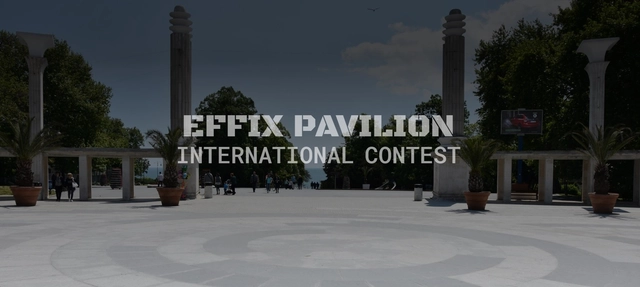
EFFIX Pavilion Contest for the Sea Garden in Varna
Devnya Cement AD, a member of Italcementi Group, and Varna Design Forum invite all students of architecture and design, and all young professionals up to 35 years old from all over the world to participate in the international contest for conceptual design of a small trading pavilion, to be situated in the Seaside Park in the city of Varna. The goal is to enrich the urban design of Varna through the realization of a contemporary and inspiring concept for a trading pavilion constructed with the innovative materials of Italcementi Group. The contest will finish with the announcement of a winner selected by a five-member Jury Panel. The winner will be awarded with monetary prize, visit to the "i.lab" research center in Italy and realization of their project as a real-size prototype.
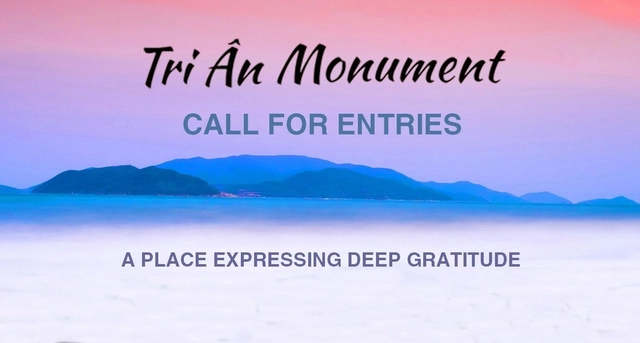
The overriding purpose of this proposed monument is to honor and express deep gratitude for the millions of Americans and Vietnamese who fought side-by-side to stop communist aggression and give the South Vietnamese people a chance to live in freedom. To give meaning to this difficult struggle, it is important for many of the Vietnamese people who fled their country and escaped communist persecution, to show their appreciation to those that helped them during and after the war.
The Wienerberger Brick Award has offered a unique platform for the recognition of outstanding brick architecture of international quality since 2004. The award comprises 5 different categories, which may change depending on trends and current topics.
https://www.archdaily.com/787220/winners-of-wienerberger-brick-award-announcedSponsored Post
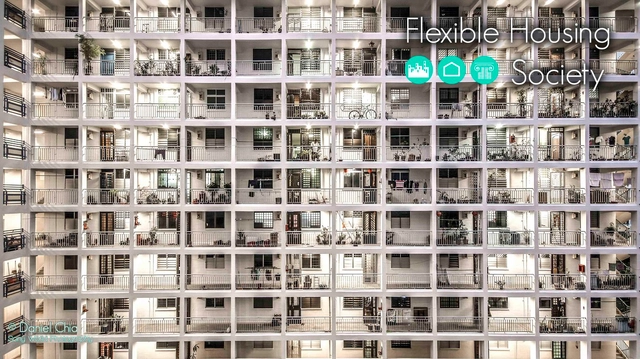
How is it possible to live in a society where changes occur in a fast and simultaneous way? These changes produce new family structures whose temporariness can change several times throughout the life cycle of a person. Therefore, currently there is no single housing prototype associated with a homogeneous sample of similar individuals who live in the same family structures.
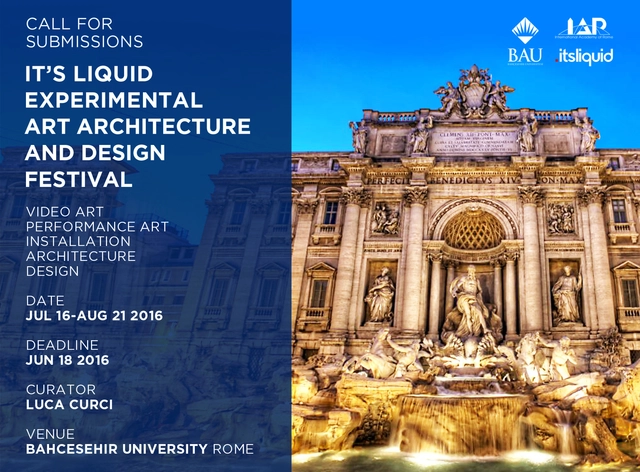
It’s LIQUID Group, in collaboration with International ArtExpo, is selecting all interesting video art and performance art works, architectural and design’s projects to include in the next 2016 festival. During the event an amazing programme of video art screenings, live performances, architectural, design projects and installation/sculpture will be presented. Artists, filmmakers, video makers, associate groups and studios, performers, architects and designers are invited to submit their works of video art, performance art, installation/sculpture and their architectural and design projects.