
Organized by Editores de Chile, the event opens this Thursday, August 27, at 7:00 PM, featuring a conversation between Francisca Jiménez and Paulo Slachevsky, as well as a performance by the national band Yorka.
Organized by Editores de Chile, the event opens this Thursday, August 27, at 7:00 PM, featuring a conversation between Francisca Jiménez and Paulo Slachevsky, as well as a performance by the national band Yorka.
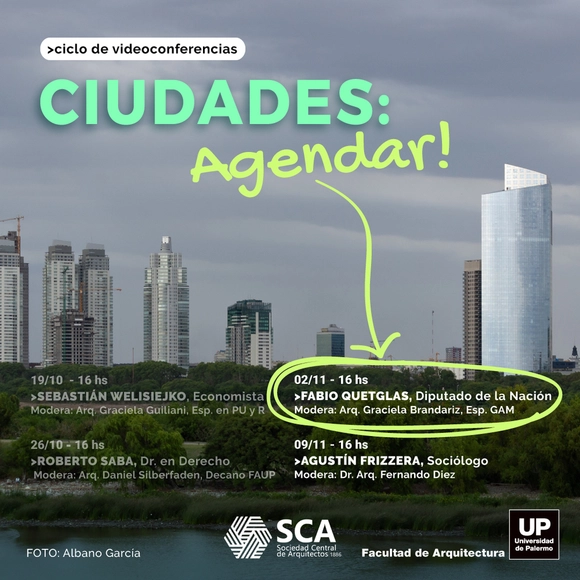
Local urban policy decision-makers must possess a better understanding of expected impacts and engage in deeper reflection to identify the solid foundations needed to act effectively within their own territories. Co-organized by the Sociedad Central de Arquitectos and the University of Palermo’s Faculty of Architecture, the series features guests from diverse fields of urban culture who are active participants in the ongoing reconstruction of the city.
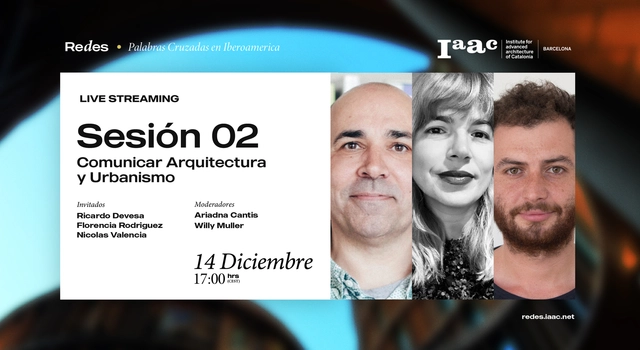
"Why do we communicate architecture and urbanism in Ibero-America?" is one of the questions that guests will explore during the second Redes IAAC session, an open, online event broadcast via streaming.

XILOFOR invites architects under 40 to consider the kitchen as a creative case study, exploring how post-COVID-19 kitchen furniture can help develop new spatial scenarios that will influence its design.

The Quechua Architecture Competition invites all participants to take part in this one-week challenge and develop a project that explores diverse fields of thought and design. The challenge for this edition: "Shadow Pavilion."

The Endless Dollhouse Project is an initiative that seeks to bring visibility to the narratives we hold regarding the domestic sphere through playful visual compositions resembling dollhouses. This is an opportune moment to learn interesting things about ourselves, our world, and our relationships with it through the representation of the domestic within the most popular traditional game: the dollhouse, which, in its ancestral symbolic background, serves as a representation of the social and distinctive traits of an era.
It is said—perhaps closer to myth than reality—that when Mies van der Rohe interviewed a candidate to join his studio, he would subject them to a peculiar test. He would lead them to a drafting table, provide them with the necessary instruments—rulers, compasses, squares, triangles, pencils, erasers, and so on—and ask them to arrange these elements within the confined field of the drawing board.
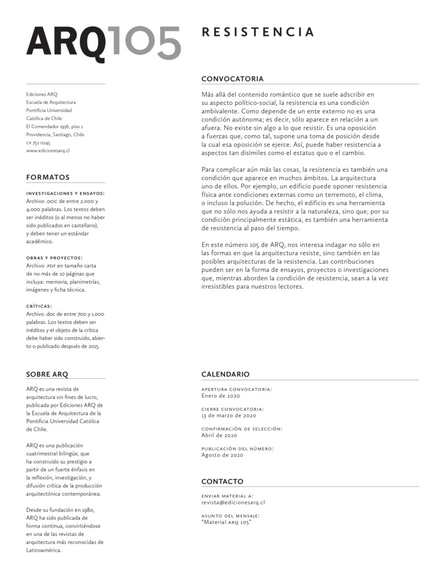
Beyond the romantic content often ascribed to its political-social aspect, resistance is an ambivalent condition. Because it depends on an external entity, it is not an autonomous condition; that is, it only appears in relation to an outside. It does not exist without something to resist. It is an opposition to forces that, as such, implies taking a stance from which that opposition is exercised. Thus, there can be resistance to aspects as disparate as the status quo or change.

In the mid-eighties, the advertising campaigns for the Benetton brand—under the art direction of Oliviero Toscani—provided an iconic image for the coexistence of different races and, in doing so, for the very idea of diversity. In 2000, an image created by Polish designer Piotr Mlodozeniec spelled out the word "CoeXisT," with the "C" replaced by a Muslim crescent, the "X" by the Star of David—a Jewish symbol—and the "T" by the Latin cross representing Christianity. Through these images, the concept of coexistence became associated with tolerance, serving as a counterpoint to both racism and religious fundamentalism.
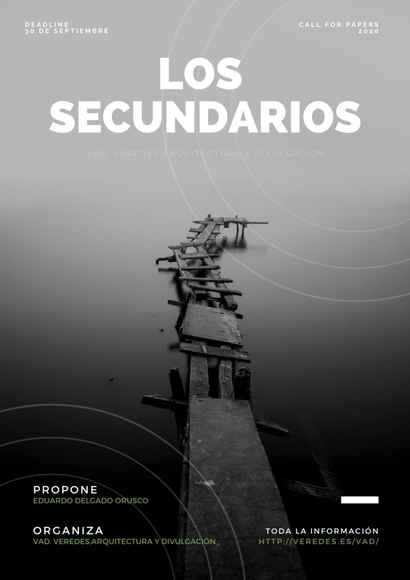
It has been 20 years since Professor Carlos Sambricio proposed the idea of recovering, within the Spanish landscape, what we wish to call "the secondary figures"—those architects who, for various reasons, did not enjoy significant critical success during their professional practice, but whose work, when revisited in light of the years that have passed, raises issues of interest to us today.
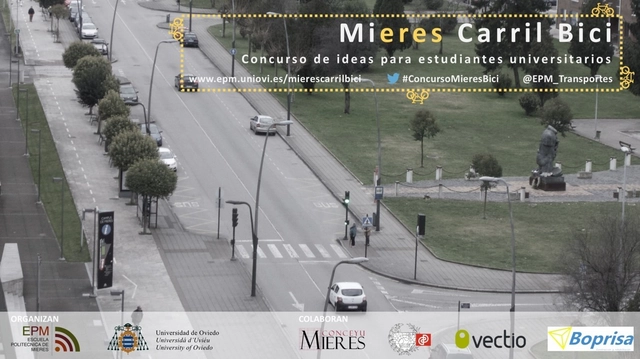
The Mieres Polytechnic School at the University of Oviedo, through its Transport Engineering Department, is launching an international ideas competition for university students to solicit proposals for resolving urban and territorial challenges associated with the evolution of transport networks.
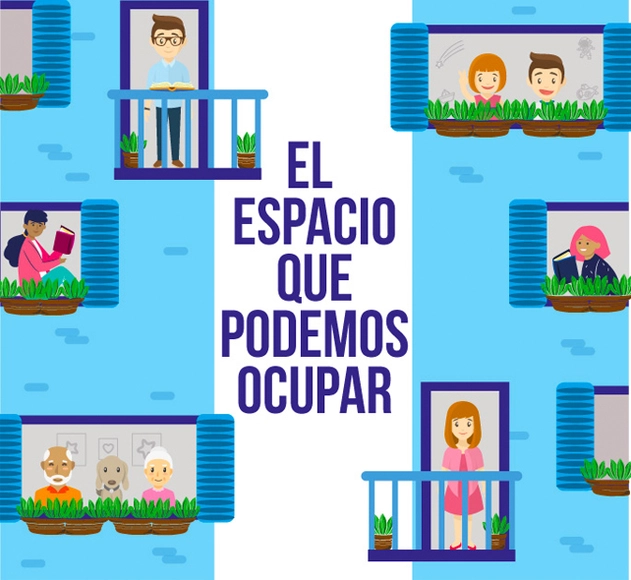
Given our current reality, CoRe aims to channel the experiences and sentiments of this coronavirus-induced quarantine through literary expression. To that end, the organization is launching:
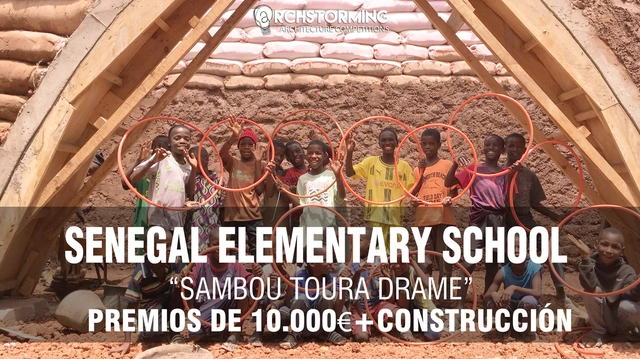
The new Archstorming competition takes us to Senegal, Africa. In some regions of the country, only 50% of school-age children have access to education, and classrooms are often overcrowded with up to 80 students due to a lack of infrastructure.
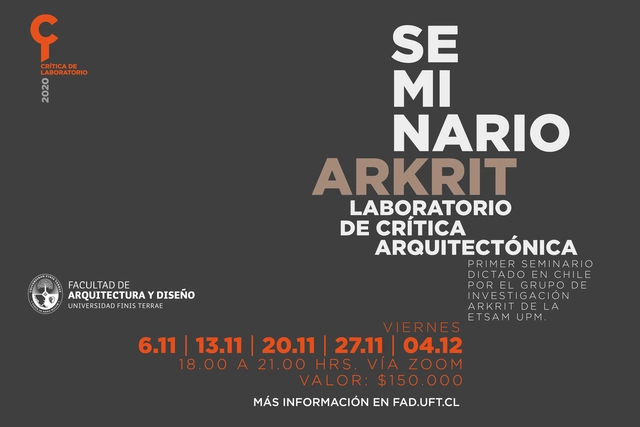
Starting in November, the Faculty of Architecture and Design at Universidad Finis Terrae will host the "Architectural Criticism Laboratory" seminar. The program will be led by the ARKRIT Research Group, established in 2008 at ETSAM, which focuses on developing architectural criticism as a methodological foundation for design. In their work, the critical exercise serves as the primary driver of the design process, to the point where criticism and design can become indistinguishable.

Isolation, viewed from various perspectives and disciplines, is the central theme of the "Isolated Dialogues" series, organized by the Universidad Finis Terrae School of Architecture, which takes place every Wednesday. Participants include artists, architects, designers, musicians, scientists, writers, journalists, and others, both Chilean and international.

Join us on Monday, July 13, at 8:00 PM for a talk with Felipe Carrasco, architect at GMMC Australia and Director of the SouthAmerican Masterclass - COMA. Presented by: Nicolas Valencia | Editorial & Data Manager | ArchDaily
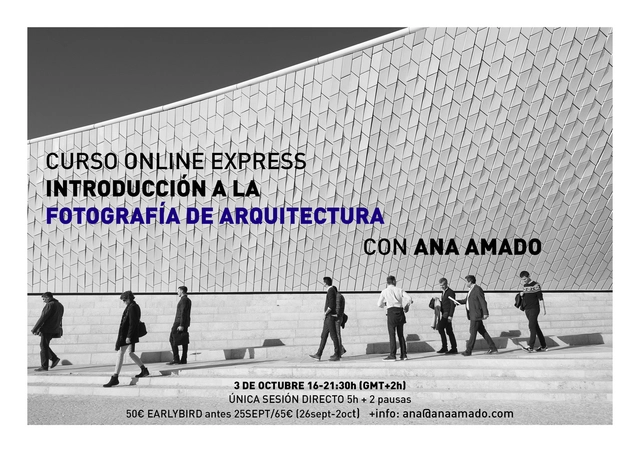
This express online course, an introduction to architectural photography, is presented by photographer Ana Amado.
The Salta Architects' Association invites you to participate in an experiential training session: "Architecture Talk I: The Secrets of the Profession."