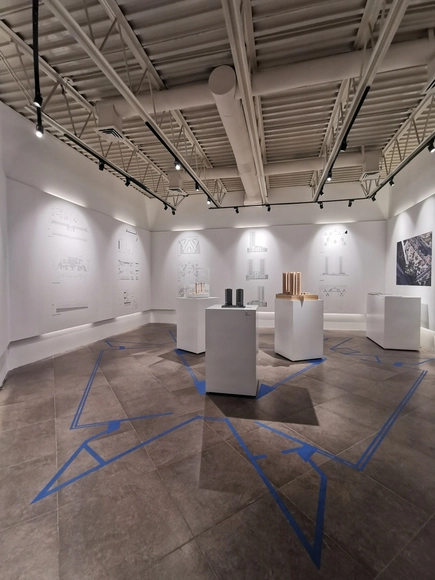
This year, the way we inhabit our cities and homes has undergone a radical shift due to the pandemic. Diseases, plagues, wars, and catastrophes have forced us to reorganize our cities and create new systems and typologies. Similarly, this pandemic has prompted us to question how we work, study, rest, and inhabit. WAUM 2020 will reflect on potential scenarios through interventions that allow us to "repair the current city" based on three visions: the city of delights, the distributed city, and the healthy city. Each participating group, composed of students from different universities and guided by a faculty team, will adopt one of these three visions to propose an artifact, system, building, or structure that functions as a "repairing" prototype—one that is non-site-specific yet applicable to various situations.
Architecture Schools Outside the Box, debate series
The second debate in the "Architecture Schools Outside the Box" series opens a space for discussion among Venezuelan professionals who are teaching through experimental exercises in other regions.
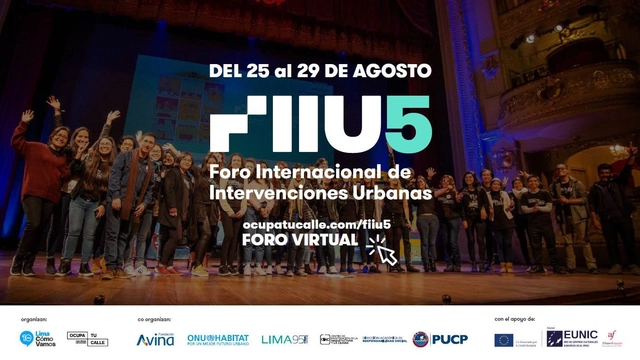
The ongoing COVID-19 pandemic has exacerbated urban inequality in Latin America, with impacts evident in the vulnerability of citizens and their relationship with public space. "This situation reflects the need to adapt and implement our streets in a creative way that accounts for the diversity of people, thereby achieving spacious public areas that help reduce the risk of contagion for the most vulnerable users," says Mariana Alegre, Executive Director of Lima Cómo Vamos and Ocupa Tu Calle.
Municipal Secretary of Mobility and Transport, Bete França, is the next guest for the live stream hosted by the Architecture and Urbanism program at the Armando Alvares Penteado Foundation (FAAP), where she is a faculty member. On Wednesday, August 19, at 4:00 PM, she will discuss urban life in the post-pandemic era and the so-called "new normal" with the audience.
Courtesy of Re_Habitar Mx. Photography: Coop Arquitectos.
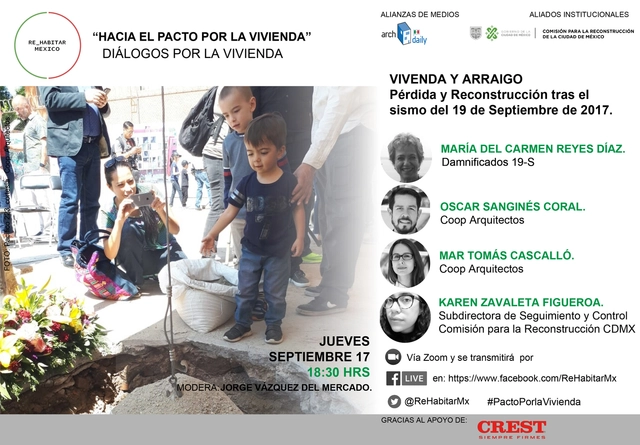
The second Housing Dialogue: "Housing and Roots" will explore the case of Pacífico 223. The discussion will cover life before the earthquake, the meaning of housing for individuals and communities, the emotional bonds born from memories associated with a home, the grief that follows its loss, and the collectives that emerge and strengthen through reconstruction efforts.
Credits: Leonel Rubén Perales Simeón, background image retrieved from https://edition.cnn.com/style/article/designing-the-perfect-city-style-jan-gehl/index.html
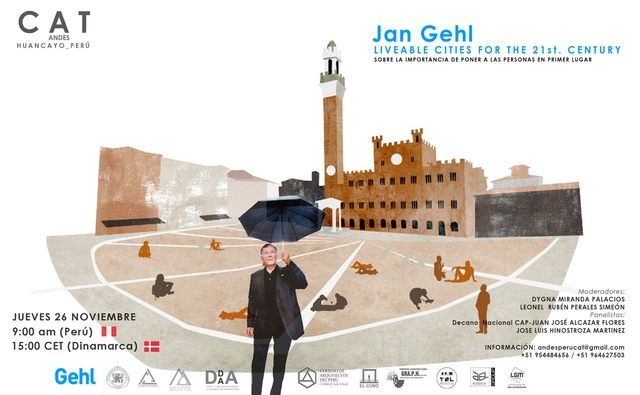
This international event is organized by the Faculty of Architecture - Department of Academic Direction (DDAA), the Postgraduate Unit of the UNCP, and the “El Cubo” collective in Huancayo, Peru. The event features keynote speaker Jan Gehl, one of the most influential figures in global urbanism. Through his work, he has championed the sustainability of major metropolises and made it his mission to advocate for urban planning that allows people, rather than automobiles, to reclaim the streets.
To what extent can the design and management of cities shape the lives of their inhabitants? This is the question we aim to answer through our first Conscious Monterrey Festival. With the participation of our guests, Monterrey will share efforts already underway, as well as ideas regarding urban matters. From the conservation and identity of built heritage to new policies and visions for the city of the future, we will cover citizen participation, the use of technology, and art with a social perspective.
Videos
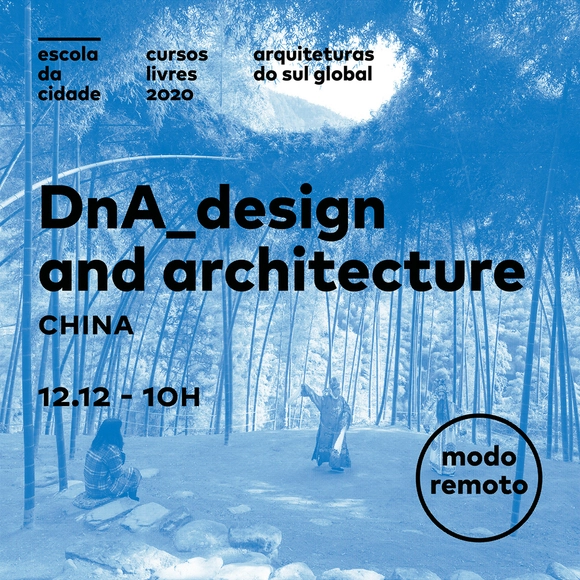
Architectures of the Global South with DnA (img.BAU Esolca da Cidade)
Saturday, December 12th, marks the final conversation of the inaugural module of the "Global South Architectures" open course, organized by Marco Artigas and Pedro Vada and hosted by Escola da Cidade.
“Untitled” (“Estranhamentos” series), full HD video in loop, 1’09”
Simone Cadinelli Arte Contemporânea continues its exhibition "How to inhabit the present?" with "Act 2 – We Are Here," on view in its storefront window and on its website starting August 24, 2020. The video works, created using various multimedia languages such as videomapping and GIFs, will run 24 hours a day and can be viewed by passersby at Rua Aníbal Mendonça, in Ipanema. The exhibition will also be replicated on the gallery's website, featuring complete information about the works and the artists [https://www.simonecadinelli.com].
Alejandra Devecchi (Urban Planning Manager at Ramboll Environ - University of São Paulo), Gabriela Callejas (Co-founder and Director of Cidade Ativa), and Pedro Baganha (Councilor for Tourism, Public Space, and Heritage at the Porto City Council) will discuss urban planning and social responsibility in city building. Government, civil society, and businesses united for a greater goal.
The IAB-RJ Continuing Education Program is launching a new season of courses for the second semester, continuing with remote classes due to the COVID-19 pandemic.
This course presents an overview of the works of Luis Barragán (1902–1988), including the historical, cultural, and political contexts in which they were designed and built. Each session will address a specific phase recognized by Mexican historiography, while drawing parallels with the work of Le Corbusier and other artists such as Mathias Goeritz and Jesús "Chucho" Reyes.
“Solution for Sustainable Cities and Communities” is the theme of the 13th Architecture Student Competition. The competition is organized by the Brazilian Center for Steel Construction (CBCA). Interested teams must register via the website https://www.cbca-acobrasil.org.br/arquitetura/ by July 24. To participate, teams must consist of two to four students and be advised by a professor from their university. Teams may also include a co-advisor.
The Colegio de Arquitectos de Chile is celebrating another anniversary with a series of free, entirely online activities. The milestone began on Tuesday, August 4, marking 78 years since the enactment of Law 7.211, which established the Colegio de Arquitectos de Chile in 1942 during the administration of President Carlos Ibáñez del Campo, and signaled the start of Architecture Month in Chile.
The 5th International Congress on Architecture and Gender | ACTION: Feminisms and the Spatialization of Resistance continues the reflections that have been organized since 2015, primarily from Southern Europe, enabling the construction of transcontinental work, research, and experience networks. This genealogy includes congresses such as ArquitectAs (2014, Seville), Matrizes (2015, Lisbon), MORE (2017, Florence), and Fielding Architecture (2019, Brighton). The fifth edition aims to emphasize the political component of the intersection between space and rights, without forgetting the diversity of being a woman or a girl and the intersection with current circumstances resulting from the COVID-19 pandemic.
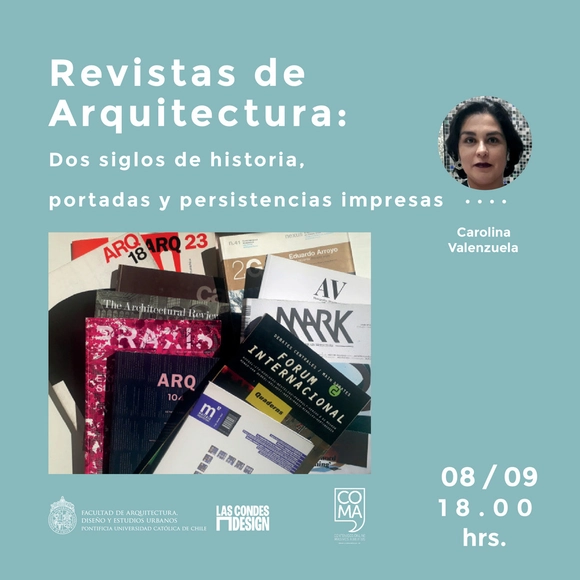
Through a graphic, historical, and comparative analysis of a selection of architectural magazines that have been instrumental in disseminating the discipline and developing graphic and editorial design, this talk examines how these publications have emerged and disappeared over the last two centuries. It also explores the historical and disciplinary milestones that ensure architectural publishing remains not only a significant presence but a relevant and vital force in a fully digital era.