How does systemic thinking and generative design contribute to new forms of convivence? Can they become tools to connect tradition and identity in a modern way? Can they help to design customizable architectural strategies that offer locally accessible solutions? Can they contribute to the creation of dignified spatial experiences that can be replicated on a mass scale?
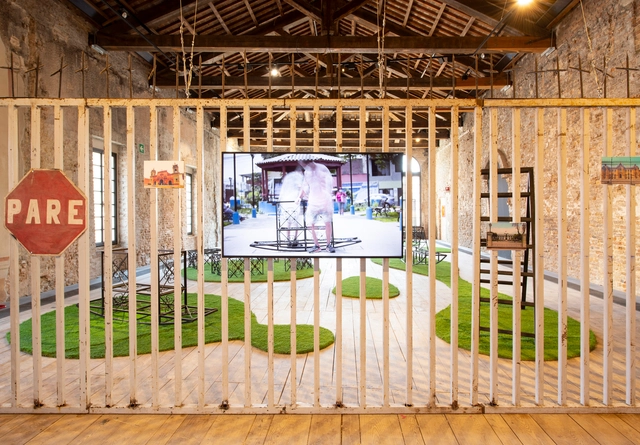
“Playground: Artifacts for Interaction”, by curator Felipe Ferrer, aims to transform the fences surrounding Peru's public spaces into tools for social integration. The project proposes removing the gates enclosing public spaces throughout Lima and Peru's other urban centers, inviting residents to freely enter and interact with the spaces. By removing these "security" mechanisms, which really serve as tools of segregation, and installing benches, playgrounds, and soccer fields, the project aims to divert all the energy, time, and resources put into installing fences and channel it into bringing new life to these public spaces.
The Federal Secretary of Culture and the National Institute of Fine Arts and Literature (INBAL) present the exhibit, titled Desplazamientos (Displacements), which will represent Mexico in the 17th International Exhibition of Architecture-The Biennale of Venice, taking place from May 22 to November 21, 2021 in the Venetian Arsenal. The exhibition aims to redefine the way that Mexico participates in this distinguished space, one of architecture's global stages and a platform for countries to share their cultural heritage. The Mexican pavilion, titled Displacements, is the result of a dialogue between the representatives of the 12 chosen projects and the the curatorial team as a part of the process to transform the pre-established theme of the Venice Biennale and to formulate a dialogue through spatial, artistic, and constructive demonstration.
https://www.archdaily.com/962748/focusing-on-architecture-as-process-rather-than-an-abstract-object-interview-with-elena-tudela-curator-of-the-mexican-pavilion-at-the-2021-venice-biennaleArchDaily Team
"When we enter the restroom, we are never alone. Instead, we are entangled in a network of bodies, infrastructures, ecosystems, cultural norms, and regulations". Although restrooms are often overlooked facilities that cater to the needs of individuals, they are, however, spaces where gender, religion, race, hygiene, health, and the economy are defined and expressed. For the 17th International Architecture Exhibition at La Biennale di Venezia, Matilde Cassani, Ignacio G. Galán, Iván L. Munuera, and Joel Sanders designed two pavilions that exhibit how restrooms are political architectures, serving as battlegrounds for the world's disputes.
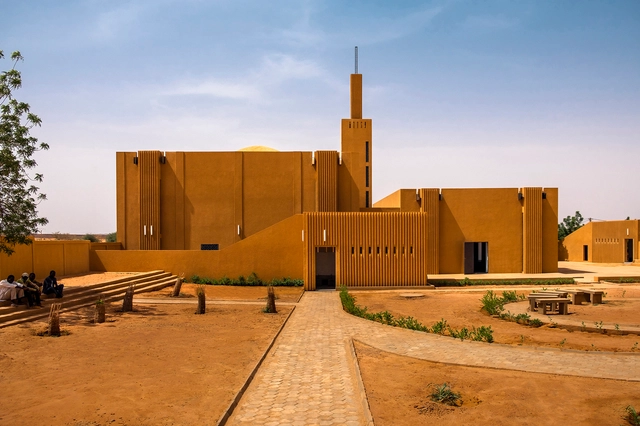
Atelier Masomi and Studio Chahar, "Hikma" Religious and Secular Complex in Dandaji, Niger, 2018. . Image Courtesy of Atelier Masomi. Photo: James Wang From the 2021 individual grant to Adil Dalbai and Livingstone Mukasa for "Africa Architecture Network"
Graham Foundation has released the names of the 2021 Individual Grant recipients - a grant supports innovative ideas in the fields of films, design, digital initiative, research, and exhibitions over the past 65 years. 71 creative individuals from across the world were chosen for their inventive ideas and creations that tackle pressing issues on society.
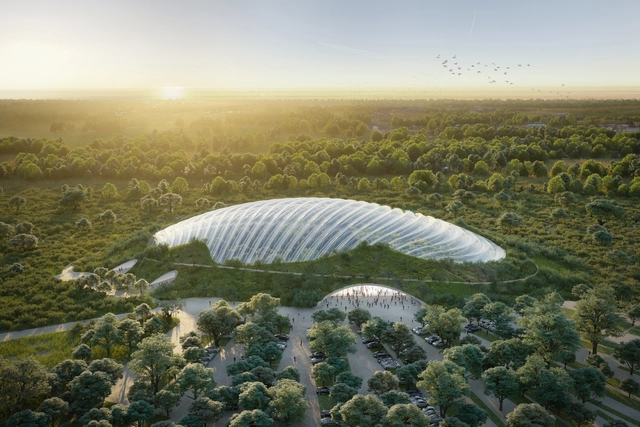
Not-for-profit Zuecca Projects and Coldefy have shared new research for Tropicalia, the largest single-dome greenhouse on the planet, for the 17th International Architecture Exhibition – La Biennale di Venezia. Presenting tropical fauna and flora, the team is also sharing the architectural and engineering specificities of the Tropicalia greenhouse with its unique sustainable air treatment engineering.
Developed by architect Gerardo Caballero, in collaboration with Paola Gallino, Sebastian Flosi, Franco Brachetta, Ana Babaya, Leonardo Rota, Emmanuel Leggeri, Sofia Rothman, Gerardo Bordi, Edgardo Torres, and Alessandro De Paoli, "The Infinite House", a project inspired by traditional Argentine houses, will represent Argentina in the upcoming 2021 VeniceArchitecture Biennale. The project reflects on the identity of Argentine public housing and the role collective housing, both public and private, has played in the country's history and society. The Infinite House aims to push the limits of the domestic and to highlight the importance of the collective rather than the individual by illustrating that a home extends beyond one's own living space: "it is the city, the country, and even the world."
Coming soon. Visions from the minimum territory ("Próximamente") is the title of the Uruguay Pavilion at the Venice Biennale 2021, which will take place between May 22 and November 21, 2021.
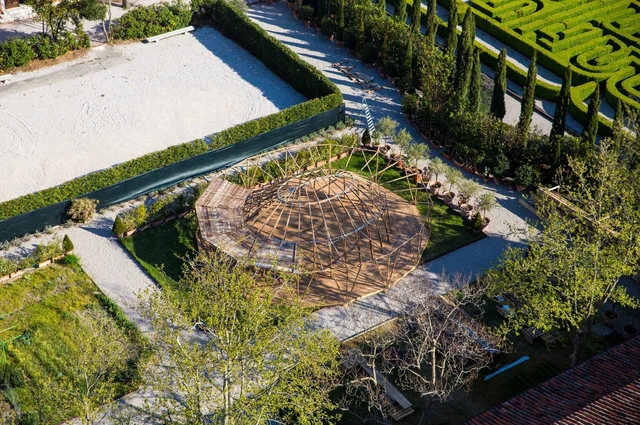
The Majlis undergoing construction at San Giorgio Maggiore. Image Courtesy of Caravane Foundation
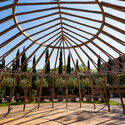
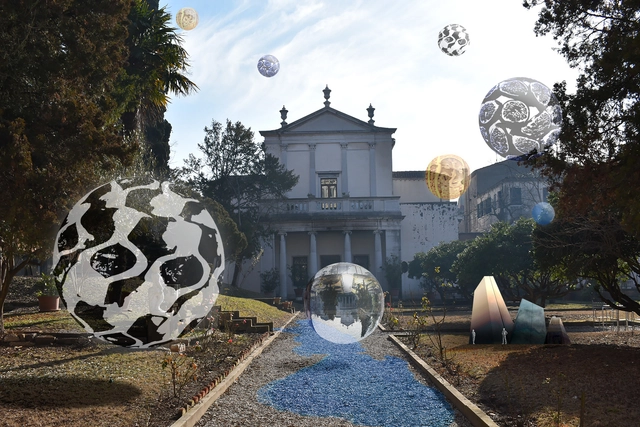
Part of the official collateral events of the 17th International Architecture Exhibition of la Biennale di Venezia, Caravane Earth Foundation will bring a unique bamboo Majlis, to the gardens of the Abbazia di San Giorgio Maggiore in Venice. Designed by internationally acclaimed bamboo architects Simón Vélez and Stefana Simic, the project will be on display from 22 May to 21 November 2021.
A sneak peak of Uncertainty, the highlight of the Spanish Pavilion at the 2021 Biennale of Venice taking place from May 22 to November 21 of this year.
“Playground, Artifacts for Interaction” by Felipe Ferrer will be featured in the Peru Pavilion in the 2021 Venice Biennale of Architecture. The project was the winner of the Curatorial Competition held by The Cultural Patronage of Peru that aimed to highlight how fences and gates shape our understanding of public spaces.
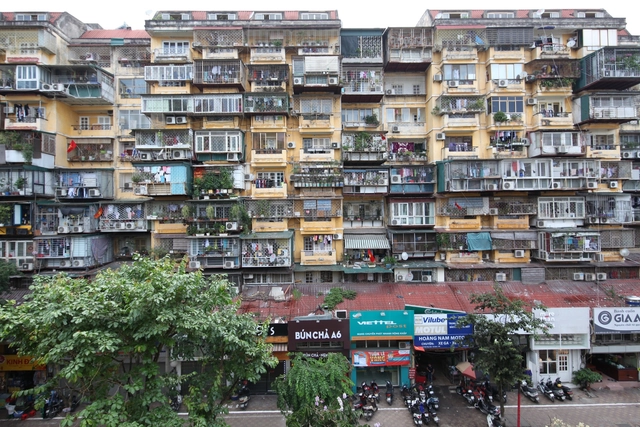
Overall view of a KTT apartment building; Hanoi, Vietnam – 2018. Image Courtesy of Christophe Hutin
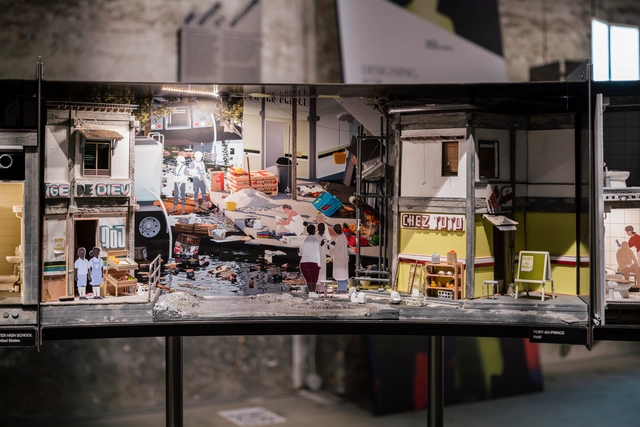
The French pavilion at the 2021 Venice Biennale, “aims to reflect on the meeting between architectural know-how and the inhabitants’ own experiences of their living spaces”. Curated by Christophe Hutin, the intervention entitled “Communities at Work” will provide an immersive experience with the help of images in motion. Using five specific case studies on different continents: in Europe, Asia, America, and Africa, the exhibition presents a journey into a world where communities transformations their own living spaces, without following any formal schemes designed by an architect.
Entitled Primitive Migration from/to Taiwan, the National Taiwan Museum of Fine Arts (NTMoFA) and curatorial teams Divooe Zein Architects and Double-Grass International Co., organized an immersive exhibition for the Biennale Architettura 2021. Taiwan’s Collateral Event for the 17th International Architecture Exhibition of La Biennale di Venezia will run from 22 May to 21 November 2021 at Palazzo delle Prigioni.
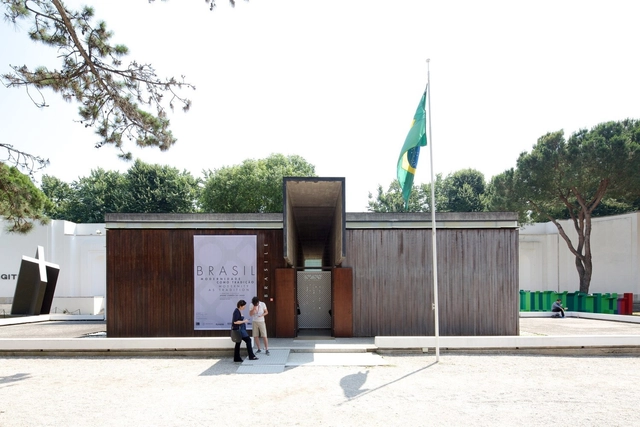
Entitled utopias of common life, Brazil's official participation in the 17th Bienalle Architettura 2021 is curated by the collaborative studio Arquitetos Associados and the visual designer Henrique Penha. The exhibition at the Brazilian Pavilion in the Giardini, in Venice, begins by mapping utopias that exist on Brazilian soil, from the Guarani world vision of a Land Without Evil to contemporary times, highlighting a few singular moments among them.
Conceived before the Covid-19 pandemic, which has temporarily suspended the possibility of physical proximity in a large part of the world, the proposal gains new meanings in the current context and dialogues with the overall theme, by curator Hashim Sarkis: How Will We Live Together?
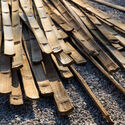
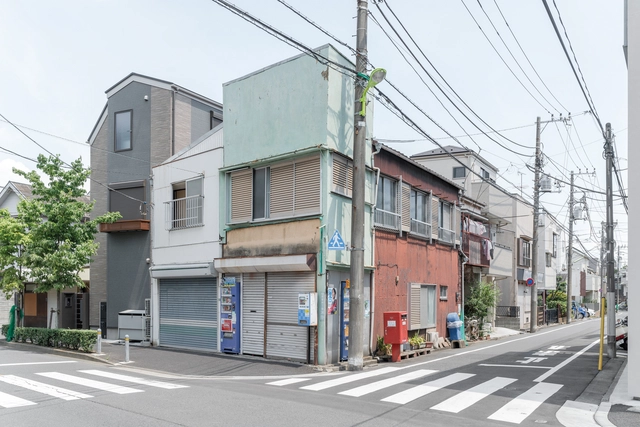
For this year's edition of the Venice Biennale, the Japan Pavilion invites visitors to reflect on the movement of goods fuelling mass consumption and rethink sustainability and reuse in architecture. Titled Co-ownership of Action: Trajectories of Elements, the project curated by Kadowaki Kozo involves dismantling an old wooden Japanese house and transporting it to Venice to be reconstructed in a new configuration with the addition of modern materials. The exhibition exemplifies how old materials could be given an entirely new existence by putting the current movement of goods in the service of reuse rather than consumption.
.jpg?1624390734&format=webp&width=640&height=580)