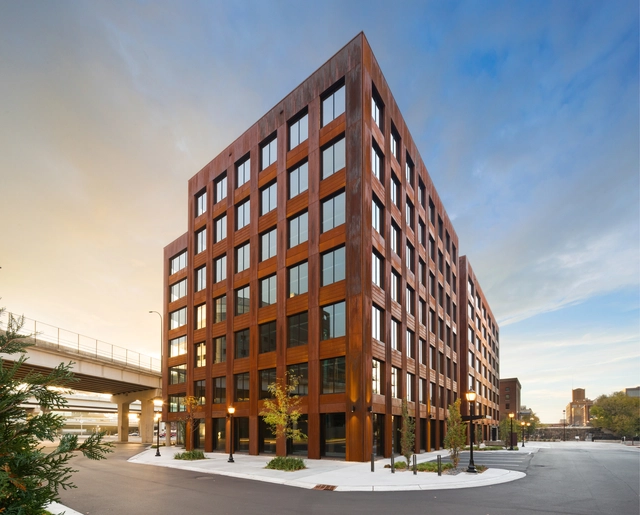
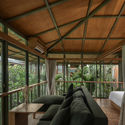
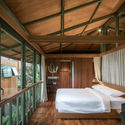
Structural timber is in the midst of a renaissance; an ironic trend given that timber is arguably the most ancient of building materials. But new innovations in structural timber design have inspired a range of boundary-pushing plans for the age-old material, including everything from bridges to skyscrapers. Even more crucially, these designs are on the path to realization, acceding to building codes that many (mistakenly) view as restrictive to the point of impossibility.
The timber structures of today aren't just breaking records - they're doing it without breaking the rules.
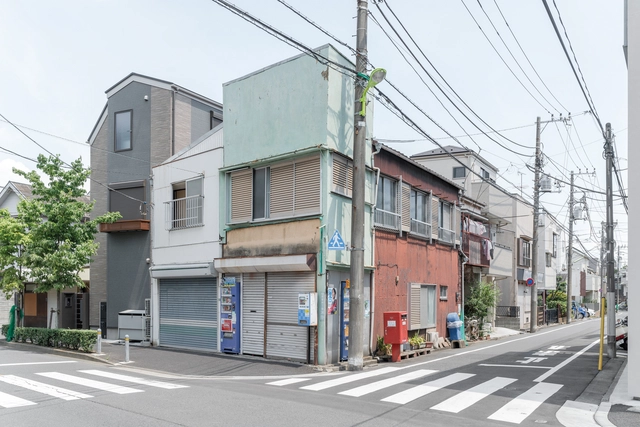
For this year's edition of the Venice Biennale, the Japan Pavilion invites visitors to reflect on the movement of goods fuelling mass consumption and rethink sustainability and reuse in architecture. Titled Co-ownership of Action: Trajectories of Elements, the project curated by Kadowaki Kozo involves dismantling an old wooden Japanese house and transporting it to Venice to be reconstructed in a new configuration with the addition of modern materials. The exhibition exemplifies how old materials could be given an entirely new existence by putting the current movement of goods in the service of reuse rather than consumption.
In order to start integrating embodied carbon studies into projects to meet sustainability goals, it is important to consider many factors such as carbon (kgCO2e) values, and what typical ranges of values to be aware of when designing for embodied carbon reduction. This e-book presents an overview of how to start integrating embodied carbon studies in your projects.
Ventilation serves two main purposes in a room: first, to remove pollutants and provide clean air; second, to meet the metabolic needs of the occupants, providing pleasant temperatures (weather permitting). It is well known that environments with inadequate ventilation can bring serious harm to the health of the occupants and, especially in hot climates, thermal discomfort. A Harvard University study demonstrated that in buildings with good ventilation and better air quality (with lower rates of carbon dioxide), occupants showed better performance of cognitive functions, faster responses to extreme situations, and better reasoning in strategic activities.
It is not difficult to see that ventilation plays a vital role in ensuring adequate air quality and thermal comfort in buildings. We have all felt it. But when we talk about ventilation, a light breeze from the window might come to mind, shifting through our hair and bringing a pleasant aroma and cooling temperature that brings fresh air and comfort. In mild climates, this experience can even be a reality on many days of the year. In harsh climates or polluted spaces, it could be quite different.
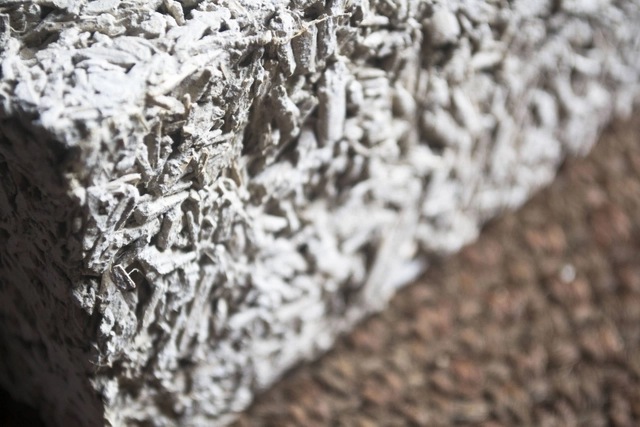
Hemp is one of the oldest crops domesticated by humans. With its wide variety of uses and applications, it’s easy to understand why it’s been a desirable product throughout history. Hemp seeds and flowers are used in health foods, medicines, and organic beauty products; the fibers and stalks of the hemp plant are used in clothing, paper, and biofuel. Today even a waste product of hemp fiber processing, so-called hemp shives, is being utilized to create sustainable building materials like hempcrete.
App update provides CO2 emission data on chosen routes. Photo: Pixabay
The GoogleMaps application will direct drivers to more eco-friendly routes that generate the lowest carbon footprint using mainly traffic data, road slopes and inclines, and other factors.
The eco-friendly option will be the application's default route if comparable options take about the same time. When alternatives are significantly faster, Google will offer choices and let users compare estimated emissions.
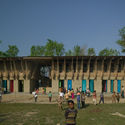
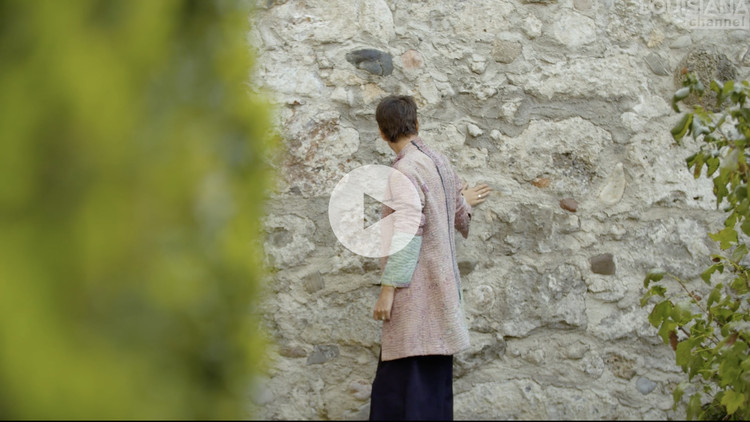
Talking to the Louisiana Channel, German architect Anna Heringer outlines the way she works and her multi-disciplinary approach to architectural practice. Growing up in a small town at the Austrian-Bavarian border close to Salzburg - Heringer spent a year living and working in Bangladesh at the age of 19, a place that is now home to a majority of her office's projects. Heringer describes herself as a mix of things in addition to being an architect, describing herself as an activist and a development worker - using her creativity to explore ideas in a variety of forms and media.
The American architect, designer, and futurist Buckminster Fuller once defined the Dymaxion principle as “constructing ever more with ever less weight, time, and ergs per each given level of functional performance.”
Along with concerns about our environment, new movements, words, concepts, and terms related to these issues constantly emerge, which require us to always remain up to date. The word sustainability itself faced some resistance until it was incorporated into common vocabulary and used widely in the most diverse contexts. Currently, much discussion surrounds the terms circular economy, resilience, the 4 Rs, urban mining, and others. In addition, there are some sustainability-related movements that have been incorporated from activism in other fields, showing the fluidity of such issues. One such initiative is the 0 kilometer materials movement, which has been featured in manifestos and some projects, albeit timidly, in recent times.
There was a time when people appreciated self-contained architecture, in which the building envelope would not function as a moderator between the climate outside and the interior environment but rather as an inert and independent barrier. Countless mechanical devices and electrical ventilation, heating, and cooling equipment. A real machine.
Today, architects are increasingly concerned with the interaction between architecture and the environment in which it is inserted, thus assuming responsibility for the thermal comfort of interior spaces, using design strategies for natural climate control.
The climate crisis has revealed the poor planning of our cities and the spaces we inhabit. Both construction and projects contribute to high carbon gas emissions. Fortunately, there are several ways to intervene to bring change into this scenario, either through materials and techniques adopted in each initiative or through geographical and social impact. In this scenario, the only certainty is that: to think about the future we cannot ignore the "green" in all its recent meanings from nature to sustainability, and ecology.
Sustainable design in the United States is for many a sort of Rorschach test. The construction industry is either making steady progress toward the ultimate goal of a carbon-free building sector, or it’s moving entirely too slowly, missing key targets as the ecological clock keeps ticking. The perplexing truth to all of this is: both are ostensibly true. In recent decades the industry has become significantly more energy efficient. We’ve added building stock but flattened the energy curve. The cost of renewables continues to drop. But way more is required, much more quickly. At the same time, huge hurdles remain. Without a renewable grid and stringent energy codes, it’s hard to see how we can fully decarbonize the building sector in even 20 years, let alone at the timeline suggested by increasingly worried climate scientists. It’s the classic good news/bad news scenario (or vice-versa, depending on your mood).
In recent years, we have published many articles about wood. Addressing trends of use, possibilities for log wood, panels, curves, and finishes, innovations in tall building structures, and wood's behavior towards fire, these articles have explicated a wide variety of the material's applications and characteristics. A specific type of wood, Cross Laminated Timber (CLT), has emerged as highly structurally efficient with thermal, seismic, and even sensory benefits, described by specialists as the concrete of the future. But when we post these articles on social media, we frequently encounter comments from our readers concerned about the impact of deforestation. Although we may see wood as a great building material of the future, we must ask ourselves: is it possible to continue cutting down trees and using their wood while still calling it sustainable?
Modular construction by Maisons Laprise, Quebec, Canada. Image Courtesy of QWEB
Proven and effective construction methods are not static, instead they're always improving. In Quebec, Canada, light wood frame and modular manufacturers are always pushing the limits of innovation. Their craft is now linked to building systems on a bold scale with offsite light wood frame construction.
There’s nothing green about your back-up generator. Manufacturing it released tons of CO2 into the atmosphere; so did shipping it from the factory to the dealership to your backyard. There it will sit, idle, waiting to be deployed only when the much cleaner—but underfunded—public infrastructure fails. At that point, it will fill the air with additional pollutants. There may be perfectly good reasons to buy an emergency generator but being green—that is, protecting the environment—isn’t one of them.
This August, as hundreds of wildfires darkened the sky above my home in Corte Madera, California, thousands of miles away in Florida, my family braced for wind and flooding as two hurricanes barreled towards the Gulf of Mexico. We all hunkered down, anxiously, as climate change-fueled disasters wreaked havoc. For weeks, the air quality in California was too hazardous for us to open our windows or go outside. In Pensacola, the Gulf storm surge was several feet deep around my family’s home and the powerful winds downed mature oak trees in their yard.