1. ArchDaily
  2. smart city

smart city: The Latest Architecture and News

UNS Designs a 10-Minute Walkable City Master Plan for Multigenerational Living in Seoul, South Korea

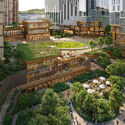
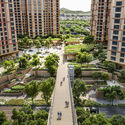
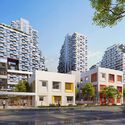
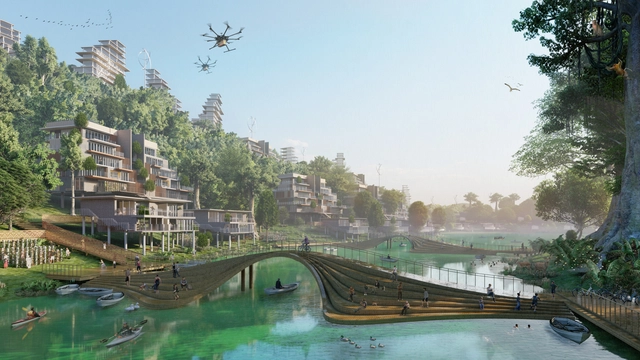
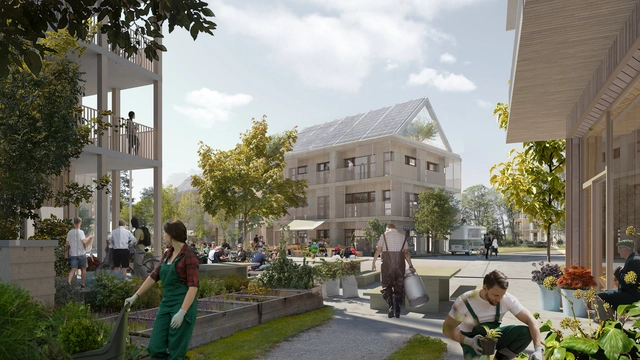
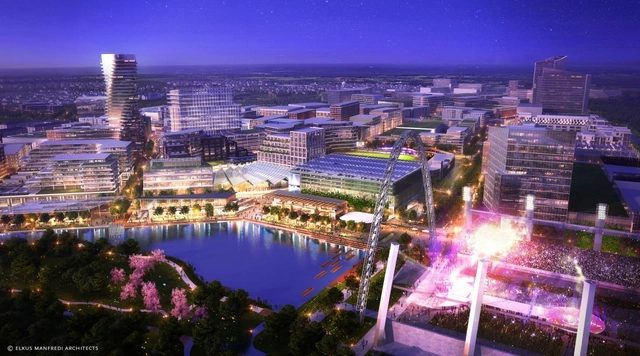
UNS has revealed images of SeoulOne, a master plan designed for Hyundai Development Company (HDC) in Seoul, South Korea, intended as a new model for multigenerational living. The project, already under construction on a brownfield site in the northeast of the city, reimagines an existing industrial site and railway area as a 405,000 m² car-free neighborhood for a multigenerational community. A never-sleeping, green master plan for Seoul, SeoulOne is envisioned as a mixed-use mini-city where all essential services for people of all ages are available within a 10-minute walk. The design includes 24/7 residential towers, retail spaces, offices, a hotel, sports facilities, daycare centers, senior living facilities, and a medical center, offering permanent services within walking distance. More than 30% of the site is dedicated to vegetation, including pocket parks, roof gardens, water gardens, and a forest walk, creating a year-round green village.
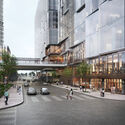
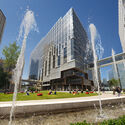
UNS Designs a 10-Minute Walkable City Master Plan for Multigenerational Living in Seoul, South Korea - 1 的图像 4UNS Designs a 10-Minute Walkable City Master Plan for Multigenerational Living in Seoul, South Korea - 2 的图像 4UNS Designs a 10-Minute Walkable City Master Plan for Multigenerational Living in Seoul, South Korea - 3 的图像 4UNS Designs a 10-Minute Walkable City Master Plan for Multigenerational Living in Seoul, South Korea - 4 的图像 4UNS Designs a 10-Minute Walkable City Master Plan for Multigenerational Living in Seoul, South Korea - More Images+ 6

National Athletics Centre: Transforming Budapest's Rust Belt into a Vibrant Community Space

 | Sponsored Content

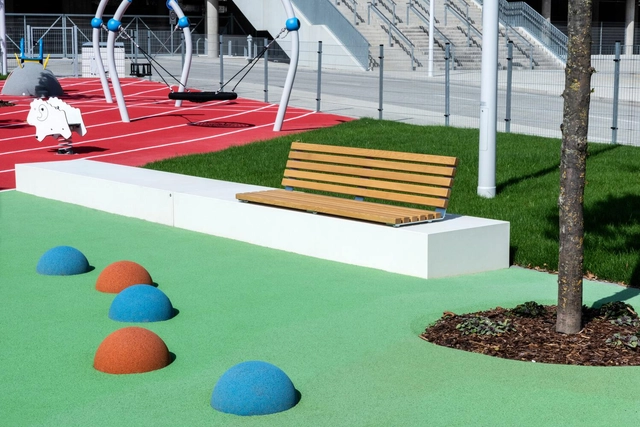
The National Athletics Centre in Budapest marks a significant milestone in urban regeneration and architectural innovation. Located on a former industrial site along the Danube, this transformative project revitalizes a neglected brownfield into a vibrant hub for sports, recreation, and community engagement. Designed by Marcel FERENCZ, architect at NAPUR Architect Ltd., with landscape design created by S-TÉR and several hundred pieces of furniture from VPI Concrete, the Centre is a cornerstone for connecting North Csepel to the city and fostering urban development.

Subscriber Access

The Future of Smart Cities: How Digital Technologies are Transforming Urban Living in Barcelona and Dublin

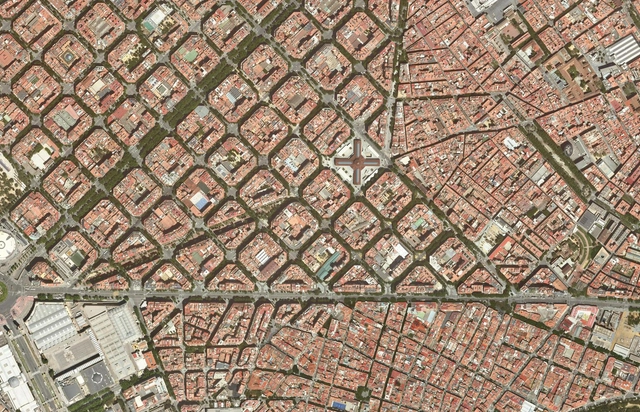
As the world witnesses an unprecedented exodus from rural to urban areas, cities face a monumental challenge: how to accommodate a constantly growing population? This phenomenon, characterized by rapid population growth and increasing density, puts pressure on resources, infrastructure, and urban services. As significant problems demand even larger solutions, it becomes necessary, more than ever, to rethink the tools at our disposal. In this challenging context, the rise of emerging technologies such as the Internet of Things (IoT), data analytics, and artificial intelligence (AI) presents itself as a light at the end of the tunnel. These technologies, initially conceived to simplify everyday tasks and facilitate communication, are potential instruments that enable an effective response to contemporary urban challenges.

The Future of Smart Cities: How Digital Technologies are Transforming Urban Living in Barcelona and Dublin - 5 的图像 4The Future of Smart Cities: How Digital Technologies are Transforming Urban Living in Barcelona and Dublin - 2 的图像 4The Future of Smart Cities: How Digital Technologies are Transforming Urban Living in Barcelona and Dublin - 1 的图像 4The Future of Smart Cities: How Digital Technologies are Transforming Urban Living in Barcelona and Dublin - 4 的图像 4The Future of Smart Cities: How Digital Technologies are Transforming Urban Living in Barcelona and Dublin - More Images+ 4

MVRDV Announces New Residential Complex for Tencent’s Campus in Shenzhen, China

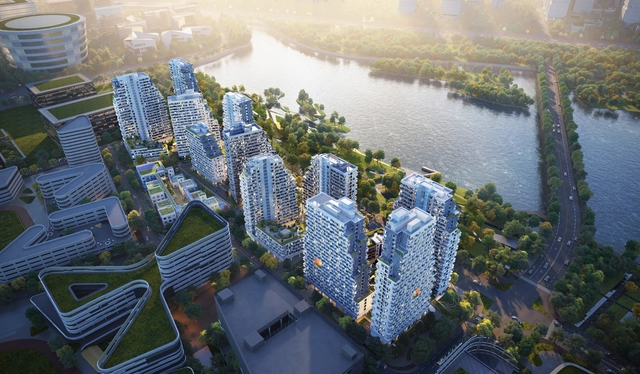
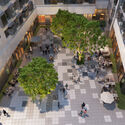
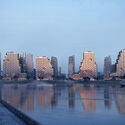
MVRDV has revealed a large-scale residential complex to take shape as part of a new smart city campus built by technology company Tencent in Qianhai Bay, Shenzhen, China. MVRDV’s intervention, named Tencent P5, is comprised of 11 apartment towers arranged around four courtyards. The project also includes amenities such as an adjacent kindergarten, to offer all the necessary facilities for the company’s employees. Construction began in early 2022 and is scheduled for completion in 2024.

MVRDV Announces New Residential Complex for Tencent’s Campus in Shenzhen, China - Imagen 1 de 4MVRDV Announces New Residential Complex for Tencent’s Campus in Shenzhen, China - Imagen 2 de 4MVRDV Announces New Residential Complex for Tencent’s Campus in Shenzhen, China - Imagen 3 de 4MVRDV Announces New Residential Complex for Tencent’s Campus in Shenzhen, China - Imagen 4 de 4MVRDV Announces New Residential Complex for Tencent’s Campus in Shenzhen, China - More Images+ 8

Designing Smart Cities: A Human-Centered Approach

By 2025, Frost and Sullivan, a market research company, has predicted that there will be at least 26 fully-fledged major smart cities around the world. While some still think that as our cities get more intelligent, they will resemble sci-fi futuristic movies, the reality is that the quality of life in these cities will drastically improve. Cities are set to become more efficient with better services. Nevertheless, before reaching these ideals, let us go back on the process itself, and evaluate the challenges that we might face.

Because the concept of smart cities is still very new, with rare finalized and implemented projects, the topic is still unclear. Although big titles and strategies are well defined, the on-ground application is still uncertain, giving us the opportunity to question its planning process. In fact, how can we go wrong when designing smart cities? What key element are we failing to address in the planning phase?  

Goldreed Industrial Design Award 2020 (1st edition)

GIDA 2020 - Goldreed Industrial Design Award - is the new international design award sponsored by the Xiongan Future Industrial Design Institute, with the aim of promoting at an international level the concept of “harmony” applied to design.

The Fundamental Role of AI in Current Post-War Reconstruction

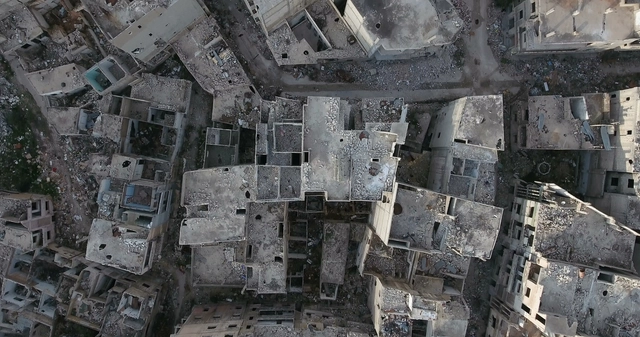
In a world devastated by war and destruction, new ideas for future reconstruction of cities are emerging. The latest technologies are creating opportunities to shape better built environments and better urban experiences. While the world has had its fair share of failed attempts of post-war reconstruction, the 21st century is promising concepts more in touch with culture, integration, and sustainability.

As we all know, technology is the game-changer of this century. It has ultimately modified how we design and build, and with the development of Artificial Intelligence, boundaries have been pushed furthermore. Able to transform the environment we live in, AI can also help shape a better version of the environment we have lost.

The Fundamental Role of AI in Current Post-War Reconstruction - Image 1 of 4The Fundamental Role of AI in Current Post-War Reconstruction - Image 2 of 4The Fundamental Role of AI in Current Post-War Reconstruction - Image 3 of 4The Fundamental Role of AI in Current Post-War Reconstruction - Image 4 of 4The Fundamental Role of AI in Current Post-War Reconstruction - More Images+ 6

Subscriber Access

An Indonesian Smart City Design and a Contemporary Art School in Vienna: 10 Unbuilt Projects Submitted by our Readers

Presented part of international competitions, this week’s best-unbuilt architecture gathers award-winning projects submitted by our readers. Highlighting as usual diverse approaches from across the globe, ArchDaily is rounding up in this article, a curated selection of cultural, civic, and urban proposals.

In Singapore, an adaptive reuse project transforms a power station into a creative industrial hub, while in Indonesia, a smart city design for the new capital generates an ecologically responsible environment. Moreover, Kjellander Sjöberg designs and develops an original city block in Stockholm, and TheeAe imagines a city hall for China. Other proposals include an entire reflective surface for a public square in Italy, a new city district in Tampere Finland, a University building in Warsaw, and a school for contemporary art in Vienna.

White Arkitekter + ReGen Villages Create First Circular, Self-Sufficient Communities for Sweden

White Arkitekter, in collaboration with Silicon Valley-based ReGen Villages, have joined forces to create fully circular, self-sufficient and resilient communities in Sweden. Inspired by computer games, the project puts in place organic food production, locally produced and stored energy, comprehensive recycling, and climate positive buildings.

First Smart Forest City in Mexico Designed by Stefano Boeri Architetti

Commisionned by Grupo Karim's, and designed by Stefano Boeri Architetti, the first Smart Forest City in Mexico will focus on innovation and environmental quality. The city balances green and built spaces, and is completely food and energy self-sufficient.

First Smart Forest City in Mexico Designed by Stefano Boeri Architetti  - Image 5 of 4First Smart Forest City in Mexico Designed by Stefano Boeri Architetti  - Image 2 of 4First Smart Forest City in Mexico Designed by Stefano Boeri Architetti  - Image 3 of 4First Smart Forest City in Mexico Designed by Stefano Boeri Architetti  - Image 6 of 4First Smart Forest City in Mexico Designed by Stefano Boeri Architetti  - More Images+ 3

Moscow Launches New Smart City District as a Living Lab

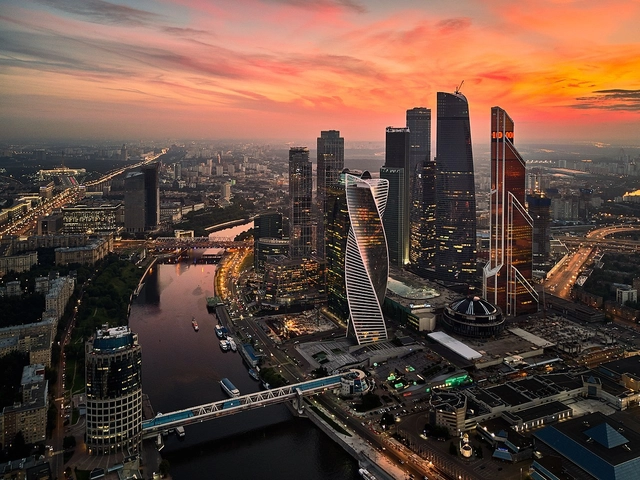
The government of Moscow has begun developing an existing district in the city to test nearly 30 new ‘smart’ technologies for urban development. Home to over 8,000 people, the district is testing ideas on smart lighting, smart waste management, and smart heating. The city intends to evaluate what impact technologies bring to residents and adjust its urban renewal plan once the pilot is complete.

Visionary Master Plan Wins Smart City Prize At World Architecture Festival

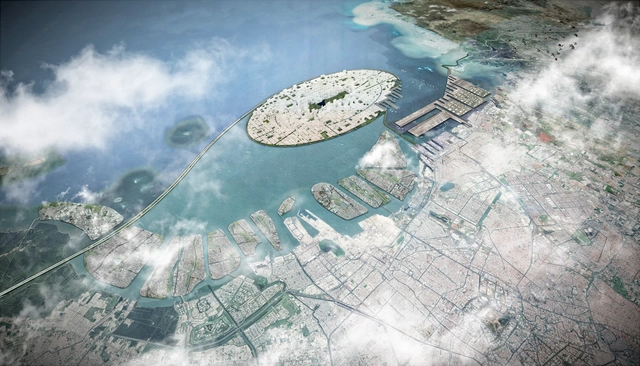
Due to rapid population and economic growth, Indonesia is facing issues such as land subsidence and rising sea levels. To combat these problems and more, SHAU Architects created a master plan for the Jakarta Jaya Foundation focused on large-scale land reclamation to integrate green space. By addressing impending challenges, SHAU Architects proposal, Jakarta Jaya: the Green Manhattan, won a Smart Cities prize at the World Architecture Festival 2017.

Subscriber Access

From Smartphones to Smart Cities: What Happens When We Try to Solve Every Problem With Technology?

In order to be successful in any field, professionals must stay ahead of the curve—though in architecture nowadays, technology progresses so quickly that it’s difficult to be on the front lines. Virtual Reality can transport architects and their clients into unbuilt designs and foreign lands. Smart Cities implement a network of information and communication technologies to conserve resources and simplify everyday life. Responsive Design will give buildings the ability to be an extension of the human body by sensing occupants' needs and responding to them.

With the technology boom, if architects want to stay in the game they will inevitably have to work alongside not only techies but scientists too. Neuroscientist Colin Ellard works “at the intersection of psychology and architectural and urban design.” In his book, Places of the Heart: The Psychogeography of Everyday Life, Ellard examines how our technology-based world impacts our emotions and behavior to try to figure out what kind of world we should strive to create.

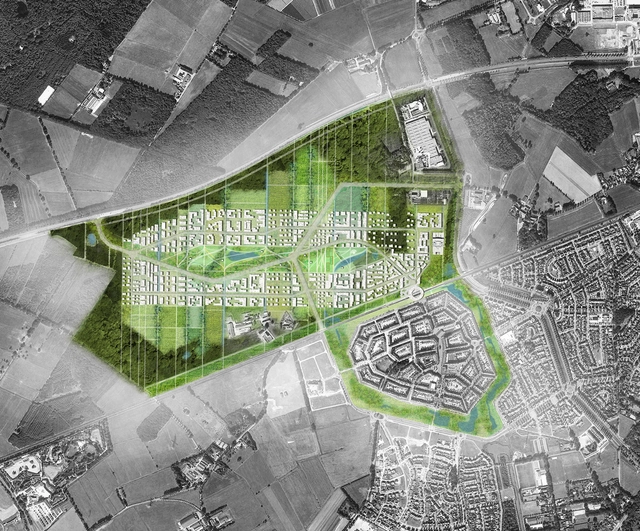
New, Innovation-Driven, "Smart City" Will be Built Just South of Boston

“Smart cities” are the latest urban phenomenon popping up across the globe. Among the newest being realized will be Union Point, a masterplan with a commitment to innovation located just south of Boston, USA.

What is a “smart city?” It is a city in which embeds multiple data collection technologies within the city in hopes of providing a supportive and competitive advantage to the city’s residents and business. Officials then use this data to make their cities safer, healthier, and more efficient. Cities are not geniuses quite yet, but the “smart city” is rethinking the way cities are run.

New, Innovation-Driven, "Smart City" Will be Built Just South of Boston - City PlanningNew, Innovation-Driven, "Smart City" Will be Built Just South of Boston - City PlanningNew, Innovation-Driven, "Smart City" Will be Built Just South of Boston - City PlanningNew, Innovation-Driven, "Smart City" Will be Built Just South of Boston - City PlanningNew, Innovation-Driven, Smart City Will be Built Just South of Boston - More Images+ 9

Bill Gates Purchases 25,000 Acres of Land for Smart City in Arizona

An investment firm run by Microsoft founder Bill Gates has paid $80 million for 25,000 acres of Arizona desert to serve as the site of a new “smart city.” To be known as Belmont, the city will be made up of 80,000 residences, as well offices, retail spaces and civic amenities such as schools and police stations. The city will serve as a test ground for the latest in logistical and infrastructural technologies.

Next Cities Institute: Designing Global Urban Futures

 | Sponsored Content

The University of Virginia’s School of Architecture Dean Ila Berman recently announced her intention to launch the NEXT CITIES INSTITUTE, an interdisciplinary design and research platform focused on the rapidly changing dynamics of global urban futures. With an aim to forecast and shape the vital urbanism of this century, the NEXT CITIES INSTITUTE will be a university-wide initiative, led by the School of Architecture and coalescing expertise throughout the University of Virginia, with partners in its Schools of Law, Leadership and Public Policy, Engineering, and Arts and Sciences. Dean Berman spoke about the NEXT CITIES INSTITUTE, its mission, and how it will transform the way students of architecture and its related fields will approach the design of future cities.

Subscriber Access

Is India's Plan to Build 100 Smart Cities Inherently Flawed?

The Indian Government’s Smart City Mission, launched in 2015, envisions the development of one hundred “smart cities” by 2020 to address the country’s rapid urbanization; thirty cities were added to the official list last week, taking the current total of planned initiatives to ninety. The $7.5-billion mission entails the comprehensive development of core infrastructure—water and electricity supply, urban mobility, affordable housing, sanitation, health, and safety—while infusing technology-based “smart solutions” to drive economic growth and improve the citizens’ quality of life in cities.

In a country bogged down by bureaucratic corruption, the mission has been commended for its transparent and innovative use of a nation-wide “City Challenge” to award funding to the best proposals from local municipal bodies. Its utopian manifesto and on-ground implementation, however, are a cause of serious concern among urban planners and policy-makers today, who question if the very idea of the Indian smart city is inherently flawed.

CBT Unveils Community-Oriented Phase 2 Masterplan for Masdar City

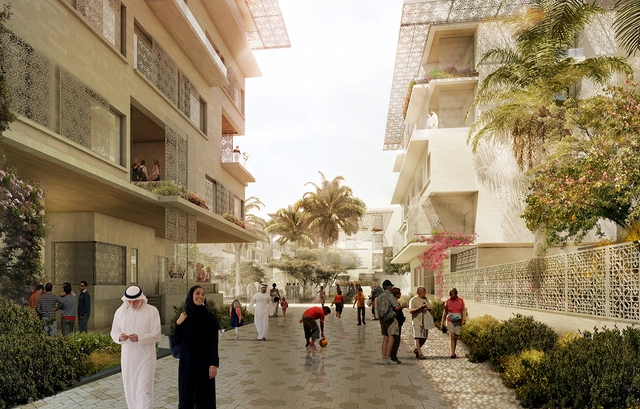
“The world’s most sustainable eco-city,” Masdar City, is preparing for its next phase of development, as unveiled in the award-winning detailed master plan (DMP) by CBT. Depicted in a comprehensive masterplan by Foster + Partners, Masdar was originally envisioned as a carbon-neutral elevated city without cars, instead featuring pod-based transportation located below the podium. As the first phase was constructed, including the Masdar Institute of Technology, a new vision for the city began to emerge, eventually leading to CBT’s pedestrian-oriented innovation community plan for Phase 2.

CBT Unveils Community-Oriented Phase 2 Masterplan for Masdar City - Image 1 of 4CBT Unveils Community-Oriented Phase 2 Masterplan for Masdar City - Image 2 of 4CBT Unveils Community-Oriented Phase 2 Masterplan for Masdar City - Image 3 of 4CBT Unveils Community-Oriented Phase 2 Masterplan for Masdar City - Image 4 of 4CBT Unveils Community-Oriented Phase 2 Masterplan for Masdar City - More Images+ 4