1. ArchDaily
  2. Nature

Nature: The Latest Architecture and News

Living in the Amazon in the 21st Century: A Planning and Urban Design Guide for Cities in the Peruvian Lowland Rainforest

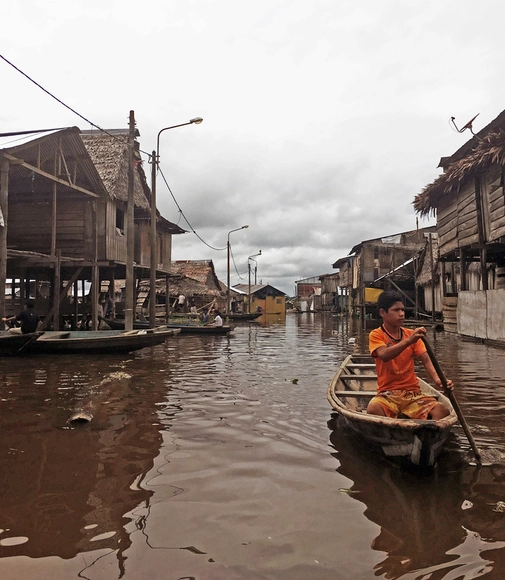
Addressing the universe of the world's largest tropical forest, the book 'Living in the Amazon in the 21st Century: A Guide to Urban Planning and Design for Cities in the Peruvian lowland rainforest', has been selected as a finalist in the category of publications at the 12th Ibero-American Biennial of Architecture and Urbanism. The issue, published in 2019 as part of the PUCP Architecture Publications, in the framework of the CASA (Self-Sustainable Amazonian Cities) project of the Climate Resilient Cities initiative of IDRC, FFLA and CDKN, focuses its research on the department of Loreto, presenting itself as "a guide for architecture and urban design, for settlements in the Amazon forest, including the social processes to be considered".

Living in the Amazon in the 21st Century: A Planning and Urban Design Guide for Cities in the Peruvian Lowland Rainforest - 1 的图像 4Living in the Amazon in the 21st Century: A Planning and Urban Design Guide for Cities in the Peruvian Lowland Rainforest - 2 的图像 4Living in the Amazon in the 21st Century: A Planning and Urban Design Guide for Cities in the Peruvian Lowland Rainforest - 3 的图像 4Living in the Amazon in the 21st Century: A Planning and Urban Design Guide for Cities in the Peruvian Lowland Rainforest - 4 的图像 4Living in the Amazon in the 21st Century: A Planning and Urban Design Guide for Cities in the Peruvian Lowland Rainforest - More Images+ 2

An Architectural Journey Through the Woods

This article was originally published on Common Edge.

There are extraordinary connections between the natural world and the capacity for creativity in human beings. In his book Last Child in the Woods, journalist and author Richard Louv observes: “Nature inspires creativity in a child by demanding visualization and the full use of the senses. Given a chance, a child will bring the confusion of the world to the woods, wash it in a creek, turn it over to see what lives on the unseen side of that confusion.” He concludes that in nature, “a child finds freedom, fantasy, and privacy: a place distant from the adult world, a separate peace.” The architect Frank Harmon likewise wrote touchingly about the outdoors, woods, and water as perfect settings for cultivating a thirst for learning and discovery: “Children raised by creeks are never bored. Creek children don’t know about learning by rote, neither are they conditioned to working nine to five. Berries are their first discoveries, and birds’ nests, and watching the stars come out. Later they discover books. To creek children, learning is discovery, not instruction.”

Houses in the Forest: Examples That Dialogue with the Environment in Latin America

Subscriber Access | 

What role do forests play in our daily lives? In what ways can they be converted into living spaces? What strategies can be implemented to reduce the environmental impact of our buildings? On the International Day of Forests, which is celebrated every 21st of March, this year we propose to raise awareness of the links between forests and our daily lives. Even though deforestation continues to advance, forests represent a source of great economic, social and ecological benefits.

When Nature and Architecture Become One: A Conversation with Dara Huang

Subscriber Access | 

Transcendentalist philosophers have long shared the idea that humans and nature are equal forces that should coexist in harmony. The notion has since expanded to the architecture world, with Frank Lloyd Wright shedding light on the term “organic architecture” as early as the 1900s. In recent years, driven by an increased interest in living closer to nature, architects continue to delve into the concept of integrating interior and exterior, blurring out visual and physical boundaries to bring landscapes indoors.

In Sky-Frame’s latest film, part of the series “My point of view”, a conversation with architect Dara Huang explores this notion, questioning how architecture can merge nature, sustainability and lifestyle within its form, without relying on more technology or materials to do so.

"Houses Are the Most Prevalent Form of Monuments": In Conversation With Bjørn Nørgaard

Subscriber Access | 

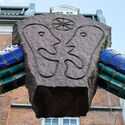
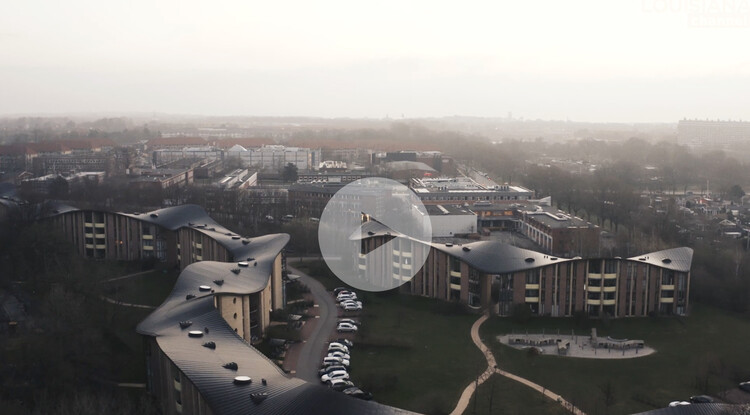
Talking to the Louisiana Channel, Danish professor, sculptor, and artist Bjørn Nørgaard outlines the philosophy that underpins his work and reflects upon his architectural projects. Nørgaard describes in the film, a co-production with Munkeruphus, the strong influence of his mentor in the 1960s - German artist Joseph Beuys - whose theories formed a key part of Nørgaard's evolution and ethos as an artist. The concept of "die soziale Plastik", or social sculpture, would go on to shape Nørgaard's approach to architecture and other forms of art - its main philosophy being that every part of life can be approached creatively.

"Houses Are the Most Prevalent Form of Monuments": In Conversation With Bjørn Nørgaard - Imagen 1 de 4"Houses Are the Most Prevalent Form of Monuments": In Conversation With Bjørn Nørgaard - Imagen 2 de 4"Houses Are the Most Prevalent Form of Monuments": In Conversation With Bjørn Nørgaard - Imagen 3 de 4"Houses Are the Most Prevalent Form of Monuments": In Conversation With Bjørn Nørgaard - Imagen 4 de 4Houses Are the Most Prevalent Form of Monuments: In Conversation With Bjørn Nørgaard - More Images+ 4

Dominican Republic Exhibition for the 2021 Venice Biennale Invites Visitors to Rediscover their Connection with Nature

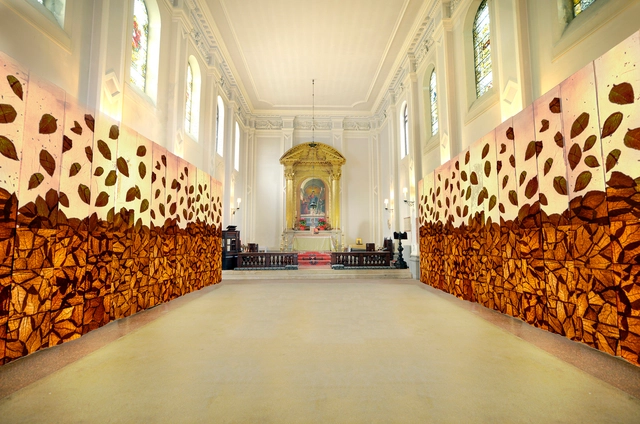
For the 17th Venice Architecture Biennale, the Dominican Republic presents the exhibition CONEXIÓN by artist and architect LiLeón (Lidia León Cabral) and art critic Roberta Semeraro. Hosted at Venice's Anglican Church, the project lies at the intersection of art and interior architecture, and is inspired by "the bond between the Dominican Republic and Mother Earth".

Dominican Republic Exhibition for the 2021 Venice Biennale Invites Visitors to Rediscover their Connection with Nature - Image 1 of 4Dominican Republic Exhibition for the 2021 Venice Biennale Invites Visitors to Rediscover their Connection with Nature - Image 2 of 4Dominican Republic Exhibition for the 2021 Venice Biennale Invites Visitors to Rediscover their Connection with Nature - Image 3 of 4Dominican Republic Exhibition for the 2021 Venice Biennale Invites Visitors to Rediscover their Connection with Nature - Image 4 of 4Dominican Republic Exhibition for the 2021 Venice Biennale Invites Visitors to Rediscover their Connection with Nature - More Images+ 5

Amid the COVID-19 Pandemic, Take Time to Reconnect with Nature

If you are in a place impacted by the COVID-19 pandemic, spending 20 minutes experiencing nature in a park, street, or even your backyard can significantly reduce your stress levels. Just be sure to follow federal, state, and local guidelines and maintain social distancing of 6 feet or 2 meters. But even if you cannot or are unable to go outside, taking a break by opening a window and looking at a tree or plant can also help de-stress.

Long-Term Plans: To Build for Resilience, We’ll Need to Design With—Not Against—Nature

Moving away from its early exclusive focus on natural disasters, resilient architecture and design tackles the much tougher challenge of helping ecosystems regenerate.

Thirty years ago, as a high school student at the Cranbrook boarding school in suburban Detroit, I wrote a research-based investigative report on the environmental crisis for the student newspaper. I had been encouraged to do so by a faculty adviser, David Watson, who lived a double life as a radical environmentalist writing under the pseudonym George Bradford for the anarchist tabloid Fifth Estate. His diatribe How Deep Is Deep Ecology? questioned a recurring bit of cant from the radical environmental movement: Leaders of groups like Earth First! frequently disparaged the value of human life in favor of protecting nature.

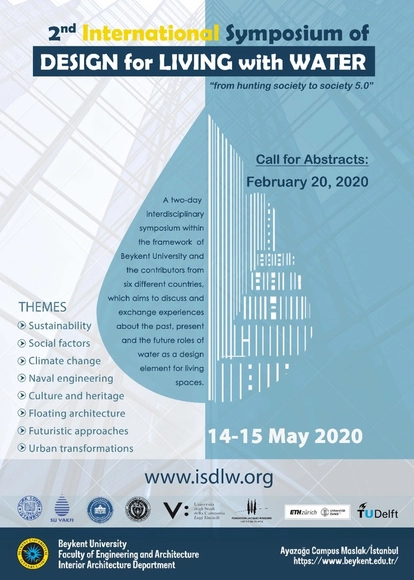
International Symposium of Design for Living with Water

In the days of witnessing the nature's responses to climate change and facing the risk of loosing basic life sources we are calling (inviting) all the academicians, designers, and all other interested parties to take a part in sharing their idea about the importance of ecofriendly, responsive and nature responsible design. We are curious to hear your opinions. We proudly announce the 2nd International Symposium of Design for Living with Water!!
It is our turn to take a part in responsibility toward water and nature!

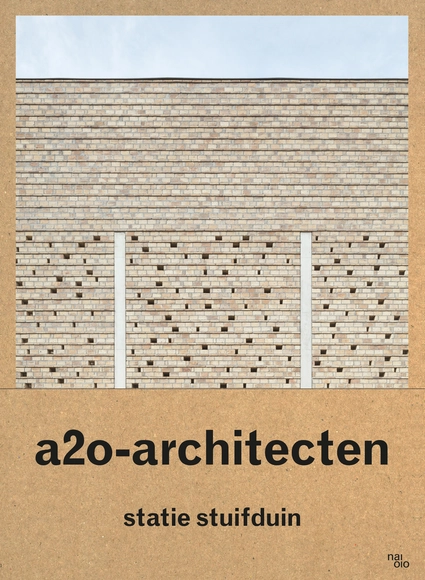
Statie Stuifduin -a2o-architecten

In this book, Belgian architecture office a2o presents an investigative and connecting approach to architecture through an evocative reading of their latest project, crematorium Statie Stuifduin in Lommel, Belgium. This thoughtful yet radical design blends architecture and landscape in a succession of spaces that reveals a deep understanding of both the fundamental aspects of and changing attitudes towards death, burial and the journey of life. Rather than through explicit religious symbols, the sacral is represented by the universal power of nature and by Romantic notions of finding meaning in rediscovered nature. In doing so, Statie Stuifduin goes beyond the specifics of the building to explore new visions of what contemporary funeral architecture can be.

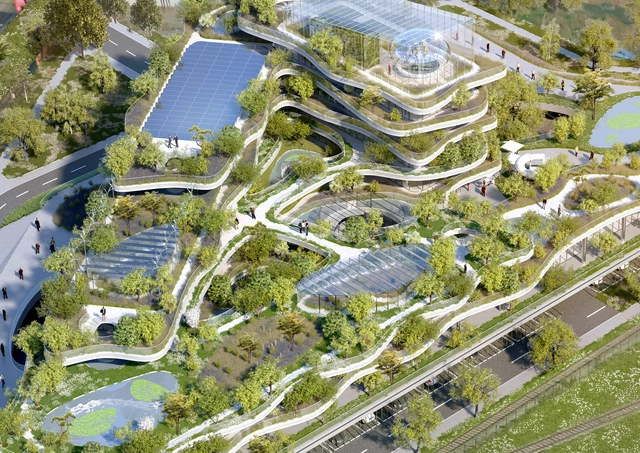
Semaphore: an Ecological Utopia Proposed by Vincent Callebaut

In a design proposal for Soprema’s new company headquarters in Strasbourg, France, Vincent Callebaut Architectures envisions an 8,225 square-meter ecological utopia. The building, called Semaphore, is described in the program as a “green flex office for nomad co-workers” and is dedicated to urban agriculture and employee well-being.

An eco-futuristic building, Semaphore is inspired by biomimicry and intended as a poetic landmark, as well as aiming to serve as a showcase for Soprema’s entire range of insulation, waterproofing, and greening products. The design is an ecological prototype of the green city of the future, working to achieve a symbiosis between humans and nature.

Semaphore: an Ecological Utopia Proposed by Vincent Callebaut - 1 的图像 4Semaphore: an Ecological Utopia Proposed by Vincent Callebaut - 2 的图像 4Semaphore: an Ecological Utopia Proposed by Vincent Callebaut - 3 的图像 4Semaphore: an Ecological Utopia Proposed by Vincent Callebaut - 4 的图像 4Semaphore: an Ecological Utopia Proposed by Vincent Callebaut - More Images+ 18