1. ArchDaily
  2. Architecture Essays

Architecture Essays: The Latest Architecture and News

The Religion of the City: Cars, Mass Transit and Coronavirus

Religion is a uniquely human reality. As are cities. As we emerge from our burrows of sequestration, the silent cities and places of worship will become human again, versus the present sad memory of what they once were.

We will recover from another human reality, the pandemic and when we do we will be forced to address some questions. Before this century, the automobile was once seen as the way Americans could create a new reality: a huge middle class that could control its life by using the freedom that cars gave them to go where they wanted, when they wanted, and to live where they wanted. Before this latest change of sequestration, that vision of what cars meant to our culture was changing —especially in cities.

Architecture and the Environmental Impact of Artificial Complexity

This article was originally published on Common Edge.

There is an astonishing degree of complexity, order, and beauty in the natural world. Even so, and especially within the realm of living things, nothing is more complex than it needs to be to sustain its existence. Every aspect of the system serves a purpose. If it does not, the unneeded component eventually ceases to exist in future generations. Even with these constraints of resource and energy efficiency, we find boundless beauty and harmony in the natural world. Contrast nature’s “just the right amount of complexity” to the way many architects design buildings today. While nature is only as complex as it needs to be, architects and designers add excessive and inessential complexity to their buildings and landscapes when none is warranted.

Endless “Sustainable” Growth is an Oxymoron

This article was originally published on Common Edge

In a Common Edge article, I briefly discussed a concept that I call the “Triple Bottom Lie,” which posits that more people, plus more consumption by each person, plus an economic system completely dependent on the aforementioned items, can just keep working forever, without consequences. Historically, the United States has accepted the economic shibboleth of endless growth because it reduced class conflict; a rising tide (supposedly) lifted all boats, rafts and yachts included. We are, however, approaching the limits of growth, from both a resource standpoint (we’re running out of raw materials) and a technological standpoint (our inventions are progressively less revolutionary).

Assault on a Sacred Place

This article was originally published on Common Edge.

For most people, calling a place “sacred” designates it as an important location, one usually associated with spirituality. It might be the setting for religious rituals (the sacred space of a church, synagogue, or mosque), a spot where some event described as “miraculous” has occurred (such as the reported sighting of the Virgin Mary in Lourdes, France, which became a pilgrimage site), or a place which held the body of deity (think of the Church of the Holy Sepulchre in Jerusalem, built upon what is believed the be the tomb of Jesus Christ). 

The Work of Architecture in the Age of Mechanical Reproduction

This article was originally published on Common Edge.

I attended graduate school, in geography, in Tucson, Arizona, United States, in the late 1990s. Tucson draws fame from a number of things, including its Mexican-American heritage, its chimichangas, its sky islands, and its abundant population of saguaro cacti.

2020: The End of the 20th Century in Architecture

Every December talking heads (or screens) trumpet “Everything Has Changed”. But this year it is true. Imminent inoculations may bring back human contact, but the Coronavirus Year has changed us.

I think 2020 ended the 20th Century in architecture. Architecture never leads in pivotal periods. Modernism was birthed by a Western World leaving monarchies and diving into the Industrial Revolution: it caused neither.

Modern Architects Stink at Lying. Luckily, That’s Fixable

This article was originally published on Common Edge.

Apart from dressing like an undertaker, wearing black-rimmed circular glasses, and driving Swedish cars, modern architects’ most conspicuous trait is their aesthetic honesty, which is dangerous. Sincerity leaves little room for imagination.

The Same People who Designed Prisons Also Designed Schools

According to architect and academic Frank Locker, in architectural education, we keep repeating the same formula from the 20th-century: teachers transmitting a rigid and basic knowledge that gives students, no matter their motivation, interests, or abilities, little to no direction. In this way, says Locker, we are replicating, literally, prisons, with no room for an integral, flexible, and versatile education.

"What do you think of when you're in a space with closed doors and a hallway where you can't enter without permission or a bell that tells you when you can enter and leave?" asks Locker.

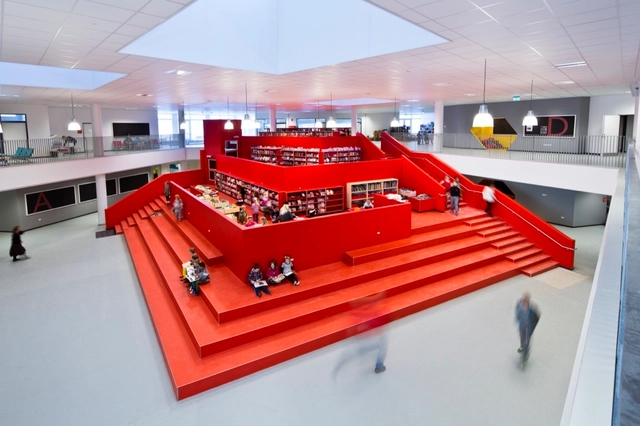
The Same People who Designed Prisons Also Designed Schools - Image 1 of 4The Same People who Designed Prisons Also Designed Schools - Image 2 of 4The Same People who Designed Prisons Also Designed Schools - Image 3 of 4The Same People who Designed Prisons Also Designed Schools - Image 4 of 4The Same People who Designed Prisons Also Designed Schools - More Images+ 4

What a Yeast Sachet Can Tell Us About the Cities of the Future

Subscriber Access | 

Stores in Santiago, Chile, ran out of yeast in mid-March, such as it happened after the beginning of the social crisis in 2019. Given that Chile has the second-highest bread consumption per capita in the world, it would seem that Chileans handle uncertainty stocking up ingredients for bread making. Everybody wants to make bread, including myself.

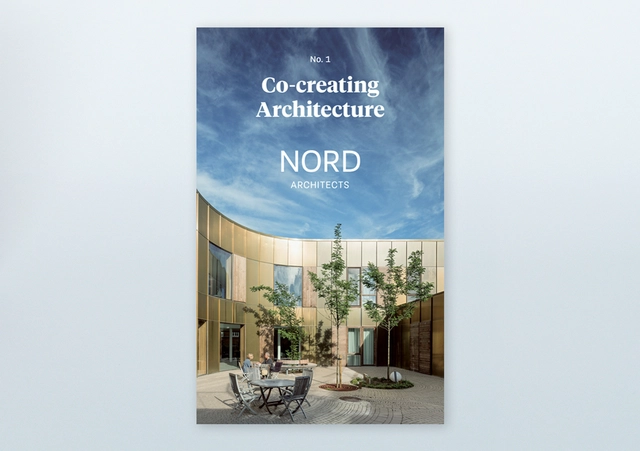
Co-creating Architecture no. 1 – Nord Architects

Co-creating Architecture is a bookseries project that takes a look at the vast potential and use of co-creation within Danish architecture.

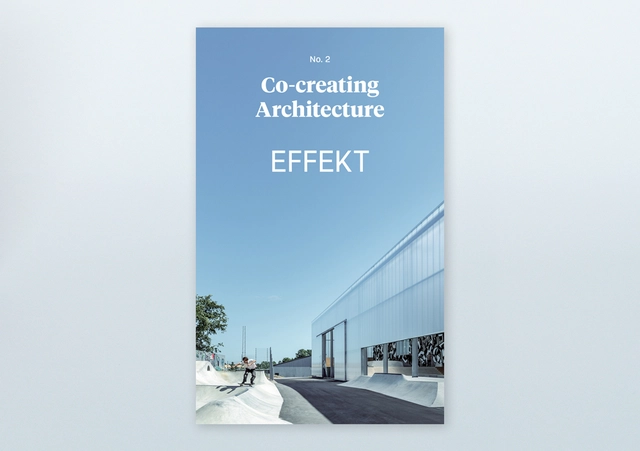
Co-creating Architecture no. 2 – Effekt

Co-creating Architecture is a bookseries project that takes a look at the vast potential and use of co-creation within Danish architecture.

Call for Submissions: Get Published on Balmond Studio's Blog!

Ever wanted to get your work published alongside pioneers such as Cecil Balmond, Daniel Libeskind, Martin Kemp, and Alain de Botton?

Well, now you can! On Balmond Studio’s blog TiP.

Dayananda Sagar College of Architecture Announces Winners of the Essays in Architecture Competition

Architectural thinking has a rich tradition of being bound to writing. Be it the vāstu śāstra, the Seven Lamps by Ruskin, or the writings of Thoreau—writing and craft have not only gone hand in hand but are synonymous. Imagination is the moment of architecture and it finds expression in writing as much, if not more, as it does in drawing. Unfortunately, the power of the pen, especially when it comes to architecture-design, remains largely underrated.

What Can Design do in Chile's Social Crisis? Nothing.

Subscriber Access | 

This article was originally published in ArchDaily en Español last October 30, twelve days after the social crisis in Chile escalated. Some ideas of the analysis may feel outdated since some structural reforms were recently announced, but the author decided to keep the original spirit of the piece.

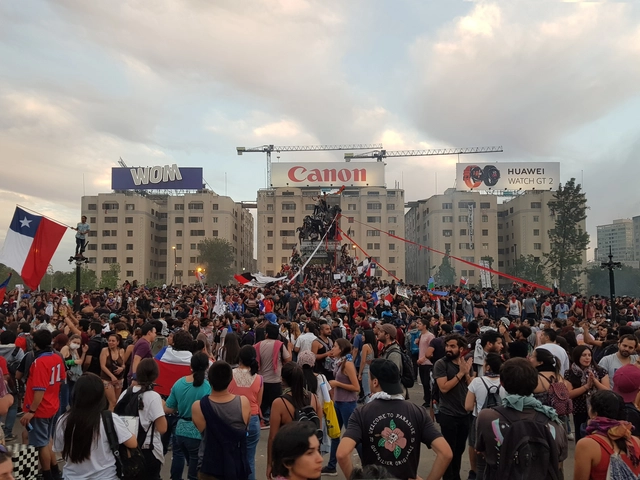
A 4 cent fair increase for the Metro in Santiago sparked mass fare-dodging protests in Chile starting on October 6. Alongside spontaneous street demonstrations, the protests spilled into widespread violence across Santiago during the following days until October 18. That day, the Metro network collapsed, the riots multiplied across the city, and looting and fires were out of control. That night, President Sebastian Piñera declared a state of emergency.

What Can Design do in Chile's Social Crisis? Nothing. - Image 1 of 4What Can Design do in Chile's Social Crisis? Nothing. - Image 2 of 4What Can Design do in Chile's Social Crisis? Nothing. - Image 3 of 4What Can Design do in Chile's Social Crisis? Nothing. - Image 4 of 4What Can Design do in Chile's Social Crisis? Nothing. - More Images

An Architect’s Creative Journey Between New York, New Haven, Istanbul and Ajman: Emre Arolat Shares his Experience

Subscriber Access | 

Emre Arolat has a long and distinguished career in architecture, marked by honors such as the Aga Khan Award for architecture and appointments such as the co-curatorship of the 2012 Istanbul Design Biennial. As both a practicing architect and an educator (he teaches at the Yale School of Architecture), Arolat spends a great deal of time traveling around the world. In this guest essay, Arolat shares his experience on the road, illuminating a personal creative process. - AD Editorial Team 

Postmodern Post-Mortem: Why We Need To Stop Using Architecture's Most Misunderstood Word

Subscriber Access | 
Postmodern Post-Mortem: Why We Need To Stop Using Architecture's Most Misunderstood Word - Image 1 of 4
© Giacomo Pala

We were hoping for it to happen in the early 2000s. We saw it coming with the opening of the exhibition “Postmodernism: Style and Subversion, 1970 – 1990” at the V&A in London in 2011. But now, after recent discussions on the umpteenth supposed “postmodern revival,” it is finally sure: the word “postmodernism” is back and it’s here to stay. But as clear as it is that the word “postmodernism” is once again fashionable, it is not really clear what we mean when using it. Indeed, this word has been used to imply every possible meaning: architects have used it to describe fashionable and “cute” designs, some critics have used it to categorize everything that is colorful, while some theorists have been using it to affirm that, because of this concept, architecture has surrendered to technology or form, becoming nothing more than a caricature of its own presupposed moral values.

Whether we agree with such commentaries or not, there is one thing that we still need to discuss: what does “postmodern” mean? And, even more urgently: what could it mean today? After all, if we have to deal once again with one of the most misinterpreted and contradictory words ever introduced in our field, we should at least discuss what it means, before using it.

2016 Berkeley Prize Now Open

The 2016 Berkeley Prize is now open. Open to all undergraduate architecture students, the essay competition "strives to show architects-in-training that the smallest act of building has global implications: that design can and does play a major role in the social, cultural, and psychological life of both the individual and society at large." This year's competition theme is "Sheltering Those in Need: Architects Confront Homelessness." All initial submissions are due November 1, 2015. Essay semifinalists will be given the opportunity to apply for a travel fellowship. All the details, here.

Isaac Asimov on How Creativity Happens

Subscriber Access | 

Innovation, rebellion or “the next big thing” – whatever you call it, it seems architects and designers are eternally on the hunt for the idea that will put them on the map: the original thought that is fully and unarguably theirs. In this essay by Isaac Asimov, written in 1959 but only recently published on Technology Review, the scientist and writer poses the question: how do people get new ideas? Though originally written to provoke scientists and engineers working on defense systems, the thoughts and contributions serve as a gentle reminder to all creative classes, of the role of collaboration, play and failure in the design process.