

-
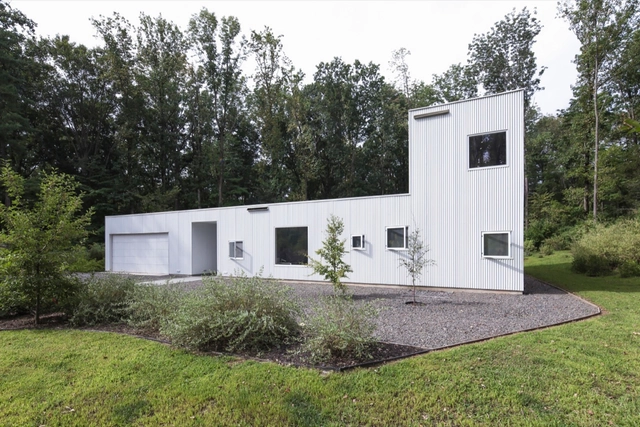
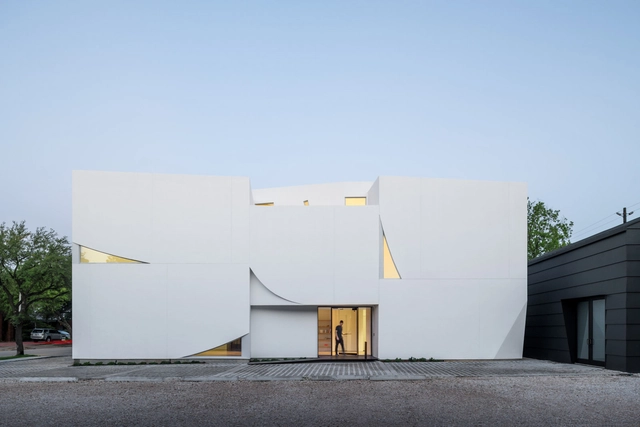
Architects: Schaum/Shieh
- Area: 4000 ft²
- Year: 2018
-
Manufacturers: Dornbracht, Duravit, Grasscrete, PVE, Solatube
This article was originially published by Metropolis Magazine as "Architects, Armed with Data, Are Seeing the Workplace Like Never Before."
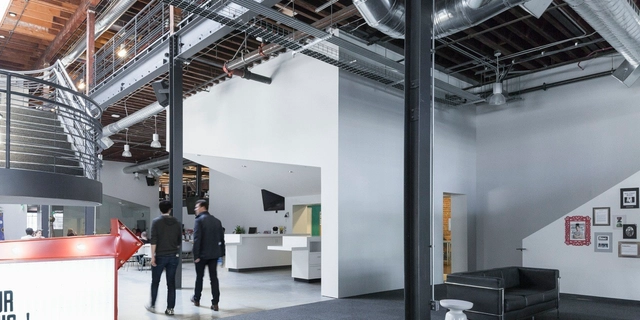
A workplace that improves employee productivity and efficiency has been a white whale of corporate managers for decades. But even before the office as we know it today was born, designers and innovators were already studying sites of labor, such as the factory, to devise strategies to boost worker performance. By the 1960s, Robert Propst, the inventor behind Herman Miller’s Action Office line of workplace furniture, and others were conducting workspace research that would ultimately lead to the creation of the modern cubicle.
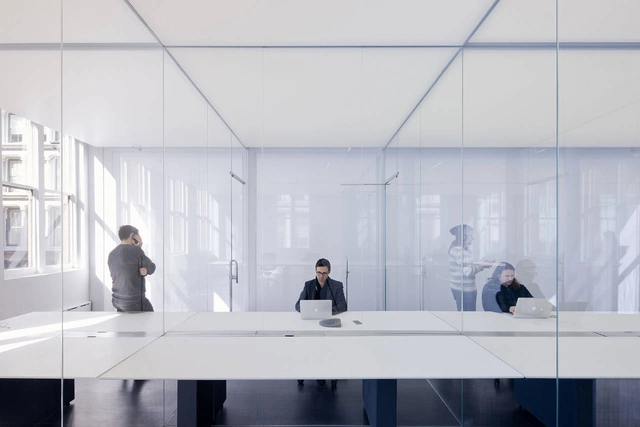
These developments relied largely on observation and intuition to organize office workers in purportedly effective ways. Now, advances in technology allow designers to take a more sophisticated approach, using sensors, internet-connected furniture and fixtures, and data analytics to study offices in real time. “You can take into account every single employee, and people are very different,” says London architect Uli Blum. “It’s about solving the fundamental problems of getting people the environment they need. And the easiest way is to ask them,” he adds. But finding out the needs of hundreds, sometimes thousands, of workers can quickly become an exercise in futility.

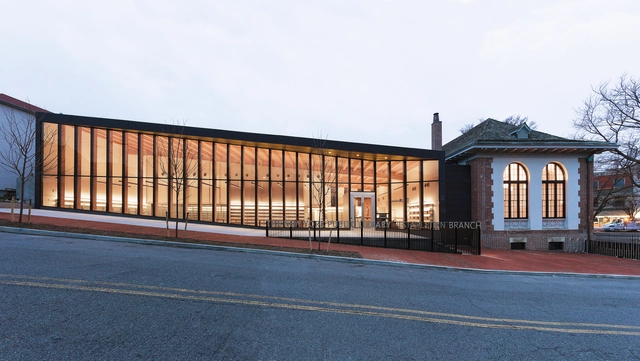
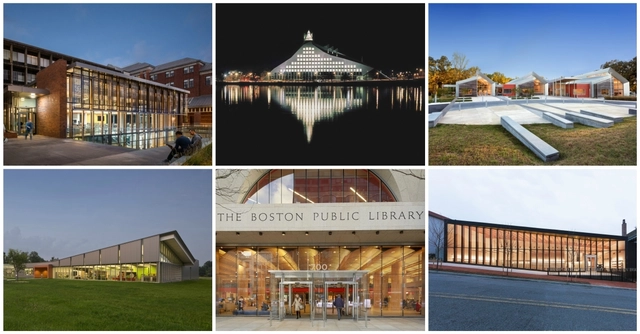
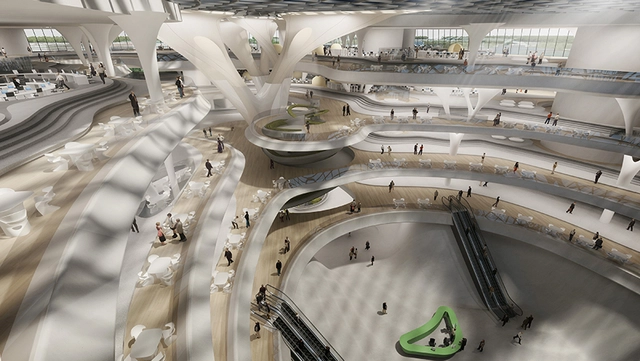
The American Institute of Architects (AIA) and the American Library Association (ALA) have selected eight projects as recipients of the 2017 AIA/ALA Library Building Awards. Founded to “encourage and recognize excellence in the architectural design of libraries,” the award draws attention to the changing role of libraries in society, and how exemplary community spaces can change to reflect the needs of their surrounding residents.
The eight winners of the 2017 AIA/ALA Library Building Awards are:
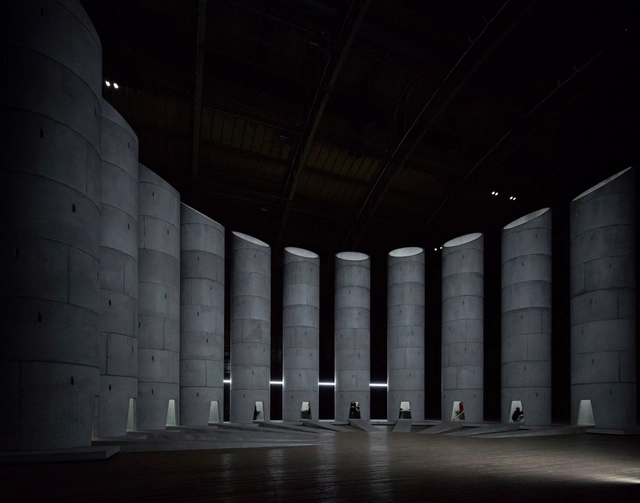
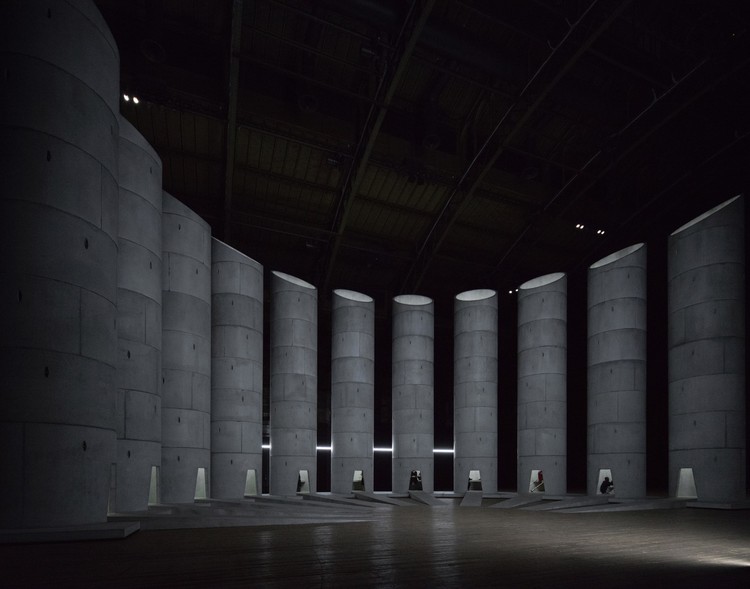
Artist Taryn Simon in collaboration with OMA/Shohei Shigematsu has designed An Occupation of Loss, a major new performance work choreographed around an OMA-designed monumental sculptural setting consisting of 11 concrete wells. Located at Park Avenue Armory’s Wade Thompson Drill Hall, and co-commissioned by the Armory and Artangel, London, the performance piece focuses on “the anatomy of grief and the intricate systems that we devise to contend with the irrationality of the universe.”

New York-based architecture firm Leong Leong has created an installation for the third annual Sight Unseen OFFSITE exhibition as a part of the citywide NYCxDESIGN festival.
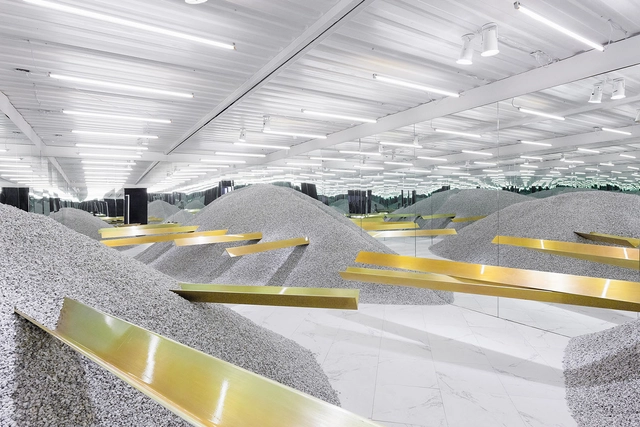
Titled TOPO, the installation was a scaleless environment composed of more than one thousand foam rollers. Collectively, they form a landscape “that is both an intimate sanctuary and an expansive horizon.” The installation was situated in a room of mirrors, giving the effect that it extends indefinitely.
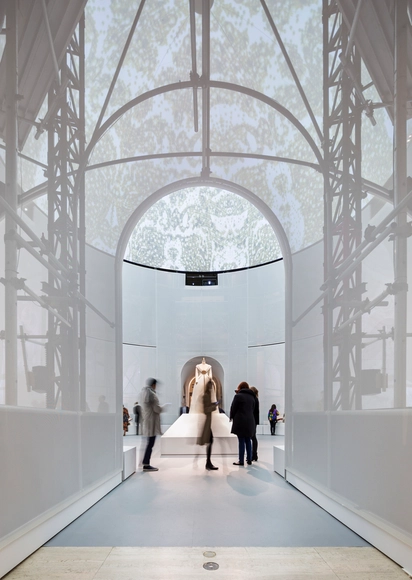
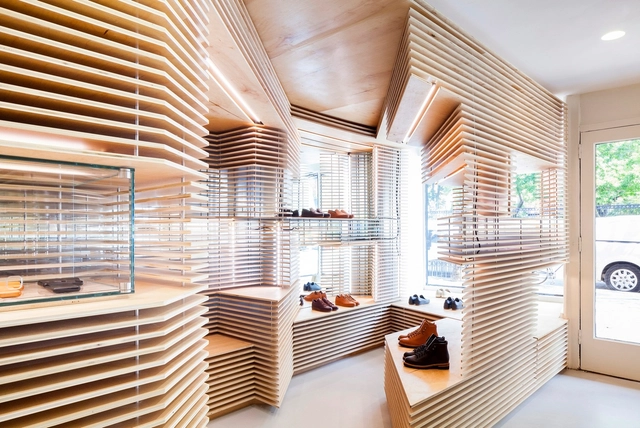
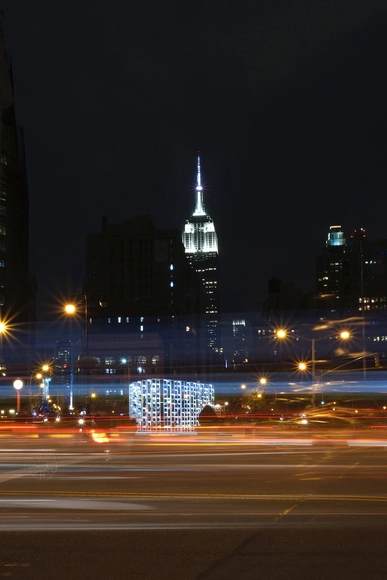
Text description provided by the architects. This holiday season, wedged between two New York City icons - the Flatiron and Empire State building - stands the #NewYorkLight public art installation by Brooklyn-based INABA. A magnificent place to experience the Manhattan grid, the installation frames a unique and uninterrupted view of the skyline due to the clearing of Madison Square Park.