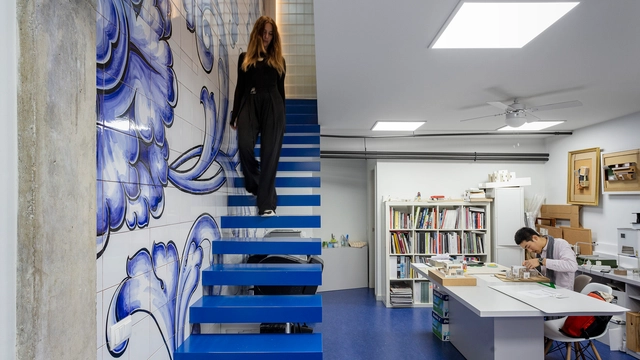
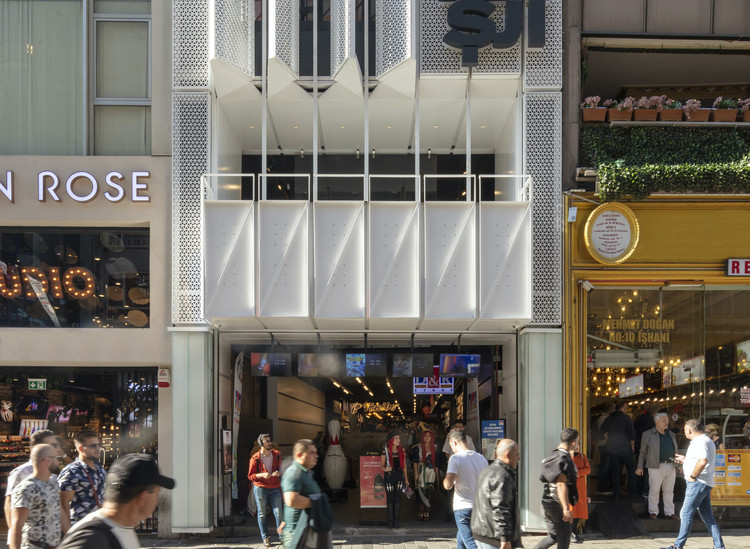
Marc Goodwin is an architectural photographer, writer, and teacher. He was born in London and currently divides his time between Europe, the Americas, the Middle East, and Asia. His work has been published in seven architecture books, with one more on the way, and countless times in the architectural press. His doctoral thesis - Architecture’s Discursive Space, Photography - investigates the components of conventional architectural photography and opposes them to a system of atmospheres. Since the completion of his doctorate, he has been travelling the globe non-stop, taking commissions and producing the Architecture Studios Atlas.
Instagram / @archmospheres
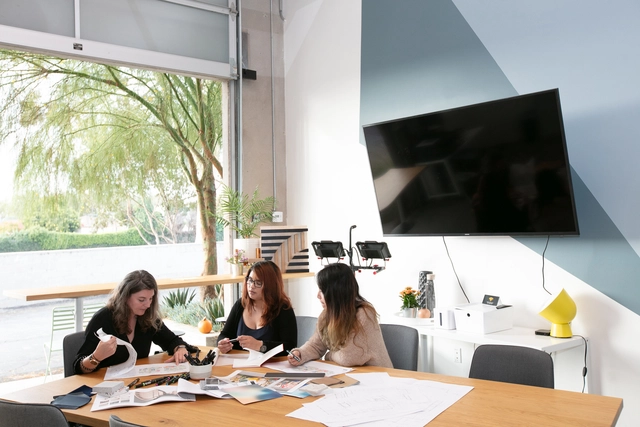
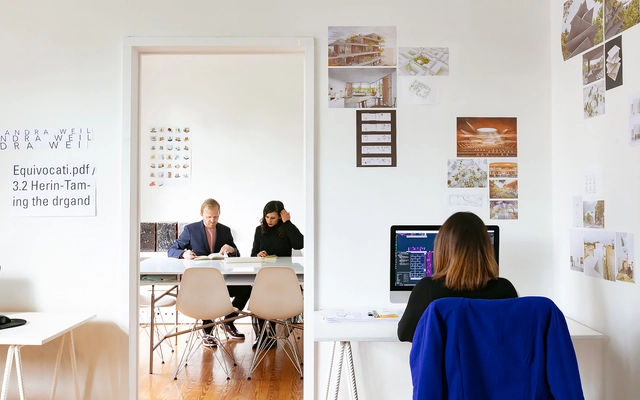
Although architecture itself is universal, the day-to-day practice still varies across the world, influenced by a wide range of factors, from the professional requirements and responsibilities of an architect, the local environment, history and building customs, to local priorities and challenges. In a hyper-connected world, where architecture seems to become more uniform, how do local contexts and characteristics shape the built environment? This article taps into the commonalities and the variations within the architecture profession.
Despite all the hurdles and the pain, 2020 did not fail us in terms of content. Reacting to the global situation, ArchDaily's team of editors has tackled all the pressing issues that occurred this year and influenced the worldwide state of turmoil. While the whole planet was on pause, these writers were in search of critical substance, seeking to produce exclusive editorial pieces that highlight present-day topics and concerns. Generating articles in 4 languages, English, Spanish, Portuguese, and Chinese, this group of diverse individuals provided both local and global perspectives, reaching everyone that “talks architecture”.
Aspiring "to empower everyone who makes architecture happen to create a better quality of life", ArchDaily’s selection of best articles is the result of many aspects. Some of the choices explored distinctive subjects while others were very well-received among our readers. Emphasizing its academic standards, our platform focused its efforts on covering a vast range of ideas, from the consequences of the pandemic on the built environment, cities and their transformations, technical expertise and material specifications, to artificial intelligence and the future.
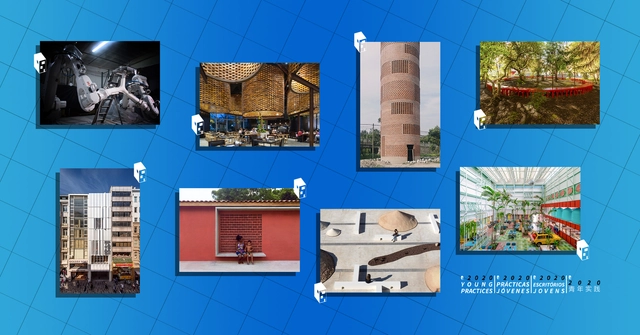
ArchDaily is proud to announce the 2020 Young Practices selection. This premier edition highlights emerging offices that are providing innovative approaches, proposals, and solutions to some of the main challenges Humankind is facing right now. From climate crisis to racial and gender issues. From technological disruption to social cohesion. These challenges are shaping the evolution of architecture, leading the discipline towards a new society and a new economy.
Chosen from over 350 submissions from 72 countries and 215 cities, all over the world, the selected firms reflect the sequential changes architecture has been navigating through over the last twenty years, with the rise and latter consolidation of new technologies, tools, formats, topics, scales, and interdisciplinary approaches.
Architecture school is a place of experiment and a testing ground for innovative ideas. The academic work and student projects can bring to light the focus of an entire career, shape the backbone for an architectural theory, and crystalize values. How do their studies and formative years reflect on the later work of different architects? Taking a journey along decades, we explore the transition from architecture school to practice, the reverberance of academic explorations and early projects in the work of several architects and practices, highlighting the different pivotal steps that have shaped the beginning of their architectural journey.
Architects and urban planners seeking new sources of income during this period can find job opportunities across various regions in Brazil. For example, the City, Housing, and Health competition, organized by CAU/RJ, will award R$ 10,000 to the two best ATHIS (Technical Assistance for Social Interest Housing) proposals addressing housing and health in the era of Covid-19. Meanwhile, the Healthy House – Healthy City competition, hosted by CAU/RS, challenges participants to propose architectural solutions under different themes and will distribute R$ 100,000 in prizes.
At ArchDaily, engaging with architects through conversations that reveal their working methods, histories, and reflections—both personal and collective, within their teams and the broader professional community—has always been a core priority. This dialogue not only brings knowledge to the professionals building our world, but also provides future generations with tools and experiences as they enter the workforce, always maintaining a critical eye on architectural practice.
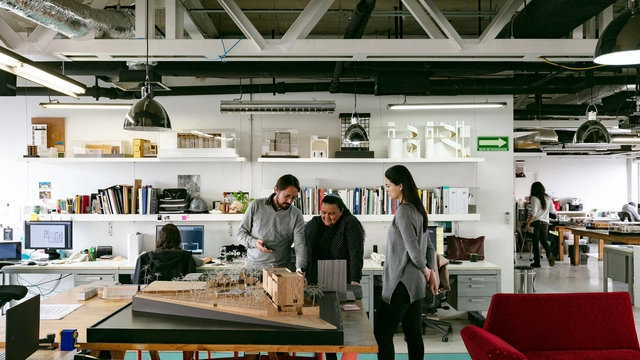
PRODUCTORA is a Mexico City-based architecture studio founded by Abel Perles (1972, Argentina), Carlos Bedoya (1973, Mexico), Víctor Jaime (1978, Mexico), and Wonne Ickx (1974, Belgium). The firm is characterized by its emphasis on precise geometries in an effort to generate legible projects with clear gestures, as well as its pursuit of timeless material and spatial resolutions.
Due to the COVID-19 crisis, the world is in isolation and everyone is confined in their own house. In an attempt to analyze and understand how people are dealing with forced isolation in their current living conditions, KAAN Architecten has released an online survey that questions the space we are currently living in and how it influences our mood.
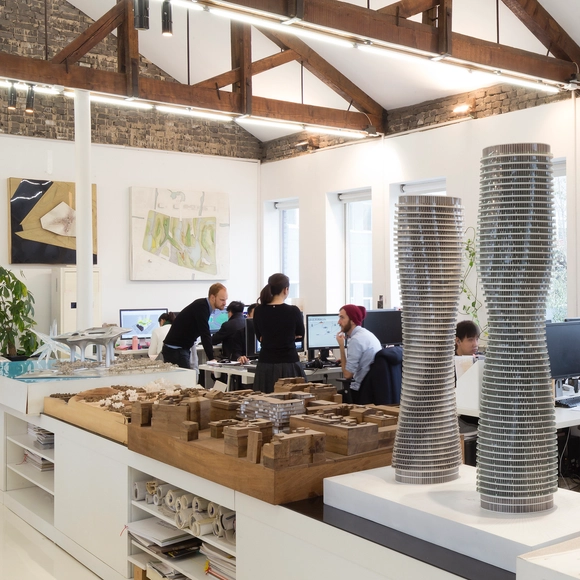
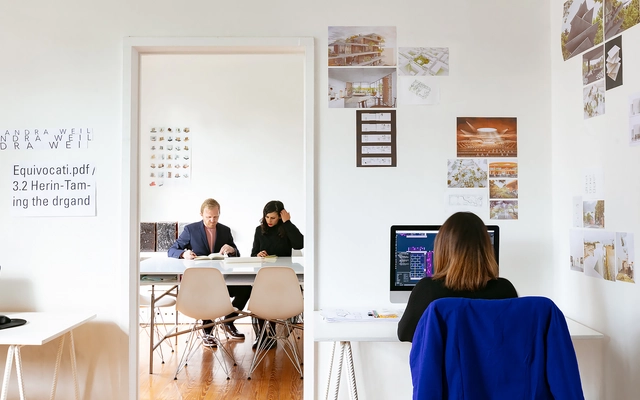
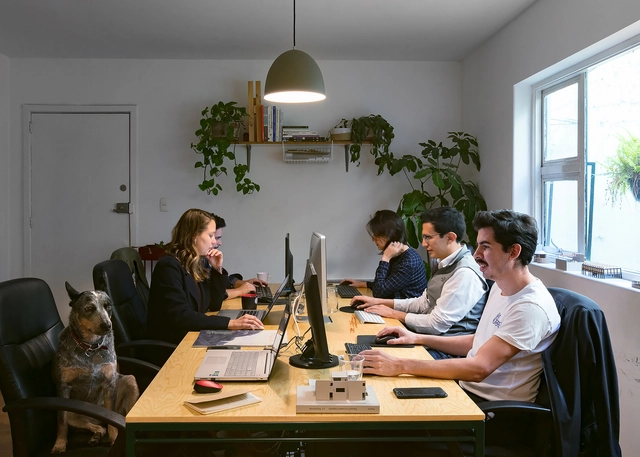
The National Social Distancing Campaign (Jornada de Sana Distancia) in Mexico began on March 23, 2020. However, a couple of weeks earlier, even despite the Federal Government's recommendation to continue activities as normal, social media was already filled with people choosing to replicate the European model and self-isolate. Immediately, some architecture practices decided to close their physical offices and transition to a remote work model, while others took several weeks longer. Yet, this period of social and physical (spatial) distancing is experienced differently in every household. In the months since this pandemic unfolded, it has laid bare not only the inequality in basic needs within dense urban areas but also the fragility of the social order itself. Whether at a macro or micro scale, all these experiences occur within and are influenced by the built environment, making architecture both judge and jury in this equation.
Perkins and Will have generated a set of strategies, grounded in public health guidance, to help offices resume their work during COVID-19. Focusing on the transition phase, the guideline helps employers draw a road map for safe return.
The National Social Distancing Campaign (Jornada de Sana Distancia) in Mexico began on March 23, 2020, but a couple of weeks prior—even as the Federal Government recommended continuing normal activities—social media users were already opting to replicate the European model and self-isolate. Right away, some architecture firms made the decision to close their physical offices and transition to a remote work model, while others took a few more weeks to do so. However, this period of social and physical (spatial) distancing is experienced differently in every household. Over the months that this pandemic has unfolded, it has exposed not only the inequality regarding basic needs in dense urban areas, but also the fragility of our established social order. Whether at a macro or micro scale, all these experiences occur within and are influenced by the built environment, making architecture both arbiter and active participant in this equation.
The National Social Distancing Campaign (Jornada de Sana Distancia) in Mexico began on March 23, 2020. However, a couple of weeks earlier, despite the federal government's recommendation to continue normal activities, people on social media were already choosing to replicate the European model of self-isolation. Some architecture firms immediately decided to close their physical spaces and transition to remote work, while others took a few more weeks. Still, this period of social and physical (spatial) distancing is experienced differently in every household. The months of this pandemic have exposed not only inequality regarding basic needs in dense urban areas, but also the fragility of our social order. Whether at a macro or micro scale, all these experiences are shaped and influenced by the built environment, making architecture both a judge and a party to the equation.
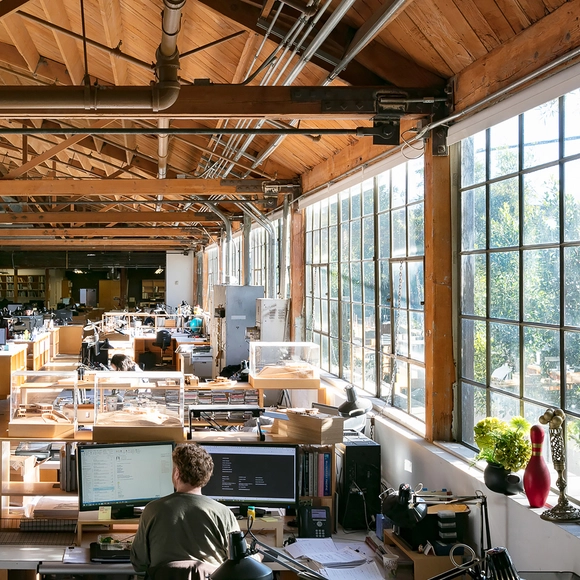
The world crisis caused by the Coronavirus has called millions of people to quarantine and socially distance in order to stop the contagion curve. This has resulted in companies being confronted with the challenge of continuing to work remotely, with most of their teams working from home.
https://www.archdaily.com/936691/trends-report-how-architects-are-working-from-homePola Mora
.jpg?1611113689&format=webp&width=640&height=580)
.jpg?1611113634&format=webp&width=230&height=230&crop=true)
.jpg?1611113754&format=webp&width=230&height=230&crop=true)
.jpg?1611113860&format=webp&width=230&height=230&crop=true)
.jpg?1611113924&format=webp&width=230&height=230&crop=true)
.jpg?1611113689)
.jpg?1608067459&format=webp&width=640&height=580)
.jpg?1608067859&format=webp&width=230&height=230&crop=true)
.jpg?1608067247&format=webp&width=230&height=230&crop=true)

.jpg?1608067553&format=webp&width=230&height=230&crop=true)
.jpg?1608067459)











.jpg?1589245986&format=webp&width=230&height=230&crop=true)