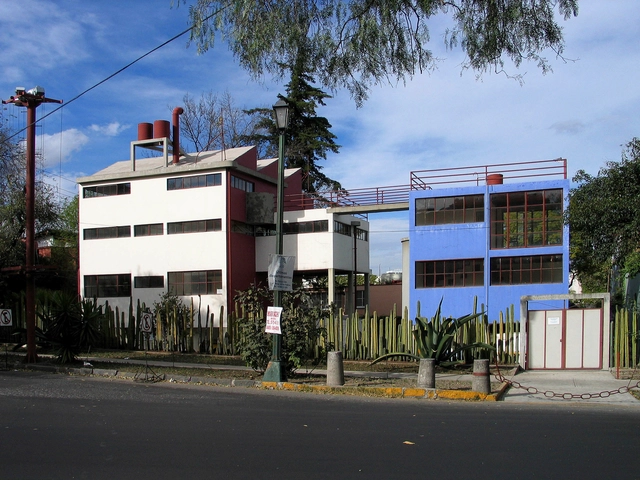
Diego Rivera and Frida Kahlo house. Via: Wikimedia, CC BY-SA 3.0 license
Geometric shapes, exposed reinforced concrete walls, visible electrical installations, large windows that prioritize natural light and ventilation, gardens that value native plants. The first works by the Mexican architect Juan O’Gorman, built between 1929 and 1932, bring an aesthetic that can be seen today, but in reality they are the pure expression of one of the currents of the 20th century modernist movement, functionalism.
Over the past 60 years, architects and engineers have surrendered to industrial construction solutions, with buildings designed to be built faster and faster and at very low cost.
Over the past 60 years, architects and engineers have surrendered to industrial construction solutions, with buildings designed to be built faster and faster and at very low cost. As a more standardized and cheaper international approach to building emerged throughout the 20th century, many professionals abandoned the vernacular traditions of their ancestral cultures, which were developed over thousands of years, to fight the climatic extremes of different regions.
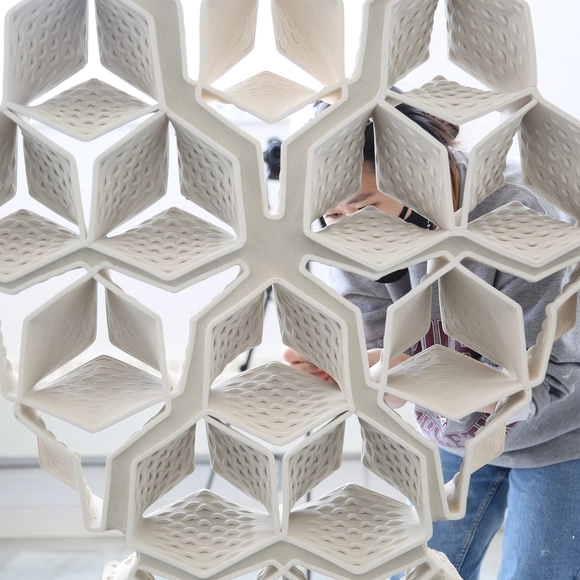
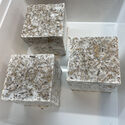
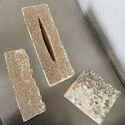
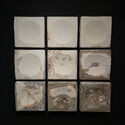
Since the 1980’s, 3D-printing has offered new ways of developing architecture, engineering, and objects of daily use. When it comes to digitizing analogue processes, it is vital for users to become familiar with current tech innovations and their benefits. HIVE Project reshapes the art and craft of building in clay by combining traditional ceramics, smart geometry, and robotic precision to construct a masonry wall composed of one hundred seventy-five unique 3D-printed clay bricks.
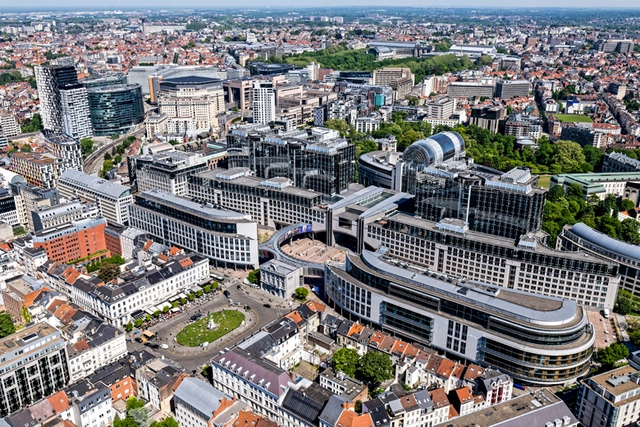
The European design team integrated by architectural firms JDS Architects, Coldefy, Carlo Ratti Associati, NL Architects, and Ensamble Studio has been announced as the winner of the international design competition for the renewal of the Paul-Henri SPAAK Building, the European Parliament plenary building in Brussels, Belgium.
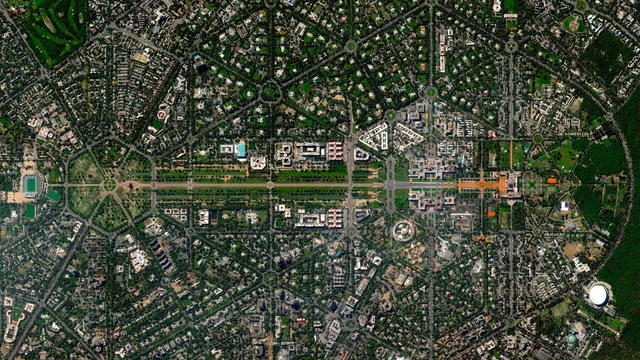
Today, technology is increasingly ubiquitous in major cities, driven by the rapid pace of capital-driven movement. A popular term to describe the relationship between urbanism and technology is “Smart Cities,” which centers on leveraging data to enhance building connectivity. However, widespread access to these new technologies has revealed how our unique experiences as citizens—driven by a strong desire to document urban environments—allow us to map and experience cities from alternative perspectives.
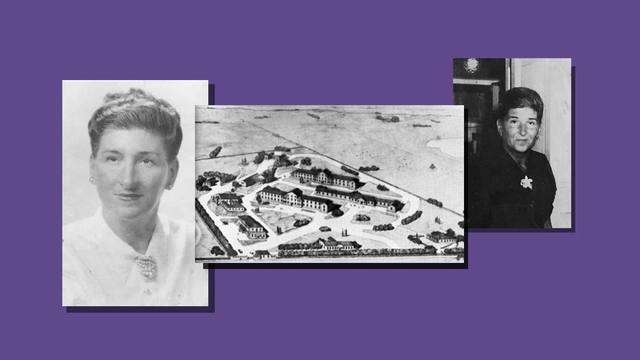
The first woman to receive an architecture degree in Argentina was Filandia Pizzul in 1928 from the University of Buenos Aires, more than 50 years after the program was first established. Starting in 1874, the architecture program operated independently of the Department of Sciences, where these studies had been housed since 1865. She was a pioneer in several fields, also becoming the first woman to complete courses at the Civil Aviation Directorate in 1928, earning pilot's license No. 181.
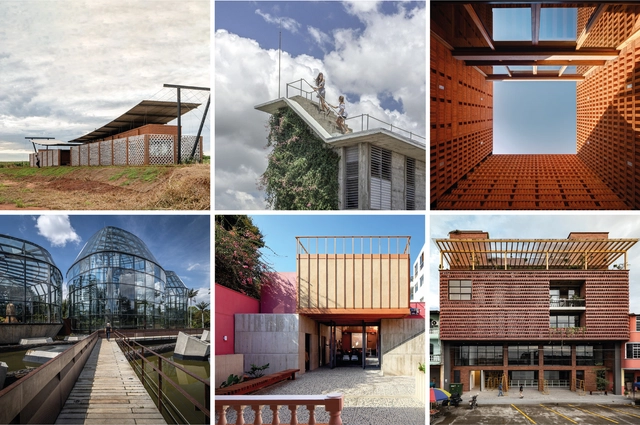
This November, REDBAAL will mark its first decade of activity, a milestone celebrated alongside four editions of the Oscar Niemeyer Award for Latin American Architecture (ON Award). Over these years, more than 350 projects have been submitted, all of which share the distinction of having been previously recognized at the most prestigious architectural biennials across Latin America.
https://www.archdaily.com/1132501/discover-the-20-finalist-projects-of-the-2022-oscar-niemeyer-award-for-latin-american-architectureDiego Vivas
Every day, architects and designers from around the world send us their latest projects, products, news, and opinions. We collect, curate, and publish the best information, delivering our platform to over 17 millions of monthly readers. Since 2008 we have been sharing inspiration, knowledge, and tools with the goal to help everyone who makes architecture happen to create better cities and quality of life.
At ArchDaily, we are always improving your experience on our platform, which is why we have prepared a survey to gather your feedback, and better understand the topics that are most relevant to our readers.
https://www.archdaily.com/985557/help-us-improve-your-archdaily-experienceArchDaily Team
Cortesia de Saint-Gobain's Architecture Student Contest
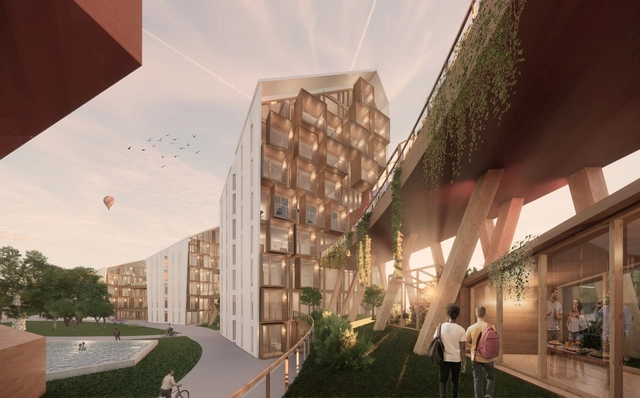
The 17th edition of the "Architecture Student Contest" has come to an end, with the participation of over 220 universities from 32 countries. This year, the challenge was to transform a district located in Warsaw, Poland in order to revitalize an area located next to Warszawa Wschodnia (Warsaw East). The contest involved the design of a new student residence and housing, as well as a meeting and entertainment center in an old factory building that is classified as a historical heritage site. With the requirement of addressing the space's performance as well as its architectural, environmental and social aspects, the contestants were tasked with a project that positively impacts its users and the planet, with low carbon emissions throughout its life cycle.
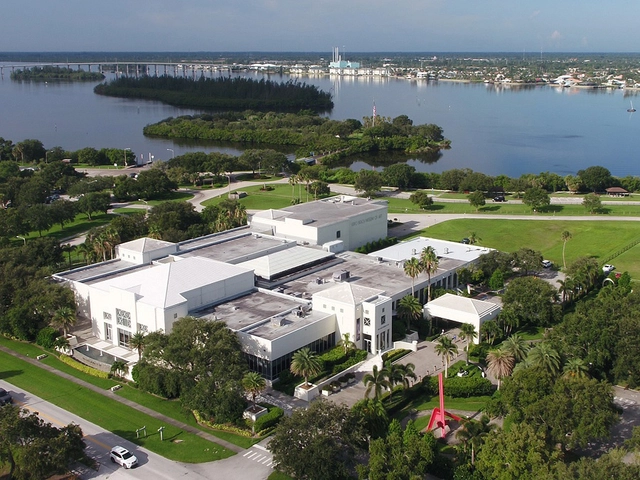
Vero Beach Museum of Art. Image Courtesy of Vero Beach Museum of Art
The Vero Beach Museum of Art (VBMA) in Florida has announced the appointment of Allied Works Architecture to lead the expansion and renovation project. The selection process took over nine months and it entailed a line-up of 13 national architectural firms and an eventual short-list. The winning design team will be led by Allied Works founder Brad Cloepfil and Principals Chelsea Grassinger and Gabe Smith. The expansion and renovation process is expected to be completed by 2026.
As one of the first steps in the elaboration of an architectural project, the study of the current legislation on the ground is of paramount importance for the success of the proposal. Through calculations and restrictions, zoning laws present limits to be considered in projects that, consequently, instigate architects to think of intelligent solutions, dealing with such limitations in a practical and creative way.
These parameters are dictated by the government and aim to stop, maintain or accelerate urban growth in certain portions of cities. These are norms that establish guidelines for land occupation, delimiting the percentage of built-up area, setbacks, distances, permeability, among others.
The luxury hotel, as an architectural typology, is distinctive. In effect, it's a self-contained community, a building that immerses the well-off visitor into their local context. Self-contained communities they might be, but these hotels are also vessels of the wider socioeconomic character of a place, where luxury living is often next door to informal settlements in the most extreme examples of social inequality.
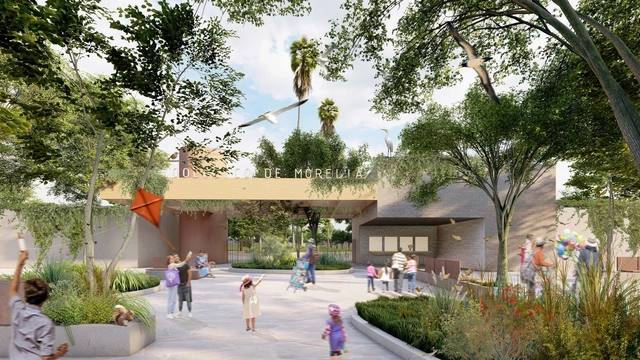
Cortesía de Celia Atzimba Granados Campos (Socia-directora de SIN TÍTULO ARQUITECTURA), Luis Jacobo Villafuerte (Socio-director de SIN TÍTULO ARQUITECTURA), Rodrigo Pantoja Calderón (Fundador y director de EVO (A) LAB), Natalia Olivera y Rafael Luviano
As part of an initiative by the Ministry of Urban Development and Mobility of the Government of Michoacán, the Ministry of the Environment, and the Michoacan University of San Nicolás de Hidalgo, the First Ideas Competition to renovate and adapt the Morelia Zoo (one of the largest in Mexico by number of species) to the new environmental, social, and cultural conditions of its context was launched.
https://www.archdaily.com/1131902/discover-the-winning-proposal-for-the-benito-juarez-ecological-park-in-michoacan-mexicoArchDaily Team
For its 43rd edition, the Grand Jury of the 2022 Konex Awards has selected the 100 most outstanding figures of the last decade in Argentine Visual Arts, spanning the period from 2012 to 2021. Honoring five individuals in each of the 21 established disciplines, the awards and diplomas of merit will be presented on Tuesday, September 13.
The International Solicitation for the Urban Design of the Center Area of Western China (Chongqing) Science City has officially launched! We warmly invite outstanding design teams from around the world to participate. International Solicitation for Urban Design of the Center Area of Western China (Chongqing) Science City is now open for pre-qualification! Design teams from home and abroad are welcome to participate.
Wallpapers can be quite controversial. They can be typical of old-fashioned and antiquated homes, but at the same time, they can also add personality to otherwise dull spaces. One of the best parts of using these elements is that they can be quickly installed, and with relatively low costs. This also means that they aren't very long-lasting, and can therefore be quickly discarded and replaced, making them transient decoration items. As Joanna Banham—a researcher on wallpapers—states, “Wallpaper is often regarded as the Cinderella of the Decorative Arts – the most ephemeral and least precious of the decorations produced for the home. Yet, the history of wallpaper is a long and fascinating subject that dates back to the 16th century and encompasses a huge range of beautiful patterns created both by anonymous hands and by some of the best-known designers of the 19th and 20th centuries.” Today we are seeing another wallpaper resurgence, with numerous options of materials, patterns, and colors, and several examples of architects who have used them creatively in their projects. In this article, we go through the history of wallpapers and some of the current alternatives on the market, by diving into the Architonic catalog.
Ennead Architects and Kahler Slater have unveiled the design of a new 200,000 square-foot museum building in Milwaukee, Wisconsin. Set on a 2.4 acre site in the Haymarket neighborhood, the design is based on four core principles: community, nature, education, and the preservation of the museum’s vast collections. The project is expected to break ground in late 2023 and open to the public in 2026.
The New York City Senate and Assembly have passed the SIGH act, prohibiting the construction of new schools near major roadways. The act, named The Schools Impact by Gross Highways Act, aims to protect school-age children from air pollution. Under this law, the commissioner of education for the city will not be able to approve the plans for the construction of any new schoolhouse within 500 feet (150 meters) of a controlled-access highway unless the commissioner determines that space limitations are so severe that there is no other site to erect such new schoolhouse.
Earlier this year, I witnessed an intriguing situation. I followed, via an architect friend, the negotiation for the contracting of an architectural project for a single family home. The land owner, a public school teacher, sought professional help to build her dream home, estimated at about 60 square meters. It was a challenging terrain, with specific cutouts and a very steep topography that was compensated by the view of the city. The limited budget and the owner's history indicated that this would be the seaside version of the famous Vila Matilde House by Terra e Tuma.
Few other materials can convey architectural atmosphere as well as the glass. A to-go choice for the modernists, due to its transparent nature, glass still holds a solid place within the material palette for architects around the globe. Such unique element is the subject of Archiving Flux / Stasis, a photographic exhibition by Erieta Attali hosted by the Greek Ministry of Culture in Casa Romana, Kos Island, Greece, set to open its doors in July 21st.
With all of the strange residential interior design trends that are making a comeback, conversation pits are probably one that you wouldn’t expect. This well-known 1970s design feature feels both very retro and modern, providing a comfortable place to lounge and a complete escape from the distractions of television and cinema. Instead of a design that supports and enhances a digital connection, having a large area to sit, and quite literally conversate, might be the space that we all need.
Finnish architect Juhani Pallasmaa once said that "architecture is essentially an extension of nature into the man-made realm, providing the ground for perception and the horizon of experiencing and understanding the world."
In the constant hustle and bustle of the modern surroundings, it is more than needed to take a step back and listen to the sounds of something as calmly powerful as nature. Moreover, listening to the beautiful harmonies created by birds chirping and sound waves can make our inner voice louder as well.