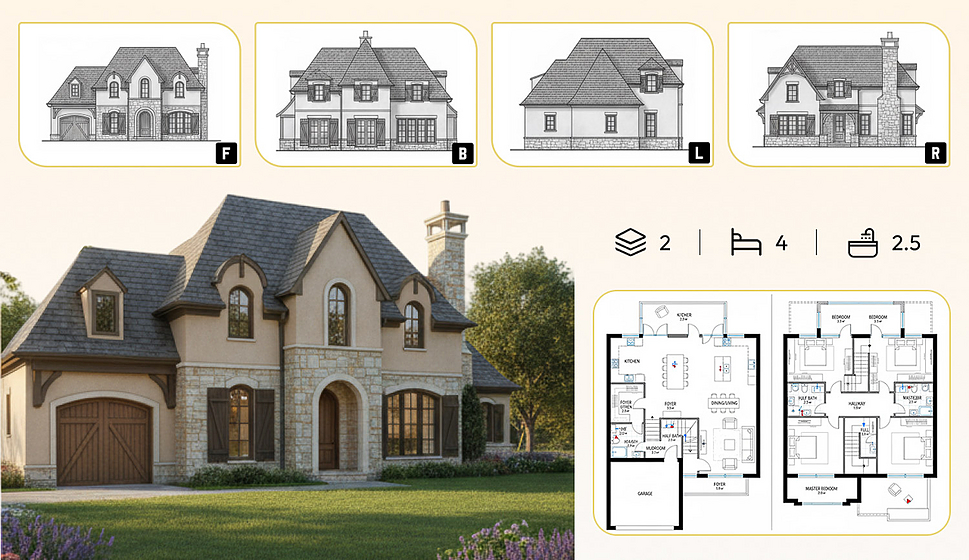
This guide covers a workflow that moves from project parameters to generated floor plans, 3D perspective views, exterior design exploration, and site context visualization, using AI tools in place of preliminary CAD and rendering work.
This guide covers a workflow that moves from project parameters to generated floor plans, 3D perspective views, exterior design exploration, and site context visualization, using AI tools in place of preliminary CAD and rendering work.
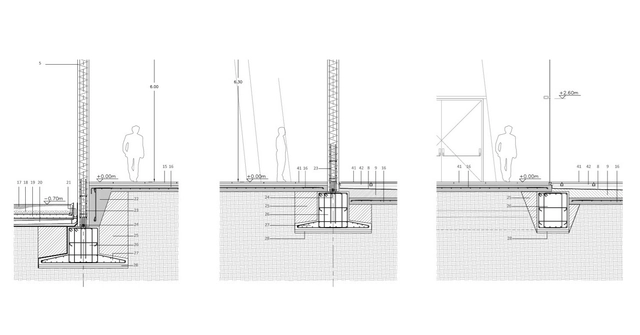
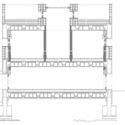
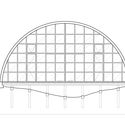
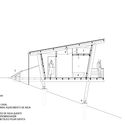
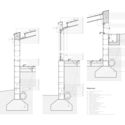
Foundations are certainly not the structural elements on which architects spend the most time during the design process. Since they are typically underground and serve a strictly technical purpose, this decision is usually left to structural engineers. However, foundations play a crucial role in construction, as they are the structural elements that transfer building loads to the ground.
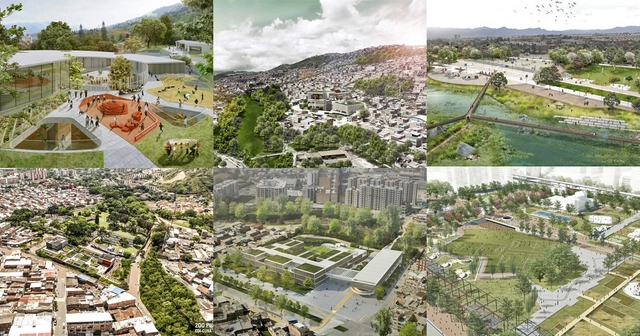

"Architectural competitions represent the combination of the art of choosing and the craft of being chosen," says Roberto Fernández about an area of our discipline that is widely recognized as an excellent platform for firms and independent professionals to present their ideas as true manifestos. Meanwhile, in academic circles, competitions often serve as tools for formal, conceptual, and graphic experimentation.
These types of commissions undoubtedly inspire not only architecture and urban planning professionals but also the public as a key player in their evaluation. Whether or not these proposals are built, they demonstrate that we must constantly champion innovation, recognizing the immense effort behind these results. With this in mind, we have selected six award-winning projects that reflect the value of architectural competitions in Colombia.

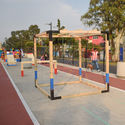
The Architecture and Design Festival "Concéntrico 04" is preparing for its fourth edition, taking place from April 27 to May 1, 2018. This public event invites residents and visitors to discover and rediscover key sites in the historic center of Logroño, Spain, through temporary urban installations.
As part of the temporary architectural installations for Concéntrico 04, the festival launched design competitions for interventions in Plaza de San Bartolomé, Viña Lanciano and the creation of an information pavilion in Plaza Escuelas Trevijano to serve as a landmark and starting point for the festival's routes and activities. These will be built, assembled, and dismantled by the winners themselves.

The "Floating Cemetery of Alto Biobío" project, developed by Universidad de Chile architect Fabián Leiva, proposes a memorial for the Quepuca cemetery—one of 14 flooded following the construction of the Ralco hydroelectric plant. The design features a monomaterial concrete volume positioned over the flooded cemetery to establish a vertical communication between the living and the dead, creating a point of connection between them.
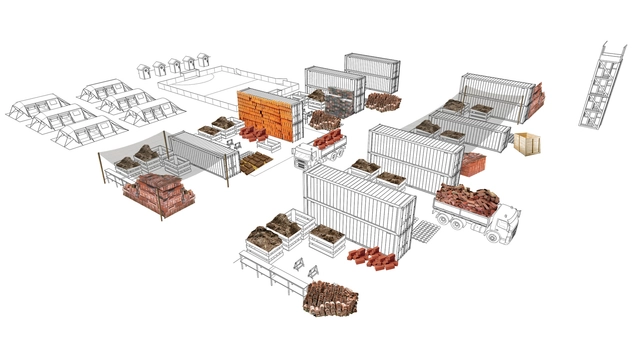


To mark the commemoration of the February 27 earthquake and tsunami, the creation of “Rubble Hospitals” is being promoted, drawing on recent earthquake experiences in Chile and Mexico.
A new guide for creating these spaces was announced in Concepción by Chile's Proyecta Memoria Foundation, coinciding with the anniversary of the February 27 earthquake and tsunami. The guide compiles experiences from earthquakes in Chile and Mexico, while promoting Rubble Hospitals as spaces to safeguard and reuse debris from large-scale seismic events.
The document is the result of three years of work and details memory rescue initiatives during the 2010 and 2015 earthquakes in Chile and the earthquakes in Mexico.
_20Wikimedia_Commons.jpg?1528296272&format=webp&width=640&height=580)
The “Welcome Mother Nature” project, winner of the June 2016 international competition to redesign Madrid's Plaza España, will ultimately not be allowed to alter the position of the Cervantes monument as initially planned.
The Community of Madrid announced at the Local Heritage Commission its intention to fast-track the declaration of the complex as an Asset of Heritage Interest (BIP). Consequently, the project designed by architects Fernando Porras Isla-Fernández, Aranzazu La Casta Muñoa, and Lorenzo Fernández-Ordóñez Hernández will not be allowed to rotate the statue of the Spanish writer to face the Edificio España, as reported by the Spanish newspaper El País.

The Federal District office of Iphan did not approve the project submitted by the Federal District Department of Roads (DER-DF) for the reconstruction of the section of the Eixão Sul that collapsed in February of this year, burying two cars and the tables of a restaurant.
The agency responsible for Brazil's artistic and cultural heritage blocked the proposal, claiming that the DER-DF/Novacap project "significantly alters the original architecture and compromises the architectural and urban integrity and, by extension, that of the Plataforma Rodoviária complex and complementary road system."

Featuring references to his career, projects, and travels, the Ocupação Paulo Mendes da Rocha celebrates the 90th birthday, on October 25, of Brazil's most important living architect. Through sketches, technical drawings, models, and other materials selected from Mendes da Rocha’s personal archive, curator Guilherme Wisnik reveals some of the architect’s most radical ideas, which use ideology and technique to challenge and subvert colonial mindsets that still echo in Brazilian architectural design.
_at_Cuadra_San_C....jpg?1518020946&format=webp&width=640&height=580)
_at_Cuadra_San_Cri....jpg?1518020987 "Sean Scully Wall of Light Cubed, Mexico 2018 Stone sourced locally near Mexico City © Sean Scully. Image © Felix Friedmann")
_at_Cuadra_San_Cristobal__....jpg?1518020930 "Sean Scully Landline That Pink, 2017 Oil on Aluminum © Sean Scully")
_at_Cuadra_San_C....jpg?1518020946 "Sean Scully Wall of Light Cubed, Mexico 2018 Stone sourced locally near Mexico City © Sean Scully. Image © Felix Friedmann")
_at_Cuadra_San_Cristobal__....jpg?1518020961 "Sean Scully Brown Silver Tower, 2016 Corten and Stainless Steel © Sean Scully. Image © Felix Friedmann")
_at_Cuadra_San_C....jpg?1518020946)
Curated by Oscar Humphries, this exhibition opened on Monday, February 5 at 11 AM, and will run from February 7 to March 24, 2018.
Sean Scully - San Cristóbal is the first exhibition presented at Cuadra San Cristóbal, and marks the first time the artist's sculptures will be exhibited in Latin America.
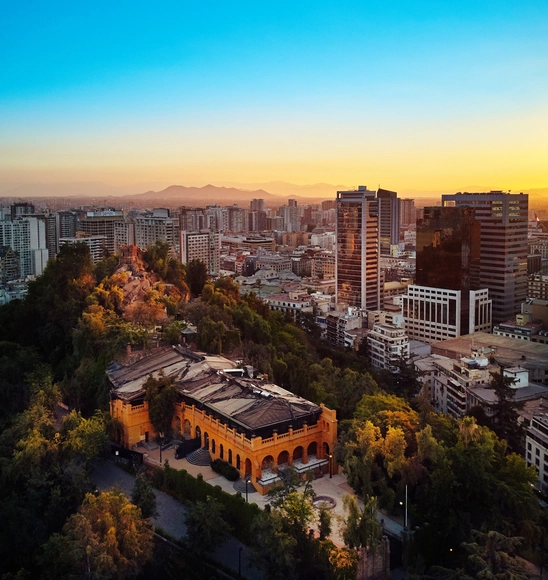
In the late 19th century, Santa Lucía Hill in Santiago, Chile, underwent a radical transformation, evolving from a rocky outcrop in the center of the capital into a vibrant green space. During the hill's redevelopment, the mayor of Santiago at the time, Benjamín Vicuña Mackenna, converted one of its structures, Hidalgo Fort, into a castle that housed a history museum. Reduced to an administrative warehouse during the 20th century, the fort—originally built in 1816—was converted into an event venue in 1997 and is now preparing for its most significant renovation since its construction.
According to the Chilean newspaper La Tercera, Castillo Hidalgo will be transformed into a cultural center featuring “a convention center and a laboratory.” This will allow the venue to open its doors for more than just private events, especially since Santa Lucía Hill receives over 600,000 tourists annually, according to figures from the Municipality of Santiago.
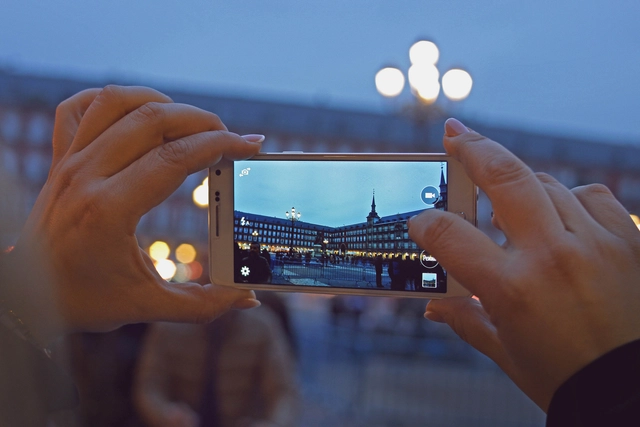
Yesterday, the Official Association of Architects of Madrid and the COAM Architecture Foundation presented the "Arquitectura de Madrid" mobile app, developed with the support of the Madrid City Council and the Foro de Empresas por Madrid.
This is arguably one of the most important and ambitious initiatives undertaken by COAM in recent years in a clear effort to connect architecture with society. In today's fully digitalized context, this app serves as a useful and powerful tool to promote Madrid's architecture, easily accessible to any citizen, student, professional, or visitor to the Spanish capital.
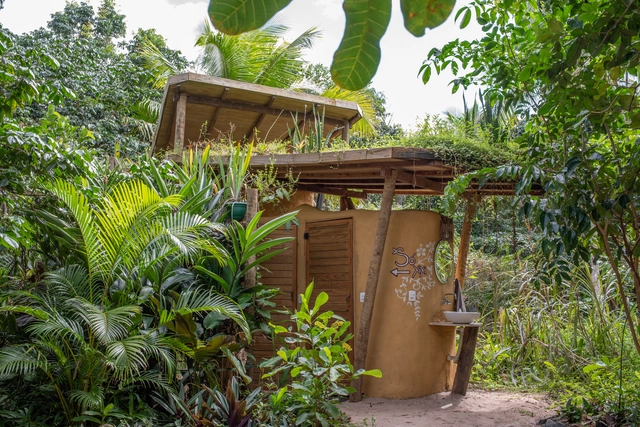
The dry toilet performs all the functions of a conventional toilet without using water, while also producing resources that can be used to fertilize crops and agroforestry projects. With various construction models available, this social technology is far more than just an alternative sanitation system. When approached as a solution within our closed-loop reality, it offers an answer to various public sanitation issues, as this single technology prevents both soil and water contamination.
Operating on the basic principle of using solar heat to raise the temperature inside the waste receptacle—thereby eliminating pathogens and producing fertilizer—ecological sanitation models are highly adaptable. They improve the environmental performance of homes and public spaces, successfully meet demands based on usage, and are easy to construct and maintain.
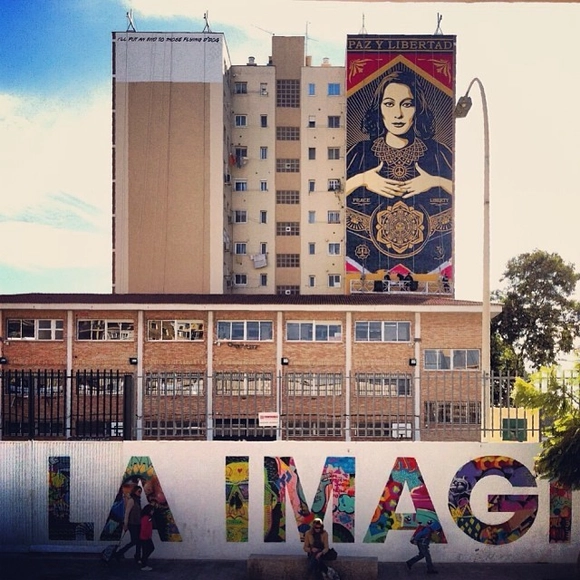
Spain is the European country with the most "Good Practices" recognized by the URBACT program. In total, 17 good practices have been recognized across 15 cities and municipalities throughout Spain. The themes addressed by these municipalities are highly diverse, ranging from the issues chosen for intervention to the methods of implementation and the solutions proposed.
The European URBACT program was established to foster sustainable urban development and urban innovation in municipalities across Europe. As such, any city or municipality, regardless of its size, can participate in the program. Currently, 550 cities from 29 different countries and 7,000 active local stakeholders are participating.
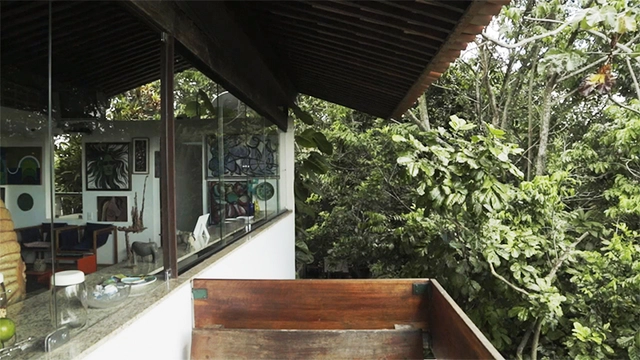
Wandenkolk Tinoco designed numerous projects after graduating in the late 1950s from the School of Fine Arts of Pernambuco: residences, institutional and residential buildings, as well as paintings and sculptures. Beyond his active practice, Wandenkolk taught for several years at the School of Architecture of Recife, which later became part of the Federal University of Pernambuco.
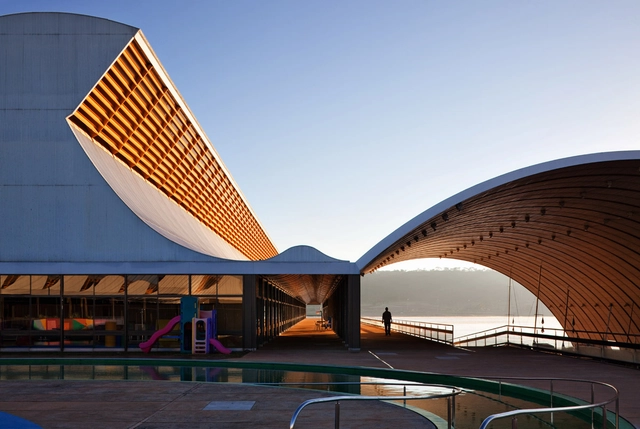
Today, we launch a series of publications showcasing open-access theses and dissertations that address issues relevant to Architecture and Urbanism. We recognized the need to share the remarkable academic output of our universities—which often goes unrecognized—with the widest possible audience.
In this first edition, we present the work of architect Jorge Isaac Perén Montero and his master's thesis entitled "Natural Ventilation and Lighting in the Work of João Filgueiras Lima, Lelé: Studies of the Sarah Kubitschek Network Hospitals in Fortaleza and Rio de Janeiro," advised by Professor Rosana Maria Caram at the São Carlos School of Engineering - EESC/USP.
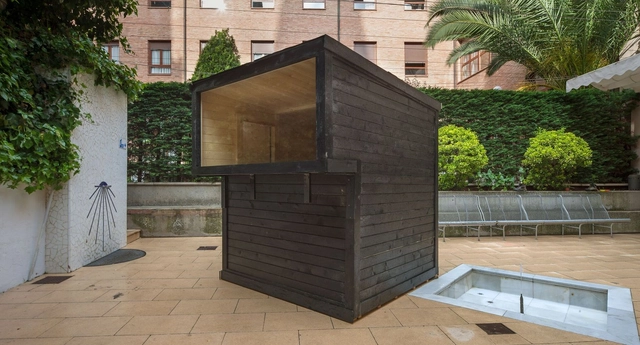
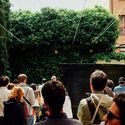
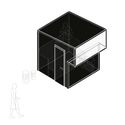
Conéntrico is an International Architecture and Design Festival that proposes to reflect on the city of Logroño (Spain) through the revitalization of undervalued public spaces. Its latest edition, Conéntrico 04, takes place between April 27 and May 1, 2018, in the Historic Center of Logroño. The festival invites visitors to explore the city through installations, exhibitions, meetings, activities, and performances that connect venues, plazas, streets, courtyards, and hidden spaces that usually go unnoticed in daily life. Jairo Rodríguez integrates the greatest number of senses in a sauna in the middle of the courtyard of the Municipal Pilgrims' Hostel.
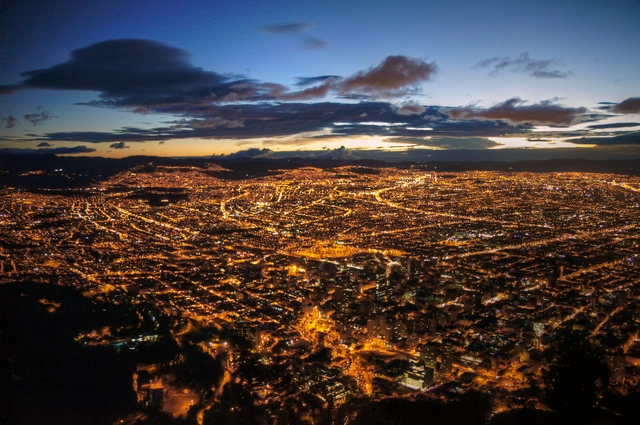
The identity of cities lies not only in their name, geographic location, or development. It is also found in the haptic perception we have of them as inhabitants—that is, how our senses interpret the elements within the city.
In this video, photographer Óscar Iván Núñez presents “How Does Bogotá Sound?”, an audiovisual compilation of both natural and artificial urban sounds from the Colombian capital. In it, he invites viewers to explore an area of the city in a different way, identifying everyday sounds that shape this capital's soundscape.


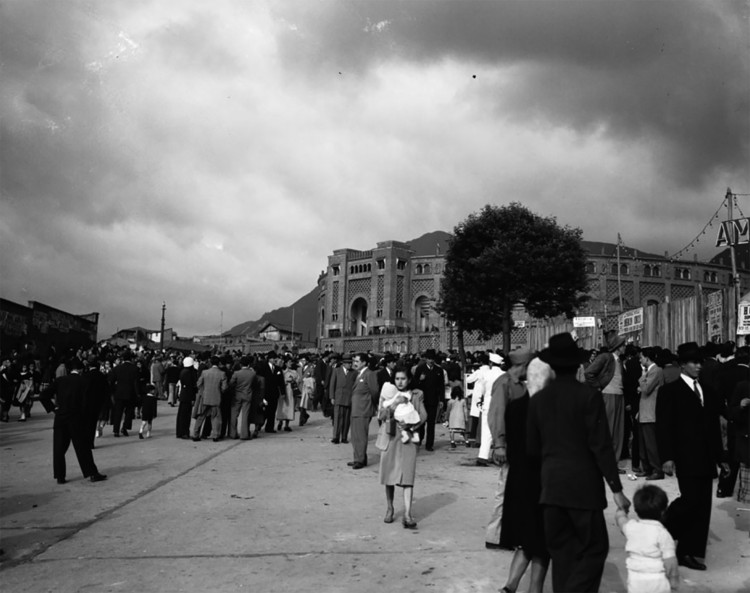
The modernization of Bogotá between 1940 and 1970, captured in urban and architectural photo essays, was documented in various books, magazines, and photobooks of the era, as well as in images from public and private archives across the city. These images reveal an intentional, and even critical, approach to how modern architecture reconfigured city centers, placing new buildings and urban spaces in relation to the existing cityscape.
In analyzing the impact of photojournalism, the work of Sady González, Manuel H. and Daniel Rodríguez is essential. Architecture and the city serve as the backdrop for scenes of urban life, characters, events, and daily activities. Their photographs offer an indispensable visual testament for understanding the city's transformation and its historical context.
In this edition of Bogotá in the Eyes of 10 Photographers we explore the legacy of Sady González:
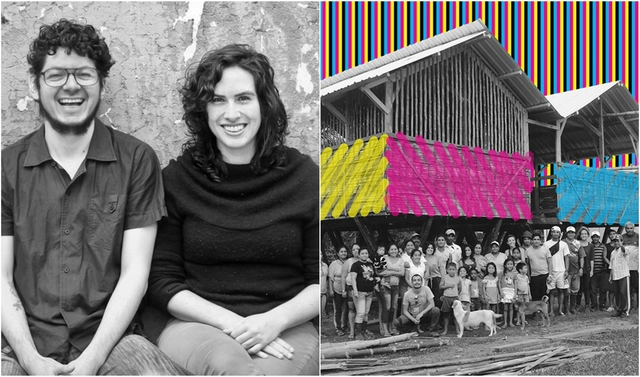
The 2018 International Housing Finance Summit, organized by INFONAVIT, brought together experts from various disciplines to discuss the future of cities and the lessons learned to date. Held on May 2 and 3 at the Camino Real Polanco, the event hosted prominent figures who examined urban transformation processes to evaluate models that could guide us toward an integrated urban plan.
The event featured the participation of Al Borde, a firm that has materialized its ideas across various Latin American countries, earning numerous awards and accolades. In 2016, they served on the nominating committee for the Mies Crown Hall Americas Prize (MCHAP) and were part of the official selection at the Venice Biennale, which was themed 'Reporting from the Front.' Currently, they are among the winners of the "Young Architects in Latin America" competition, a collateral event of the 16th International Architecture Exhibition at the Venice Biennale.
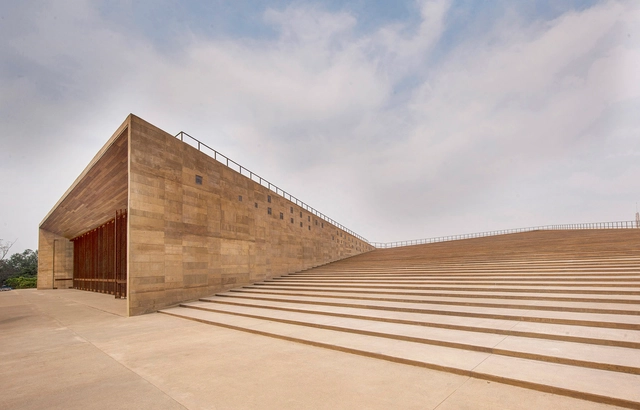
As part of a generation of photographers who in recent years have helped place Mexican architecture on the global map, Jaime Navarro is one of the key figures who has navigated the technological transition shaping a new way of seeing and practicing architecture. As one of the country's most recognized photographers, Jaime Navarro's approach aims for photography that can help document the beauty and goodness of specific historical moments, witnessing how we relate, what moves us, and what transcends disciplinary boundaries to build new futures. Below, we present an exclusive interview that showcases his career and the admiration of the ArchDaily team.
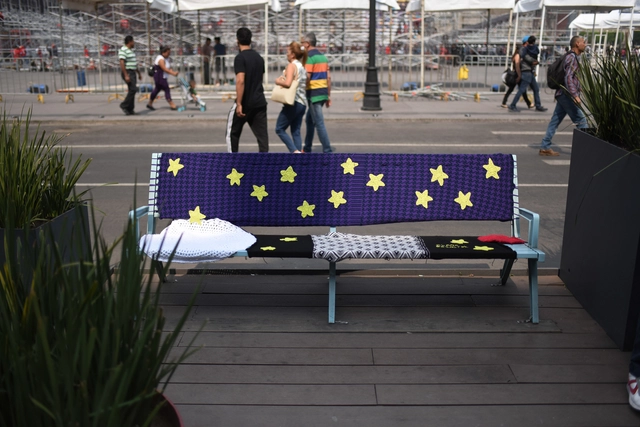
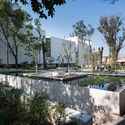
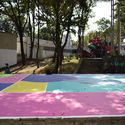
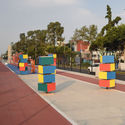
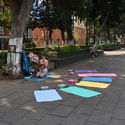
The 2nd Placemaking Latinoamérica Summit—organized by Lugares Públicos A.C.—took place in Mexico City during the first and second weeks of November. It featured various activities, including the rehabilitation of eight public spaces led by Mexican and Latin American participatory urban planning specialists in the boroughs of Cuauhtémoc, Iztacalco, and Miguel Hidalgo.
These interventions were carried out as part of a broader effort to reflect and act on the Placemaking methodology at a Latin American scale, fostering collaboration between organizations from different countries to improve public space. This process is detailed in the "White Paper on Latin American Placemaking: Tactical Urbanism and Innovation in Public Space Program," presented this week by the Alliance for Urban Regeneration (ARU) and Lugares Públicos.

As we contemplated the vestibule of the Laurentian Library, I distinctly remember paraphrasing Giorgio Vasari: I thank God for being born in the time when Álvaro Siza is alive and for being worthy of having him as a master on such friendly terms. A much more eloquent version was dedicated to the "divine" Michelangelo Buonarroti in the original Lives of the Most Excellent Painters, Sculptors, and Architects (1568), yet it rang just as true in the presence of the "mystic" Siza – an epithet bestowed by Eduardo Souto de Moura. At that moment in Florence, the architect of sculpture and the sculptor of architecture met metaphysically face to face in the form of a staircase, whose silhouette would outlive time, transformed by the Baroque and reinterpreted by many authors – from Charles Garnier to Alvar Aalto – yet perhaps by none with more enthusiasm than Álvaro Siza himself.
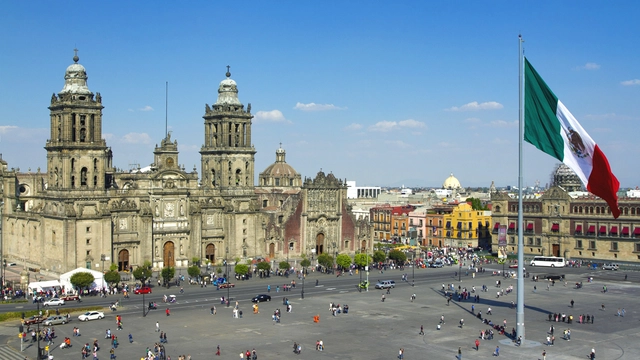
Javier Reverte once said that "the adventure of travel consists of being able to experience the daily lives of other people in places far from your home as an extraordinary event." It is precisely within those extraordinary events that, upon arriving in a new country, we undergo an adaptation process that transforms the extraordinary into the everyday. Whether you share a language with your host country or face an unfamiliar tongue, the first few months are a crash course in absorbing countless new concepts—from discovering you can buy cigarettes at pharmacies to distinguishing the distinct calls of trucks selling tacos, tamales, or sweet potatoes. We learn new terms to define daily life, while simultaneously relearning familiar words that take on entirely new meanings.
-1.jpg?1518763923&format=webp&width=640&height=580)
In the presence of officials from the Ministry of Culture, Dra. Lidia Camacho, general director of the National Institute of Fine Arts, Mtra. Irene Muñoz Trujillo, director of the Mixed Fund for Tourism Promotion of Mexico City, and Maria Laura Medina de Salinas, honorary president of the Design Week México board, the general director of Design Week México and World Design Capital CDMX 2018, Emilio Cabrero, announced the details of the activity program for World Design Capital CDMX 2018.