Hello!
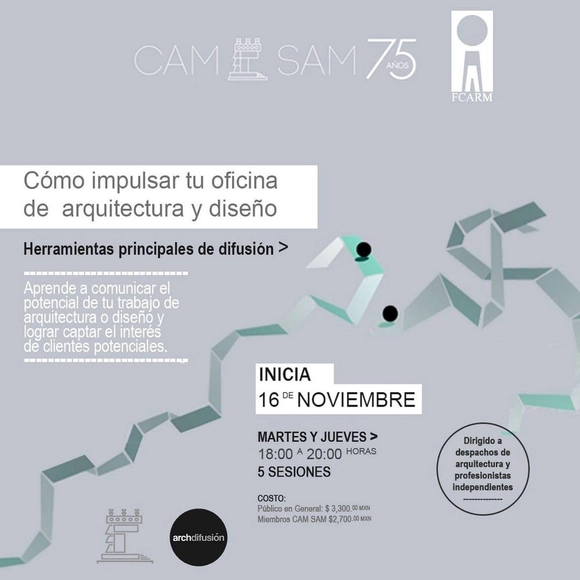
Workshops: The "archdifusión" method is a series of practical workshops focused on providing dissemination tools for students, professionals, and firms within the architectural industry and related disciplines.
Hello!
Workshops: The "archdifusión" method is a series of practical workshops focused on providing dissemination tools for students, professionals, and firms within the architectural industry and related disciplines.
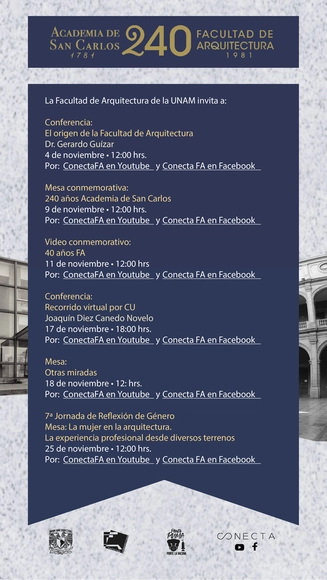
The Social Communication Coordination, in collaboration with the Cultural Diffusion Coordination and the Library and Archives Coordination of the UNAM Faculty of Architecture, held a campaign throughout November to commemorate the 240-year history of the Academia de San Carlos and the 40th anniversary of the Faculty of Architecture.
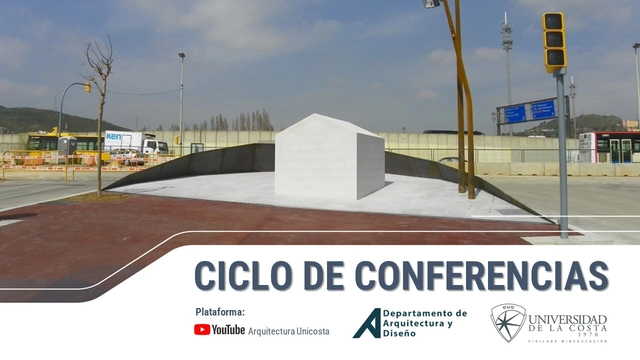
“The only way of discovering the limits of the possible is to venture a little way past them into the impossible,” says Arthur Charles Clarke.
Knowledge inspires others. Sharing it allows us to open up and connect with one another. Facilitating this exchange fosters empathy and an awareness of otherness. This activity aims to integrate the team through knowledge and strengthen academic synergies by cultivating an awareness of otherness and a respect for the expertise of others.
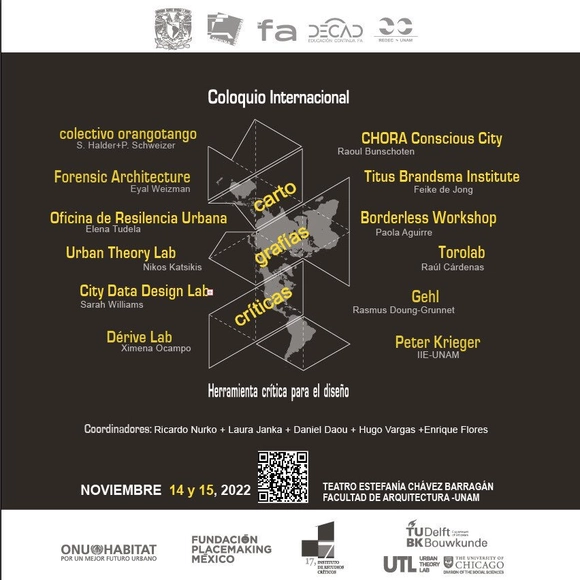
The International Colloquium: Cartography, a Critical Tool for Design, brings together internationally renowned speakers in critical cartography from various disciplines to present diverse perspectives and visions of mapping. The event is structured around three interrelated themes: creative mapping, descriptive mapping, and critical mapping. The first segment explores various approaches to mapping through innovative processes and methodologies in critical cartography; the second group analyzes cartography as an intersubjective and interdisciplinary medium in the current Anthropocene era; finally, the third group presents counter-mapping, participatory cartographies, and spatial practices as critical processes aimed at highlighting and emancipating other realities.
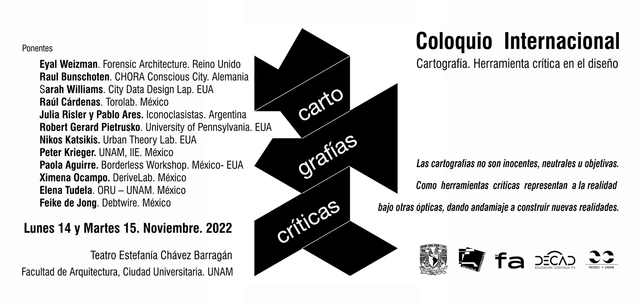
We live in a world immersed in images and their representations. We carry devices that show us the world in real time and locate us through our movements and desires with every application we navigate. In a world saturated with data, yet simultaneously filled with increasingly complex concrete realities, critical cartography reveals new visions and versions of the world we inhabit. It constructs an alternative atlas of ongoing and projective dynamics, challenging us to consider what spaces we are designing in the face of complex challenges across different spatial scales—climate change, violence, migration, extraction, and financial flows. Critical cartography is concerned with crossing, analyzing, and synthesizing data to make information more accessible and intelligible; manifesting complex systems where the human element is not the only priority, thus allowing us to think about nature on a different scale; and mediating participatory processes to visualize and measure social conflicts and inequalities within their spatial context.
Maps are not innocent, neutral, or objective. As critical tools, they present—and represent—the planet through different lenses, providing a framework to intervene in and construct new worlds. As we participate in the construction and production of the spaces we inhabit, architects, urbanists, landscape architects, and designers find that critical cartography reveals different narratives and descriptions to us.
This raises the following questions:
What role has mapping and cartography played in the construction of social space?
How do critical cartographies influence us as producers of the spaces we inhabit?
How can we leverage critical cartography as a design tool to understand, interpret, and project space?
The Faculty of Architecture at the National Autonomous University of Mexico (UNAM) invites you to the colloquium "Cartography: A Critical Tool for Design," where these questions will be addressed through the presentation of various approaches to emerging cartographies. The event will showcase work from diverse actors involved in mapping and cartography through their research, practical methodologies, and field experiences in mapping processes, iconographic design, and atlas development.
Discussions will range from big data analysis to participatory cartography; from methods based on geographic information systems to entirely analog explorations; and from everyday urban narratives to speculations on new utopias.
The presentations are aimed at professionals, faculty, and students involved in the design and production of the urban and social spaces we inhabit, with the goal of exploring cartography and the mapping process as a critical tool for design.
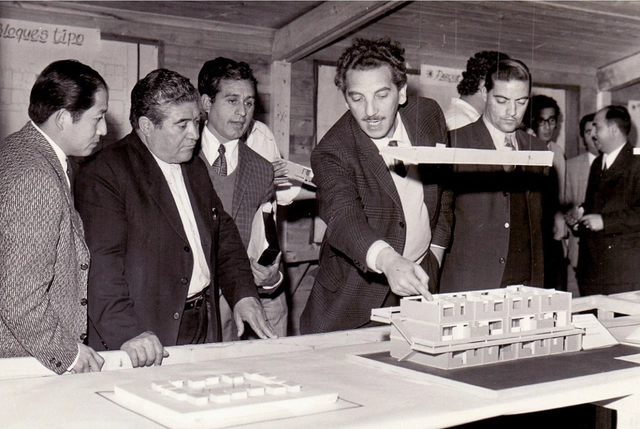
On November 16, the University of Santiago de Chile (USACH) will award an honorary doctorate to architect and 2019 National Architecture Prize recipient Miguel Lawner Steiman, in recognition of his distinguished career and commitment to social housing.
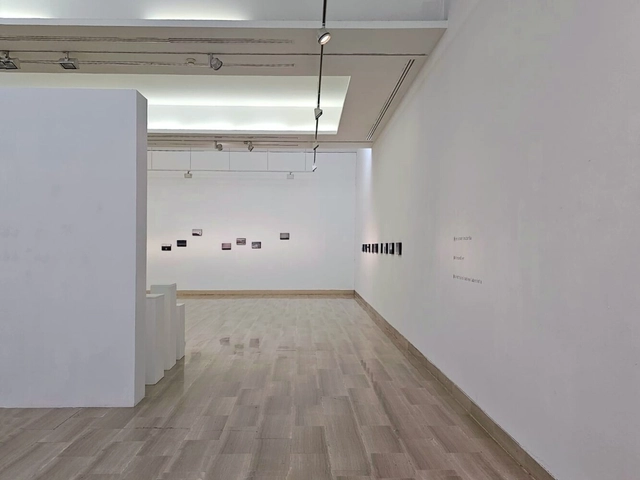
Construction of a Labyrinth is the latest proposal from the artistic team of Elena Morón and Jesús Marina. It features latent virtual images that will gradually emerge, physical photographs that truly exist, a play on codes and texts, and real voids and perforations created by the artists.
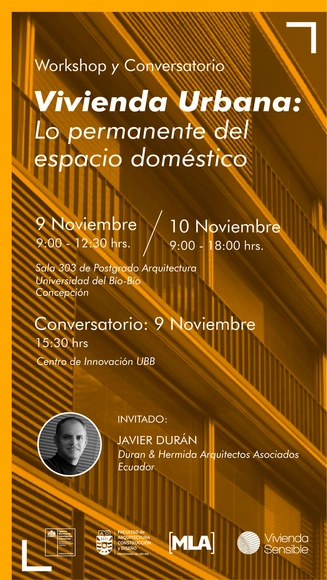
This workshop focuses on a design exercise regarding urban housing for diverse social sectors and is intended for architects and advanced architecture students. It is organized by the ANID Exploratory Project "Vivienda Sensible" and the Latin American Master of Architecture program at the University of Bío-Bío.
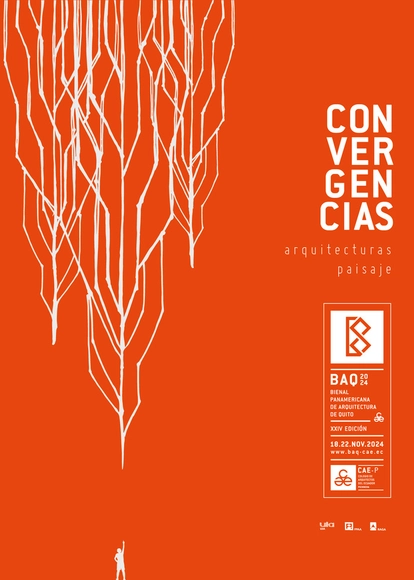
On Thursday, November 23, the official launch of the 24th edition of the Pan-American Architecture Biennial of Quito (BAQ 2024)—one of the most anticipated architectural events nationally and internationally, organized by the Pichincha College of Architects—took place at the Center for Contemporary Art.

Aiming to highlight the material and cultural heritage of Brazilian furniture, Galeria Teo is hosting the exhibition "Celina Decorações: Público, Indústria e Madeira," curated by Ethel Leon and Eduardo Costa, from November 8 to February 29, 2024.

Feeding ourselves requires a colossal effort that has a greater impact than anything else we do. Observing the world through the lens of food can help us understand the interrelation between a host of factors that shape the city and influence our lives: large-scale infrastructure dedicated to mobility and transport, energy, climate change, health and the obesity epidemic, the power of major production, distribution, and retail multinationals, urbanization...
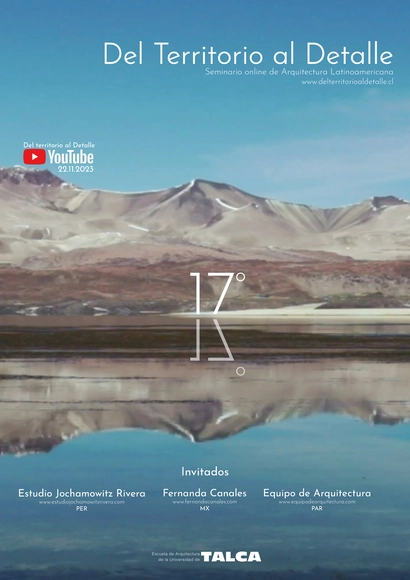
The 17th edition of the "From Territory to Detail" International Architecture Seminar serves as a space for dialogue and reflection, bringing together students, academics, and professionals alongside renowned Latin American architects. These architects share a common trait: they balance teaching with professional practice across various fields, ranging from editorial work to artistic experimentation.
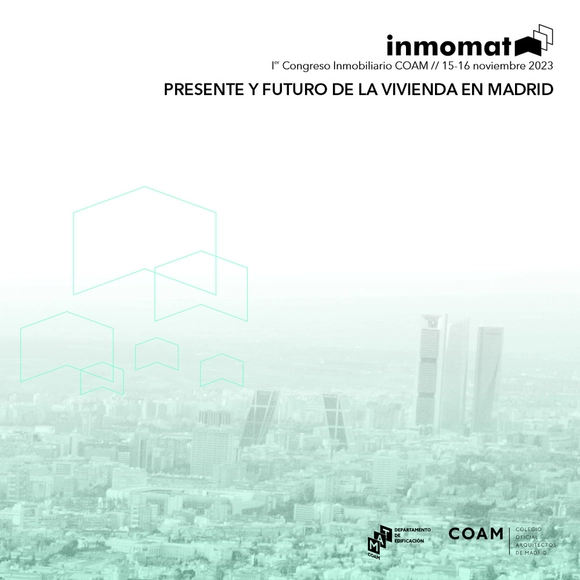
The Official College of Architects of Madrid (COAM), through its MATCOAM Building Department, is organizing the INMOMAT Real Estate Congress. The event aims to become an essential gathering for the real estate industry, offering an immersive experience with key agents of change to revalue architecture and urban planning as tools for transforming the real estate sector.
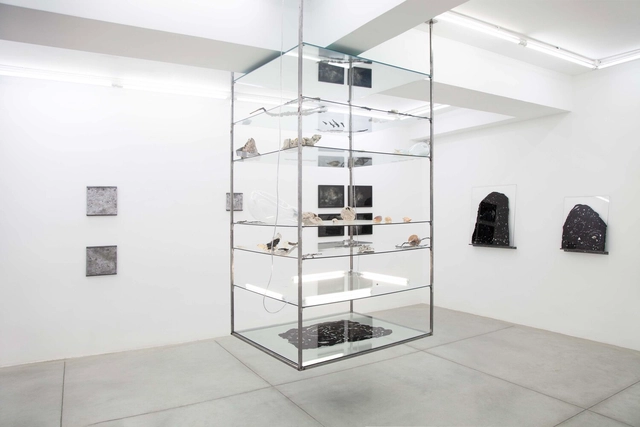
On Thursday, November 16, at 7:00 PM, Galeria Athena will host a free, public conversation between artist Jonas Arrabal, curator Fernanda Lopes, and artist Julia Arbex. The discussion will center on "Ensaio sobre uma duna" (Essay on a Dune), a solo exhibition by Jonas Arrabal on view at the gallery through December 2.
International sustainable construction event will address topics that will also be featured at COP-28

Piracicaba to host regional forum on decent housing as public health in November
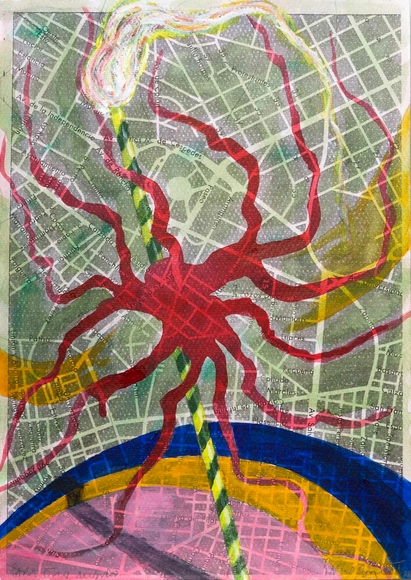
“Map Room” opens on November 7
The Instituto Cervantes presents an exhibition by Spanish artist Pablo Sycet at its Rio de Janeiro headquarters

As climate change worsens globally, socio-environmental issues have gained prominence in recent years. In November, more than 400 organizations—including SampaPé!—signed an open letter from the Partnership for Active Travel and Health (PATH), urging government and municipal leaders to invest more in walking and cycling to meet climate goals and improve people's quality of life. The text was presented at COP 27 during a series of meetings, lectures, and official side events at the UN conference.