FOCO is a lecture series organized by the University Commission of the Sociedad Central de Arquitectos every Saturday at 7:00 PM. With over 15 editions to date, the series has featured presentations from more than 65 prominent figures in architecture, design, and related disciplines, concluding each session with a performance by a guest artist.
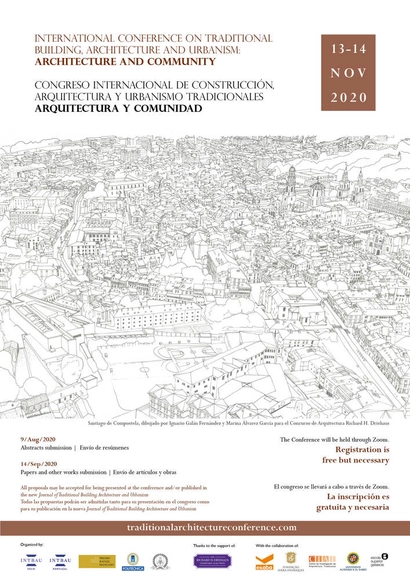
The "International Congress on Traditional Construction, Architecture, and Urbanism: Architecture and Community" will be held online on November 13 and 14, 2020.
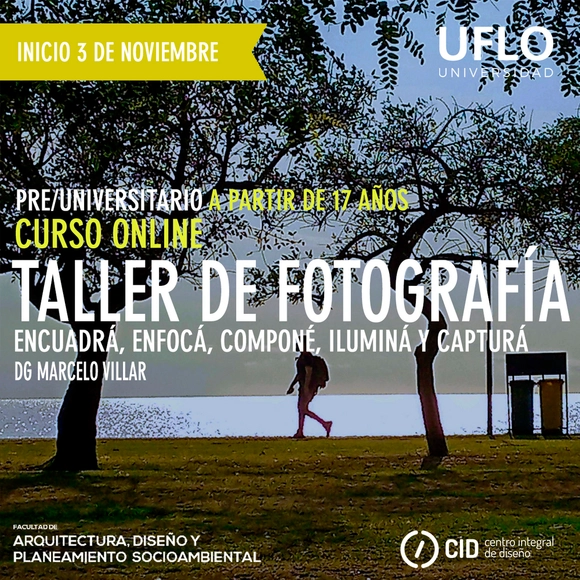
We all see because it is a natural human gift. However, if we learn to LOOK through the eye of the camera, we can Frame. If we can distinguish between near and far, sharp and blurry, foreground and background, we can Focus. By prioritizing, categorizing, organizing, and balancing, we can Compose. By drawing with light, concealing with shadow, and saturating and texturing the subject, we can Illuminate. By understanding the situation, tracking movements, positions, and paths, and waiting for the exact moment, we can Capture. The sum of these five actions results in a great photograph.
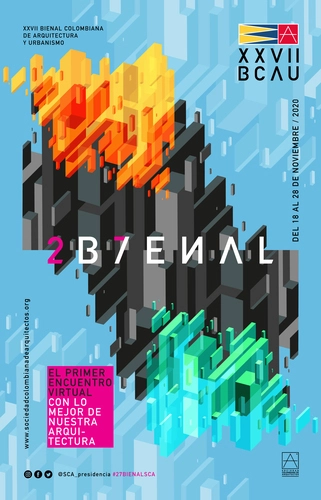
The academic program for the 27th edition of our Biennial will be held virtually from November 18 to 28, 2020. This year’s theme is: Architects committed to innovation and entrepreneurship.
The call for entries for the Arquitectura Film Festival Santiago 2024 has closed, drawing significant global participation that showcases a broad spectrum of cinematic perspectives on film, architecture, and emotions.
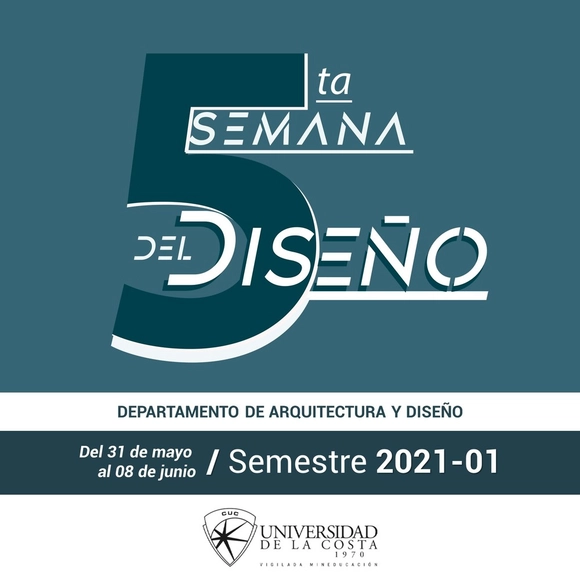
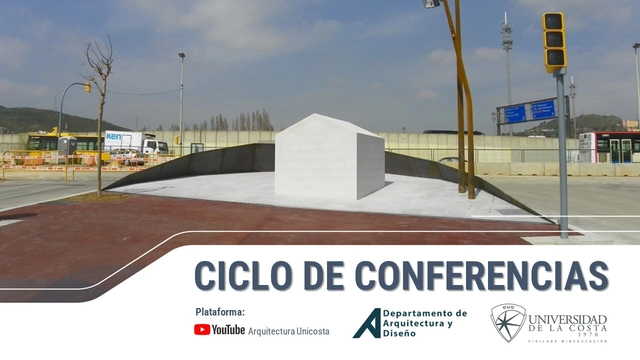
Design Week is a biannual event hosted by the Department of Architecture and Design at the Universidad de la Costa (Barranquilla, Colombia), established in 2019. It serves as an exhibition and competition space where the results of emerging classroom creative processes are presented and measured against the realities of professional practice, showcasing and sharing the achievements of the Department's academic programs with the university community.
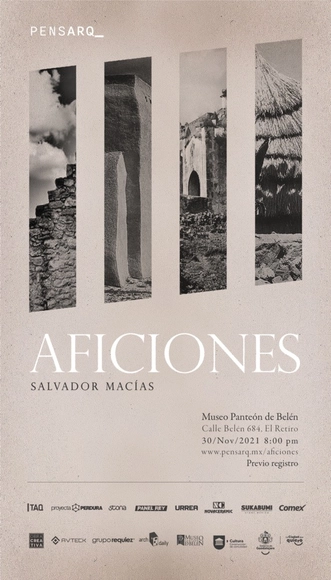
PENSARQ_ invites architects, interior designers, and designers to the event "AFICIONES" with renowned architect Salvador Macías. In an intimate talk, he will review the elements that motivate his professional practice by revisiting some of the books that have inspired him throughout his career.
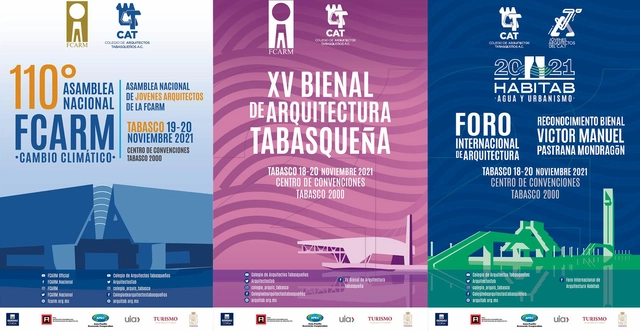
The Colegio de Arquitectos Tabasqueños A.C. (CAT), in collaboration with the Federación de Colegios de Arquitectos de la República Mexicana A.C. (FCARM), will host the 110th Ordinary Assembly of the FCARM on November 19 and 20, 2021, at the Centro de Convenciones Tabasco 2000 (located within Plaza Galerías Tabasco), at Av. Planetario s/n, Col. Los Ríos, C.P. 86035, Villahermosa, Tabasco, Mexico. Simultaneously, the CAT will coordinate a series of events taking place from November 18 to 20, 2021, within the same venue, featuring professionals and experts in the field of architecture, as well as students in related fields and the general public. The scheduled events are:
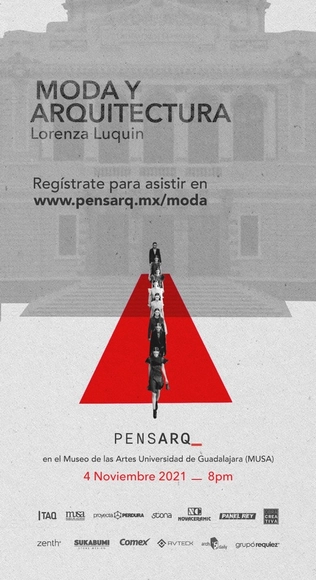
FASHION AND ARCHITECTURE is an event that will explore the close relationship between these disciplines, where both inform one another through volumes, proportions, forms, colors, textures, balance, and creativity.
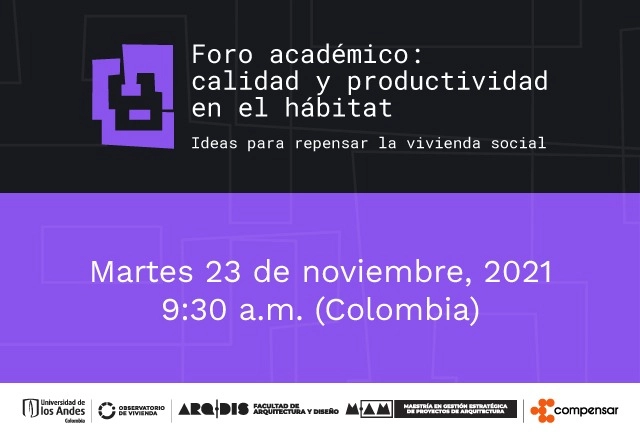
The Faculty of Architecture and Design at the Universidad de los Andes (Colombia) and Compensar extend a special invitation to the second academic housing forum: Quality and Productivity in the Habitat: Ideas for Rethinking Social Housing.
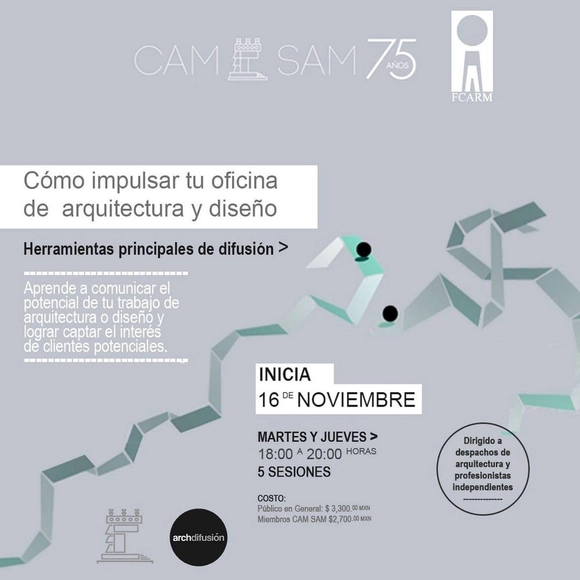
Main poster. Image created by archdifusión and CAM SAM
Hello! Workshops: The "archdifusión" method is a series of practical workshops focused on providing dissemination tools for students, professionals, and firms within the architectural industry and related disciplines.
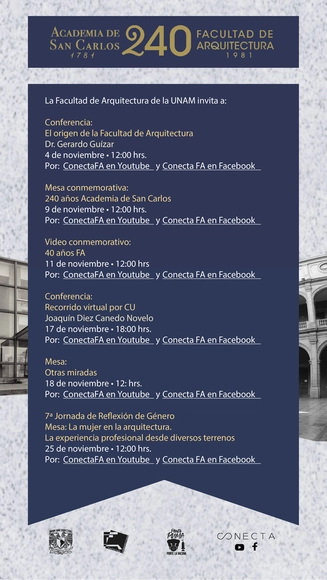
The Social Communication Coordination, in collaboration with the Cultural Diffusion Coordination and the Library and Archives Coordination of the UNAM Faculty of Architecture, held a campaign throughout November to commemorate the 240-year history of the Academia de San Carlos and the 40th anniversary of the Faculty of Architecture.
“The only way of discovering the limits of the possible is to venture a little way past them into the impossible,” says Arthur Charles Clarke.
Knowledge inspires others. Sharing it allows us to open up and connect with one another. Facilitating this exchange fosters empathy and an awareness of otherness. This activity aims to integrate the team through knowledge and strengthen academic synergies by cultivating an awareness of otherness and a respect for the expertise of others.
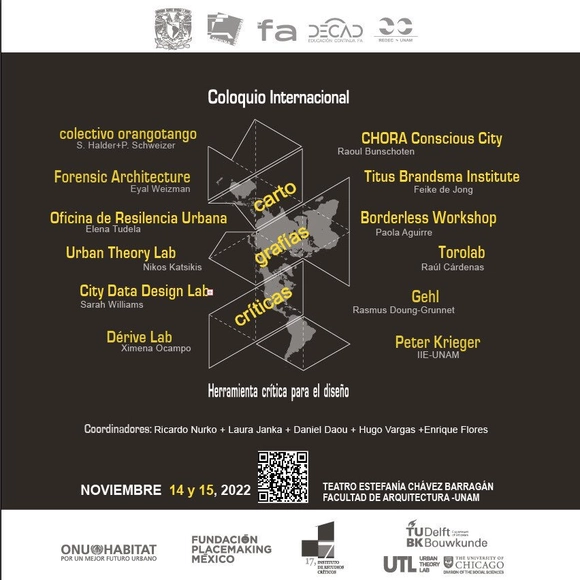
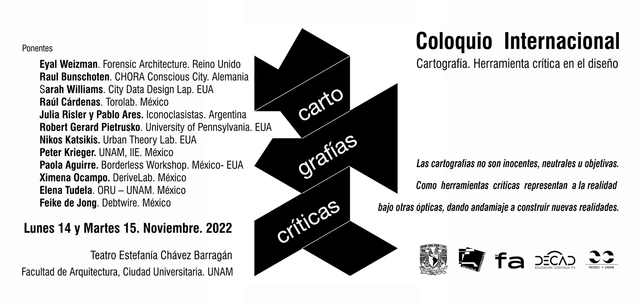
The International Colloquium: Cartography, a Critical Tool for Design, brings together internationally renowned speakers in critical cartography from various disciplines to present diverse perspectives and visions of mapping. The event is structured around three interrelated themes: creative mapping, descriptive mapping, and critical mapping. The first segment explores various approaches to mapping through innovative processes and methodologies in critical cartography; the second group analyzes cartography as an intersubjective and interdisciplinary medium in the current Anthropocene era; finally, the third group presents counter-mapping, participatory cartographies, and spatial practices as critical processes aimed at highlighting and emancipating other realities.
We live in a world immersed in images and their representations. We carry devices that show us the world in real time and locate us through our movements and desires with every application we navigate. In a world saturated with data, yet simultaneously filled with increasingly complex concrete realities, critical cartography reveals new visions and versions of the world we inhabit. It constructs an alternative atlas of ongoing and projective dynamics, challenging us to consider what spaces we are designing in the face of complex challenges across different spatial scales—climate change, violence, migration, extraction, and financial flows. Critical cartography is concerned with crossing, analyzing, and synthesizing data to make information more accessible and intelligible; manifesting complex systems where the human element is not the only priority, thus allowing us to think about nature on a different scale; and mediating participatory processes to visualize and measure social conflicts and inequalities within their spatial context. Maps are not innocent, neutral, or objective. As critical tools, they present—and represent—the planet through different lenses, providing a framework to intervene in and construct new worlds. As we participate in the construction and production of the spaces we inhabit, architects, urbanists, landscape architects, and designers find that critical cartography reveals different narratives and descriptions to us. This raises the following questions: What role has mapping and cartography played in the construction of social space? How do critical cartographies influence us as producers of the spaces we inhabit? How can we leverage critical cartography as a design tool to understand, interpret, and project space? The Faculty of Architecture at the National Autonomous University of Mexico (UNAM) invites you to the colloquium "Cartography: A Critical Tool for Design," where these questions will be addressed through the presentation of various approaches to emerging cartographies. The event will showcase work from diverse actors involved in mapping and cartography through their research, practical methodologies, and field experiences in mapping processes, iconographic design, and atlas development. Discussions will range from big data analysis to participatory cartography; from methods based on geographic information systems to entirely analog explorations; and from everyday urban narratives to speculations on new utopias. The presentations are aimed at professionals, faculty, and students involved in the design and production of the urban and social spaces we inhabit, with the goal of exploring cartography and the mapping process as a critical tool for design.
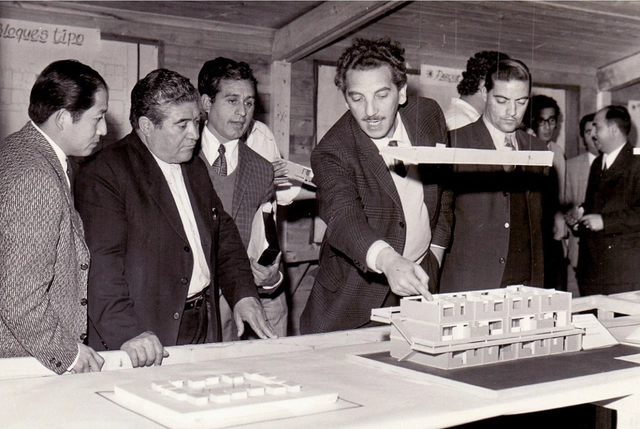
On November 16, the University of Santiago de Chile (USACH) will award an honorary doctorate to architect and 2019 National Architecture Prize recipient Miguel Lawner Steiman, in recognition of his distinguished career and commitment to social housing.
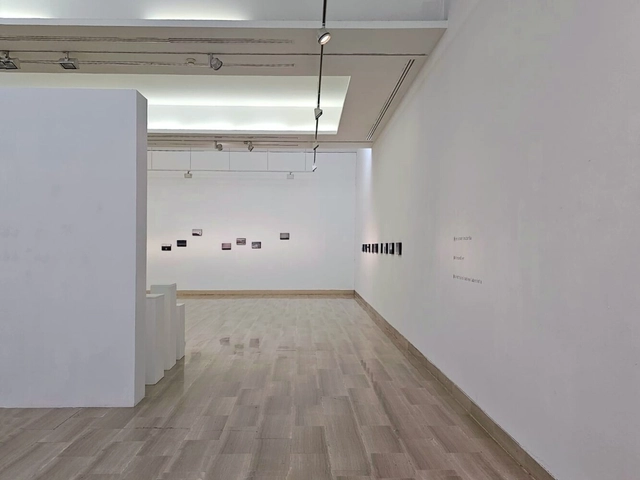
Construction of a Labyrinth is the latest proposal from the artistic team of Elena Morón and Jesús Marina. It features latent virtual images that will gradually emerge, physical photographs that truly exist, a play on codes and texts, and real voids and perforations created by the artists.